
Clean-burning heat for Providence County's coldest nights.
From the triple-deckers of Providence to the mill villages of Woonsocket and Pawtucket, pellet heat is a low-hassle way to cut heating bills through a Rhode Island winter that averages 22°F lows. Find the right stove or insert and get matched with a trusted local dealer.
Every Project Starts From One of These Five Situations
Automated warmth for New England's most populous county.
Providence County is home to nearly 1.6 million people—Rhode Island's capital city plus Cranston, Warwick, Pawtucket, Woonsocket, North Providence, and dozens of other cities and towns packed into a relatively small footprint. Sitting in climate zone 5A with roughly 5,478 heating degree days a year, the county's winters aren't as punishing as Burlington, VT, but they're cold enough that most homes run supplemental heat from November into April. Winter lows average around 22°F, with plenty of nights well below that once a nor'easter or arctic outbreak moves through.
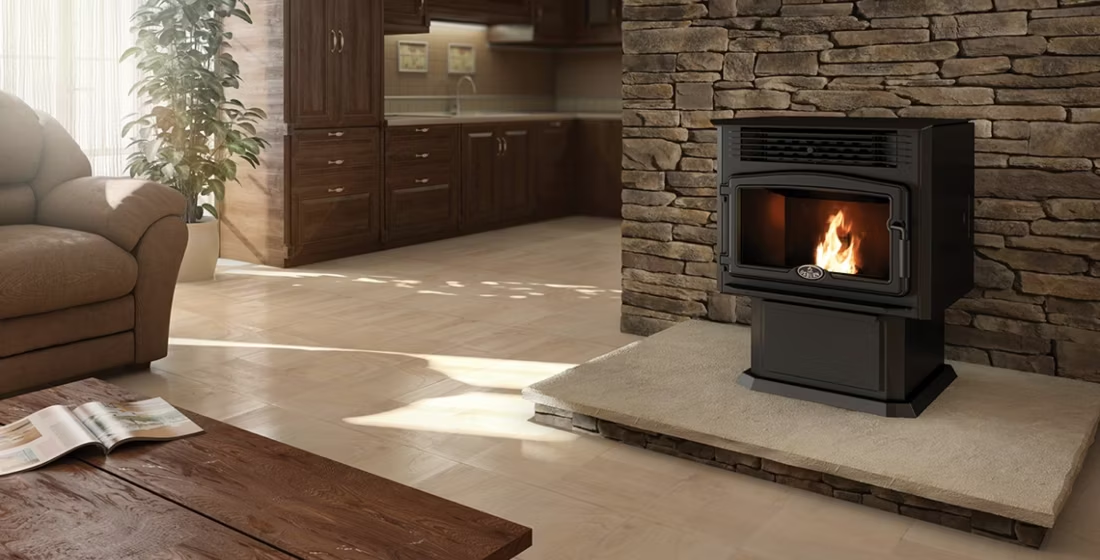
Pellet stoves have caught on across the county for a simple reason: they deliver steady, thermostatically controlled heat without the wood-splitting, chimney-sweeping, or ash-hauling that comes with a traditional wood setup. Rhode Island has no county government—every city and town in Providence County runs its own building department—but the fuel itself is easy to source regionally, with brands like Lignetics, New England Wood Pellet, and Maine Woods Pellet Co. stocked at hardware stores, farm supply outlets, and hearth dealers throughout the area. With no non-attainment or wood-smoke restrictions on the books locally, pellet appliances burn cleanly here without the curtailment-day headaches some western counties deal with.
Three steps. No salesperson until you're ready.
Tell us about your project
Your zip code, your situation, and the fuel you're leaning toward—or let the answers point you to one.
See what's actually available
The brands dealers within 100 miles genuinely carry—real options, never a catalog mirage.
Get your dealer & Project Guide
A trusted local dealer, plus the free Project Guide & Parts List that names every component of the job.
Frequently Asked Questions
How much does a pellet stove installation cost in Providence County?
A freestanding pellet stove installed in a Providence County home typically runs $3,500 to $6,500, depending on the unit, whether a new hearth pad is needed, and the length of the vent run through an exterior wall. A pellet insert going into an existing masonry fireplace—common in the older housing stock found in Providence, Pawtucket, and Woonsocket—usually falls in a similar $3,500 to $7,000 range, since it reuses the existing chimney chase for the vent liner. Newer construction with no existing fireplace or exterior wall access nearby can push toward the higher end once venting and electrical work are factored in. Local dealers will give you a firm number after seeing your specific chimney or wall setup.
What size pellet stove do I need for my home?
Sizing comes down to square footage and how drafty the home is—a real consideration in Providence County's older triple-deckers and colonial-era housing stock. As a rough guide: units rated for 40,000-50,000 BTU handle a single large room or open floor plan up to around 1,500 square feet, while larger 60,000+ BTU stoves can carry a full multi-room home through a New England winter as primary heat. Homes being used for supplemental heat only—a common setup in Cranston and Warwick where central heat already exists—can usually size down. A local dealer will walk your space and factor in ceiling height, insulation age, and layout before recommending a specific model.
Where can I find certified pellet stove installers near me?
Look for installers with NFI (National Fireplace Institute) pellet-specialist certification—it signals training specific to pellet appliance venting, wiring, and clearance requirements, which differ from wood stove installs. Hearth dealers serving Providence County typically cover the full county, from the capital out to Woonsocket and the Blackstone Valley towns, and most handle the town-specific building permit as part of the job. Because Rhode Island doesn't have county government, each city or town—Providence, Cranston, Warwick, and the rest—runs its own permitting office, so it's worth confirming your installer is familiar with your specific town's process rather than assuming one county-wide standard applies.
What's the difference between a pellet stove and a pellet insert?
A pellet stove is a freestanding, self-contained unit that sits on a hearth pad and vents through a wall or existing chimney—it can go almost anywhere with electrical access and a short vent run. A pellet insert is built to slide into an existing masonry fireplace opening, using a stainless liner run up the old chimney as the vent path. For the many older homes across Providence, Pawtucket, and Woonsocket with an existing but rarely-used fireplace, an insert is often the more natural fit since it repurposes a chimney that's already there. Newer homes without an existing fireplace typically go with a freestanding stove instead.
Do I need a permit to install a pellet stove in Providence County?
Yes—but because Rhode Island counties aren't governmental units, there's no single Providence County permitting office. Each city and town handles it independently: Providence, Cranston, Warwick, Pawtucket, Woonsocket, and every other municipality in the county issues its own building permit for a new pellet appliance installation, and most also require an electrical permit since pellet stoves need a dedicated outlet. Most local dealers pull these permits as part of the installation, so it's rarely something the homeowner has to manage directly—just confirm with your installer that they're set up to work with your specific town's building department.
What's the best pellet stove for Providence County's climate?
For a Providence County winter—5,478 heating degree days and regular stretches in the teens and 20s—a mid-to-large hopper stove that can run 24+ hours on a full load is worth prioritizing, since nobody wants to refill a hopper at 2 a.m. during a nor'easter. Brands like Harman, Enviro, and England's Stove Works are commonly carried by local New England dealers and hold up well to daily winter use. For fuel, regional brands including Lignetics, New England Wood Pellet, and Maine Woods Pellet Co. are widely stocked across the county and priced competitively compared to pellets shipped in from further afield. A local dealer can match hopper size and BTU output to your home's square footage and how much of the heating load you want the stove to carry.
Will my pellet stove work during a power outage?
Not without backup power—this is the one real tradeoff of pellet heat. Pellet stoves rely on an electric auger to feed fuel and a blower to distribute heat, so a power outage shuts the unit down, and nor'easters and ice storms do knock out power across Providence County most winters. Some homeowners pair a pellet stove with a small battery backup or portable generator specifically to keep the auger and igniter running through a multi-hour outage. If reliable heat during outages is the top priority, some Providence County homeowners split the difference—pellet for daily convenience, with a wood stove or fireplace elsewhere in the home as an off-grid backup.
How much pellet fuel will I need for a Providence County winter?
A pellet stove used as a home's primary heat source through a full Providence County winter typically burns somewhere between 2 and 3.5 tons of pellets, depending on square footage and insulation quality. Used for supplemental heat in one main living area—the more common setup in Cranston and Warwick homes with existing central heat—usage often drops to around 1 to 1.5 tons. Pellets are sold by the ton in 40-pound bags, and regional brands like Lignetics and New England Wood Pellet are stocked at hardware stores and farm supply retailers throughout the county, so restocking mid-winter is rarely an issue.
Pellet stove vs. wood stove—which is right for my home?
Wood stoves burn local hardwoods—oak, maple, and birch are all common firewood species in Rhode Island—run without electricity, and offer the lowest fuel cost if you're cutting or sourcing your own wood. They also require more hands-on tending: splitting, stacking, and loading. Pellet stoves trade that hands-on element for thermostatic convenience—load the hopper, set the temperature, and it runs itself—but they depend on electricity and on a steady pellet supply. For Providence County's dense, close-set neighborhoods where storing a full wood supply isn't always practical, pellet often wins on convenience. For homes that want a heat source that keeps working through a multi-day power outage, wood remains the more resilient choice. Plenty of local homeowners run both.
Why is my open fireplace making my house colder?
Open fireplaces suck—literally. As the fire burns, it consumes air your furnace already paid to heat and pulls it out through the chimney, so the house is actually colder after the fire goes out than before you lit it. An insert fixes this: it seals the chimney, puts fixed glass across the front, and turns that hole in your house into a real heat source.
What's the difference between an insert and a zero-clearance fireplace?
An insert is a fireplace that slides into a pre-existing wood-burning fireplace—if you don't have one, there's nothing to insert it into. A zero-clearance fireplace is built into a framed wall, which makes it the answer for remodels and new construction. Simple test: existing masonry fireplace means insert; blank or framed wall means zero-clearance.
Does a fireplace add value to my home?
On average, a fireplace adds back to the home about the same amount you spent installing it. Add the monthly savings from heating the rooms you actually use instead of the whole house—often hundreds of dollars a year—and the value case is strong before you even count what a fire does for how your family uses the room.
Can a fireplace actually lower my heating bill?
Yes—by creating a comfort zone. A furnace heats every square foot of the house just to warm the one room you're in; a gas fireplace on low burns roughly a sixth of the gas a typical furnace does. Set the furnace around 55–60 degrees as a baseline, then heat the rooms your family actually uses. Families who heat this way commonly save $20–$60 a month.
Stove and Fireplace Dealers in Providence County
Listings include WhyFire partner dealers, dealers we have verified as authorized for the brands we recommend, and established local businesses that carry hearth products. Every listing shows which one it is. The ones marked Preferred run on WhyFire's software, so they can show you real pricing and book your appointment right here. No manufacturer pays for placement. How we verify dealers →
Atlas Insulation Co.
Frederickson Farm
Hearthside Fireplace & Patio
Stove King
Robbins Garden Center, Inc.
Pellet Brands Stocked Around Providence County
Manufacturers will point you to the nearest stocking dealer.
Find your pellet stove in Providence County.
Tell us about your home and heating goals, and we'll match you with a trusted local Providence County dealer plus a free Project Guide & Parts List—the exact parts, vent kit, and installer recommendation for your pellet project.
Find Your Fireplace →