
Real Warmth, No Venting, No Chimney Required.
A clean, plug-in or hardwired way to add heat and ambiance to a Pascoag home—no gas line, no masonry work, no combustion byproducts. Find the right unit and connect with a trusted local dealer.
Every Project Starts From One of These Five Situations
Zone heat that makes sense for Pascoag's older homes.
Pascoag sits in the northwest corner of Rhode Island, part of the town of Burrillville, at 428 feet elevation—colder in winter than the coastal parts of the state. Winter lows here average 18°F and the area sees a long, cold heating season each year, putting it closer to inland New England towns like Burlington, VT than to Providence twenty-five miles south. Much of the housing stock is older woodframe construction heated primarily by oil or propane, and an electric fireplace or insert has become a common way to add supplemental heat and ambiance to a specific room—a finished basement, a sunroom addition, a bedroom that never quite keeps up—without cutting a hole for venting or running new gas line.
Pascoag also has an unusual utility setup worth knowing before you buy: the village is served in part by Pascoag Utility District, one of the few town-owned electric utilities in Rhode Island, with residential rates around 16.5 cents per kWh, while neighboring homes on National Grid's Narragansett Electric service pay closer to 25 cents per kWh. That's a real difference in what it costs to run an electric heater for hours at a stretch, and it's worth checking your bill before sizing up a unit meant for daily supplemental heat rather than occasional ambiance.
Three steps. No salesperson until you're ready.
Tell us about your project
Your zip code, your situation, and the fuel you're leaning toward—or let the answers point you to one.
See what's actually available
The brands dealers within 100 miles genuinely carry—real options, never a catalog mirage.
Get your dealer & Project Guide
A trusted local dealer, plus the free Project Guide & Parts List that names every component of the job.
Frequently Asked Questions
How much does it cost to install an electric fireplace in Pascoag?
A plug-in electric fireplace or insert that uses an existing wall outlet typically runs $200 to $800 installed, since there's no venting or gas line to run—most of the cost is the unit itself plus mounting. A built-in linear electric fireplace set into new framing, with a dedicated 20-amp circuit and finish carpentry around it, usually lands between $1,500 and $4,000 depending on size and trim work. Converting an existing masonry fireplace—common in Pascoag's older farmhouses—to an electric insert generally runs $600 to $2,000, since it uses the opening you already have rather than requiring new construction.
What does it actually cost to run an electric fireplace here?
It depends on which utility serves your address. A typical 1,500-watt electric fireplace running 8 hours a day uses about 12 kWh. At Pascoag Utility District's residential rate of roughly 16.5 cents per kWh, that's about $2 a day. At National Grid's Narragansett Electric rate of roughly 25 cents per kWh, the same usage runs closer to $3 a day. Over a full heating season that gap adds up—worth checking your bill before deciding whether an electric unit makes sense as daily supplemental heat versus occasional evening use.
Do I need a permit to install an electric fireplace in Pascoag?
A plug-in unit that runs off a standard outlet generally doesn't require a permit. A hardwired built-in unit—especially one on its own dedicated circuit—typically does require an electrical permit through the Town of Burrillville's building department, and the wiring should be done by a licensed electrician regardless of paperwork. If your project involves framing a new wall niche or converting a masonry fireplace opening, ask your local dealer whether a building permit applies as well; they can usually tell you in the first conversation.
Can an electric fireplace actually heat my home, or is it just for looks?
Most electric fireplaces top out around 1,500 watts, which works out to roughly 5,100 BTUs—enough to comfortably warm a single room of 300 to 400 square feet, but not enough to serve as primary heat for a whole house in a climate with a long, cold heating season like Pascoag's. Where they genuinely earn their keep is zone heating: taking the chill off a converted basement, a three-season porch, or a bedroom your oil furnace never quite reaches, and letting you turn the thermostat down elsewhere in the house.
Electric vs. wood—which makes more sense for my Pascoag home?
Wood is still common in this part of Providence County—oak, maple, and birch are all readily available locally—and a wood stove or insert provides real heat that keeps working during a power outage, which matters here given how often winter storms knock out lines. Electric fireplaces can't do that; they go dark the moment the power does. What electric offers instead is zero ash, no chimney maintenance, no smoke, and the ability to run on a timer or app in a room where you just want clean ambiance and quick supplemental warmth. Many Pascoag homeowners end up with both—wood or a pellet stove for backup heat, electric for the rooms where convenience matters more than raw output.
What's the difference between an electric insert and a wall-mounted electric fireplace?
An electric insert is built to slide into an existing fireplace opening—a good fit for the many older Pascoag and Burrillville homes with an unused masonry fireplace that's currently just losing heat up the flue. A wall-mounted or built-in linear electric fireplace, by contrast, gets framed into a wall from scratch, which makes it the better option for a basement, addition, or bedroom that never had a fireplace to begin with. Both plug into standard household current or a dedicated circuit—neither needs a chimney or exterior vent.
What size electric fireplace do I need?
For ambiance alone, sizing is mostly about matching the fireplace width to your wall or existing opening. For actual supplemental heat, most 1,500-watt units are rated for around 400 square feet under normal ceiling heights—plenty for a single living room, bedroom, or finished basement space, but not enough to offset heat loss in a large open floor plan or a home with high ceilings and older, uninsulated walls, which describes a lot of the housing stock around Pascoag. A local dealer can look at your specific room and tell you whether one unit covers it or whether you're better off with two smaller units in different rooms.
Will my electric fireplace still work during a power outage?
No—electric fireplaces require power to run the heating element, fan, and flame effect, so they shut off the moment the electricity does. That's a real consideration in Pascoag, where winter storms occasionally take down lines for both Pascoag Utility District and National Grid customers. If backup heat during an outage matters to you, plan on pairing an electric fireplace for daily convenience with a wood stove, pellet stove, or vented gas unit that can operate independent of the grid.
Electric vs. gas—which is the better fit for my room?
Gas fireplaces put out real heat—often 20,000 to 30,000 BTUs—and can run during a power outage if equipped with a battery-backup ignition, but they require either a gas line or a propane tank and, in most cases, venting to the outside. Electric fireplaces need neither: they plug in or wire to a standard circuit, install almost anywhere, and cost far less upfront, but they max out around 5,100 BTUs and won't run without utility power. For a supplemental-heat room in an older Pascoag home where running new gas line isn't practical, electric is usually the simpler, cheaper answer. For a room where you want the fireplace to genuinely carry the heating load, gas is worth the extra cost and installation complexity.
Can I put a TV above my fireplace?
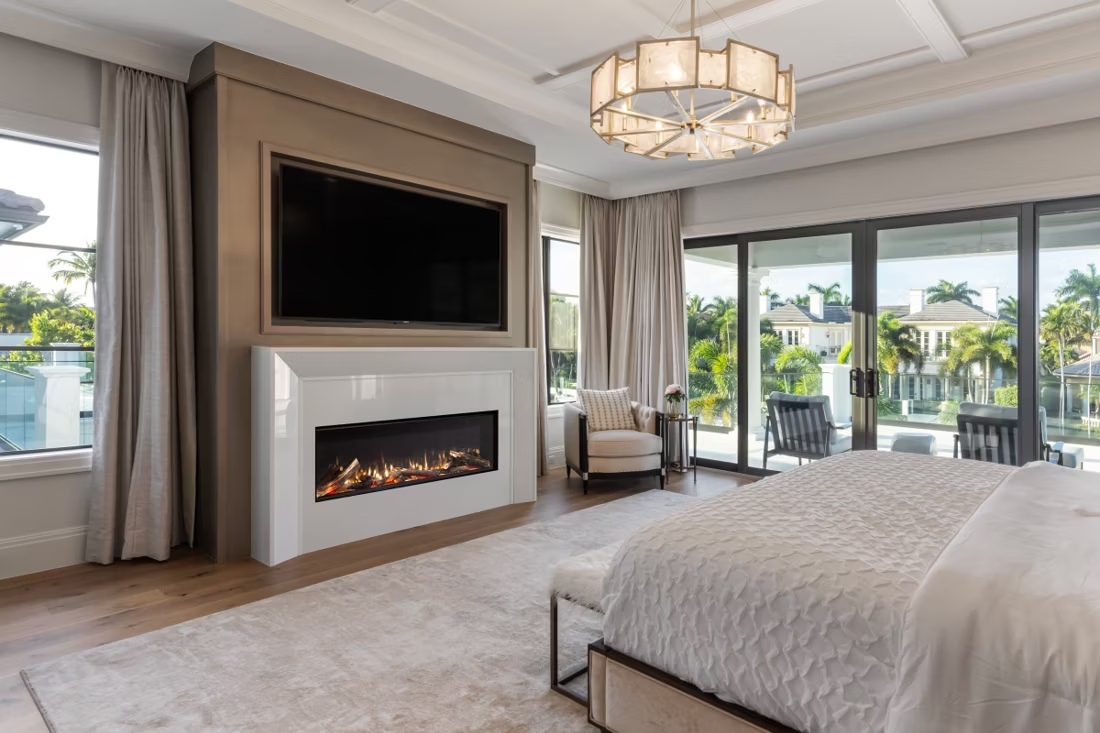
Yes—with an asterisk. Fireplaces are hot and TVs don't like heat. Either put a mantel between them to deflect rising warmth, or choose a fireplace with heat-management technology that creates a cool zone on the wall above—the wall stays around 125 degrees, barely warm, while the room still gets full heat. If you like clean lines and don't want a mantel, heat management is the answer.
Do electric fireplaces actually produce heat?
Yes—most put out around 4,800–5,000 BTUs from a standard outlet, which comfortably warms a bedroom, office, or den as a comfort-zone heater. What they won't do is carry a whole house the way wood, gas, or pellet can. Think of electric as ambiance-first with honest supplemental heat: flames on with no heat in July, flames plus warmth in January.
Can I install a fireplace myself?
If you're putting a fire in your house on purpose, it's best to work with an expert. Unless you're genuinely experienced in framing, gas line, vent pipe, and the national code on clearances to combustibles, have a professional do it—and ideally the same company that sells you the fireplace, so warranty, service, and liability all live under one roof.
Can a fireplace actually lower my heating bill?
Yes—by creating a comfort zone. A furnace heats every square foot of the house just to warm the one room you're in; a gas fireplace on low burns roughly a sixth of the gas a typical furnace does. Set the furnace around 55–60 degrees as a baseline, then heat the rooms your family actually uses. Families who heat this way commonly save $20–$60 a month.
Nearby Dealers
Hearth shops serving Pascoag and the surrounding area. Every listing shows whether it is a WhyFire partner, a dealer we have verified as authorized for the brands we recommend, or a local business carrying hearth products. No manufacturer pays for placement. How we verify dealers →
Frederickson Farm
Atlas Insulation Co.
Stove King
Robbins Garden Center, Inc.
Architectural Fireplaces Of New England
Hearthside Fireplace & Patio
Electric Service in Pascoag
An electric fireplace's heater draws about 1,500 watts—pennies per hour at local rates.
The Narragansett Electric Co
Pascoag Utility District
Find your electric fireplace in Pascoag.
Tell us a bit about your home and we'll put together a free Project Guide & Parts List for your electric fireplace project—sized for your room, matched to your utility rate, and paired with a trusted local dealer who can install it right.
Find Your Fireplace →