
Real ambiance, zero venting, for Cranston homes.
With a long, roughly six-month heating season and a housing stock full of capes, colonials, and older triple-deckers, Cranston homeowners want zone heat that doesn't require a chimney or a gas line. I'll match you with a trusted local dealer who knows what actually fits your panel and your room.
Every Project Starts From One of These Five Situations
The simplest upgrade for Providence County's older housing stock.
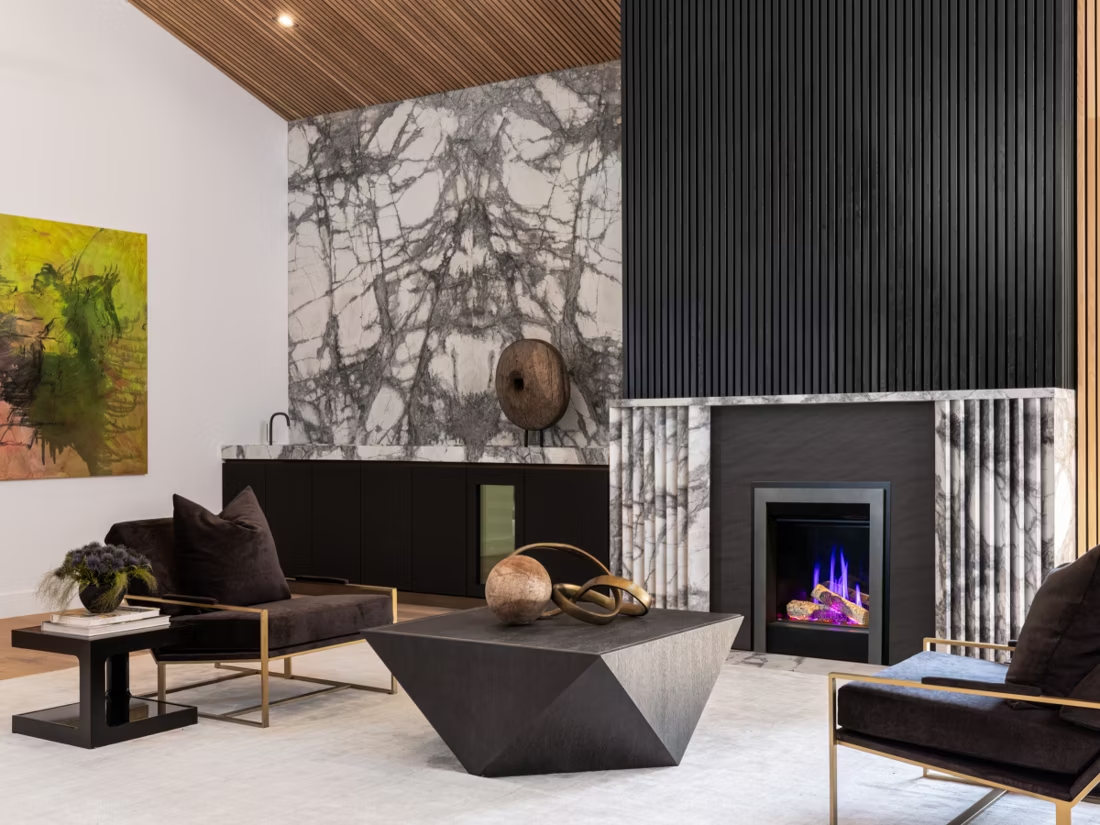
At 192 feet above sea level and a winter low averaging 22°F, Cranston sits in a solidly cold climate zone 5A—not the deep-freeze territory of Duluth or International Falls, but with a long, roughly six-month heating season, homes here still run heat for the better part of six months. Wood and pellet stoves are essentially a non-issue in Cranston's housing stock: dense neighborhoods around Pawtuxet Village, Edgewood, and the Garden Hills area are full of older colonials, capes, and converted triple-deckers where adding a chimney or venting a pellet stove through a tight lot line isn't practical or, in many cases, legal under local setback rules. Electric fireplaces sidestep all of that.
Almost every home here is served by The Narragansett Electric Co, and at $0.2508 per kWh, Rhode Island runs one of the higher residential electric rates in the country—noticeably above the national average. That reality shapes how electric fireplaces get used locally: as targeted zone heat for a finished basement, a converted porch, or a family room addition, layered on top of a gas or oil furnace that still carries the whole-house load, rather than as a primary heat source. What you get in return is a unit that plugs in or hardwires with no chimney, no gas line, and no annual sweep—a real advantage in Cranston's tighter, older lots where venting options are limited anyway.
Three steps. No salesperson until you're ready.
Tell us about your project
Your zip code, your situation, and the fuel you're leaning toward—or let the answers point you to one.
See what's actually available
The brands dealers within 100 miles genuinely carry—real options, never a catalog mirage.
Get your dealer & Project Guide
A trusted local dealer, plus the free Project Guide & Parts List that names every component of the job.
Frequently Asked Questions
How much does an electric fireplace installation cost in Cranston?
A plug-in electric insert or freestanding unit that uses a standard 120-volt outlet can run as little as $500 to $1,200 installed, which covers a lot of the smaller finished-basement and family-room jobs in Cranston's older housing stock. A built-in linear electric fireplace framed into a wall, which usually needs a dedicated 20-amp circuit run from the panel, typically lands between $2,000 and $4,500 depending on the wall work and finish materials. Homes in older sections of Cranston with a 100-amp panel sometimes need an electrician to confirm there's room on the panel before that circuit gets added, which a local dealer will flag up front.
Do I need a permit to install an electric fireplace in Cranston?
If you're plugging a unit into an existing outlet, there's usually nothing to permit. If the installation calls for a new dedicated circuit or any hardwiring—which is common for built-in units—that electrical work needs a permit and inspection through the City of Cranston's Building & Electrical Inspections office, and it has to be pulled by a licensed electrician. Most established local dealers coordinate the electrical permit as part of the install rather than leaving it to the homeowner.
What does an electric fireplace actually cost to run in Cranston?
This is worth doing the math on given Narragansett Electric's rate of $0.2508 per kWh, which is well above the national average. A typical 1,500-watt electric fireplace running on high costs roughly $0.38 an hour, or a little over $3 for an eight-hour evening of use. That's fine for supplemental zone heat in a family room or finished basement, but it's not a cheap way to heat an entire home compared to gas—which is part of why most Cranston households keep gas or oil as their primary system and use an electric unit for targeted warmth and ambiance.
Where does an electric fireplace make the most sense in a Cranston home?
Finished basements are the single most common install we see requests for in Cranston—no chimney access, and an electric unit doesn't add any combustion byproducts to a below-grade space. Converted three-season porches and additions on the capes and colonials common around Cranston's older neighborhoods are the other frequent spot, since running a gas line or masonry chimney to an addition is often more disruptive and expensive than it's worth for occasional-use rooms.
Electric vs. gas fireplace—which makes more sense in Cranston?
Gas gives you more heat output per hour and is generally cheaper to run than electric resistance heat at Narragansett Electric's $0.2508/kWh rate, which is why gas fireplaces and inserts remain the standard choice for homeowners wanting real supplemental heat in a main living space. Electric wins on installation simplicity—no gas line, no venting, no annual service—and on flexibility for rooms like finished basements or condo units where running new gas isn't practical. A lot of Cranston households end up choosing gas for the primary family room and electric for a secondary space like a basement rec room or bedroom.
What size electric fireplace do I need for my Cranston home?
Most electric fireplaces are rated for supplemental heat in the 400-1,000 square foot range, which covers a typical Cranston den, family room, or finished basement rec room comfortably. For an open-concept living and dining area in a larger colonial, you're better off treating the unit as ambiance plus partial heat and leaning on your existing furnace for the rest of the load, rather than expecting one unit to carry a large open floor plan on its own.
Do electric fireplaces need a chimney or venting in Cranston?
No—this is the main reason electric fireplaces work so well in Cranston's older, tighter-lot neighborhoods. There's no flue, no chimney, and no exterior vent termination to worry about, which matters in areas like Pawtuxet Village or around the triple-deckers near Cranston Street where lot lines and shared walls make adding new venting difficult or impossible. It's also why electric is the practical option for condo and multi-family conversions where a shared building simply won't allow a new chimney penetration.
Will my home's electrical panel handle a new electric fireplace?
Plug-in units on a standard outlet usually don't stress anything. But a built-in electric fireplace with a dedicated circuit draws real load, and a fair number of Cranston's older homes—particularly capes and colonials built decades before central air was standard—are still running 100-amp service. An electrician can confirm in a few minutes whether there's room on your panel for a new 20-amp circuit, and if not, a panel upgrade is usually a separate, one-time cost worth pricing out before you commit to a specific unit.
Are there rebates for efficient electric heating equipment in Cranston?
Rhode Island runs statewide energy-efficiency incentive programs through its utility, and it's worth checking current offerings before you buy, since electric fireplaces themselves are typically classified as supplemental heat rather than a whole-home heating upgrade and may not always qualify. What's more consistently available are efficiency rebates tied to heat pumps and weatherization, which some Cranston homeowners pursue alongside an electric fireplace purchase to offset the higher per-kWh cost of running electric heat in Rhode Island. A local dealer can tell you what's currently funded.
Can I put a TV above my fireplace?
Yes—with an asterisk. Fireplaces are hot and TVs don't like heat. Either put a mantel between them to deflect rising warmth, or choose a fireplace with heat-management technology that creates a cool zone on the wall above—the wall stays around 125 degrees, barely warm, while the room still gets full heat. If you like clean lines and don't want a mantel, heat management is the answer.
Do electric fireplaces actually produce heat?
Yes—most put out around 4,800–5,000 BTUs from a standard outlet, which comfortably warms a bedroom, office, or den as a comfort-zone heater. What they won't do is carry a whole house the way wood, gas, or pellet can. Think of electric as ambiance-first with honest supplemental heat: flames on with no heat in July, flames plus warmth in January.
Can a fireplace actually lower my heating bill?
Yes—by creating a comfort zone. A furnace heats every square foot of the house just to warm the one room you're in; a gas fireplace on low burns roughly a sixth of the gas a typical furnace does. Set the furnace around 55–60 degrees as a baseline, then heat the rooms your family actually uses. Families who heat this way commonly save $20–$60 a month.
Can I install a fireplace myself?
If you're putting a fire in your house on purpose, it's best to work with an expert. Unless you're genuinely experienced in framing, gas line, vent pipe, and the national code on clearances to combustibles, have a professional do it—and ideally the same company that sells you the fireplace, so warranty, service, and liability all live under one roof.
Nearby Dealers
Hearth shops serving Cranston and the surrounding area. Every listing shows whether it is a WhyFire partner, a dealer we have verified as authorized for the brands we recommend, or a local business carrying hearth products. No manufacturer pays for placement. How we verify dealers →
Atlas Insulation Co.
Frederickson Farm
Stove King
Electric Service in Cranston
An electric fireplace's heater draws about 1,500 watts—pennies per hour at local rates.
The Narragansett Electric Co
Get your free Project Guide & Parts List for an electric fireplace in Cranston.
Tell me about your room, your panel, and what you're trying to heat, and I'll match you with a trusted local Cranston-area dealer and send a free Project Guide & Parts List with the right unit and circuit specs for your home.
Find Your Fireplace →