
Keep Your Family Warm and Safe—No Matter What
From Tunkhannock to Meshoppen and Nicholson, Wyoming County homes have burned local oak, hickory, maple, and cherry for generations. Find the right stove or insert for your house, and get matched with a trusted local dealer.
Every Project Starts From One of These Five Situations
Hardwood country runs on wood heat.
Wyoming County sits in Pennsylvania's Endless Mountains, a rural stretch of climate zone 5A with roughly 5,740 heating degree days a year and winter lows that average around 20°F—colder than Buffalo, NY sees on an average night, though not as brutal as the Northern Plains. Winters here run long, from late fall into April, and the county's small towns and scattered farmsteads have leaned on wood heat as a practical, self-sufficient answer to that cold for as long as anyone can remember.
The county's forests are heavy with oak, hickory, maple, and cherry—dense hardwoods that split well, season predictably, and put out serious BTUs once dry. There's no non-attainment designation or winter inversion problem here, so unlike parts of the West or industrial Northeast, wood burning in Wyoming County isn't subject to curtailment days or smoke advisories. Homeowners across Tunkhannock, Meshoppen, Nicholson, and Laceyville still permit new installations through their local building authority—many boroughs handle this themselves, while unincorporated townships route through the county codes and planning office—but there's no added air-quality hurdle layered on top of the standard building code review.
Three steps. No salesperson until you're ready.
Tell us about your project
Your zip code, your situation, and the fuel you're leaning toward—or let the answers point you to one.
See what's actually available
The brands dealers within 100 miles genuinely carry—real options, never a catalog mirage.
Get your dealer & Project Guide
A trusted local dealer, plus the free Project Guide & Parts List that names every component of the job.
Frequently Asked Questions
How much does a wood stove installation cost in Wyoming County?
Most wood stove installations in this part of Pennsylvania run in the $3,500 to $8,000 range, with the final number driven by the stove model, whether an existing masonry chimney can be reused or a new Class A chimney needs to be run, and whether a hearth pad has to be added or upgraded to meet clearance requirements. Homes with an existing, sound chimney are usually on the lower end; new construction or older farmhouses without a chimney already in place—common on the rural roads outside Tunkhannock and Meshoppen—tend to land toward the higher end once venting and framing are factored in. A local dealer can give you a firm number after an in-home look.
What size wood stove do I need for my home?
With winter lows averaging around 20°F and roughly 5,740 heating degree days, Wyoming County sits in a solidly cold-climate zone without being extreme—sizing matters, but you're not necessarily reaching for the largest stove on the showroom floor. Small stoves (rated up to around 1,000 sq ft) suit a cabin or single large room; medium stoves (1,000–2,000 sq ft) cover most main living areas in the county's older farmhouses and ranch homes; larger stoves (2,000+ sq ft) can carry a whole well-insulated house as primary heat. Older, less-insulated homes—common throughout the county's townships—often need to size up a step from what square footage alone would suggest. A local dealer will size your space correctly during a free in-home consultation; an oversized stove smolders and creates creosote buildup, while an undersized one won't keep up on the coldest January nights.
Where can I find certified wood stove installers near me?
Look for installers carrying NFI (National Fireplace Institute) certification or CSIA (Chimney Safety Institute of America) credentials—both signal real training in wood-burning appliance installation, not just general contracting experience. In a county this rural, dealers often travel between Tunkhannock, Meshoppen, Nicholson, and Laceyville, so ask up front whether a travel charge applies for your address. Having the same company handle both the sale and the install simplifies warranty coverage down the road. Skip handyman or general-contractor installs for wood-burning units—improper clearances and venting are the leading cause of chimney fires, and it's not a corner worth cutting in a house that relies on the stove through a real winter.
What's the difference between a wood stove and a wood insert?
A wood stove is a freestanding unit set on a hearth pad, vented through a chimney, and installable almost anywhere clearances allow. A wood insert is built to slide into an existing masonry fireplace, turning a drafty open hearth—common in the county's older farmhouses—into a sealed, high-efficiency heat source. If your Wyoming County home already has a working masonry fireplace, an insert is usually the smarter upgrade since it reuses the chimney you've already got. Homes without an existing fireplace, or new construction, are typically better suited to a freestanding stove.
Do I need a permit to install a wood stove in Wyoming County?
Yes—a building permit is required for a new wood stove installation, and the unit itself needs to meet current EPA emissions standards (2020 NSPS) for new sales. Within incorporated boroughs like Tunkhannock, permits are typically pulled through the borough office; in the county's townships, that review runs through the Wyoming County Codes and Planning office. Most local dealers handle the permit paperwork as part of the installation, so it's rarely something you have to manage yourself. And because Wyoming County has no winter inversion or non-attainment designation, there's no burn-curtailment schedule to work around once the stove is installed—you're only dealing with the one-time permitting step, not ongoing smoke advisories.
What's the best wood stove for Wyoming County's climate?
With winter lows around 20°F rather than deep sub-zero cold, Wyoming County homes generally do well with either catalytic or non-catalytic stoves—the choice comes down more to burn-time preference than raw survival heat. Catalytic models from brands like Blaze King or Woodstock Soapstone hold a low, steady fire for 12+ hours, which suits a house burning overnight through a January cold snap. Non-catalytic stoves from Pacific Energy or Lopi run a bit hotter and simpler to operate, and work well for supplemental heat or smaller spaces. Local oak and hickory—both dense, high-BTU hardwoods common on county wood lots—burn well in either style once properly seasoned. A dealer familiar with the county's older housing stock can match a specific model to your square footage and insulation.
How often should my chimney be inspected and cleaned?
The CSIA recommends an annual inspection for any wood-burning appliance, and that holds true in Wyoming County regardless of how the stove is used. Plan on a full sweep and Level 1 inspection once a year, ideally in late summer or early fall before the first cold snap. Households burning wood as a primary heat source—not uncommon on the county's rural roads—sometimes need a mid-winter cleaning if creosote builds up faster than expected. Skipping this step is the single biggest driver of chimney fires, and it matters even more out here given how far emergency response can be from some of the county's more remote addresses.
Where can I get firewood in Wyoming County?
Firewood is easy to come by locally—oak, hickory, maple, and cherry are all common on county wood lots, and several local sawmills and seasonal sellers deliver by the cord, typically running somewhere in the $200 to $300 range depending on species and how well-seasoned the wood is. For self-cutting, State Game Lands parcels and Pennsylvania DCNR Bureau of Forestry land nearby offer firewood cutting permits for a modest fee—worth checking with the regional forestry district office if you're set up to cut and split your own. Buying a cord or two ahead of the season and letting it season through summer remains the standard approach for most Wyoming County households.
Wood stove vs. pellet stove—which is right for me?
Wood stoves burn cordwood, work without electricity—a real advantage during winter storm outages on the county's rural power lines—and pair naturally with locally cut oak and hickory. Pellet stoves burn compressed wood pellets from regional suppliers like Energex, Hamer Pellet Fuel, or Greene Team Pellet Fuel, run cleaner with less ash, and are simpler to operate day-to-day, but the auger and blower need electricity, so they go dark in an outage unless you add battery backup. For Wyoming County homes on rural feeders where power can stay out for a day or more after an ice storm, wood often wins as the more dependable backup. For in-town homes prioritizing convenience with steady grid power, pellet is a solid alternative. Local dealers carry both and can talk through which fits your situation.
Why is my open fireplace making my house colder?
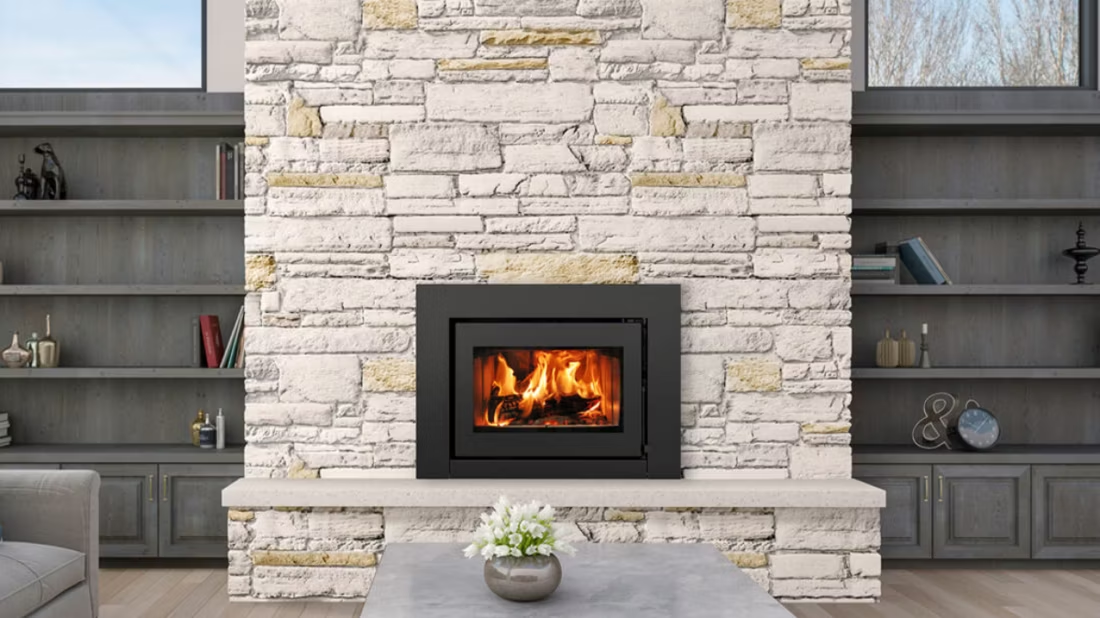
Open fireplaces suck—literally. As the fire burns, it consumes air your furnace already paid to heat and pulls it out through the chimney, so the house is actually colder after the fire goes out than before you lit it. An insert fixes this: it seals the chimney, puts fixed glass across the front, and turns that hole in your house into a real heat source.
Why is a fireplace insert so efficient?
An insert does two things: it seals the chimney completely, so you stop losing air you already paid to heat, and it radiates warmth into the room through the firebox and glass. Most add a heat-exchange fan that pulls cool room air underneath, wraps it around the hot firebox, and pushes it back out warm. Your home is more efficient before you've even lit the first fire.
What is an in-home preview and do I need one?
It's a visit where a hearth professional measures your space, confirms the model you picked actually works in your home, and walks the specs—framing, gas line, venting, finish work—before anything is ordered. Some details you just can't know until you see the house. Never make a down payment without one; it's the single most-skipped step that burns buyers.
How much should I budget for a fireplace?
For an average home—covering the fireplace, the vent pipe, and basic installation—a budget between $3,900 and $5,500 gives you a lot of options across wood, gas, and pellet. By the time you add finish work, gas line, and electrical, the average complete installation lands between $5,000 and $12,000 all-in. In a remodel or new build, a good rule is to put about 2.5% of the total project cost toward the fireplace.
Stove and Fireplace Dealers in Wyoming County
Listings include WhyFire partner dealers, dealers we have verified as authorized for the brands we recommend, and established local businesses that carry hearth products. Every listing shows which one it is. The ones marked Preferred run on WhyFire's software, so they can show you real pricing and book your appointment right here. No manufacturer pays for placement. How we verify dealers →
TAll Pines Farm Store & Fireplaces
Glowing Embers
Find your wood stove in Wyoming County.
Tell us about your home and we'll match you with a trusted local dealer and put together a free Project Guide & Parts List—the right wood stove or insert for your house, the exact parts including the vent kit, and who to call to get it installed.
Find Your Fireplace →