
Add warmth to any room in Wyoming County—no chimney required.
Zone heat for farmhouses, camps, and finished spaces across the Endless Mountains—from Tunkhannock to Meshoppen. Find the right electric unit and connect with a trusted local dealer.
Every Project Starts From One of These Five Situations
Simple, flexible heat for the Endless Mountains region.
Wyoming County sits in the rolling hill country of northeastern Pennsylvania's Endless Mountains, a climate zone 5A area that has a long, cold heating season averaging around 20°F in winter, comparable to areas like northern New England. Homes here range from 19th-century farmhouses along the Susquehanna and Tunkhannock Creek valleys to camps and cabins scattered through the county's wooded ridges—many without a chimney chase or the ductwork to add central zone heating easily.
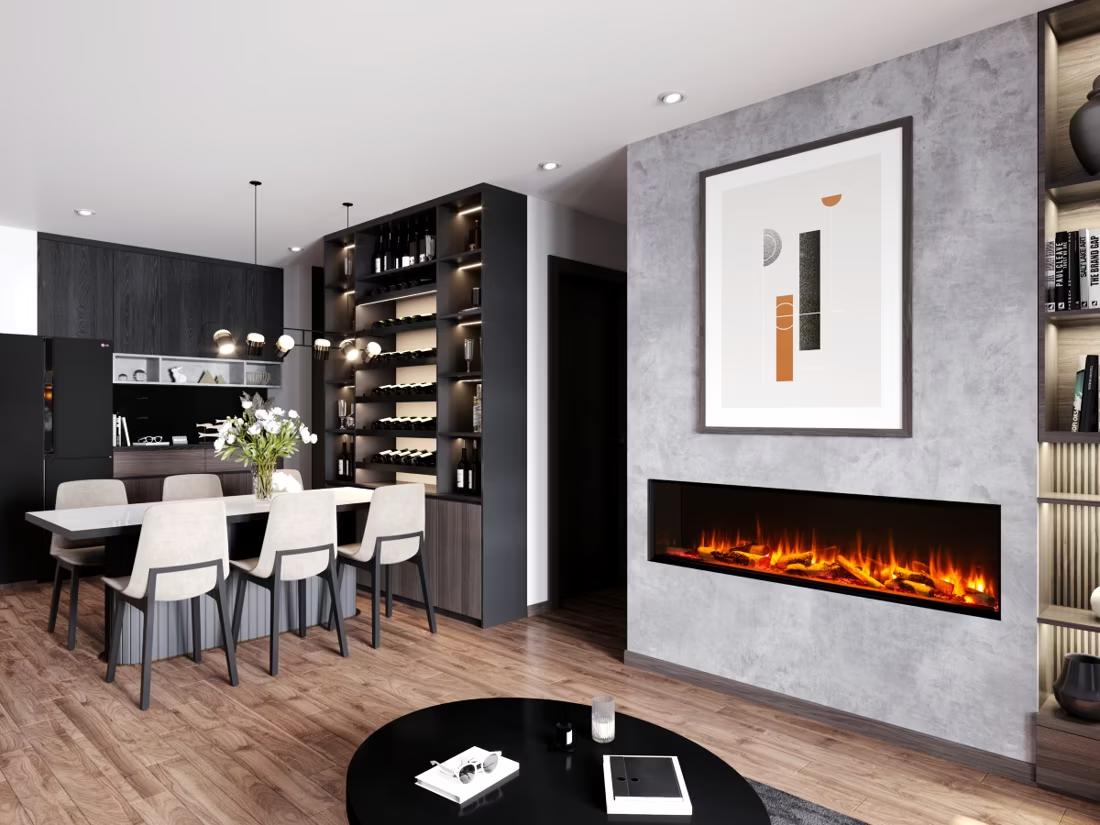
That's where electric fireplaces, inserts, and stoves fill a real gap. They plug into an existing outlet (or a dedicated 20-amp circuit for larger units), need no venting, gas line, or masonry work, and can be installed in an afternoon by a local electrician or hearth dealer. For a rental property in Tunkhannock, a finished basement, a camp along the lake, or a bedroom that runs cold while the rest of the house is warm, an electric unit adds real, thermostatically controlled heat without touching the chimney. Most Wyoming County homes are served by PPL Electric Utilities, and running one of these units as supplemental heat is a straightforward way to take pressure off an oil or propane furnace during the coldest stretches of the season.
Three steps. No salesperson until you're ready.
Tell us about your project
Your zip code, your situation, and the fuel you're leaning toward—or let the answers point you to one.
See what's actually available
The brands dealers within 100 miles genuinely carry—real options, never a catalog mirage.
Get your dealer & Project Guide
A trusted local dealer, plus the free Project Guide & Parts List that names every component of the job.
Frequently Asked Questions
How much does an electric fireplace or insert installation cost in Wyoming County?
Most electric fireplace and insert installations in Wyoming County run between $300 and $1,200. A plug-in unit that drops into an existing masonry fireplace opening or mounts on a wall is on the lower end—often a same-day job. Built-in units requiring a dedicated 20-amp circuit, new wall framing, or a mantel surround push toward the higher end once an electrician is involved. Because there's no venting or gas line to route, electric installs are consistently the least expensive hearth project in the county, and local dealers can usually quote a firm price after seeing photos of the room.
What size electric fireplace do I need for my room?
Electric fireplaces are rated in BTUs (typically 4,000–5,200 BTU for standard units) rather than sized by square footage the way a wood stove is. As a rule of thumb, a standard-output unit comfortably supplements heat for a room up to 400 square feet in a Wyoming County home with average insulation; older farmhouses with drafty windows or high ceilings may need a higher-output model or a second unit in an adjoining room. Electric units are built as supplemental zone heat, not a whole-home solution—a local dealer can walk through your specific room dimensions and insulation before you buy.
Do I need a permit to install an electric fireplace in Wyoming County?
In most cases, no. Because electric units don't require venting, a chimney, or a gas line, they fall outside the building permit process that applies to wood and gas installations. The one exception is when a unit needs a new dedicated circuit—that electrical work should be pulled through your local electrical inspector or a licensed electrician working under Pennsylvania's Uniform Construction Code, and most reputable installers handle that step for you. A simple plug-in insert on an existing outlet typically needs no permit at all.
Will my electric fireplace work during a power outage?
No—and this is worth being upfront about. Electric fireplaces require grid power to run their heating element, fan, and flame effect, so during an ice storm or line outage (which happens periodically in the ridge-and-valley terrain around Wyoming County when PPL Electric Utilities lines go down), the unit simply won't function. If backup heat during outages matters to you, an electric fireplace should be a secondary or ambiance option, paired with a battery or generator setup, or backed up by a wood or propane appliance elsewhere in the home for true emergency heat.
What's the difference between an electric fireplace, insert, and stove?
An electric fireplace is typically a built-in or wall-mounted unit designed to look like a framed hearth, often used in a new remodel or as a focal point in a living room. An electric insert is sized to slide into an existing masonry fireplace opening, instantly converting an unused wood-burning fireplace into usable heat without any chimney work. An electric stove is a freestanding cabinet-style unit that mimics a wood or pellet stove's look and can sit anywhere near an outlet. For Wyoming County homes with an old, rarely-used masonry fireplace, an insert is usually the simplest upgrade; for rooms without any existing fireplace, a stove or built-in unit works just as well.
Is electric heat a good fit for Wyoming County's climate?
As supplemental heat, yes—with realistic expectations. With a long, cold heating season and winter lows averaging 20°F, an electric unit alone won't carry a Wyoming County home through the coldest months, but it's genuinely useful for taking the edge off a cold bedroom, heating a finished basement or camp without running a furnace zone that's otherwise shut down, or adding ambiance and modest heat to a farmhouse room with drafty single-pane windows. Many county homeowners pair an electric unit with their existing oil, propane, or wood setup rather than replacing it outright.
How much does it cost to run an electric fireplace day to day?
A standard 1,500-watt electric fireplace running at full heat costs roughly 20–30 cents per hour on typical PPL Electric Utilities residential rates, or a few dollars for an evening of use. Most owners run the heater intermittently—a few hours in the evening in a single room—rather than continuously, which keeps monthly costs modest compared to running a whole-house furnace longer to compensate for a cold room. Units with adjustable thermostats and eco-mode settings can trim that further by cycling the heating element off once the room reaches target temperature.
Are there any rebates for installing an electric fireplace in Wyoming County?
Electric fireplaces generally aren't eligible for the efficiency rebates that apply to heat pumps or high-efficiency furnaces, since they're classified as supplemental zone heaters rather than a primary heating system upgrade. It's still worth checking current PPL Electric Utilities program offerings and any Pennsylvania weatherization assistance programs, since incentives shift year to year—but most Wyoming County homeowners budget for an electric fireplace as a straightforward out-of-pocket purchase rather than a rebate-eligible project.
Electric vs. wood or pellet—which makes more sense for my home?
Wood, split from the oak, hickory, maple, and cherry that's abundant on Wyoming County's wooded ridges, offers real off-grid heat during outages and lower fuel costs if you cut your own. Pellet stoves running regional brands like Energex, Hamer Pellet Fuel, or Greene Team Pellet Fuel offer cleaner, more automated burning but still need electricity for the auger and blower. Electric fireplaces skip fuel handling and venting entirely, install in an afternoon, and are the simplest option for supplemental heat or ambiance—but they offer zero backup value in an outage and won't meaningfully offset a Wyoming County winter heating bill on their own. Many homeowners in the county end up with a primary wood or propane setup and an electric unit in a secondary room where running a chimney or gas line isn't practical.
Can I put a TV above my fireplace?
Yes—with an asterisk. Fireplaces are hot and TVs don't like heat. Either put a mantel between them to deflect rising warmth, or choose a fireplace with heat-management technology that creates a cool zone on the wall above—the wall stays around 125 degrees, barely warm, while the room still gets full heat. If you like clean lines and don't want a mantel, heat management is the answer.
Does an electric fireplace need a vent or chimney?
No—that's its superpower. An electric fireplace needs a wall and an outlet, period. No vent pipe, no gas line, no clearances to design around, which is why it works in bedrooms, offices, apartments, and walls where venting a gas or wood unit would be impractical or impossible. Installation is typically the simplest and least expensive of any fireplace type.
Does a fireplace add value to my home?
On average, a fireplace adds back to the home about the same amount you spent installing it. Add the monthly savings from heating the rooms you actually use instead of the whole house—often hundreds of dollars a year—and the value case is strong before you even count what a fire does for how your family uses the room.
How much should I budget for a fireplace?
For an average home—covering the fireplace, the vent pipe, and basic installation—a budget between $3,900 and $5,500 gives you a lot of options across wood, gas, and pellet. By the time you add finish work, gas line, and electrical, the average complete installation lands between $5,000 and $12,000 all-in. In a remodel or new build, a good rule is to put about 2.5% of the total project cost toward the fireplace.
Stove and Fireplace Dealers in Wyoming County
Listings include WhyFire partner dealers, dealers we have verified as authorized for the brands we recommend, and established local businesses that carry hearth products. Every listing shows which one it is. The ones marked Preferred run on WhyFire's software, so they can show you real pricing and book your appointment right here. No manufacturer pays for placement. How we verify dealers →
TAll Pines Farm Store & Fireplaces
Glowing Embers
Find your electric fireplace in Wyoming County.
Tell us a bit about your room and we'll put together a Project Guide & Parts List for your electric fireplace, insert, or stove—and match you with a trusted local dealer serving Wyoming County.
Find Your Fireplace →