
Steady gas heat for Wyoming County's long, cold winters.
From Tunkhannock to Meshoppen and the farm townships across the Endless Mountains, propane keeps most homes warm through a heating season that racks up nearly 5,740 degree days. Find the right unit and get matched with a trusted local dealer.
Every Project Starts From One of These Five Situations
Dependable heat in a county built on propane.
Wyoming County sits in Pennsylvania's Endless Mountains region, where winter lows average around 20°F and the heating season is long enough that annual heating demand is comparable to parts of northern New England. Small boroughs like Tunkhannock and Meshoppen have some natural gas infrastructure, but most rural households and farmsteads scattered across the county rely on propane rather than piped gas. There's an irony to that: this county sits directly over the Marcellus Shale gas play, yet distribution lines haven't kept pace with drilling activity, so bottled and bulk propane remains the practical fuel for the majority of homes here.
That reality shapes what a gas fireplace project actually looks like in Wyoming County. Most installs run on propane, sized around either an existing tank or a new tank set by a local supplier, and chosen for their ability to keep producing heat during the ice storms and outages that come with a 5A climate zone. A direct-vent gas insert or fireplace gives one of the county's oak, hickory, maple, and cherry country farmhouses instant, thermostat-controlled warmth without the nightly wood-hauling and chimney tending that comes with a standard fireplace.
Three steps. No salesperson until you're ready.
Tell us about your project
Your zip code, your situation, and the fuel you're leaning toward—or let the answers point you to one.
See what's actually available
The brands dealers within 100 miles genuinely carry—real options, never a catalog mirage.
Get your dealer & Project Guide
A trusted local dealer, plus the free Project Guide & Parts List that names every component of the job.
Frequently Asked Questions
How much does a gas fireplace installation cost in Wyoming County?
Most gas fireplace or insert installations in this area run in the $4,000 to $9,500 range, depending on the unit, the venting path, and whether propane tank or gas line work is involved. Installing a direct-vent propane insert into an existing masonry fireplace, using a tank you already have, sits on the lower end. New construction or a fresh built-in unit that requires framing, venting, and a new propane tank set tends to land higher. Because so much of Wyoming County runs on propane rather than piped gas, factor in tank rental or purchase costs from a local supplier as a separate line item from the fireplace install itself.
Can I convert my existing wood fireplace to gas?
Yes, and it is a common project for the older farmhouses and A-frame homes scattered through Wyoming County's townships. A propane gas insert is fitted into the existing masonry opening, using a stainless liner run through your current chimney as the vent path. Typical cost is $4,000 to $8,000 depending on the insert model and whether new gas line or tank work is needed. The conversion keeps the look of the original hearth while eliminating firewood handling—appealing if you are managing a rural property alone through a five-month heating season.
Do I need natural gas, or is propane the standard here?
Propane is the standard fuel for most gas fireplace installs in Wyoming County. Natural gas distribution reaches some homes in and around Tunkhannock and a handful of the more built-up boroughs, but coverage is limited outside those pockets—despite the county sitting on top of the Marcellus Shale gas fields. Most fireplace models can be configured for either fuel; your installer sets the correct orifice and regulator. If you are outside a natural gas service area, plan on either an existing propane tank or a new tank installation through a regional propane supplier before the fireplace goes in.
Will my gas fireplace still work during a power outage?
Most modern gas fireplaces are built to keep running when the power goes out, which matters in a county where ice storms regularly knock out lines for days at a time. Units with IPI (intermittent pilot ignition) include a battery backup that kicks in automatically, so the fireplace still lights on demand off stored batteries. Valor fireplaces take a different route: their pilot assembly generates its own electricity through the thermocouple, so there are no batteries to remember at all. For rural Wyoming County homes where a downed line can mean a long wait for restoration, that distinction is worth asking a local dealer about directly.
What's the difference between a gas fireplace, gas insert, and gas stove?
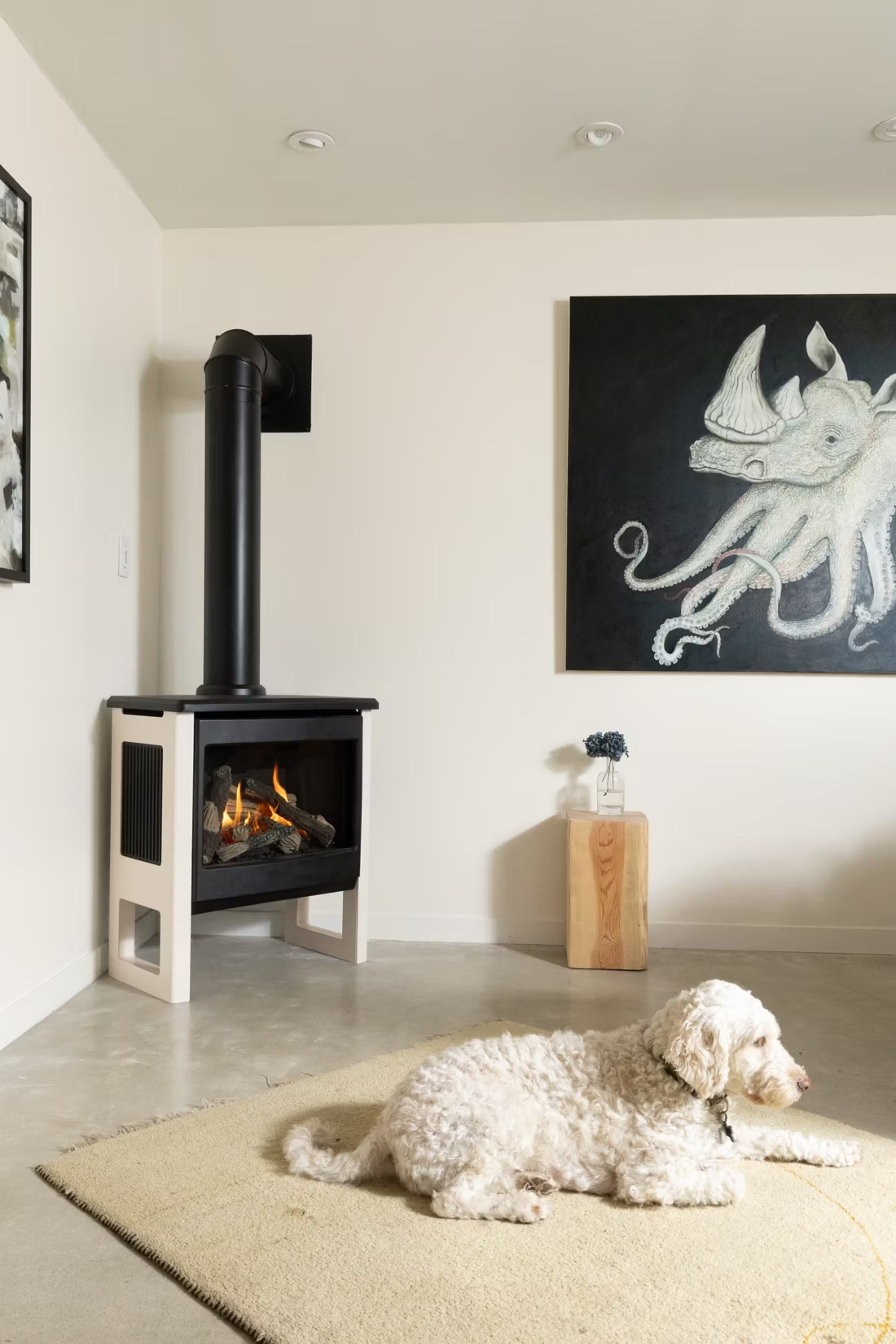
A gas fireplace is a fully built-in unit set into a wall or framed enclosure, typically used in new construction or a full remodel. A gas insert slides into an existing masonry fireplace opening, converting an old wood-burning hearth into a sealed, efficient heat source using the existing chimney as the vent. A gas stove is a freestanding cabinet-style unit that sits on the floor, similar in footprint to a wood stove but running on propane or natural gas. For the many Wyoming County homes with an existing masonry fireplace, an insert is usually the most straightforward and cost-effective upgrade.
Do I need a permit to install a gas fireplace in Wyoming County?
Yes. Pennsylvania's Uniform Construction Code (UCC) requires a building permit and gas-line inspection for new fireplace installations, and any propane or gas line work must be handled by a licensed gas-fitter. Wyoming County does not run a single countywide building department—enforcement is handled at the township or borough level, so your permit will go through your local municipality's code enforcement officer. Most established local hearth dealers are familiar with which office covers which township and will coordinate the permit and inspection as part of the install.
What's the difference between vented and vent-free gas fireplaces?
Vented gas fireplaces—direct-vent or B-vent—pull combustion air from outside and exhaust the combustion byproducts back outside through sealed venting. Vent-free (ventless) units burn fuel directly into the living space without exterior venting, which is more efficient on paper but releases some water vapor and trace combustion gases into the room. Vent-free units are legal in Pennsylvania but come with strict room-sizing and oxygen-depletion-sensor requirements. For Wyoming County's older, often less air-sealed farmhouses, direct-vent units are the more commonly installed and recommended option—they deliver strong heat output without any indoor air quality tradeoffs.
How often should my gas fireplace be serviced?
Plan on an annual inspection for any gas-burning fireplace or insert. A technician checks the burner, pilot assembly, venting, and gas connections, and cleans the glass and firebox interior. This is a much smaller job than wood-stove chimney sweeping but just as important for safe operation, especially on propane systems where tank and line connections should be checked along with the appliance itself. Local hearth service providers and propane suppliers in the Tunkhannock area typically handle this as a single annual visit.
Gas vs. wood—which makes more sense for a Wyoming County home?
Wood offers real independence from utility service and lower fuel cost if you have access to the oak, hickory, maple, and cherry that grow throughout the county's woodlots—a genuine advantage during multi-day power outages. Gas offers instant, thermostat-controlled heat with none of the splitting, stacking, or ash cleanup, and propane-fueled units with battery-backup or self-powering ignition can also run through outages. Many households here end up with both: a propane insert or fireplace for daily comfort in the main living space, and a wood stove or a pellet appliance running Energex, Hamer, or Greene Team pellets as backup or supplemental heat elsewhere in the house.
Is my gas fireplace wasting gas?
If it was installed more than 15 years ago, probably. Older gas fireplaces keep a standing pilot light burning all the time, and that little flame can cost a couple hundred dollars a year. Newer models use pilot-on-demand ignition—the pilot lights only when you use the fireplace and goes out when you turn it off.
What's the difference between an insert and a zero-clearance fireplace?
An insert is a fireplace that slides into a pre-existing wood-burning fireplace—if you don't have one, there's nothing to insert it into. A zero-clearance fireplace is built into a framed wall, which makes it the answer for remodels and new construction. Simple test: existing masonry fireplace means insert; blank or framed wall means zero-clearance.
Can a fireplace actually lower my heating bill?
Yes—by creating a comfort zone. A furnace heats every square foot of the house just to warm the one room you're in; a gas fireplace on low burns roughly a sixth of the gas a typical furnace does. Set the furnace around 55–60 degrees as a baseline, then heat the rooms your family actually uses. Families who heat this way commonly save $20–$60 a month.
Can I install a fireplace myself?
If you're putting a fire in your house on purpose, it's best to work with an expert. Unless you're genuinely experienced in framing, gas line, vent pipe, and the national code on clearances to combustibles, have a professional do it—and ideally the same company that sells you the fireplace, so warranty, service, and liability all live under one roof.
Stove and Fireplace Dealers in Wyoming County
Listings include WhyFire partner dealers, dealers we have verified as authorized for the brands we recommend, and established local businesses that carry hearth products. Every listing shows which one it is. The ones marked Preferred run on WhyFire's software, so they can show you real pricing and book your appointment right here. No manufacturer pays for placement. How we verify dealers →
TAll Pines Farm Store & Fireplaces
Glowing Embers
Get matched with a Wyoming County gas dealer.
Tell us about your home and heating goals, and we'll match you with a trusted local dealer plus a free Project Guide & Parts List—the exact parts, vent kit, and recommended installer for your Wyoming County gas fireplace project.
Find Your Fireplace →