
Keep Your Family Warm and Safe—No Matter What
Most homes in this small Lehigh Valley borough heat with gas or electric, but for the right property, a wood stove or insert can still make sense—figuring out if yours is one of them starts with a local pro.
Every Project Starts From One of These Five Situations
A borough of tight lots and few wood-burning homes.
Macungie is a compact, walkable borough of about 3,200 people tucked into the Lehigh Valley, with tight in-town lots, historic twins and rowhomes, and none of the national forest or state game lands acreage that makes wood heat a given in more rural parts of Pennsylvania. Winters here are moderate by Northeast standards—averaging 20°F on the coldest nights with a moderate overall heating season, milder than places like Burlington, VT or Duluth, MN—which means most Macungie households rely on gas service or electric heat from PPL Electric rather than cordwood for day-to-day comfort.
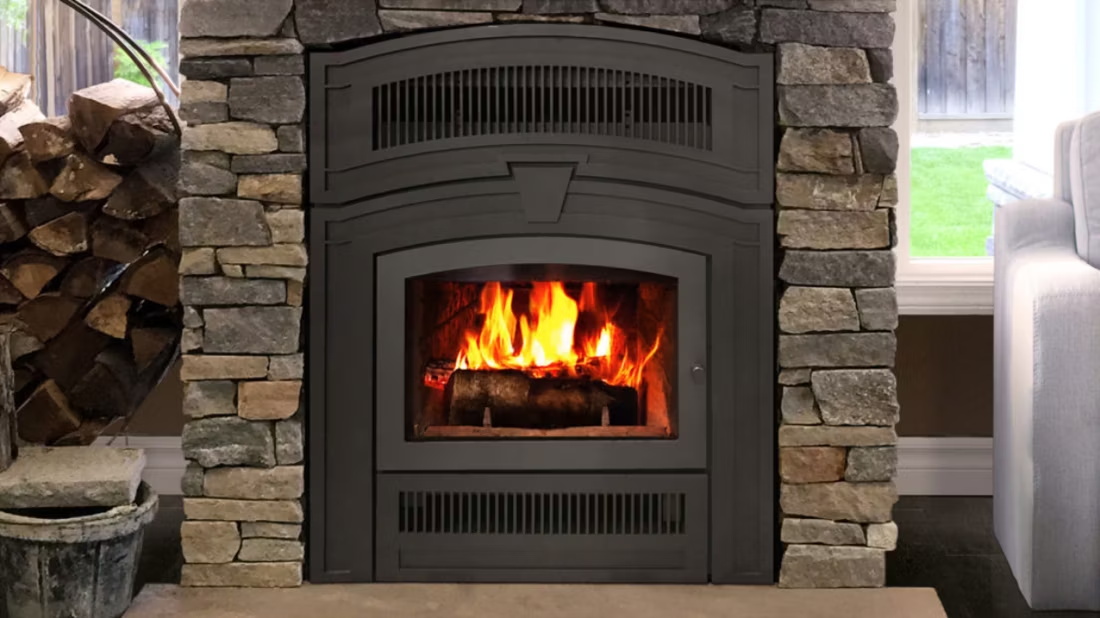
That said, wood heat hasn't disappeared here. A handful of homeowners, especially those on larger lots toward Lower Macungie Township or Upper Milford, install a wood stove or insert for backup heat during power outages or the ambiance of a real fire. Local hardwoods—oak, hickory, maple, and cherry—are the common species, typically sourced from tree services and firewood dealers rather than public-land cutting permits, since there's no nearby national forest issuing permits the way there is out West. If that's you, the project still needs to be done right: correctly sized venting, EPA-certified equipment, and a permit through the borough.
Three steps. No salesperson until you're ready.
Tell us about your project
Your zip code, your situation, and the fuel you're leaning toward—or let the answers point you to one.
See what's actually available
The brands dealers within 100 miles genuinely carry—real options, never a catalog mirage.
Get your dealer & Project Guide
A trusted local dealer, plus the free Project Guide & Parts List that names every component of the job.
Frequently Asked Questions
How much does a wood stove installation cost in Macungie?
Wood stove installs are less common here than in rural parts of Pennsylvania, so pricing is driven more by the individual home than by a deep local market. Expect somewhere in the $4,000 to $8,500 range for a stove or insert, hearth pad, and Class A chimney or liner—the low end applies if you already have a masonry fireplace to insert into, the high end if a home built for gas or oil heat needs a full new chimney chase run through the roof. A local hearth dealer serving the Lehigh Valley will give you a firm number after seeing the house.
What size wood stove do I need for a Macungie home?
Most homes in Macungie's borough core are twins or rowhomes in the 1,200 to 2,000 square foot range, which typically call for a small to medium stove rated for 1,000 to 1,800 square feet—especially since you're usually supplementing existing gas or electric heat rather than replacing it. Larger properties toward Lower Macungie or Upper Milford Townships may want a medium to large unit if the stove is meant to carry more of the heating load. A local dealer can size it properly based on your insulation and layout rather than square footage alone.
Where do I find a certified wood stove installer near Macungie?
Because wood heat is a smaller niche here than gas or electric, you may need to look slightly outside the borough—toward Allentown, Emmaus, or the broader Lehigh Valley—to find a hearth dealer who installs wood stoves regularly. Look for NFI (National Fireplace Institute) certification or CSIA (Chimney Safety Institute of America) credentials; both indicate real training in venting and clearance requirements, which matter more in a rare install than a common one, since there's less local trial-and-error to fall back on.
Wood stove or wood insert—which fits my Macungie home?
It depends on your house's age. Many of Macungie's older twins and rowhomes near Main Street were built with a masonry fireplace, and for those, a wood insert is usually the simpler and more efficient path—it uses the chimney you already have. Newer construction in Lower Macungie Township, and most homes built in recent decades within the borough, were built for gas or oil heat with no masonry chimney at all, which means a freestanding wood stove with new Class A pipe is the only real option.
Do I need a permit to install a wood stove in Macungie?
Yes. Macungie Borough enforces the Pennsylvania Uniform Construction Code (UCC), which requires a building permit for any new wood-burning appliance, along with inspection of clearances and venting. The stove itself needs to meet current EPA 2020 NSPS emissions standards—nearly every stove sold new today qualifies, but it rules out installing an older used unit. A hearth dealer who regularly pulls permits in Lehigh County will typically handle this paperwork as part of the installation.
What's the best wood stove for Macungie's climate?
Macungie's winters are real but moderate—20°F average lows and a moderate overall heating season, closer to a mild Mid-Atlantic winter than the extended sub-zero stretches you'd see in Duluth, MN or Burlington, VT. That means most homeowners here are better served by a mid-size non-catalytic stove from a brand like Pacific Energy or Jøtul, sized for supplemental or backup heat rather than a 20-hour catalytic burner built for all-night, single-digit cold. If you're planning to lean on the stove heavily during outages, a local dealer can talk through catalytic options too.
How often should a wood stove chimney be inspected in Macungie?
The CSIA recommends an annual inspection for any wood-burning appliance, and that holds regardless of how often the stove runs. Since Macungie doesn't have many chimney sweeps working wood stoves day in and day out the way a heavily wood-reliant town would, it's worth booking early in the fall—before burning season backs up local schedules in Allentown and Emmaus.
Where can I get firewood in or near Macungie?
There's no national forest or state game land near Macungie issuing cutting permits, so firewood here comes from local tree services, landscapers, and dedicated firewood dealers rather than public land. Oak, hickory, maple, and cherry are the common Lehigh Valley hardwoods, and a seasoned cord typically runs $250 to $300 delivered. Buying a year ahead and stacking it to dry is worth the effort—Lehigh Valley humidity means green wood takes a full season or more to season properly.
Should I consider a pellet stove instead of wood in Macungie?
Pellet stoves are just as uncommon here as wood stoves—most Macungie homes already have access to natural gas or PPL Electric service, which makes a gas insert or electric unit the simpler, lower-maintenance choice for most homeowners. Wood still has a real advantage pellet doesn't: it works without electricity, which matters if you want heat during a power outage. If backup heat during storms is the goal, wood wins; if convenience and low ash are the priority and outages aren't a concern, gas is usually the better fit in this area.
Why won't my new wood stove get going like my old one?
New wood stoves are 70%+ efficient, so far less heat goes up the flue—which also means less draft to get a fire established. The rule: build a genuinely hot fire for about 45 minutes before you choke it down. Skip that and you get smoke in the room, creosote in the chimney, and a fire that never takes off. Most performance complaints trace straight back to this.
What's the difference between an insert and a zero-clearance fireplace?
An insert is a fireplace that slides into a pre-existing wood-burning fireplace—if you don't have one, there's nothing to insert it into. A zero-clearance fireplace is built into a framed wall, which makes it the answer for remodels and new construction. Simple test: existing masonry fireplace means insert; blank or framed wall means zero-clearance.
What is an in-home preview and do I need one?
It's a visit where a hearth professional measures your space, confirms the model you picked actually works in your home, and walks the specs—framing, gas line, venting, finish work—before anything is ordered. Some details you just can't know until you see the house. Never make a down payment without one; it's the single most-skipped step that burns buyers.
How much should I budget for a fireplace?
For an average home—covering the fireplace, the vent pipe, and basic installation—a budget between $3,900 and $5,500 gives you a lot of options across wood, gas, and pellet. By the time you add finish work, gas line, and electrical, the average complete installation lands between $5,000 and $12,000 all-in. In a remodel or new build, a good rule is to put about 2.5% of the total project cost toward the fireplace.
Nearby Dealers
Hearth shops serving Macungie and the surrounding area. Every listing shows whether it is a WhyFire partner, a dealer we have verified as authorized for the brands we recommend, or a local business carrying hearth products. No manufacturer pays for placement. How we verify dealers →
Stoves N Stuff Ltd
Pennsburg Ace Hardware
Progressive Propane
Abe Fence / Landscape Supply
Atlantic Building Prodcuts Inc
Penn Hearth Llc.
Scandia Stoves Of Pa Inc.
Keller Enterprises
Glen-Gery Brick
Krings Hearth & Home - Schnecksville
Krings Hearth & Home - Bechtelsville
Independence Propane
East Lawn Supply Co., Inc.
Sequoia Supply Hatfield Showroom
A Chimney King
Ambler Fireplace & Patio - Chalfont
Liberty Oil & Propane
Forest Inn Masonry Supply
Estates Chimney Sweep
Kozy By The Fire
See if wood heat makes sense for your Macungie home.
Tell us about your home and we'll match you with a trusted local hearth dealer and send a free Project Guide & Parts List—a clear plan for your wood stove or insert project, including the exact parts and venting kit needed.
Find Your Fireplace →