
Pellet Heat in a Natural-Gas Town.
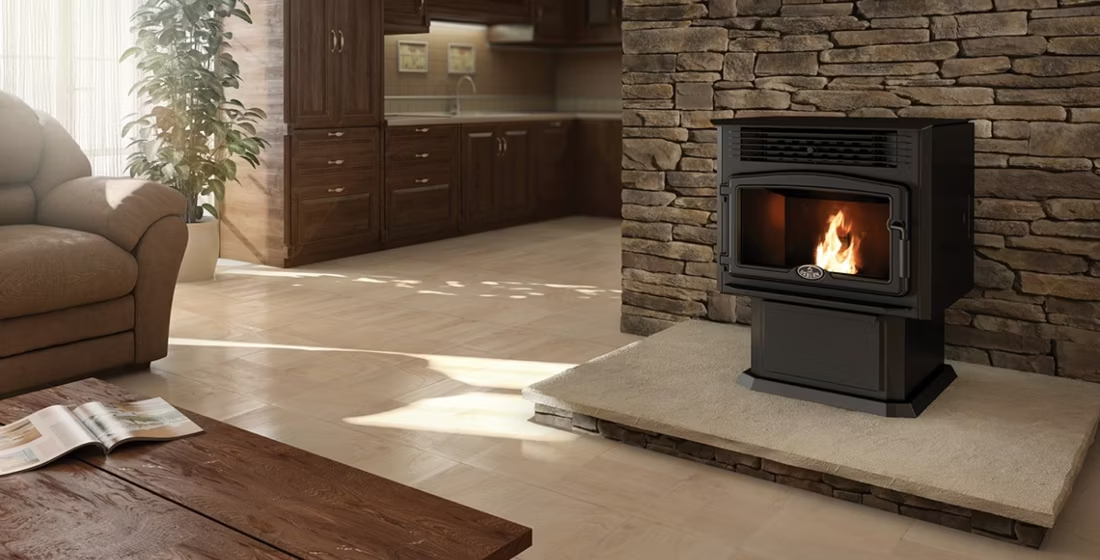
Most homes in this small Lehigh Valley borough already run on natural gas, but a smaller group of homeowners still add a pellet stove for backup warmth, zone heating, or a cleaner-burning alternative to an old fireplace. Here's what that actually looks like here.
Every Project Starts From One of These Five Situations
A small Lehigh Valley borough built around natural gas.
Macungie is a tight, walkable borough of around 3,250 people sitting at 382 feet in the Lehigh Valley, with winters cold enough to matter—average lows near 20°F and roughly 5,674 heating degree days a year in this Climate Zone 5A pocket of Pennsylvania. That's a real heating season, but it's one most Macungie homes already handle with piped natural gas. Because gas service reaches most of the borough's streets and older twin and row homes, a pellet stove usually isn't the first heating decision a homeowner makes here—it's not unheard of, it's just not the default.
The homeowners who do go pellet in Macungie tend to have a specific reason: a drafty upstairs bedroom the furnace can't quite reach, a desire for radiant heat with less mess than cordwood, or a hedge against PPL Electric Utilities outages during ice storms (pellet stoves still need power to run the auger and blower, so this usually means pairing the stove with a small battery backup). Supply isn't the obstacle—Pennsylvania is pellet country, with regional producers like Energex, Hamer Pellet Fuel, and Greene Team Pellet Fuel all within a reasonable drive, so fuel is easy to find even though the appliance itself is a niche choice in this particular borough.
Three steps. No salesperson until you're ready.
Tell us about your project
Your zip code, your situation, and the fuel you're leaning toward—or let the answers point you to one.
See what's actually available
The brands dealers within 100 miles genuinely carry—real options, never a catalog mirage.
Get your dealer & Project Guide
A trusted local dealer, plus the free Project Guide & Parts List that names every component of the job.
Frequently Asked Questions
Are pellet stoves actually common in Macungie?
Not especially—and it's worth saying plainly. Macungie is a small, established borough where natural gas already reaches most homes, so gas fireplaces and furnaces are the default heating upgrade, not pellet stoves. Pellet installations here tend to be deliberate choices: a homeowner wanting supplemental zone heat in one room, someone converting away from an old open wood fireplace, or a household prioritizing outage resilience with a battery-backed unit. If you're considering one, you're in good company, just not the majority.
How much does a pellet stove installation cost in Macungie?
For a freestanding pellet stove with a new through-wall vent kit, expect a total installed cost in the neighborhood of $3,000 to $6,000, depending on the unit and how much wall or floor work is involved. A pellet insert dropped into an existing masonry fireplace—common in Macungie's older twin and row homes—usually runs a bit higher, often $4,000 to $7,000, once a liner and venting adapter are factored in. A trusted local dealer will give you a firm number after seeing your chimney or wall configuration in person.
Do I need a permit to install a pellet stove in Macungie?
Yes. Macungie Borough requires a building permit for any new solid-fuel appliance, including pellet stoves, and the venting penetration (whether through an exterior wall or an existing chimney) needs to meet current mechanical code. Lehigh County handles some of the underlying code enforcement depending on the scope of work. In practice, most established installers fold the permit application into the project and pull it on your behalf, so it's rarely something you have to manage yourself—just confirm it's included before signing anything.
Will my pellet stove work if PPL Electric loses power?
Not on its own. Pellet stoves rely on an electric auger to feed fuel and a blower to distribute heat, so a standard unit shuts down the moment the power does—which matters in a Lehigh Valley ice storm. If backup heat during outages is a priority, ask a local dealer about a battery backup or small inverter setup sized for your specific stove model; most current pellet stoves can run for hours on a modest battery. If guaranteed no-power heat is the main goal, a wood stove or a gas unit with a standing pilot is a more direct answer.
Where do people in Macungie buy pellets?
Pennsylvania is a major pellet-producing state, so supply isn't a problem even though pellet stoves themselves are a smaller category here. Regional brands like Energex, Hamer Pellet Fuel, and Greene Team Pellet Fuel are widely stocked at farm supply and hardware stores throughout the Lehigh Valley, typically sold in 40-lb bags. Prices fluctuate with demand each winter, so it pays to buy early in the fall before cold weather drives up demand at the local retailers.
Pellet vs. gas—which makes more sense for a Macungie home?
Given that natural gas already serves most of the borough, a gas fireplace or insert is usually the simpler, lower-maintenance path for primary or supplemental heat—no fuel bags to store, no hopper to fill, no ash to empty. Pellet stoves make more sense when you want a wood-fire look and radiant feel without the chimney and creosote management of cordwood, or when you specifically want an appliance that doesn't depend on your existing gas line. Neither one is the 'wrong' answer here—it comes down to whether you value gas's push-button convenience or pellet's fire-in-the-room ambiance.
What size pellet stove do I need for a Macungie home?
With roughly 5,674 heating degree days and winter lows around 20°F, Macungie sits in a moderately cold Zone 5A climate—enough that undersizing shows up quickly on the coldest nights. A small pellet stove (rated for 500-1,000 sq ft) is typically used for supplemental heat in one room or a finished basement, while medium units (1,000-2,000 sq ft) can carry a larger open floor plan as a bigger share of the heating load. Because most Macungie homes lean on gas as primary heat, pellet stoves here are more often sized for zone heating than whole-house duty—a local dealer can confirm sizing after seeing your layout.
How often does a pellet stove need to be cleaned and serviced?
Plan on a full professional service once a year, ideally before the fall heating season, along with routine homeowner maintenance every few days of use: emptying the ash pot, wiping the burn pot, and checking the hopper and auger for debris. Annual service typically includes cleaning the exhaust venting, checking the gaskets and door seal, and testing the blower and igniter—components that matter more on a pellet stove than a wood stove because there's more mechanical equipment involved. Skipping this tends to show up as reduced heat output or auger jams mid-winter.
Can I put a pellet insert into my existing fireplace instead of a freestanding stove?
Often, yes—many of Macungie's older twin and row homes still have a masonry fireplace that a pellet insert can slide into, using the existing chimney cavity (with a proper liner) as part of the venting path. This keeps your mantel and hearth intact while converting an inefficient open fireplace into a controlled heat source. Freestanding stoves make more sense in homes without an existing fireplace, or where you want the stove placed somewhere other than the original hearth location. A local installer can tell you within a few minutes which option your fireplace opening supports.
What's the difference between an insert and a zero-clearance fireplace?
An insert is a fireplace that slides into a pre-existing wood-burning fireplace—if you don't have one, there's nothing to insert it into. A zero-clearance fireplace is built into a framed wall, which makes it the answer for remodels and new construction. Simple test: existing masonry fireplace means insert; blank or framed wall means zero-clearance.
Why is a fireplace insert so efficient?
An insert does two things: it seals the chimney completely, so you stop losing air you already paid to heat, and it radiates warmth into the room through the firebox and glass. Most add a heat-exchange fan that pulls cool room air underneath, wraps it around the hot firebox, and pushes it back out warm. Your home is more efficient before you've even lit the first fire.
What is an in-home preview and do I need one?
It's a visit where a hearth professional measures your space, confirms the model you picked actually works in your home, and walks the specs—framing, gas line, venting, finish work—before anything is ordered. Some details you just can't know until you see the house. Never make a down payment without one; it's the single most-skipped step that burns buyers.
How much should I budget for a fireplace?
For an average home—covering the fireplace, the vent pipe, and basic installation—a budget between $3,900 and $5,500 gives you a lot of options across wood, gas, and pellet. By the time you add finish work, gas line, and electrical, the average complete installation lands between $5,000 and $12,000 all-in. In a remodel or new build, a good rule is to put about 2.5% of the total project cost toward the fireplace.
Nearby Dealers
Hearth shops serving Macungie and the surrounding area. Every listing shows whether it is a WhyFire partner, a dealer we have verified as authorized for the brands we recommend, or a local business carrying hearth products. No manufacturer pays for placement. How we verify dealers →
Stoves N Stuff Ltd
Pennsburg Ace Hardware
Progressive Propane
Abe Fence / Landscape Supply
Atlantic Building Prodcuts Inc
Penn Hearth Llc.
Scandia Stoves Of Pa Inc.
Keller Enterprises
Glen-Gery Brick
Krings Hearth & Home - Schnecksville
Krings Hearth & Home - Bechtelsville
Independence Propane
East Lawn Supply Co., Inc.
Sequoia Supply Hatfield Showroom
A Chimney King
Ambler Fireplace & Patio - Chalfont
Liberty Oil & Propane
Forest Inn Masonry Supply
Estates Chimney Sweep
Kozy By The Fire
Pellet Brands Stocked Around Macungie
Manufacturers will point you to the nearest stocking dealer.
Find your pellet stove in Macungie.
Tell us about your home and we'll put together a free Project Guide & Parts List—the right pellet stove or insert for your space, the vent kit it needs, and a match with a trusted local dealer near Macungie.
Find Your Fireplace →