
Find the right hearth for a Lehigh Valley winter.
Wood, gas, pellet, and electric fireplace resources for every city and township in Lehigh County—from Allentown to Bethlehem to the small boroughs in between. Find the right unit and connect with a trusted local hearth retailer.
Every Project Starts From One of These Five Situations
Steady, four-season heating needs across Lehigh County, Pennsylvania.
Lehigh County sits in Pennsylvania's climate zone 5A, with roughly 5,293 heating degree days a year and average winter lows near 22°F—a heating season comparable to Madison, WI, though without the lake-effect extremes. That's enough cold, from November through March, to make a supplemental or primary hearth appliance a real line item in most households' comfort planning, not just an aesthetic choice. The county's hardwood forests and old farmland woodlots supply plenty of oak, hickory, maple, and cherry for the wood-burning households scattered through the rural western and northern parts of the county, while the dense Allentown-Bethlehem-Emmaus corridor leans more toward gas and pellet units suited to smaller lots and tighter clearances. There are no active air-quality non-attainment concerns tied to residential wood burning here, which gives homeowners more flexibility than in inversion-prone western basins.
What you'll find on this hub: hearth retailers, service technicians, and fuel suppliers serving every community in the county—from the urban rowhome blocks of Allentown and Bethlehem to the rural stretches around New Tripoli, Slatington, and Coopersburg. Pick your fuel below to drill into specifics—local dealers, installation costs, recommended units, and the resources that match your project. Whether you're heating a South Side Bethlehem twin or a farmhouse near the Blue Mountain ridge, this is the starting point.
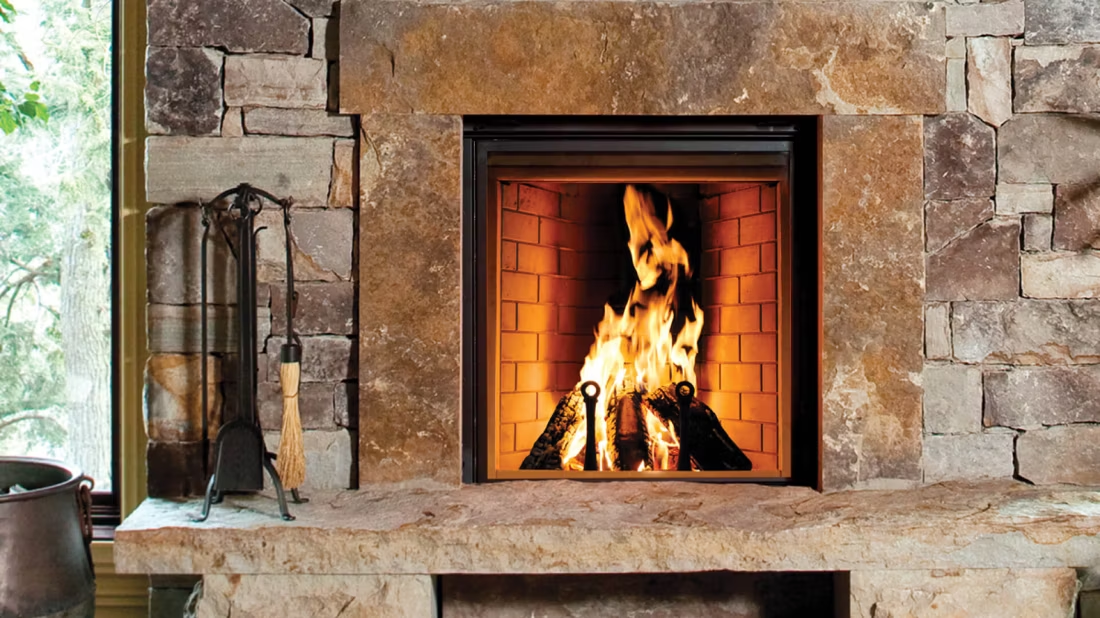
Four fuels. One honest answer for Lehigh County.
Three steps. No salesperson until you're ready.
Tell us about your project
Your zip code, your situation, and the fuel you're leaning toward—or let the answers point you to one.
See what's actually available
The brands dealers within 100 miles genuinely carry—real options, never a catalog mirage.
Get your dealer & Project Guide
A trusted local dealer, plus the free Project Guide & Parts List that names every component of the job.
Frequently Asked Questions
Which fuel works best in Lehigh County?
It depends on the home and neighborhood. Wood is a strong option for the rural western and northern parts of the county—around New Tripoli, Germansville, and the ridge towns—where oak, hickory, and cherry firewood is readily available from local woodlots and tree services, and larger lots accommodate proper chimney clearances. Gas is the practical choice in the denser Allentown-Bethlehem-Emmaus corridor, where UGI Utilities provides broad natural gas coverage and rowhome or twin-home construction favors direct-vent installs over masonry chimney work. Pellet is a solid middle ground—regional brands like Energex, Hamer Pellet Fuel, and Greene Team Pellet Fuel keep supply local and reliable, and pellet stoves suit smaller lots where wood storage isn't practical. Electric works well as supplemental heat in bedrooms, finished basements, and apartments, though with 5,293 heating degree days a year it isn't typically anyone's sole heat source through a full Lehigh Valley winter. Many households here run gas or pellet as primary and wood as an emergency backup for winter storms.
Do I need a permit to install a fireplace in Lehigh County?
In most cases, yes. Municipalities across Lehigh County—Allentown, Bethlehem, Emmaus, Whitehall Township, and the rest—each administer their own building permit process under the Pennsylvania Uniform Construction Code, so a new wood stove, insert, gas fireplace, gas insert, or pellet stove typically requires a permit through your local township or city building department rather than a single countywide office. Gas installations also need a licensed gas-fitter for the line connection, often pulled as a separate permit. Wood-burning appliances installed new should meet current EPA emissions standards. Electric fireplaces usually skip the permit process unless the install involves hardwiring a built-in unit into a new circuit. Most local hearth retailers handle the permitting paperwork as part of the installation, so homeowners rarely have to navigate it solo.
Are there air quality restrictions on wood burning in Lehigh County?
No—Lehigh County doesn't have the winter inversion or non-attainment issues that trigger burn bans in basin or valley regions further west, like parts of Oregon's high desert. There's no local advisory system asking residents to curtail wood burning on high-pollution days. That said, new wood stove and insert installations should still meet current EPA emissions standards, and a well-maintained, EPA-certified stove burning seasoned oak or hickory (properly dried to 20% moisture or below) produces far less visible smoke and creosote buildup than an old smoke dragon burning green wood—which matters for chimney fire risk even without a regulatory mandate.
Can one local hearth retailer handle all four fuel types?
Many Lehigh County hearth retailers carry three or four fuel types, since the county spans both dense boroughs and rural townships with very different heating needs. Dealers based in or near Allentown and Bethlehem tend to stock the broadest mix—wood, gas, pellet, and electric—so homeowners can compare options side by side and see working displays before deciding. Smaller shops in the outlying boroughs sometimes specialize, focusing heavily on wood and pellet for rural clientele with less emphasis on electric built-ins. If you're not sure which fuel fits your home, a multi-fuel dealer near the Allentown-Bethlehem corridor is generally the easiest starting point for comparing trade-offs in person.
How does service work in the outlying parts of Lehigh County?
Most chimney sweeps and hearth technicians are based in or near the Allentown-Bethlehem-Emmaus urban core but travel out to the outlying townships—Washington, Heidelberg, Lynn, and the boroughs along the Blue Mountain ridge—for annual service and installs. Expect scheduling to book up fastest in September and October as households prepare for the first cold snap; mid-winter emergency calls for a stuck damper or failed igniter can mean a longer wait. Rural customers who rely on wood as a primary or backup heat source should plan on scheduling chimney sweeping proactively each fall rather than waiting for a problem, since oak and hickory creosote buildup is a real risk with heavy seasonal use.
What's the typical cost range for fireplace installation across all fuel types in Lehigh County?
Costs vary by fuel and by how much existing infrastructure a home already has. Wood stove or insert installation typically runs $4,000–$8,500 for a straightforward retrofit into an existing chimney, more for new construction requiring a full masonry chimney or class-A chimney pipe. Gas fireplace, insert, or stove installation generally runs $4,000–$10,000, with cost driven largely by how far the unit sits from an existing gas line—UGI service makes this more affordable in the urban corridor than in areas relying on propane. Pellet stove or insert installation typically runs $4,000–$7,000. Electric fireplace costs range from $200–$3,000 for the unit itself, plus $400–$1,200 in labor for anything beyond a simple plug-in install. See the county + fuel pages above for retailer-specific pricing detail.
How much should I budget for a fireplace?
For an average home—covering the fireplace, the vent pipe, and basic installation—a budget between $3,900 and $5,500 gives you a lot of options across wood, gas, and pellet. By the time you add finish work, gas line, and electrical, the average complete installation lands between $5,000 and $12,000 all-in. In a remodel or new build, a good rule is to put about 2.5% of the total project cost toward the fireplace.
Can I install a fireplace myself?
If you're putting a fire in your house on purpose, it's best to work with an expert. Unless you're genuinely experienced in framing, gas line, vent pipe, and the national code on clearances to combustibles, have a professional do it—and ideally the same company that sells you the fireplace, so warranty, service, and liability all live under one roof.
Does a fireplace add value to my home?
On average, a fireplace adds back to the home about the same amount you spent installing it. Add the monthly savings from heating the rooms you actually use instead of the whole house—often hundreds of dollars a year—and the value case is strong before you even count what a fire does for how your family uses the room.
Wood, gas, pellet, or electric—how do I choose?
Match the fuel to your life, not the other way around. Wood: lowest fuel cost and total power-outage independence, but you're hauling and stacking. Gas: press a button, set a thermostat, no maintenance to speak of. Pellet: wood economics with automatic feeding, in exchange for weekly cleaning and a need for electricity. Electric: plugs in anywhere with honest supplemental heat. Nobody regrets the fuel that fits how they actually live.
Stove and Fireplace Dealers in Lehigh County
Listings include WhyFire partner dealers, dealers we have verified as authorized for the brands we recommend, and established local businesses that carry hearth products. Every listing shows which one it is. The ones marked Preferred run on WhyFire's software, so they can show you real pricing and book your appointment right here. No manufacturer pays for placement. How we verify dealers →
Stoves N Stuff Ltd
Abe Fence / Landscape Supply
Penn Hearth Llc.
Keller Enterprises
Glen-Gery Brick
Krings Hearth & Home - Schnecksville
Progressive Propane
Atlantic Building Prodcuts Inc
Scandia Stoves Of Pa Inc.
Pennsburg Ace Hardware
East Lawn Supply Co., Inc.
Forest Inn Masonry Supply
Liberty Oil & Propane
Kozy By The Fire
Independence Propane
Krings Hearth & Home - Bechtelsville
Hinton & Sons Inc.
Sequoia Supply Hatfield Showroom
Get matched with a Lehigh County hearth dealer.
Tell us about your project and we'll match you with a trusted local dealer and send a free Project Guide & Parts List—the exact parts, vent kit, and recommended dealer for your fuel and your home in Lehigh County.
Find Your Fireplace →