
Keep Your Family Warm and Safe—No Matter What
Wood heat isn't the default in Kenmar's mostly gas-and-electric homes, but for backup heat, a cabin, or a hearth that burns local oak and cherry, a properly sized stove still earns its place through a long, demanding winter heating season each year.
Every Project Starts From One of These Five Situations
An honest look at wood in Kenmar.
Kenmar sits at 530 feet in Lycoming County, a climate zone 5A town with winter lows averaging around 20°F and a long, demanding winter heating season that makes cold-weather heat a real concern for every household here. On paper, that's cold enough for wood heat to make sense. In practice, most Kenmar homes run on electric service through PPL Electric Utilities or gas heat, and wood-burning installations are less common here than in the more rural, forest-adjacent parts of central Pennsylvania.
That doesn't mean wood is off the table—it means the decision is more deliberate. The homeowners who install a wood stove or insert in Kenmar tend to have a specific reason: a home with an existing masonry fireplace they want to actually use, a desire for heat that keeps working when PPL's lines go down in an ice storm, or simply an appreciation for burning oak, hickory, maple, or cherry sourced from Lycoming County woodlots. Because the local market for wood stove installers is thin in a town this size, working with a dealer who genuinely knows solid-fuel code and venting—rather than a generalist contractor—matters more here than in a bigger wood-heat market.
Three steps. No salesperson until you're ready.
Tell us about your project
Your zip code, your situation, and the fuel you're leaning toward—or let the answers point you to one.
See what's actually available
The brands dealers within 100 miles genuinely carry—real options, never a catalog mirage.
Get your dealer & Project Guide
A trusted local dealer, plus the free Project Guide & Parts List that names every component of the job.
Frequently Asked Questions
Is a wood stove a normal thing to install in Kenmar?
Not really the default, no. Kenmar's roughly 4,700 residents mostly heat with electric service from PPL Electric Utilities or gas systems, and wood-burning fireplace installs are the exception rather than the rule. A small number of homeowners still install a wood stove or insert—usually for backup heat during winter outages or because they like burning local oak, hickory, maple, or cherry rather than running the furnace. It's a legitimate choice, just not the town's default heating strategy.
How much does a wood stove installation cost in Kenmar?
Because there isn't a dense local market for wood stove installers in a town this size, pricing in Kenmar tracks broader central Pennsylvania averages rather than a hyper-local number. Expect somewhere in the $3,500 to $8,500 range, depending on whether you're retrofitting an existing masonry fireplace with an insert, running new Class A chimney pipe for a freestanding stove, or building a hearth pad from scratch. A dealer serving the Lycoming County area can give you a firm number after seeing your home.
What size wood stove do I actually need for a Kenmar home?
With winter lows averaging 20°F and a long, demanding winter heating season, Kenmar's cold season is real, even if wood isn't most homes' primary heat. If you're installing a stove purely for backup or supplemental warmth, a small-to-medium unit rated for 1,000–1,600 square feet is usually plenty for a main living area. If you want the stove to genuinely offset your electric or gas bill on the coldest weeks, size up and talk to a dealer about your home's insulation—an oversized stove in a tight house will smolder and build creosote fast.
What firewood is actually available around Kenmar?
Lycoming County's hardwood mix runs to oak, hickory, maple, and cherry—all of which show up regularly in local firewood listings and on private woodlots. Oak and hickory burn hot and long, making them the better choice if you're leaning on the stove for real heat output rather than ambiance. Cherry burns a bit cooler but is popular for its smell and easy splitting. Maple sits in between. If you're buying rather than cutting your own, expect roughly $200–$300 per cord for seasoned hardwood in this part of the state.
Will a wood stove actually help during a power outage in Kenmar?
Yes, and this is one of the strongest arguments for installing one even in a town where wood isn't the norm. Kenmar's electric service runs through PPL Electric Utilities, and like any grid-dependent system, it can go down during ice storms or high-wind events. A wood stove or insert keeps producing heat with zero electrical input—no blower motor, no igniter, no thermostat board to fail. If backup heat during outages is your main reason for considering wood, a simple non-catalytic stove with manual air control is often the most outage-proof option a dealer will show you.
Do I need a permit to install a wood stove in Kenmar?
Almost certainly yes, though the exact process depends on whether your property falls under the local municipal building office or Lycoming County's building department—this is worth confirming directly since jurisdiction can vary by exact address in this part of the county. Any new solid-fuel appliance also needs to meet current EPA emissions standards. Most hearth dealers who work in this area handle the permit filing as part of the installation, so you're not chasing paperwork on your own.
Wood, gas, or electric—what's practical for a Kenmar home?
For most Kenmar households, gas or electric heat is the practical daily-use choice, and that's reflected in how the town actually heats itself. Wood earns its place as a supplemental or backup system: something that keeps a living room warm and functional if the power's out, or that lets you use an existing fireplace instead of letting it sit cold. If you're deciding between a full wood-heating setup versus a gas insert, weigh how often you'd realistically tend a fire against the convenience of flipping a switch—in a town this size, either path has installers who can do it right.
Where can I source firewood near Kenmar?
Lycoming County has real forestland nearby, including state forest acreage where firewood cutting permits are available through the Pennsylvania Bureau of Forestry's local district office—worth calling ahead since permit terms and seasonal cutting windows are set at the district level. For homeowners who'd rather buy than cut, local firewood sellers around Williamsport and the surrounding townships typically sell seasoned oak, hickory, and cherry by the cord, generally in the $200–$300 range depending on species and delivery.
How do I find a reliable wood stove dealer near Kenmar?
Given Kenmar's small population, the nearest dealers with real wood-stove installation experience—proper venting, code-compliant clearances, EPA-certified units—are usually based in the greater Williamsport area rather than in Kenmar itself. That's exactly the kind of matching Find My Fireplace does: we're not a retailer or manufacturer, we're a neutral matchmaker that connects you with a trusted local dealer who actually installs wood systems in Lycoming County, rather than a big-box option with no local install track record.
What's the difference between an insert and a zero-clearance fireplace?
An insert is a fireplace that slides into a pre-existing wood-burning fireplace—if you don't have one, there's nothing to insert it into. A zero-clearance fireplace is built into a framed wall, which makes it the answer for remodels and new construction. Simple test: existing masonry fireplace means insert; blank or framed wall means zero-clearance.
Why is a fireplace insert so efficient?
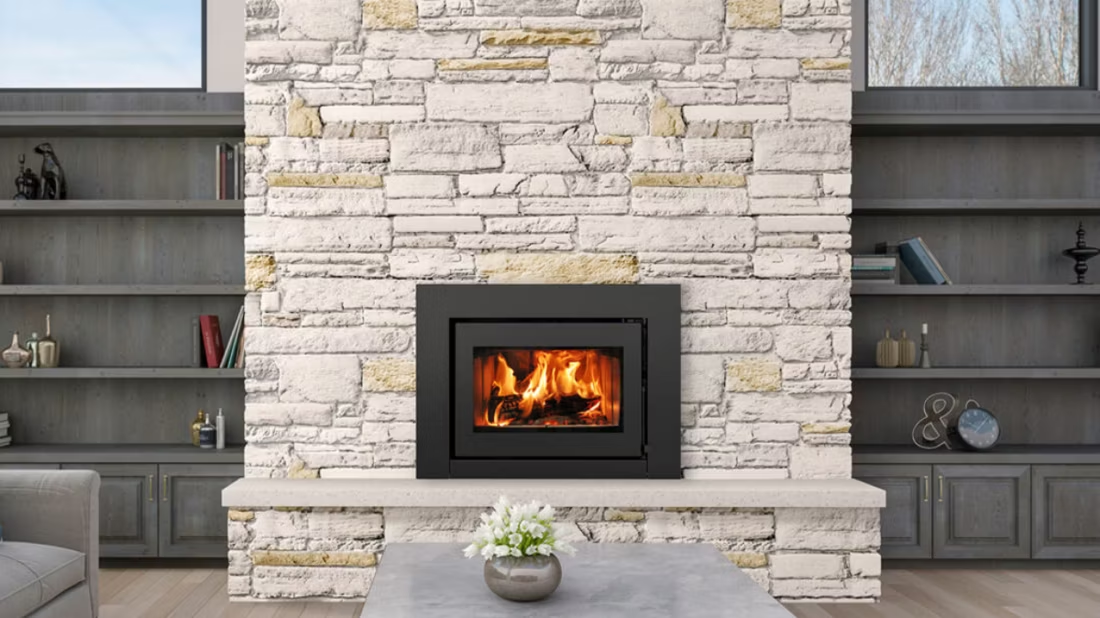
An insert does two things: it seals the chimney completely, so you stop losing air you already paid to heat, and it radiates warmth into the room through the firebox and glass. Most add a heat-exchange fan that pulls cool room air underneath, wraps it around the hot firebox, and pushes it back out warm. Your home is more efficient before you've even lit the first fire.
Does a fireplace add value to my home?
On average, a fireplace adds back to the home about the same amount you spent installing it. Add the monthly savings from heating the rooms you actually use instead of the whole house—often hundreds of dollars a year—and the value case is strong before you even count what a fire does for how your family uses the room.
How much should I budget for a fireplace?
For an average home—covering the fireplace, the vent pipe, and basic installation—a budget between $3,900 and $5,500 gives you a lot of options across wood, gas, and pellet. By the time you add finish work, gas line, and electrical, the average complete installation lands between $5,000 and $12,000 all-in. In a remodel or new build, a good rule is to put about 2.5% of the total project cost toward the fireplace.
Nearby Dealers
Hearth shops serving Kenmar and the surrounding area. Every listing shows whether it is a WhyFire partner, a dealer we have verified as authorized for the brands we recommend, or a local business carrying hearth products. No manufacturer pays for placement. How we verify dealers →
Ace Fireplace, Stoves & Outdoor Living
The Warm Up Shop Inc.
Jerry The Fix It Guy
Terry's Chimney
Passonetti's Mechanical
Terry's Coal-Wood Stoves
Fired Up Fireplaces
Find your wood stove near Kenmar.
Tell us about your home and we'll match you with a trusted local dealer serving the Kenmar area, plus a free Project Guide & Parts List with the exact stove, venting, and hearth components your project needs.
Find Your Fireplace →