
Find the right hearth for a Lycoming County winter.
Wood, gas, pellet, and electric fireplace resources for every borough and township in Lycoming County—from Williamsport to the ridges above Trout Run. Find the right unit and connect with a trusted local hearth retailer.
Every Project Starts From One of These Five Situations
Susquehanna Valley heating across Lycoming County, Pennsylvania.
Lycoming County stretches from the West Branch Susquehanna Valley up into the Allegheny Plateau, and the terrain shows up in how people heat their homes. With around 5,674 heating degree days and average winter lows near 20°F, the season here is comparable to what you'd see in Madison, WI—long, steady, and cold enough that a heating system needs to actually perform, not just look good. The county's hardwood forests of oak, hickory, maple, and cherry have supplied firewood for generations, and burning your own wood or buying it from a local logger is still common practice in the more rural townships outside Williamsport.
What you'll find on this hub: hearth retailers, service technicians, and fuel suppliers serving every community in the county—from Williamsport and Montoursville along the river to Muncy, Hughesville, and the smaller boroughs tucked into the valleys. Pick your fuel below to drill into specifics—local dealers, installation costs, recommended units, and the resources that match your project. Whether you're heating a rowhouse in Williamsport or a farmhouse near Trout Run, this is the starting point.
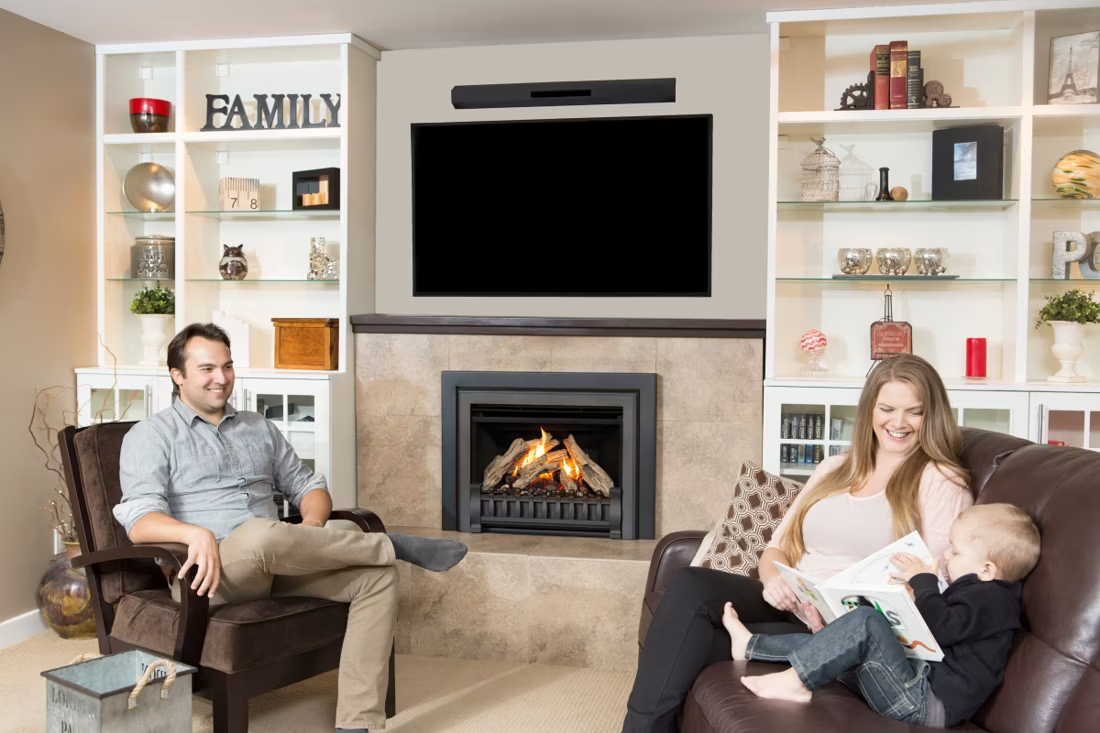
Four fuels. One honest answer for Lycoming County.
Three steps. No salesperson until you're ready.
Tell us about your project
Your zip code, your situation, and the fuel you're leaning toward—or let the answers point you to one.
See what's actually available
The brands dealers within 100 miles genuinely carry—real options, never a catalog mirage.
Get your dealer & Project Guide
A trusted local dealer, plus the free Project Guide & Parts List that names every component of the job.
Frequently Asked Questions
Which fuel works best in Lycoming County?
It depends on your home and your goals, but all four fuels have a genuine place here. Wood is well-suited to the county's rural townships—oak, hickory, and maple are locally abundant, and a catalytic or non-catalytic EPA-certified stove can carry a farmhouse through a 20°F overnight without much trouble. Gas is the convenience pick in Williamsport and the boroughs where natural gas service is already run to the house—no wood handling, consistent heat, and a clean look. Pellet stoves split the difference: you get wood-like ambiance and solid output without splitting or stacking, and regional brands like Energex and Hamer Pellet Fuel are readily available through local dealers and farm stores. Electric fireplaces work well as supplemental heat in bedrooms, sunrooms, or converted spaces, but given the county's real winter cold, they're rarely anyone's sole heat source. Plenty of Lycoming County homes run two fuels—wood or pellet as the workhorse, gas or electric for the rooms that need quick, low-maintenance warmth.
Do I need a permit to install a fireplace in Lycoming County?
In most cases, yes. New wood stoves, wood inserts, gas fireplaces, gas inserts, gas stoves, and pellet stoves generally require a building permit, and any new gas line work also needs a permit plus a licensed contractor for the gas connection. Wood-burning appliances installed today need to meet current EPA emissions standards. Electric fireplaces are usually exempt unless the installation involves hardwiring a built-in unit into a new circuit. Permit jurisdiction depends on where you live—within Williamsport and the other incorporated boroughs, permits typically run through the borough or city code office; in the townships, it's usually the township building or zoning officer, sometimes with a county-level UCC inspection agency involved. Most local hearth retailers handle this paperwork as part of the installation, so you're not usually pulling the permit yourself.
Are there air quality restrictions on wood burning in Lycoming County?
No—Lycoming County doesn't have the winter inversion or non-attainment issues that trigger burn advisories in some western states. There's no formal curtailment program here. That said, EPA 2020 NSPS certification is still required for new wood stove and insert installations, which matters most for efficiency and lower particulate output during long burns, not for regulatory compliance with an air-quality alert system. If you're replacing an older pre-EPA stove, a newer certified unit will typically use noticeably less wood for the same heat output—a real consideration given how much oak and hickory a county-wide heating season can burn through.
Can one local hearth retailer handle all four fuel types?
Many hearth retailers serving Williamsport and the surrounding county carry three or four fuel types, but coverage varies by dealer—some specialize in wood and pellet with a smaller gas and electric selection, others lean heavily gas and electric with wood as a secondary line. If you're not yet sure which fuel fits your home, a multi-fuel dealer with working showroom displays is worth visiting first—you can see and feel the difference between a catalytic wood stove, a direct-vent gas insert, and a pellet stove before committing. The county + fuel pages above break out which local retailers carry which fuel types in more detail.
How does service work in the rural townships of Lycoming County?
Most chimney sweeps and hearth technicians are based in or near Williamsport and travel out to the outlying townships—up toward Trout Run and Ralston, east toward Muncy and Hughesville, and west along Route 44 into the more remote parts of the county. A modest travel fee is common for calls beyond a 20-25 mile radius. Scheduling annual chimney sweeps or gas unit inspections in late summer or early fall (before the season's first cold snap) is easier than trying to get someone out during a January cold spell, when demand for emergency service spikes. If your property is more remote, it's worth keeping a backup heat plan—a wood stove as a power-outage backup for a home that primarily runs gas or pellet is a common setup in this county.
What's the typical cost range for fireplace installation across all fuel types in Lycoming County?
Costs vary meaningfully by fuel and by how much venting or chimney work is involved. Wood stove or insert installation: roughly $4,000-$8,500 for a typical job, more if a new chimney liner or full masonry chimney is needed. Gas fireplace, insert, or stove: roughly $4,000-$10,000, with the low end for conversions where gas service already reaches the room and the high end for new gas line runs plus venting. Pellet stove or insert: roughly $4,000-$7,000 for a standard install. Electric fireplace: the unit itself often runs $200-$3,000, with $300-$1,000 in labor for anything beyond a simple plug-in placement, such as a built-in wall unit. The county + fuel pages above go deeper into local retailer pricing for each fuel type.
Can I install a fireplace myself?
If you're putting a fire in your house on purpose, it's best to work with an expert. Unless you're genuinely experienced in framing, gas line, vent pipe, and the national code on clearances to combustibles, have a professional do it—and ideally the same company that sells you the fireplace, so warranty, service, and liability all live under one roof.
Wood, gas, pellet, or electric—how do I choose?
Match the fuel to your life, not the other way around. Wood: lowest fuel cost and total power-outage independence, but you're hauling and stacking. Gas: press a button, set a thermostat, no maintenance to speak of. Pellet: wood economics with automatic feeding, in exchange for weekly cleaning and a need for electricity. Electric: plugs in anywhere with honest supplemental heat. Nobody regrets the fuel that fits how they actually live.
What is an in-home preview and do I need one?
It's a visit where a hearth professional measures your space, confirms the model you picked actually works in your home, and walks the specs—framing, gas line, venting, finish work—before anything is ordered. Some details you just can't know until you see the house. Never make a down payment without one; it's the single most-skipped step that burns buyers.
Can a fireplace actually lower my heating bill?
Yes—by creating a comfort zone. A furnace heats every square foot of the house just to warm the one room you're in; a gas fireplace on low burns roughly a sixth of the gas a typical furnace does. Set the furnace around 55–60 degrees as a baseline, then heat the rooms your family actually uses. Families who heat this way commonly save $20–$60 a month.
Stove and Fireplace Dealers in Lycoming County
Listings include WhyFire partner dealers, dealers we have verified as authorized for the brands we recommend, and established local businesses that carry hearth products. Every listing shows which one it is. The ones marked Preferred run on WhyFire's software, so they can show you real pricing and book your appointment right here. No manufacturer pays for placement. How we verify dealers →
Ace Fireplace, Stoves & Outdoor Living
The Warm Up Shop Inc.
Jerry The Fix It Guy
Passonetti's Mechanical
Fired Up Fireplaces
Terry's Coal-Wood Stoves
Terry's Chimney
Find your fireplace in Lycoming County.
Pick your fuel below and we'll match you with a trusted local hearth retailer, plus a free Project Guide & Parts List—the exact parts, including the vent kit, for your specific home.
Find Your Fireplace →