
Add Real Warmth to Any Room in Kenmar—No Venting Required.
Zone heat for Lycoming County homes without a chimney, gas line, or wood supply. Find the right electric fireplace or insert and connect with a trusted local dealer.
Every Project Starts From One of These Five Situations
Heat exactly where you need it, without a flue.
Kenmar sits along the West Branch Susquehanna River in Lycoming County, just outside Williamsport, at a modest 530 feet of elevation. Winters here still bite—average lows around 20°F and roughly 5,674 heating degree days a year put Kenmar in climate zone 5A, milder than Buffalo, NY, but solidly cold-climate territory for six months of the year. Many of the older homes and rental properties in and around Kenmar were built with a single wood-burning fireplace as their only hearth feature, and a lot of those fireboxes have sat unused for years.
That's where electric fireplaces have found real traction locally. An electric insert drops into an existing masonry opening with no chimney liner, no gas line, and often no structural work at all—just a standard outlet or a simple 120V/240V circuit run by an electrician. With PPL Electric Utilities serving the area at roughly $0.1234 per kWh, running an electric unit as supplemental heat in a bedroom, den, or converted rental unit is inexpensive and predictable. It's also the most practical option for the area's smaller homes, manufactured housing, and apartment conversions common around Williamsport, where a full wood or gas retrofit isn't realistic.
Three steps. No salesperson until you're ready.
Tell us about your project
Your zip code, your situation, and the fuel you're leaning toward—or let the answers point you to one.
See what's actually available
The brands dealers within 100 miles genuinely carry—real options, never a catalog mirage.
Get your dealer & Project Guide
A trusted local dealer, plus the free Project Guide & Parts List that names every component of the job.
Frequently Asked Questions
How much does an electric fireplace installation cost in Kenmar?
A plug-in freestanding or wall-mount electric fireplace typically runs $300 to $900 installed, since most units simply need a standard outlet and a mounting bracket. A built-in electric insert set into an existing masonry firebox—the more common project in Kenmar's older housing stock—usually runs $1,500 to $4,500 once trim kits, a dedicated circuit, and any minor framing are included. Because there's no venting or gas line to run, electric installs are consistently the fastest and least invasive hearth project a local contractor can quote.
Will an electric fireplace actually heat my room, or is it just for looks?
Most residential electric fireplaces put out around 4,600–5,200 BTU (roughly 1,500 watts), enough to noticeably warm a bedroom, den, or single living area in a Kenmar home—but not enough to replace a furnace during a 20°F January stretch. Think of it as zone heat: it lets you turn down the thermostat in the rest of the house while keeping the room you're actually in comfortable. For larger open rooms, a local dealer can recommend a higher-output insert or point you toward supplementing with a second unit rather than oversizing on flame effect alone.
Do I need a permit to install an electric fireplace in Lycoming County?
A simple plug-in unit that uses an existing outlet typically doesn't require a permit. A built-in insert that requires a new dedicated circuit or any electrical panel work generally does need an electrical permit, pulled by a licensed electrician through your local building department. Most hearth dealers who install electric inserts either handle this directly or coordinate with a licensed electrician as part of the job, so you're not left tracking down the paperwork yourself.
What does an electric fireplace actually cost to run in Kenmar?
At PPL Electric Utilities' residential rate of about $0.1234 per kWh, a typical 1,500-watt electric fireplace running on high costs roughly 18–19 cents per hour. Run it for six hours a night through a cold Lycoming County evening and you're looking at about $1.10 a day, or somewhere around $30–$35 a month if used regularly through the winter. Most owners run the heater intermittently and the flame effect alone (with heat off) for ambiance, which drops the cost to just a few cents an hour.
Electric vs. gas fireplace—which makes more sense for my Kenmar home?
Gas fireplaces put out real, whole-room heat (20,000–40,000 BTU) and can serve as legitimate backup heat during a power outage if you choose a battery-backup or self-powered ignition model, but they require a gas line and proper venting. Electric units skip the venting and gas line entirely, install in a fraction of the time, and cost far less up front—but they need grid power to run and won't keep a room warm during an outage. For a converted rental unit, an addition, or a room where running gas line isn't practical, electric is usually the more sensible fit. For a primary living space where real heat output matters, gas is worth the extra installation cost.
Will my electric fireplace work if the power goes out?
No—electric fireplaces require grid power to run both the heater and the flame effect, so they go dark along with everything else during an outage. If backup heat during winter storms is a priority for your Kenmar home, pair the electric unit with a generator, or consider a gas fireplace with battery-backup ignition for the primary living space and reserve electric units for supplemental rooms where outage performance isn't critical.
Can an electric insert go into my existing wood-burning fireplace?
Yes, and it's one of the most common projects local installers see in Kenmar's older housing stock. Many homes here were built with a wood-burning masonry fireplace that's gone unused for years—often because the chimney needs expensive repair or the owner simply doesn't want to deal with firewood and ash. An electric insert slides into that existing opening, uses a surround kit to finish the look, and typically doesn't touch the chimney at all, since no venting is needed. It's a straightforward way to get a working, attractive fireplace back without any masonry or chimney work.
What's the difference between an electric insert, a wall-mount unit, and a mantel package?
An electric insert is built to slide into an existing masonry fireplace opening and finish flush with a surround kit—the right choice if you already have a firebox in a Kenmar home. A wall-mount unit hangs directly on a wall like a flat-screen TV and needs no fireplace opening at all, popular in newer builds or rooms without existing hearths. A mantel package pairs a freestanding electric firebox with a surrounding cabinet or shelf unit, giving you a complete fireplace look with zero installation beyond plugging it in—a common choice for rental properties and apartments around Williamsport where landlords want a finished look without any construction.
What electric fireplace brands should I look for?
Dimplex, Napoleon, and Amantii are among the most widely stocked electric fireplace brands at hearth dealers serving the Lycoming County area, known for realistic flame technology and reliable heating elements. Dimplex in particular offers a wide range of insert sizes that fit common older masonry openings found in Kenmar and Williamsport-area homes. A local dealer can show you flame samples and heater performance in person, which matters more with electric units than with wood or gas, since the visual effect varies noticeably between manufacturers.
Can I put a TV above my fireplace?
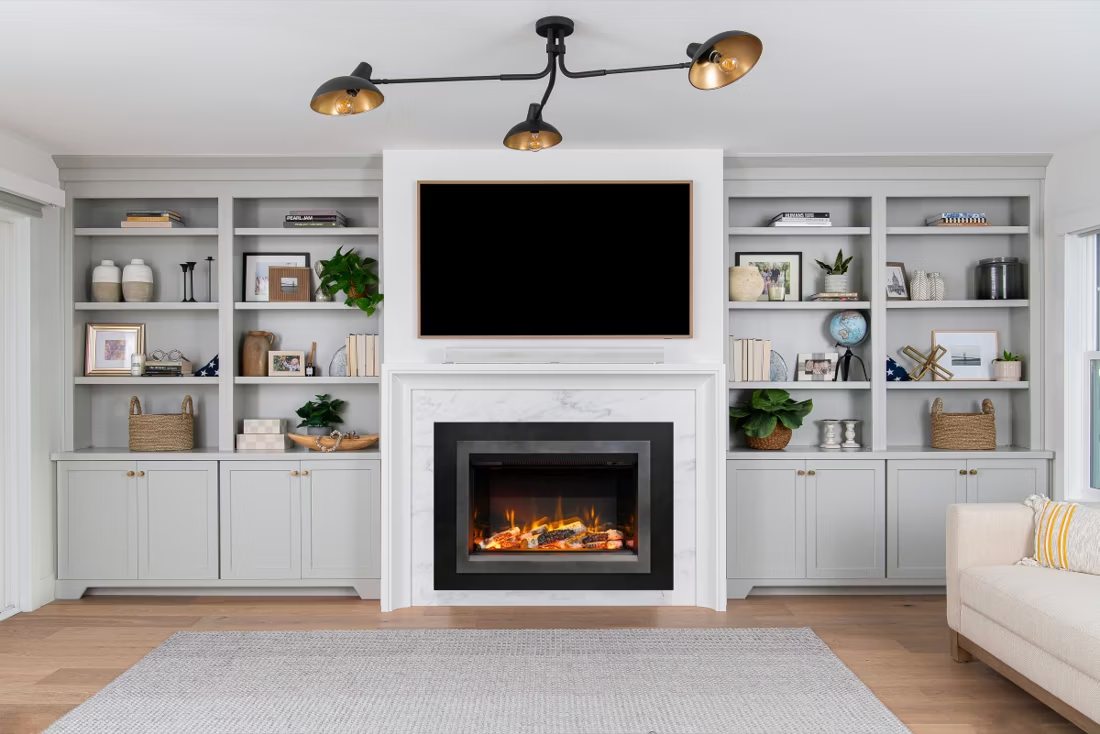
Yes—with an asterisk. Fireplaces are hot and TVs don't like heat. Either put a mantel between them to deflect rising warmth, or choose a fireplace with heat-management technology that creates a cool zone on the wall above—the wall stays around 125 degrees, barely warm, while the room still gets full heat. If you like clean lines and don't want a mantel, heat management is the answer.
Does an electric fireplace need a vent or chimney?
No—that's its superpower. An electric fireplace needs a wall and an outlet, period. No vent pipe, no gas line, no clearances to design around, which is why it works in bedrooms, offices, apartments, and walls where venting a gas or wood unit would be impractical or impossible. Installation is typically the simplest and least expensive of any fireplace type.
What is an in-home preview and do I need one?
It's a visit where a hearth professional measures your space, confirms the model you picked actually works in your home, and walks the specs—framing, gas line, venting, finish work—before anything is ordered. Some details you just can't know until you see the house. Never make a down payment without one; it's the single most-skipped step that burns buyers.
Does a fireplace add value to my home?
On average, a fireplace adds back to the home about the same amount you spent installing it. Add the monthly savings from heating the rooms you actually use instead of the whole house—often hundreds of dollars a year—and the value case is strong before you even count what a fire does for how your family uses the room.
Nearby Dealers
Hearth shops serving Kenmar and the surrounding area. Every listing shows whether it is a WhyFire partner, a dealer we have verified as authorized for the brands we recommend, or a local business carrying hearth products. No manufacturer pays for placement. How we verify dealers →
Ace Fireplace, Stoves & Outdoor Living
The Warm Up Shop Inc.
Jerry The Fix It Guy
Terry's Chimney
Passonetti's Mechanical
Terry's Coal-Wood Stoves
Fired Up Fireplaces
Electric Service in Kenmar
An electric fireplace's heater draws about 1,500 watts—pennies per hour at local rates.
Ppl Electric Utilities Corp
Find your electric fireplace in Kenmar.
Tell us a bit about your home and we'll match you with the right electric fireplace or insert—and connect you with a trusted local dealer for a free Project Guide & Parts List.
Find Your Fireplace →