
Electric heat that installs in an afternoon, anywhere in Lycoming County.
No chimney, no gas line, no venting—just a supplemental heat source that works in the century-old row houses of Williamsport and the newer builds out toward Montoursville and Muncy. Find the right unit and connect with a trusted local dealer.
Every Project Starts From One of These Five Situations
The heating option that skips the chimney entirely.
Lycoming County runs from the Susquehanna River flats around Williamsport up into the ridges of the Allegheny Plateau, with winters that average a 20-degree overnight low and add up to a heating season colder than Philadelphia, milder than Buffalo, NY, but plenty cold enough that most homes here run a furnace or boiler for months at a stretch. Wood heat has deep roots in this county—the oak, hickory, maple, and cherry that come off Lycoming's hardwood stands have fueled stoves for generations—but a large share of homeowners, particularly in Williamsport's historic neighborhoods and in condos and rentals throughout the county, don't have a working flue or the appetite for one.
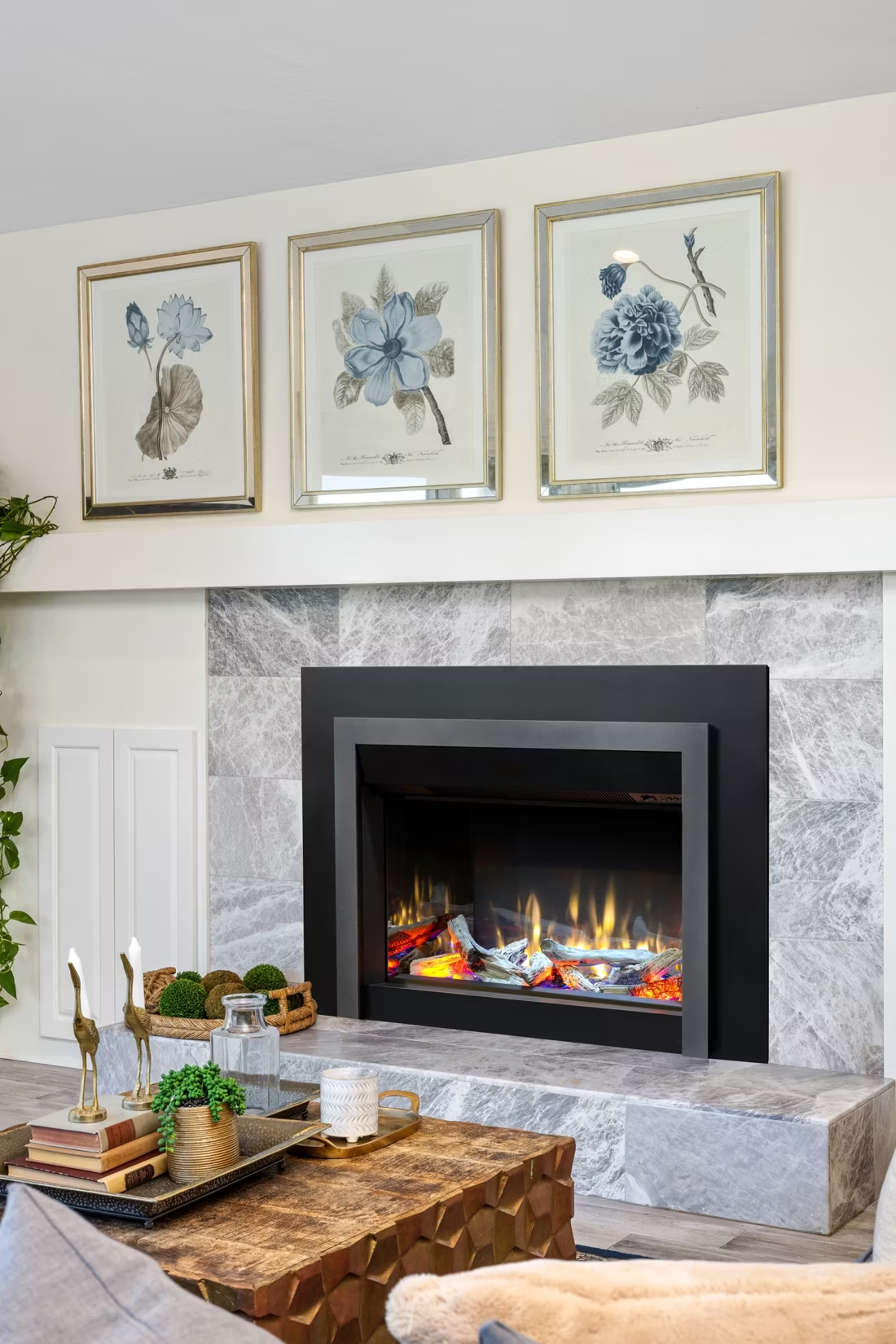
That's where electric fireplaces do their best work. A plug-in unit needs nothing more than a standard outlet; a built-in or wall-mounted model needs a dedicated circuit at most—no masonry, no gas line permit, no annual chimney sweep. PPL Electric Utilities serves most of Lycoming County, and electric fireplaces here are typically used the way they're meant to be used: zone heat for a single room, so the furnace or boiler can idle down and the electric bill for that one space stays predictable. For lumber-era Victorian homes downtown where a new masonry chimney could cost more than the fireplace itself, or for a garage apartment above the Susquehanna that never had a flue in the first place, electric is often the only realistic option—and a good one.
Three steps. No salesperson until you're ready.
Tell us about your project
Your zip code, your situation, and the fuel you're leaning toward—or let the answers point you to one.
See what's actually available
The brands dealers within 100 miles genuinely carry—real options, never a catalog mirage.
Get your dealer & Project Guide
A trusted local dealer, plus the free Project Guide & Parts List that names every component of the job.
Frequently Asked Questions
How much does an electric fireplace installation cost in Lycoming County?
A plug-in freestanding or insert-style electric fireplace runs roughly $300 to $900 installed, since most just need an existing outlet and a compatible surround or mantel. A built-in wall unit or a linear electric fireplace set into a wall cavity, which may require a licensed electrician to run a dedicated 120V or 240V circuit, typically lands between $1,000 and $2,500 depending on the model and how much drywall or framing work is involved. Homes in Williamsport's older neighborhoods with knob-and-tube or older panel wiring sometimes need panel upgrades first, which adds to the electrical side of the job—a local dealer or electrician can tell you quickly during a walkthrough whether your existing service can handle the load.
Can an electric fireplace actually heat a room during a Lycoming County winter?
Yes, within limits. Most electric fireplaces top out around 5,000-1,500 BTU heaters equivalent to a good space heater—enough to comfortably warm a single bedroom, den, or sunroom, but not enough to replace a furnace across a whole house when overnight lows sit around 20°F. In practice, that's exactly how most Lycoming County homeowners use them: as zone heat for the room they actually spend time in, letting the central furnace or boiler run lower everywhere else. For a drafty upstairs bedroom in an older Williamsport home or a finished basement that the furnace never quite reaches, that's usually plenty.
Do I need a permit to install an electric fireplace in Lycoming County?
A plug-in freestanding unit doesn't require a permit—it's no different than adding a lamp. A built-in electric fireplace that requires new electrical wiring or a circuit installed by an electrician generally does require an electrical permit, either through the City of Williamsport's codes department if you're inside city limits, or through the Lycoming County permitting process for townships that don't run their own inspections. Most licensed electricians pull this permit as part of the job, so it's rarely something the homeowner has to handle directly.
What's the difference between an electric fireplace, insert, and wall-mounted unit?
A freestanding electric fireplace looks like a stove or mantel-style unit and just needs floor space and an outlet—the simplest option for renters or homeowners who don't want to alter walls. An electric insert is sized to slide into an existing masonry fireplace opening, which is common in older Williamsport homes that have a fireplace but no working flue or the owner doesn't want to burn wood or gas in it. A wall-mounted or linear electric fireplace is built into the wall itself, flush or recessed, and tends to be the choice for new construction or full remodels where a clean, modern look matters more than replicating a traditional hearth.
Electric vs. wood vs. gas—which makes sense for my Lycoming County home?
Wood remains a strong choice here given the abundance of local oak, hickory, and cherry and the fact that it keeps working during a power outage—a real consideration on the Allegheny Plateau side of the county where storms can knock out lines for a day or more. Gas offers instant, consistent heat but needs either a natural gas line or a propane tank, plus venting work. Electric is the simplest and cheapest to install of the three, and the cleanest to live with day to day, but it won't function during an outage and it isn't going to replace your furnace on the coldest nights of a long, cold winter here. For a lot of homeowners here, electric ends up being the answer for a specific room—a den, a bedroom, a finished basement—while wood or gas handles the whole-house load.
What's the best electric fireplace option for an older Williamsport home without a working chimney?
An electric insert is usually the right call if you already have a masonry fireplace opening—a lot of the Victorian and Craftsman-era homes around Williamsport's historic districts have a fireplace that was capped or never vented for gas, and an insert drops into that existing opening without any structural changes. If there's no fireplace opening at all, a wall-mounted linear unit or a freestanding mantel-style fireplace both work well and don't require touching the home's masonry or original woodwork, which matters in houses where preserving the period details is part of the appeal.
How much does it cost to run an electric fireplace in Lycoming County?
Running cost depends on PPL Electric Utilities' residential rate and how many hours a day the unit is on. Most electric fireplaces draw around 1,500 watts on the heat setting, which translates to roughly 15-20 cents an hour of active heating at typical local rates—noticeably cheaper per hour than running a whole-house furnace to heat the same single room, which is the main reason zone heating with electric makes financial sense for a den or bedroom that gets regular use through a long Lycoming County winter.
Can I install an electric fireplace in an apartment or rental in Lycoming County?
In most cases, yes, and it's one of the more common uses for these units in the county. A freestanding, plug-in electric fireplace requires no modification to the unit and no landlord approval in most lease situations, since it's treated like any other appliance. If you want a wall-mounted or built-in unit, check with the property owner first, since that typically involves running a new circuit or altering a wall—something a landlord will want to sign off on even in a rental in downtown Williamsport or one of the county's smaller boroughs.
Will my electric fireplace still work if the power goes out?
No—this is the one honest tradeoff worth knowing before you buy. Electric fireplaces depend entirely on grid power, so during an outage they shut off along with everything else, unlike a wood stove that keeps burning regardless. In parts of Lycoming County where storms occasionally take down lines for extended stretches, especially in the more rural townships away from Williamsport, some homeowners pair an electric fireplace for everyday convenience with a wood stove or fireplace insert as genuine backup heat. If backup capability during outages is a priority for your household, that's worth discussing with a local dealer before you settle on electric as your only heat source.
Can I put a TV above my fireplace?
Yes—with an asterisk. Fireplaces are hot and TVs don't like heat. Either put a mantel between them to deflect rising warmth, or choose a fireplace with heat-management technology that creates a cool zone on the wall above—the wall stays around 125 degrees, barely warm, while the room still gets full heat. If you like clean lines and don't want a mantel, heat management is the answer.
Do electric fireplaces actually produce heat?
Yes—most put out around 4,800–5,000 BTUs from a standard outlet, which comfortably warms a bedroom, office, or den as a comfort-zone heater. What they won't do is carry a whole house the way wood, gas, or pellet can. Think of electric as ambiance-first with honest supplemental heat: flames on with no heat in July, flames plus warmth in January.
Can a fireplace actually lower my heating bill?
Yes—by creating a comfort zone. A furnace heats every square foot of the house just to warm the one room you're in; a gas fireplace on low burns roughly a sixth of the gas a typical furnace does. Set the furnace around 55–60 degrees as a baseline, then heat the rooms your family actually uses. Families who heat this way commonly save $20–$60 a month.
What is an in-home preview and do I need one?
It's a visit where a hearth professional measures your space, confirms the model you picked actually works in your home, and walks the specs—framing, gas line, venting, finish work—before anything is ordered. Some details you just can't know until you see the house. Never make a down payment without one; it's the single most-skipped step that burns buyers.
Stove and Fireplace Dealers in Lycoming County
Listings include WhyFire partner dealers, dealers we have verified as authorized for the brands we recommend, and established local businesses that carry hearth products. Every listing shows which one it is. The ones marked Preferred run on WhyFire's software, so they can show you real pricing and book your appointment right here. No manufacturer pays for placement. How we verify dealers →
Ace Fireplace, Stoves & Outdoor Living
The Warm Up Shop Inc.
Jerry The Fix It Guy
Passonetti's Mechanical
Fired Up Fireplaces
Terry's Coal-Wood Stoves
Terry's Chimney
Find your electric fireplace in Lycoming County.
Tell us about your home and we'll match you with a trusted local dealer and send you a free Project Guide & Parts List—sized to your room, with the right unit and installation details, no chimney required. Copy note. Copy field cleanup below. copy_cta_eyebrow duplicate fix. ,
Find Your Fireplace →