
Steady, hands-off heat for Fulton County winters.
Automated hopper-fed heat for one of south-central Pennsylvania's most rural counties—no daily wood splitting, no propane delivery contract. Find the right pellet stove or insert and connect with a trusted local dealer.
Every Project Starts From One of These Five Situations
A rural county built for automated heat.
Fulton County sits tucked against the Maryland line in Pennsylvania's ridge-and-valley Appalachians, with Tuscarora Mountain and Sideling Hill boxing in a landscape of narrow hollows and scattered farms around McConnellsburg, Warfordsburg, and Needmore. Climate zone 5A means real winter here—the kind of cold that settles into the valleys and lingers, not unlike what a homeowner in Burlington, Vermont deals with most winters. With a year-round population in the low thousands and homes spread thin across the county, wood heat has always made sense given the abundant oak, hickory, maple, and cherry in the surrounding forests. But not every household wants to buck, split, and stack cordwood every fall, and that's where pellet heat has carved out a real niche.
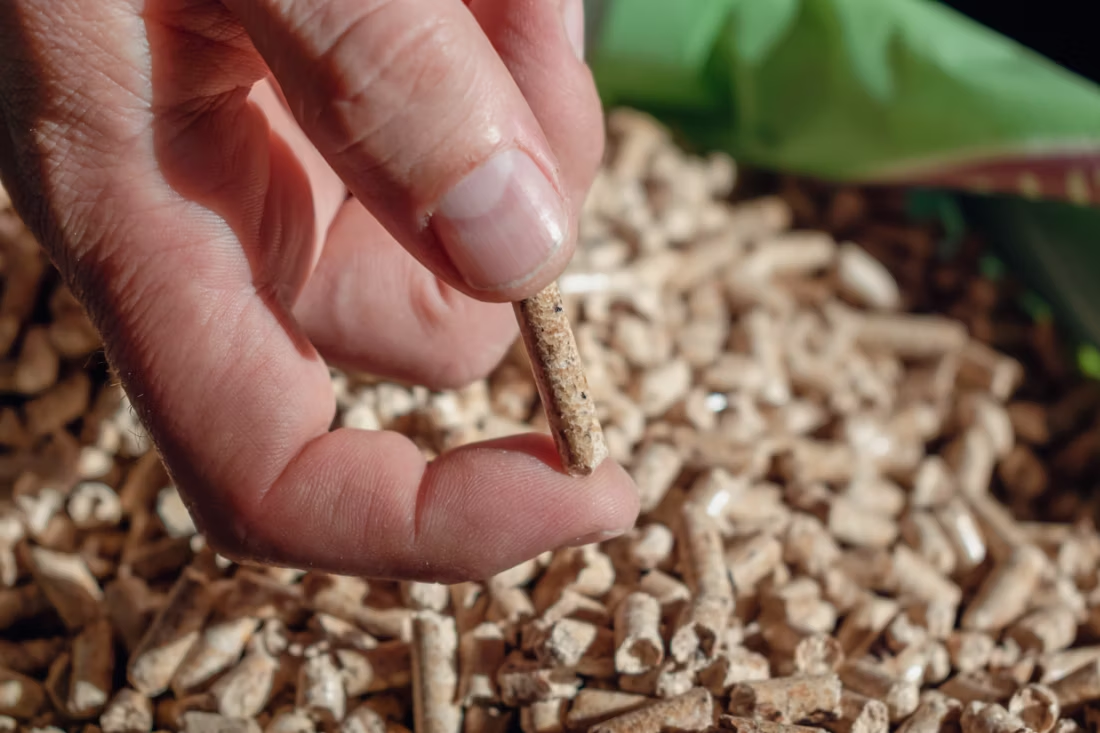
Piped natural gas is scarce to nonexistent across most of rural Fulton County, which leaves homeowners choosing between propane delivery, electric resistance heat, or wood in some form. A pellet stove splits the difference: it burns a manufactured hardwood fuel sourced from mills like Energex, Hamer Pellet Fuel, and Greene Team Pellet Fuel—all of which distribute through south-central Pennsylvania dealers—and it runs on a thermostat with a hopper you fill every day or two rather than a firebox you tend every few hours. For older homeowners, second-home owners, or anyone who wants wood-heat economics without the labor, pellet is often the fuel that actually gets used consistently through a long Fulton County winter.
Three steps. No salesperson until you're ready.
Tell us about your project
Your zip code, your situation, and the fuel you're leaning toward—or let the answers point you to one.
See what's actually available
The brands dealers within 100 miles genuinely carry—real options, never a catalog mirage.
Get your dealer & Project Guide
A trusted local dealer, plus the free Project Guide & Parts List that names every component of the job.
Frequently Asked Questions
How much does a pellet stove installation cost in Fulton County?
Across most of Pennsylvania, a freestanding pellet stove installation with a new through-wall vent typically runs somewhere in the $2,500 to $5,500 range depending on the unit, hearth pad requirements, and vent-run length; a pellet insert into an existing masonry fireplace usually lands a bit lower once the chimney is already in place. Because Fulton County is sparsely populated and many licensed hearth dealers are based out of Chambersburg, Bedford, or over the Maryland line near Hagerstown, expect a modest trip charge folded into the quote for installs out toward Needmore or Big Cove Tannery. A local dealer can give you a firm number after seeing your home.
Pellet stove vs. wood stove—which makes more sense for my Fulton County home?
Wood is free or cheap if you're cutting your own oak, hickory, or cherry off your own ground—common practice throughout the county—and it keeps working through a power outage, which matters on the ridges where ice storms can knock out lines for days. A pellet stove trades that self-sufficiency for convenience: no splitting, no seasoning wood for a year, just a bag of pellets and a thermostat setting. For a primary residence where someone is home daily to refill the hopper, pellet is often the lower-effort choice. For a hunting camp, cabin, or anywhere power isn't guaranteed, wood remains the safer bet.
Where can I buy pellets locally in Fulton County?
Regional hardwood pellet brands including Energex, Hamer Pellet Fuel, and Greene Team Pellet Fuel are distributed through farm supply stores and hearth dealers across south-central Pennsylvania, and most Fulton County pellet stove owners either stock up at a dealer in Chambersburg or McConnellsburg or buy by the pallet (50 forty-pound bags) when it's on sale in late summer. Pricing runs in line with the broader Pennsylvania market, generally in the $250-$300 per ton range depending on the brand and time of year—buying early, before the first cold snap drives demand up, is the standard local strategy.
Will my pellet stove work if the power goes out?
Not without backup power. Pellet stoves rely on an electric auger to feed fuel and a blower to distribute heat, so a standard outage shuts the unit down even with a full hopper. This matters more in Fulton County than in a lot of places—the ridge terrain around Sideling Hill and Tuscarora Mountain means downed lines from ice or wind can leave rural stretches without power for extended periods. Homeowners who want pellet heat as their main source, not just a supplement, often pair the stove with a small battery backup unit or a portable generator sized to run the auger and blower during outages. If backup power isn't in the plan, keep a wood stove or fireplace as a fallback.
Do I need a permit to install a pellet stove in Fulton County?
Most municipalities in Fulton County require a building permit for a new pellet stove installation, particularly when it involves cutting a new vent penetration through a wall or roof. Requirements vary by township, so check with your local municipal office or the Fulton County planning office before work begins. In practice, most established hearth dealers pull the permit as part of the installation and make sure the vent termination clearances meet code—one more reason to go through a licensed local installer rather than a DIY box-store install.
What's the best pellet stove for Fulton County's climate?
Given the sustained cold that settles into Fulton County's valleys through a Pennsylvania zone-5A winter, look for a pellet stove with a larger hopper capacity—60 to 80 pounds—so it can run overnight without a refill, plus a higher continuous BTU rating if you're hoping to heat more than a single room. Automatic ignition is worth paying for if the stove will run daily for months at a stretch, since it saves you from manually lighting it every morning. A local dealer familiar with the area's older farmhouses and newer energy-efficient builds can steer you toward the right output for your specific square footage and insulation level.
What size pellet stove do I need for my home?
Sizing comes down to square footage, ceiling height, and how well-insulated the home is—an older uninsulated farmhouse near McConnellsburg will need more BTU capacity per square foot than a newer, tightly-built home outside town. As a rough guide, smaller units suit a single large room or open floor plan up to around 1,200 square feet, mid-size units handle 1,200 to 2,000 square feet, and larger units can serve as primary heat for bigger or less-insulated homes. A local dealer will typically walk your home before recommending a specific model rather than sizing off square footage alone.
Pellet stove vs. propane—which is the better fit?
Propane heat runs on a delivery contract, works without you tending anything day to day, and can serve a whole-house furnace or boiler—but prices swing with the market and delivery trucks can struggle to reach some of the more remote hollows in Fulton County during a heavy snow. A pellet stove needs a bag refill every day or two and doesn't heat a whole house the way a propane furnace does, but the fuel is domestically produced, often regionally sourced from mills like Hamer or Greene Team, and tends to be more price-stable year to year. Many Fulton County households run propane for the furnace and add a pellet stove in the main living space to cut the propane bill during the coldest stretches.
How often does a pellet stove need to be cleaned and serviced?
Plan on cleaning the burn pot and ash area every few days to weekly depending on use, a deeper cleaning of the hopper, auger, and venting system at least once a season, and an annual professional inspection of the venting and blower components. Pellet stoves burn cleaner than wood and don't require the chimney sweeping a wood-burning setup does, but the mechanical parts—auger motor, igniter, blower—are exactly the kind of thing that benefits from a yearly once-over before the heavy of a Fulton County winter sets in. Local dealers who sell pellet stoves typically offer this service directly.
What's the difference between an insert and a zero-clearance fireplace?
An insert is a fireplace that slides into a pre-existing wood-burning fireplace—if you don't have one, there's nothing to insert it into. A zero-clearance fireplace is built into a framed wall, which makes it the answer for remodels and new construction. Simple test: existing masonry fireplace means insert; blank or framed wall means zero-clearance.
Why is my open fireplace making my house colder?
Open fireplaces suck—literally. As the fire burns, it consumes air your furnace already paid to heat and pulls it out through the chimney, so the house is actually colder after the fire goes out than before you lit it. An insert fixes this: it seals the chimney, puts fixed glass across the front, and turns that hole in your house into a real heat source.
What is an in-home preview and do I need one?
It's a visit where a hearth professional measures your space, confirms the model you picked actually works in your home, and walks the specs—framing, gas line, venting, finish work—before anything is ordered. Some details you just can't know until you see the house. Never make a down payment without one; it's the single most-skipped step that burns buyers.
How much should I budget for a fireplace?
For an average home—covering the fireplace, the vent pipe, and basic installation—a budget between $3,900 and $5,500 gives you a lot of options across wood, gas, and pellet. By the time you add finish work, gas line, and electrical, the average complete installation lands between $5,000 and $12,000 all-in. In a remodel or new build, a good rule is to put about 2.5% of the total project cost toward the fireplace.
Pellet Brands Stocked Around Fulton County
Manufacturers will point you to the nearest stocking dealer.
Find your pellet stove in Fulton County.
Tell us a bit about your home and we'll match you with a trusted local dealer and send over a free Project Guide & Parts List—the exact parts, vent kit, and recommended installer for a pellet project in Fulton County.
Find Your Fireplace →