
Electric heat, installed the right way, in Fulton County.
No chimney, no gas line, no venting—just clean supplemental warmth for farmhouses, additions, and mountain camps between Cove Mountain and Tuscarora Mountain. Find the right unit and connect with a trusted local dealer.
Every Project Starts From One of These Five Situations
The simplest fuel to add to an old farmhouse.
Fulton County is one of Pennsylvania's smallest and most rural counties, tucked into the ridge-and-valley terrain between Cove Mountain and Tuscarora Mountain in climate zone 5A. Winters here run cold and long, and a lot of the housing stock—farmhouses around McConnellsburg, older homes in Warfordsburg, seasonal cabins near Cowans Gap State Park—was built without natural gas service and often without a masonry chimney at all. Propane and wood (oak, hickory, maple, and cherry are the common local species) fill the primary-heat role in a lot of these homes, but neither one solves the problem of a cold back bedroom, a finished basement, or a sunroom addition that never got tied into the main heating system.
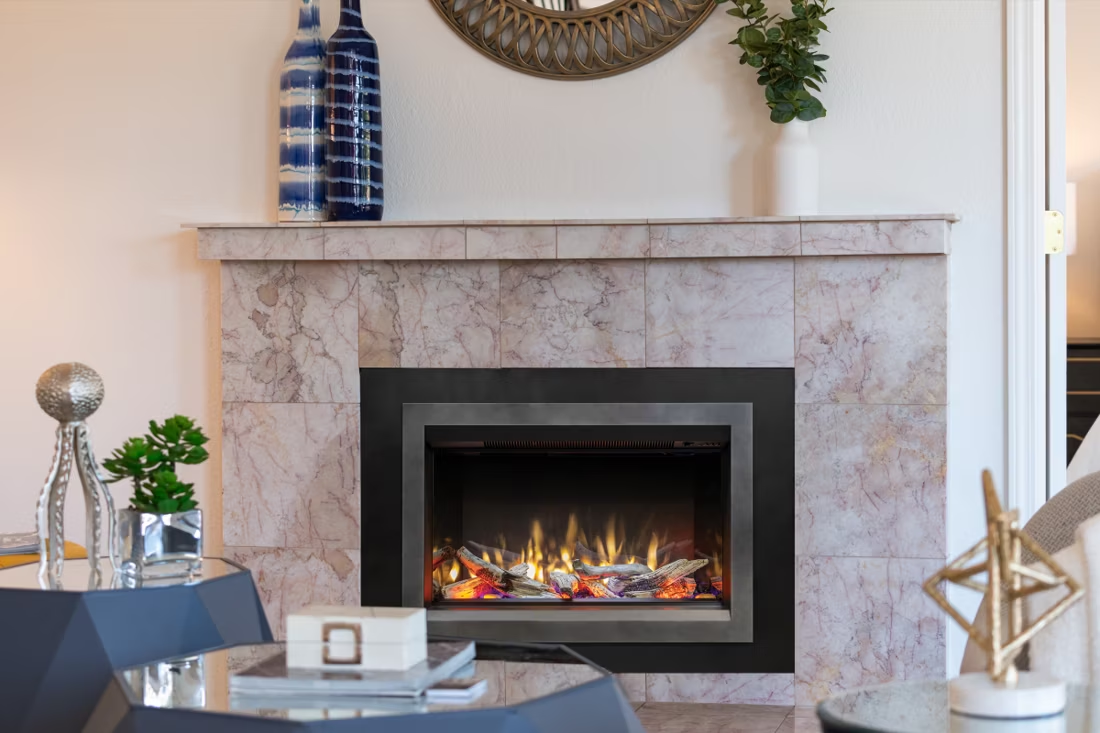
That's where electric fireplaces and inserts do real work. A plug-in freestanding unit needs nothing more than a standard outlet—no gas line, no permit, no combustion air concerns. A built-in linear electric fireplace or insert needs a dedicated circuit, which a licensed electrician can run in an afternoon, coordinated through your local Fulton Electric Cooperative service and Fulton County's code enforcement office where a permit applies. Either way, you get instant, controllable heat and realistic flame in rooms where running gas line or a chimney chase just doesn't make financial sense.
Three steps. No salesperson until you're ready.
Tell us about your project
Your zip code, your situation, and the fuel you're leaning toward—or let the answers point you to one.
See what's actually available
The brands dealers within 100 miles genuinely carry—real options, never a catalog mirage.
Get your dealer & Project Guide
A trusted local dealer, plus the free Project Guide & Parts List that names every component of the job.
Frequently Asked Questions
How much does an electric fireplace or insert cost to install in Fulton County?
A plug-in freestanding electric stove or a small insert that drops into an existing masonry opening typically runs $500 to $1,200 installed, since there's no venting to build and often no permit required beyond swapping a standard outlet. A built-in linear electric fireplace that needs a dedicated 20-amp, 120- or 240-volt circuit run by a licensed electrician—common for additions or finished basements without existing wiring nearby—usually lands between $1,500 and $3,000 depending on how far the electrician has to run wire and whether trim or a mantel surround is added. Larger custom-framed units in new construction can run higher. Rural properties outside McConnellsburg sometimes see a modest travel charge added by installers coming from Chambersburg or Bedford.
Do I need a permit to install an electric fireplace in Fulton County?
A simple plug-in unit generally doesn't require a permit since no new wiring or structural work is involved. A built-in electric fireplace or insert that requires a new dedicated circuit typically does need an electrical permit, and any framing changes may trigger a building permit through Fulton County's code enforcement office. Most licensed electricians and hearth dealers pull these permits as part of the installation, so it's rarely something homeowners have to manage themselves—but it's worth confirming with your installer before work starts, especially on older farmhouses with outdated panels.
Will an electric fireplace still work if the power goes out?
No—and this matters more in Fulton County than in a lot of places. Ridge terrain and long rural line runs from the local electric cooperative mean outages during ice storms and heavy snow can stretch for hours or, occasionally, days. An electric fireplace is a supplemental comfort and zone-heating appliance, not a backup heat source. If your household needs heat that survives an outage, that's a job for a wood stove or a properly vented propane unit, not electric. Many Fulton County homes run electric for daily convenience in a den or addition and keep a wood stove or propane heater in the main living area for exactly this reason.
What size electric fireplace do I need for my room?
Most electric fireplaces and inserts top out around 5,000 BTU (roughly 1,500 watts), which is enough to comfortably heat 400 to 600 square feet of well-sealed space—plenty for a bedroom, den, or finished basement room, but not a substitute for whole-home heat in a drafty older farmhouse. If you're trying to take the chill off a large open room or a poorly insulated addition, talk to a local dealer about placement and insulation before assuming a bigger unit will solve the problem—electric heat output is capped by the standard household circuit, unlike wood or propane.
Can an electric insert go into my existing fireplace?
Yes, and it's a common project in Fulton County's older housing stock. An electric insert slides into an existing masonry firebox opening, plugs into a nearby outlet (or a new dedicated circuit for larger models), and gives you flame effect and heat without opening the flue, buying firewood, or dealing with creosote and chimney sweeping. It's a popular option for homeowners who inherited a farmhouse fireplace that's no longer safe to burn wood in but want to keep the look of a working hearth.
Is electric or propane better for a Fulton County addition or sunroom?
It depends on how the room gets used. Electric is the easier and cheaper install—no gas line, no venting, and it can go in almost anywhere a circuit can reach, which matters in a county where propane delivery to remote ridge properties can mean a longer wait between fills. Propane wins if you want the addition to double as real heat during a power outage or you already have a tank and line on the property. A lot of local dealers will walk through both options since propane infrastructure varies so much between McConnellsburg, Warfordsburg, and the more remote parts of the county.
Does my electrical panel need to be upgraded for a built-in electric fireplace?
Sometimes. Many older Fulton County farmhouses still have 100-amp panels, and while a single 20-amp circuit for an electric fireplace usually fits without issue, a panel that's already near capacity from other additions—well pump, workshop, outbuilding—may need a subpanel or service upgrade. A licensed electrician can check available capacity in about fifteen minutes during a quote visit, and it's worth asking before you commit to a specific fireplace model.
What's the difference between an electric fireplace and an electric stove?
An electric fireplace is typically a built-in or wall-mounted unit designed to look like a traditional fireplace, often with a linear or widescreen flame display. An electric stove mimics the shape of a freestanding wood or pellet stove, sits on the floor, and plugs into a standard outlet—no dedicated circuit or installation labor required in most cases. For Fulton County homeowners wanting the lowest-cost, no-permit option for a cold room or camp near Cowans Gap, a plug-in electric stove is usually the fastest path. For a cleaner built-in look in a remodel, a wall-mounted or recessed electric fireplace is the better fit.
Electric vs. wood vs. pellet—which fits my Fulton County home?
Wood, burned in local oak, hickory, maple, or cherry, remains the go-to for primary or backup heat on farms and rural properties here, especially given how long outages can run after an ice storm. Pellet stoves—using regional brands like Energex, Hamer Pellet Fuel, or Greene Team Pellet Fuel—offer more convenience than wood but still need electricity to run the auger and blower, so they share electric's outage weakness. Electric fireplaces and inserts are the easiest and cheapest to add to a room that just needs supplemental warmth and ambiance, with no fuel storage, no venting, and no combustion byproducts. Most Fulton County households end up mixing fuels: wood or propane for real heat security, electric for the rooms where convenience matters more than backup capability.
Does an electric fireplace need a vent or chimney?
No—that's its superpower. An electric fireplace needs a wall and an outlet, period. No vent pipe, no gas line, no clearances to design around, which is why it works in bedrooms, offices, apartments, and walls where venting a gas or wood unit would be impractical or impossible. Installation is typically the simplest and least expensive of any fireplace type.
Do electric fireplaces actually produce heat?
Yes—most put out around 4,800–5,000 BTUs from a standard outlet, which comfortably warms a bedroom, office, or den as a comfort-zone heater. What they won't do is carry a whole house the way wood, gas, or pellet can. Think of electric as ambiance-first with honest supplemental heat: flames on with no heat in July, flames plus warmth in January.
Can I install a fireplace myself?
If you're putting a fire in your house on purpose, it's best to work with an expert. Unless you're genuinely experienced in framing, gas line, vent pipe, and the national code on clearances to combustibles, have a professional do it—and ideally the same company that sells you the fireplace, so warranty, service, and liability all live under one roof.
How much should I budget for a fireplace?
For an average home—covering the fireplace, the vent pipe, and basic installation—a budget between $3,900 and $5,500 gives you a lot of options across wood, gas, and pellet. By the time you add finish work, gas line, and electrical, the average complete installation lands between $5,000 and $12,000 all-in. In a remodel or new build, a good rule is to put about 2.5% of the total project cost toward the fireplace.
Find your electric fireplace in Fulton County.
Tell us a bit about your home and we'll match you with the right electric fireplace, insert, or stove—and hand you a free Project Guide & Parts List with the exact parts and circuit requirements for your project, plus a trusted local dealer to install it.
Find Your Fireplace →