
Find the right fireplace for your corner of Fulton County.
Wood, gas, pellet, and electric fireplace resources for McConnellsburg and every township in Fulton County—matched with a local hearth retailer who knows the terrain, the townships, and what actually gets installed out here.
Every Project Starts From One of These Five Situations
Cold winters and hardwood forests define heating in Fulton County, PA.
Fulton County sits in the Allegheny Mountain foothills of south-central Pennsylvania, a rural stretch of roughly 1,170 residents spread across townships like Ayr, Bethel, Licking Creek, Todd, and Wells, with McConnellsburg serving as the county seat. Winters fall into climate zone 5A—cold enough that heating season typically runs October through April, with overnight lows that can rival Buffalo, NY on the harder nights. The hardwood forests covering most of the ridges here—oak, hickory, maple, and cherry—have kept wood stoves in steady use for generations, and a lot of local firewood is still cut, split, and seasoned right on the property.
This hub rounds up hearth retailers, service technicians, and fuel suppliers covering the whole county—most traveling in from McConnellsburg or from larger service areas like Chambersburg, Bedford, or Hagerstown, MD to reach the outlying townships. Pick a fuel below to see local dealers, typical installation costs, and specifics for wood, gas, pellet, or electric in Fulton County. There's no county-wide air quality advisory here, which simplifies wood-burning decisions compared to some Pennsylvania counties—but permit requirements can still vary by township, since several of Fulton County's smaller municipalities have opted out of enforcing Pennsylvania's Uniform Construction Code.
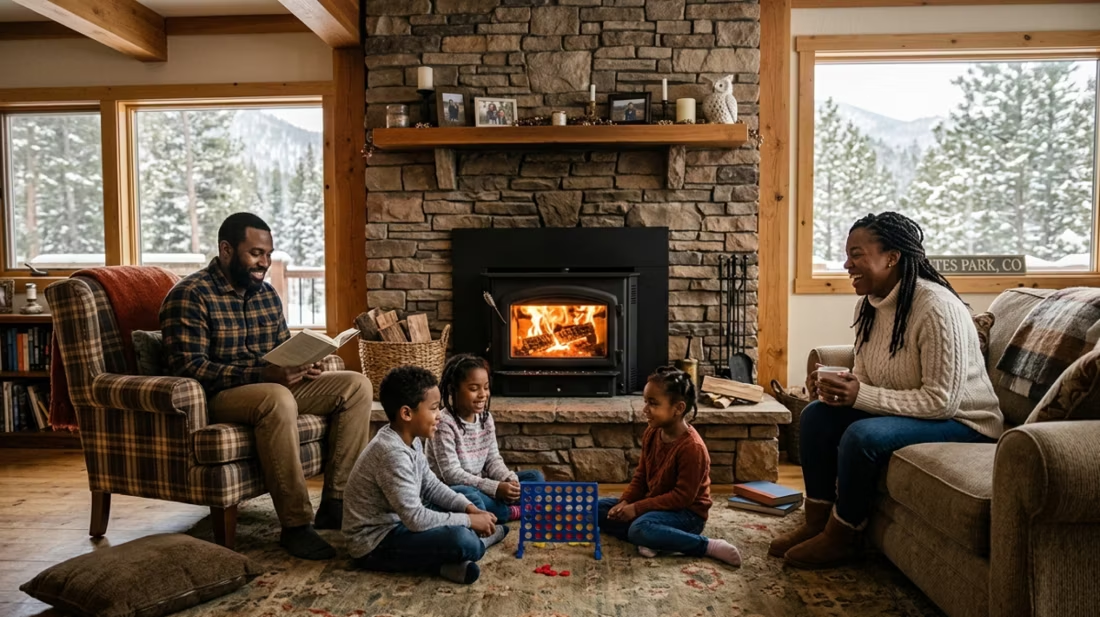
Four fuels. One honest answer for Fulton County.
Three steps. No salesperson until you're ready.
Tell us about your project
Your zip code, your situation, and the fuel you're leaning toward—or let the answers point you to one.
See what's actually available
The brands dealers within 100 miles genuinely carry—real options, never a catalog mirage.
Get your dealer & Project Guide
A trusted local dealer, plus the free Project Guide & Parts List that names every component of the job.
Frequently Asked Questions
Which fuel works best in Fulton County?
It depends on the home and the household. Wood is the traditional choice here—oak, hickory, maple, and cherry cover the ridgelines, and plenty of Fulton County residents still cut and season their own firewood, which keeps fuel costs near zero once you own a saw and a splitter. Gas is the convenience option, but Fulton County has little to no piped natural gas infrastructure, so most gas fireplace and insert installs run on propane delivered by a local supplier rather than a municipal line. Pellet is a solid middle ground—regional brands like Energex, Hamer Pellet Fuel, and Greene Team Pellet Fuel are stocked at farm and feed stores throughout south-central Pennsylvania, so fuel supply isn't the obstacle it can be in more remote counties. Electric works well as a supplemental heat source in bedrooms or additions, but on its own it won't carry a Fulton County home through a January cold snap. Most households here end up pairing a wood or pellet stove for primary heat with gas or electric for convenience in secondary rooms.
Do I need a permit to install a fireplace in Fulton County?
It depends on your township. Pennsylvania's Uniform Construction Code (UCC) governs most building permits statewide, but small municipalities are allowed to opt out of enforcing it, and several of Fulton County's rural townships have done exactly that. McConnellsburg Borough and some of the larger townships do enforce the UCC and will require a permit for a new wood stove, gas insert, or pellet appliance; other townships may have no formal permitting process at all for a hearth appliance install. Gas installations still generally need a licensed gas-fitter for the propane line connection regardless of township rules. Because coverage is inconsistent, the fastest way to know for sure is to ask your local hearth retailer—most have already worked in your township before and know exactly what your municipal office requires.
Are there air quality restrictions on wood burning in Fulton County?
No—Fulton County has no wood-burning advisories, non-attainment designations, or curtailment periods to plan around, which is different from some more populated Pennsylvania counties. That said, an EPA-certified wood stove still burns cleaner and more efficiently than an older uncertified unit, using less of the oak and hickory you or a neighbor cut, and producing less visible smoke for anyone downwind. There's no regulatory reason to upgrade an older stove in Fulton County, but there's still a fuel-efficiency one.
Can one local hearth retailer handle all four fuel types?
With a county this size, most Fulton County homeowners end up working with a hearth retailer based outside the county—commonly in Chambersburg or Bedford, both roughly 30-40 minutes from McConnellsburg—since the local population doesn't support a large stand-alone hearth showroom. The retailers that do serve Fulton County regularly typically carry wood, gas, and pellet appliances, with electric fireplaces as a smaller add-on line. If you're cross-shopping fuels, it's worth asking upfront whether a given dealer stocks working display units for each type or mainly special-orders—that affects both lead time and your ability to see a stove running before you buy.
How does service work in the outlying parts of Fulton County?
Most chimney sweeps and gas techs covering Fulton County are based in Chambersburg, Bedford, or the Hagerstown, MD area and drive in for appointments, so expect a modest travel charge on top of the service call—typically in the $40-$80 range depending on how far out your township is from the main routes (US-30 or PA-16). Scheduling ahead matters even more here than in denser counties: pre-season appointments in September or October are far easier to land than an emergency call in the middle of a January cold spell, when techs covering multiple rural counties get booked out fast. If you're on wood or pellet as a primary heat source, having a secondary fuel source or backup heater on hand for outages is a common practice among longtime Fulton County residents.
What's the typical cost range for fireplace installation across all fuel types in Fulton County?
Ranges track close to regional Pennsylvania averages, sometimes slightly lower given the lower cost of local labor. Wood stove or insert installation: roughly $4,000-$8,500 depending on chimney or liner work. Gas fireplace, insert, or stove: roughly $4,500-$10,000, with cost driven mainly by propane line runs since there's no municipal gas main to tap into. Pellet stove or insert: roughly $4,000-$7,000 for a typical install. Electric fireplace: $200-$3,000 for the unit itself, plus $300-$1,000 in labor for anything beyond a simple plug-and-play placement. Because so few large hearth retailers are based in the county itself, ask any quote whether it includes travel time from Chambersburg or Bedford—it sometimes shows up as a separate line item.
Can I install a fireplace myself?
If you're putting a fire in your house on purpose, it's best to work with an expert. Unless you're genuinely experienced in framing, gas line, vent pipe, and the national code on clearances to combustibles, have a professional do it—and ideally the same company that sells you the fireplace, so warranty, service, and liability all live under one roof.
Can a fireplace actually lower my heating bill?
Yes—by creating a comfort zone. A furnace heats every square foot of the house just to warm the one room you're in; a gas fireplace on low burns roughly a sixth of the gas a typical furnace does. Set the furnace around 55–60 degrees as a baseline, then heat the rooms your family actually uses. Families who heat this way commonly save $20–$60 a month.
Does a fireplace add value to my home?
On average, a fireplace adds back to the home about the same amount you spent installing it. Add the monthly savings from heating the rooms you actually use instead of the whole house—often hundreds of dollars a year—and the value case is strong before you even count what a fire does for how your family uses the room.
I know I want a fireplace—where do I actually start?
Do two things today: snap a photo of the wall or fireplace you want to transform, and take a tape measure to the space—width, height, depth. Those two artifacts answer most of a hearth professional's first questions. Then settle fuel (wood, gas, pellet, or electric) and set a realistic budget: $3,900–$5,500 covers fireplace, vent, and basic install for most homes.
Stove and Fireplace Dealers in Fulton County
Listings include WhyFire partner dealers, dealers we have verified as authorized for the brands we recommend, and established local businesses that carry hearth products. Every listing shows which one it is. The ones marked Preferred run on WhyFire's software, so they can show you real pricing and book your appointment right here. No manufacturer pays for placement. How we verify dealers →
Alternate Heating
Hess Alternative Home Heating
H & D Service & Stove Inc
Bunting’s Fireplace & Stove
Find your fireplace fit in Fulton County.
Tell us about your home and we'll match you with a trusted local dealer and send over a free Project Guide & Parts List—the exact parts, including the vent kit, and a recommended installer for your fuel and your township.
Find Your Fireplace →