
Steady, Thermostat-Controlled Heat for Every Lackawanna Winter.
Set-it-and-forget-it warmth for Dickson City's cold, snowy winters—without the woodpile. Find the right pellet stove or insert and connect with a trusted local dealer.
Every Project Starts From One of These Five Situations
Consistent warmth without the woodpile.
Dickson City sits at just over 1,000 feet in Lackawanna County's Lackawanna Valley, where winter lows average around 20°F and the borough logs a heavy winter heating load—a climate closer to Buffalo, NY than to milder parts of the mid-Atlantic. The surrounding hills are thick with oak, hickory, maple, and cherry, and plenty of area homes still burn cordwood. But Dickson City is a tightly built borough of narrow lots and older rowhomes and twins, where stacking and storing several cords of wood isn't practical for every household. That's exactly the gap pellet appliances fill.
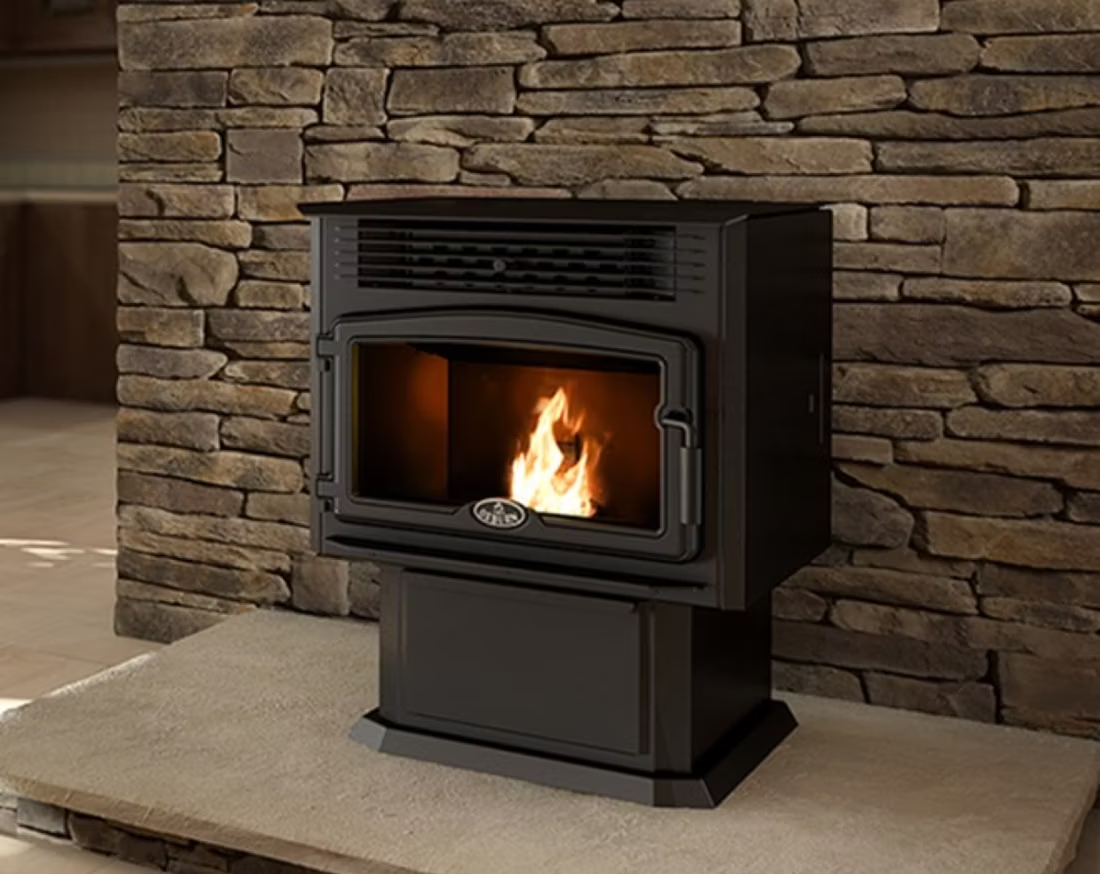
Bagged hardwood pellets from regional brands like Energex, Hamer Pellet Fuel, and Greene Team Pellet Fuel are sold by the ton at hardware stores and farm-supply dealers across northeastern Pennsylvania, so there's no chainsaw, no seasoning wait, and no state forest cutting permit to track down. A pellet stove or insert runs on an electric auger and blower powered through PPL Electric Utilities, delivering thermostat-controlled heat that holds a steady temperature far more evenly than an open wood fire—a real advantage on the long, gray NEPA stretches between December and March.
Three steps. No salesperson until you're ready.
Tell us about your project
Your zip code, your situation, and the fuel you're leaning toward—or let the answers point you to one.
See what's actually available
The brands dealers within 100 miles genuinely carry—real options, never a catalog mirage.
Get your dealer & Project Guide
A trusted local dealer, plus the free Project Guide & Parts List that names every component of the job.
Frequently Asked Questions
How much does a pellet stove installation cost in Dickson City?
Most pellet stove and insert installations in Dickson City run between roughly $3,500 and $6,500, depending on whether you're installing a freestanding stove that vents through an exterior wall or a pellet insert going into an existing masonry fireplace. Inserts typically land toward the higher end because they require a liner run up the existing chimney, while a freestanding stove venting straight through the wall with PL pipe is usually less labor. Local installers in the Scranton/Dickson City area will give you a firm number after seeing your home, but wall thickness, venting distance, and any electrical work for a dedicated outlet are the main cost drivers.
Do I need a wood permit to burn pellets in Dickson City?
No. Unlike cordwood, which in Lackawanna County often means securing a cutting permit for state forest land or buying from a local supplier who's already done that, bagged pellets are a manufactured, ready-to-burn fuel sold by the ton at hardware and farm stores. That's part of why pellet appliances are a good fit for Dickson City's tighter borough lots—there's no woodlot, no splitting, and no seasoning wait involved, just pallets of Energex, Hamer, or Greene Team pellets stacked in the garage or basement.
Where can I buy pellets in Dickson City?
Regional brands like Energex, Hamer Pellet Fuel, and Greene Team Pellet Fuel are widely stocked at hardware stores and farm-supply dealers throughout northeastern Pennsylvania, and most sell by the ton with seasonal pre-buy discounts in late summer. Expect to pay somewhere in the neighborhood of $260 to $320 per ton depending on the brand and whether you buy early or mid-winter. A typical Dickson City home burning a pellet stove as primary heat through a Lackawanna Valley winter uses roughly 2 to 3 tons per season; as supplemental heat, expect closer to 1 ton.
How much electricity does a pellet stove use, and what will it add to my PPL bill?
Pellet stoves need electricity to run the auger, combustion blower, and control board—typically drawing somewhere between 100 and 400 watts depending on the model and fan setting. At PPL Electric Utilities' residential rate of about $0.1234 per kWh, running a pellet stove continuously through a cold snap adds roughly $10 to $25 a month to your electric bill, which is generally offset by the reduction in oil, propane, or electric-baseboard heating elsewhere in the house.
Will my pellet stove work during a power outage?
Not without backup power. Because the auger, igniter, and blower all rely on electricity, a standard pellet stove shuts down the moment the power goes out—which is worth knowing given how ice and wind can knock out power in the Lackawanna Valley during winter storms. Some homeowners pair a pellet stove with a small battery backup unit or a portable generator sized to run the stove's low electrical draw. If uninterrupted heat during outages is a priority, a wood stove or a battery-backed gas unit may be worth discussing alongside pellet with a local dealer.
Do I need a permit to install a pellet stove in Dickson City?
Most freestanding pellet stove and insert installations require a building permit through Dickson City's code enforcement office, since venting penetrates an exterior wall or existing chimney and the appliance needs proper clearance to combustibles. Most local hearth dealers handle the permit application as part of the installation, coordinating the wall or roof penetration and the required clearances so you don't have to navigate it yourself.
What size pellet stove do I need for my Dickson City home?
With winter lows averaging around 20°F and a heavy winter heating load, Dickson City sits solidly in a cold-climate heating zone. For the borough's common older rowhomes and twins—often 1,200 to 1,800 square feet with less insulation than newer construction—a mid-size pellet stove in the 40,000 to 50,000 BTU range is usually enough to serve as primary or near-primary heat for the main living level. Larger or more open-plan homes may need a bigger unit, or a second zone-heat source for upstairs bedrooms. A local dealer will size this based on your square footage and insulation during an in-home visit.
How often does a pellet stove need cleaning and inspection?
Pellet stoves need more frequent light maintenance than wood stoves but less heavy chimney work. Plan on emptying the ash pot every few days to weekly during regular use, and a deeper cleaning of the burn pot, exhaust fan, and venting every one to two months during the heating season. A full professional inspection and venting cleaning once a year—typically before the season starts in early fall—is recommended for any pellet appliance, even though the vent runs are smaller and simpler than a masonry wood chimney.
Pellet stove vs. electric heat—which is right for my Dickson City home?
Electric resistance heat is simple and needs no fuel storage, but at PPL Electric's residential rate of roughly $0.1234 per kWh, it's typically the most expensive way to heat an older, drafty Lackawanna Valley home through a full winter. A pellet stove burns roughly $260-to-$320-per-ton fuel that's far cheaper per BTU, and it can meaningfully cut whatever oil, propane, or electric heat you're currently running as your primary system. The trade-off is that pellet stoves still need electricity to operate and require periodic fuel loading and ash removal, while electric heat is fully automatic. For most Dickson City homes looking to lower winter heating costs, a pellet stove used to supplement or replace electric baseboard in the main living space tends to pay for itself over a few seasons.
Why is my open fireplace making my house colder?
Open fireplaces suck—literally. As the fire burns, it consumes air your furnace already paid to heat and pulls it out through the chimney, so the house is actually colder after the fire goes out than before you lit it. An insert fixes this: it seals the chimney, puts fixed glass across the front, and turns that hole in your house into a real heat source.
Are pellet stoves loud?
They make some noise—there are two fans running plus an auger motor that turns as it feeds pellets. But there's a real range: premium models are engineered quiet, and the best offer a whisper-quiet mode you can comfortably watch TV next to. If noise matters in your room, ask to hear a stove running before you buy—it's a five-minute test that saves years of annoyance.
Can a fireplace actually lower my heating bill?
Yes—by creating a comfort zone. A furnace heats every square foot of the house just to warm the one room you're in; a gas fireplace on low burns roughly a sixth of the gas a typical furnace does. Set the furnace around 55–60 degrees as a baseline, then heat the rooms your family actually uses. Families who heat this way commonly save $20–$60 a month.
Can I install a fireplace myself?
If you're putting a fire in your house on purpose, it's best to work with an expert. Unless you're genuinely experienced in framing, gas line, vent pipe, and the national code on clearances to combustibles, have a professional do it—and ideally the same company that sells you the fireplace, so warranty, service, and liability all live under one roof.
Nearby Dealers
Hearth shops serving Dickson City and the surrounding area. Every listing shows whether it is a WhyFire partner, a dealer we have verified as authorized for the brands we recommend, or a local business carrying hearth products. No manufacturer pays for placement. How we verify dealers →
TAll Pines Farm Store & Fireplaces
Integrity Chimney Service
Glowing Embers
Spring Hill Services
Pellet Brands Stocked Around Dickson City
Manufacturers will point you to the nearest stocking dealer.
Find your pellet stove in Dickson City.
Tell us a bit about your home and we'll put together a free Project Guide & Parts List—the right pellet stove or insert, the exact vent kit and parts your install needs, and a trusted local dealer near Dickson City to put it in.
Find Your Fireplace →