
Warm Up Any Room in Dickson City—No Chimney Required.
Zone heat and real ambiance for Lackawanna County homes, without venting, gas lines, or masonry work. Get matched with a trusted local dealer.
Every Project Starts From One of These Five Situations
Simple heat for older Lackawanna County homes.
Dickson City sits at just over 1,000 feet in the Lackawanna Valley, where winter lows average 20°F and the region racks up roughly 5,740 heating degree days a season—a climate that shares more with Burlington, VT than with the Mid-Atlantic cities to the south. Most of the borough's housing stock is older: capes, colonials, and rowhomes built well before anyone thought to frame a hearth into the plan. Primary heat here comes from oil, propane, or gas-fired furnaces, and that's not something an electric unit is meant to replace.
What electric fireplaces do well is fill the gaps those furnaces leave—a chilly finished basement, a sunroom addition, a family room that never quite warms up on its own. PPL Electric Utilities serves Dickson City at a residential rate around $0.1234 per kWh, which is competitive enough that running a 1,500-watt insert for a few hours a night to take the edge off a room costs less than most people expect. No chimney, no gas line, and in most cases no major permitting—which is exactly why electric units have become the default choice for homeowners here who want supplemental warmth without opening a wall for venting.
Three steps. No salesperson until you're ready.
Tell us about your project
Your zip code, your situation, and the fuel you're leaning toward—or let the answers point you to one.
See what's actually available
The brands dealers within 100 miles genuinely carry—real options, never a catalog mirage.
Get your dealer & Project Guide
A trusted local dealer, plus the free Project Guide & Parts List that names every component of the job.
Frequently Asked Questions
How much does an electric fireplace installation cost in Dickson City?
A plug-in freestanding or insert-style electric fireplace typically runs $300 to $900 installed, since most units simply plug into an existing outlet with no electrical work needed. A built-in wall unit or a linear electric fireplace that requires a dedicated 20-amp circuit runs higher—usually $1,200 to $2,500 once you factor in an electrician to run new wiring, especially in older Dickson City homes where the existing panel may need a slot opened up. Freestanding units that slot into an existing masonry firebox as a mock insert sit in between, generally $500 to $1,200.
Do I need a permit for an electric fireplace in Dickson City?
In most cases, no. A plug-in electric fireplace or insert that uses an existing outlet doesn't trigger a building or electrical permit. If you're having a built-in unit wired on a new dedicated circuit, that electrical work typically does require a permit through Dickson City's local codes enforcement office, and a licensed electrician will usually pull it as part of the job. This is one of the biggest advantages electric has over wood or gas here—there's no chimney inspection, no venting code, and no clearance-to-combustibles calculation to work through.
How much does it cost to run an electric fireplace in Dickson City?
At PPL Electric Utilities' residential rate of about $0.1234 per kWh, a typical 1,500-watt electric fireplace costs roughly 18 cents an hour to run on high heat. Used for three or four hours a night through a Lackawanna Valley winter, that works out to somewhere between $15 and $30 a month—considerably cheaper than most homeowners assume, and far less than running the furnace to heat a room the rest of the house doesn't need warmed.
Electric insert vs. wall-mount vs. freestanding—what's the difference?
An electric insert is built to slide into an existing fireplace opening, which makes it a natural fit for older Dickson City homes that already have a masonry firebox sitting unused. A wall-mount or linear unit is framed into a wall like a flat-screen TV and works well in newer additions or remodels where there's no existing hearth. A freestanding electric stove or fireplace needs no installation at all beyond finding an outlet, making it the right call for renters or anyone who wants heat in a specific room without any construction.
Can an electric fireplace replace my furnace as primary heat?
No—electric fireplaces are built for supplemental zone heating, not whole-home heating. Most homes in this part of Lackawanna County rely on oil, propane, or natural gas furnaces to handle the cold stretches when temperatures sit in the teens and twenties for weeks at a time. An electric unit is best used to take the chill off a single room—a den, a finished basement, a converted porch—while the furnace continues to carry the rest of the house.
What's the best electric fireplace for a Dickson City home?
Because electric units don't need to be sized for climate the way a wood stove does, the bigger question is heat output and room fit. For a drafty older room in an uninsulated addition, look for a full 1,500-watt heater element from brands like Dimplex or Napoleon, which will noticeably warm a 300-400 square foot space. For rooms where you mainly want the visual of a flame with light supplemental warmth, a lower-wattage unit from Touchstone or similar brands works fine. A local dealer can match wattage to your specific room size.
Electric vs. wood—which makes more sense here?
Lackawanna County has plenty of oak, hickory, maple, and cherry available for cordwood, and a wood stove will keep producing heat straight through a PPL outage during an ice storm—something electric simply can't do since it needs power to run. But wood means chimney work, annual sweeps, and hauling and stacking fuel. Electric wins on convenience: flip a switch, no ash, no creosote, no permit hassle. For most Dickson City homes using electric as a supplement to an already-reliable furnace, the outage question matters less than it would for someone relying on wood as primary heat.
Electric vs. gas insert—which is the better fit?
A gas insert delivers real heat with a real flame and can be sized to meaningfully offset furnace use, but it requires a gas line, venting considerations, and a higher upfront cost. An electric insert skips all of that—no gas line, no venting, and a fraction of the installation cost—but tops out at supplemental heat rather than a serious BTU contributor. For a Dickson City homeowner without existing gas service to a room, or who just wants ambiance and light warmth without construction, electric is usually the simpler and cheaper answer.
Where can I see and buy an electric fireplace near Dickson City?
Dickson City itself is a small borough, so most hearth retailers with electric fireplace showrooms are based in the greater Scranton area, a short drive away. Rather than guessing which big-box unit fits your room and your panel, I match Dickson City homeowners with a trusted local dealer who can walk you through wattage, sizing, and mounting options in person—and who knows what's actually installable in the older housing stock common to this part of Lackawanna County.
Does an electric fireplace need a vent or chimney?
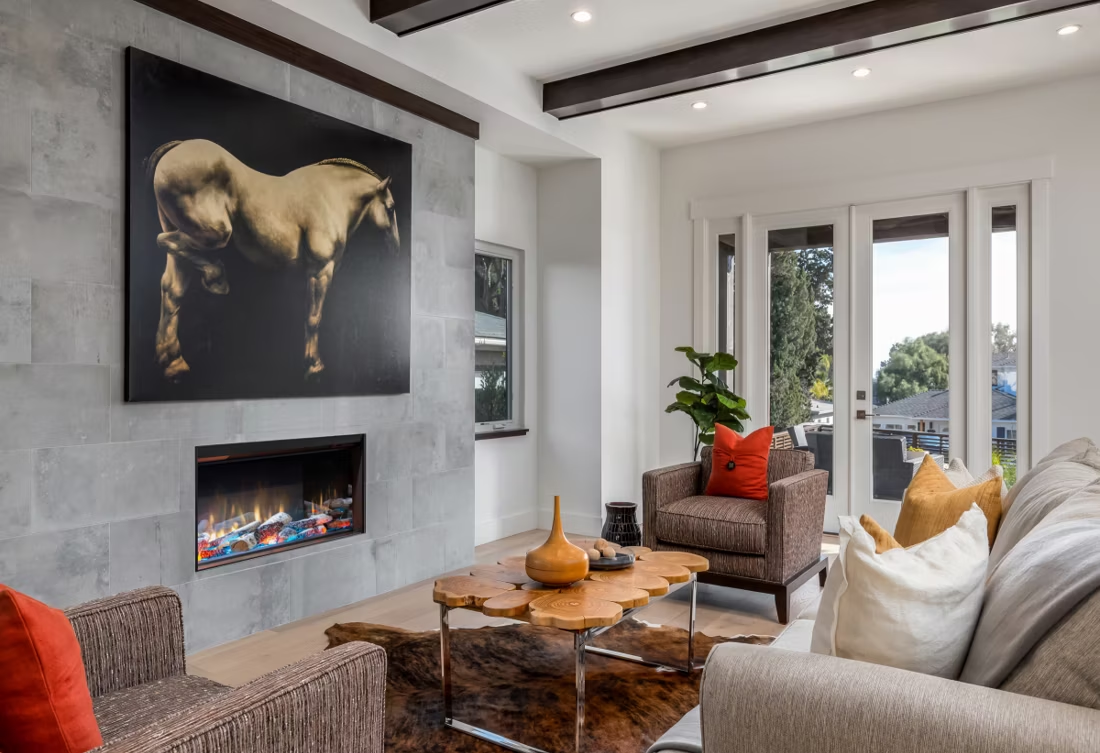
No—that's its superpower. An electric fireplace needs a wall and an outlet, period. No vent pipe, no gas line, no clearances to design around, which is why it works in bedrooms, offices, apartments, and walls where venting a gas or wood unit would be impractical or impossible. Installation is typically the simplest and least expensive of any fireplace type.
Can I put a TV above my fireplace?
Yes—with an asterisk. Fireplaces are hot and TVs don't like heat. Either put a mantel between them to deflect rising warmth, or choose a fireplace with heat-management technology that creates a cool zone on the wall above—the wall stays around 125 degrees, barely warm, while the room still gets full heat. If you like clean lines and don't want a mantel, heat management is the answer.
Can a fireplace actually lower my heating bill?
Yes—by creating a comfort zone. A furnace heats every square foot of the house just to warm the one room you're in; a gas fireplace on low burns roughly a sixth of the gas a typical furnace does. Set the furnace around 55–60 degrees as a baseline, then heat the rooms your family actually uses. Families who heat this way commonly save $20–$60 a month.
How much should I budget for a fireplace?
For an average home—covering the fireplace, the vent pipe, and basic installation—a budget between $3,900 and $5,500 gives you a lot of options across wood, gas, and pellet. By the time you add finish work, gas line, and electrical, the average complete installation lands between $5,000 and $12,000 all-in. In a remodel or new build, a good rule is to put about 2.5% of the total project cost toward the fireplace.
Nearby Dealers
Hearth shops serving Dickson City and the surrounding area. Every listing shows whether it is a WhyFire partner, a dealer we have verified as authorized for the brands we recommend, or a local business carrying hearth products. No manufacturer pays for placement. How we verify dealers →
TAll Pines Farm Store & Fireplaces
Integrity Chimney Service
Glowing Embers
Spring Hill Services
Electric Service in Dickson City
An electric fireplace's heater draws about 1,500 watts—pennies per hour at local rates.
Ppl Electric Utilities Corp
Find your electric fireplace in Dickson City.
Tell us a bit about your room and how you plan to use it, and we'll put together a free Project Guide & Parts List—the right unit, the parts you'll need, and a trusted local dealer to install it.
Find Your Fireplace →