
Heat that holds up through a Scranton winter.
Wood, gas, pellet, and electric fireplace resources for every city and borough in Lackawanna County—from Scranton and Carbondale to the smaller boroughs along the Lackawanna River. Find the right unit and connect with a trusted local hearth retailer.
Every Project Starts From One of These Five Situations
Northeastern Pennsylvania heating, from the valley floor to the ridgetops.
Lackawanna County sits in the old anthracite coal region of northeastern Pennsylvania, its valley towns strung along the Lackawanna River between forested ridgelines. Climate zone 5A puts the county in the same general cold-climate tier as Madison, Wisconsin—winter lows average around 20°F, and the heating season typically runs from October through April. The hardwood forests here are dense with oak, hickory, maple, and cherry, which is part of why wood heat has never gone out of style in this county—cordwood is genuinely abundant and burns long and hot in a properly sized stove.
What you'll find on this hub: hearth retailers, service technicians, and fuel suppliers serving every community in the county—from Scranton and Dunmore in the valley core out to Carbondale, Olyphant, Jermyn, and the smaller boroughs and townships that round out the county's roughly 465,000 residents. Pick your fuel below to drill into specifics—local dealers, installation costs, recommended units, and the resources that match your project. Whether you're heating a rowhome in South Scranton or a farmhouse up toward the county line, this is the starting point.
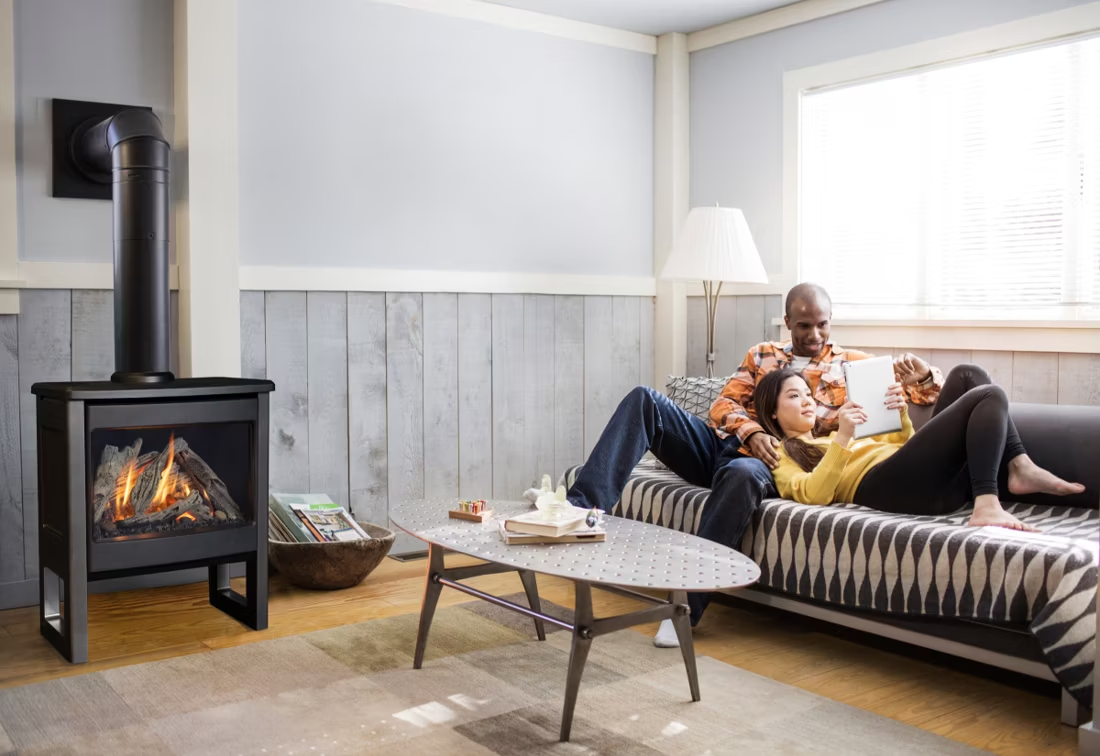
Four fuels. One honest answer for Lackawanna County.
Three steps. No salesperson until you're ready.
Tell us about your project
Your zip code, your situation, and the fuel you're leaning toward—or let the answers point you to one.
See what's actually available
The brands dealers within 100 miles genuinely carry—real options, never a catalog mirage.
Get your dealer & Project Guide
A trusted local dealer, plus the free Project Guide & Parts List that names every component of the job.
Frequently Asked Questions
Which fuel works best in Lackawanna County?
It depends on the home and the household. Wood remains a genuinely popular primary or supplemental heat source here—the local oak, hickory, maple, and cherry supply is plentiful and well-suited to a cast-iron or steel stove that can hold a fire overnight through a 20°F night. Gas is the convenience choice in Scranton, Dunmore, and other towns with natural gas service—instant heat, thermostat control, no wood handling. Pellet stoves are a solid middle ground for people who want wood-style ambiance without splitting and stacking cordwood—Energex, Hamer, and Greene Team pellet fuel are all produced within reasonable trucking distance of the county, which keeps pellet costs from spiking the way they do in regions that import fuel long-distance. Electric fireplaces work well as supplemental heat in bedrooms, basements, and additions, but in a 5A climate zone they're not a primary heat source. Many Lackawanna County homes end up running two fuels—wood or pellet as the workhorse, gas or electric for convenience rooms.
Do I need a permit to install a fireplace in Lackawanna County?
In most cases, yes. New wood stoves, wood inserts, gas fireplaces, gas inserts, gas stoves, and pellet stoves typically require a building permit, and gas installations also require a separate gas line permit performed by a licensed gas-fitter. Within the City of Scranton, permits go through the city's code enforcement office; in other boroughs and townships, permitting runs through the local municipal building department, since Lackawanna County itself doesn't issue building permits countywide. Electric fireplaces usually don't require a permit unless the installation involves a built-in unit with new wiring or a dedicated circuit. Most local hearth retailers handle the permitting process as part of the installation quote, so it's worth asking upfront rather than pulling the permit yourself.
Are there wood-burning restrictions in Lackawanna County?
No—Lackawanna County doesn't have the kind of winter inversion or non-attainment air quality issues that trigger burn bans or curtailment days in some western states. That said, new wood stove installations are still expected to meet current EPA emissions standards, and it's good practice to burn seasoned hardwood rather than green wood or construction scrap, both for chimney safety and for being a considerate neighbor in denser boroughs like Scranton and Dunmore where homes sit close together. If you're replacing an older, pre-EPA stove, a newer certified unit will burn noticeably cleaner and use less wood for the same heat output.
Can one local hearth retailer handle all four fuel types?
Many hearth retailers serving Lackawanna County carry three or four fuel types, since demand for wood, gas, and pellet is all genuinely strong here and electric units are simple enough that most stores stock a few. Dealers with full wood, gas, pellet, and electric lineups are worth visiting first if you're still deciding between fuels—you can see working displays side by side and get a straight comparison of installed cost and ongoing fuel cost. Some smaller shops specialize more narrowly, focusing on wood and pellet stoves without much gas inventory, or vice versa. If you already know your fuel, the county + fuel pages above narrow the retailer list to dealers that specifically stock and install that fuel type.
How does service work in the smaller boroughs outside Scranton?
Technicians based in Scranton, Dunmore, or Carbondale generally cover the rest of the county without much trouble, since Lackawanna County is compact enough that most boroughs are within a 20-30 minute drive of the valley core. Some techs add a modest trip fee for outlying townships, but it's usually minor compared to the base service cost. The bigger factor is timing—scheduling annual chimney sweeps or gas inspections in September or early October, before the first cold snap, gets you an appointment far more easily than calling in December when every technician in the county is backed up with emergency no-heat calls.
What's the typical cost range for fireplace installation across all fuel types in Lackawanna County?
Costs vary by fuel and by how much venting or gas line work is involved. Wood stove or insert installation: roughly $3,800–$8,500 for a typical retrofit into an existing masonry chimney, more if new class-A chimney pipe is required. Gas fireplace, insert, or stove: roughly $4,000–$10,000, with cost driven mainly by whether a new gas line needs to be run. Pellet stove or insert: roughly $4,000–$7,000 for most installs, reflecting the simpler venting pellet appliances require. Electric fireplace: $200–$3,000 for the unit itself, plus $400–$1,200 in labor for anything beyond a plug-and-play install, such as a built-in with a dedicated circuit. For a firmer number tied to your specific home, the county + fuel pages above break out cost detail by fuel type.
Wood, gas, pellet, or electric—how do I choose?
Match the fuel to your life, not the other way around. Wood: lowest fuel cost and total power-outage independence, but you're hauling and stacking. Gas: press a button, set a thermostat, no maintenance to speak of. Pellet: wood economics with automatic feeding, in exchange for weekly cleaning and a need for electricity. Electric: plugs in anywhere with honest supplemental heat. Nobody regrets the fuel that fits how they actually live.
Can a fireplace actually lower my heating bill?
Yes—by creating a comfort zone. A furnace heats every square foot of the house just to warm the one room you're in; a gas fireplace on low burns roughly a sixth of the gas a typical furnace does. Set the furnace around 55–60 degrees as a baseline, then heat the rooms your family actually uses. Families who heat this way commonly save $20–$60 a month.
Can I install a fireplace myself?
If you're putting a fire in your house on purpose, it's best to work with an expert. Unless you're genuinely experienced in framing, gas line, vent pipe, and the national code on clearances to combustibles, have a professional do it—and ideally the same company that sells you the fireplace, so warranty, service, and liability all live under one roof.
Does a fireplace add value to my home?
On average, a fireplace adds back to the home about the same amount you spent installing it. Add the monthly savings from heating the rooms you actually use instead of the whole house—often hundreds of dollars a year—and the value case is strong before you even count what a fire does for how your family uses the room.
Stove and Fireplace Dealers in Lackawanna County
Listings include WhyFire partner dealers, dealers we have verified as authorized for the brands we recommend, and established local businesses that carry hearth products. Every listing shows which one it is. The ones marked Preferred run on WhyFire's software, so they can show you real pricing and book your appointment right here. No manufacturer pays for placement. How we verify dealers →
Integrity Chimney Service
Glowing Embers
Spring Hill Services
S & T Coombe
Find your fireplace in Lackawanna County.
Pick your fuel below and we'll match you with a trusted local dealer, plus send a free Project Guide & Parts List—the exact parts, vent kit, and recommended installer for your home.
Find Your Fireplace →