
Reliable, hands-off heat for Clarion County's hardwood country.
With 6,708 heating degree days and winter lows averaging 16°F, Clarion County homes need heat that keeps running without daily tending. Find the right pellet stove or insert, and get matched with a trusted local dealer.
Every Project Starts From One of These Five Situations
Hands-off heat that keeps up with a real Appalachian winter.
Clarion County sits in rural northwestern Pennsylvania, population just over 13,000, with a winter that runs long and settles in cold—6,708 heating degree days a year, on par with what a Buffalo, NY household deals with most winters. The county's oak, hickory, maple, and cherry hardwoods have always made this wood-heat country, and many households near Cook Forest and the edges of Allegheny National Forest still cut their own firewood under a Forest Service permit (roughly $20 per cord, May through October). But not every household wants to split and stack wood every fall, and that's where pellet appliances have earned a real foothold here.
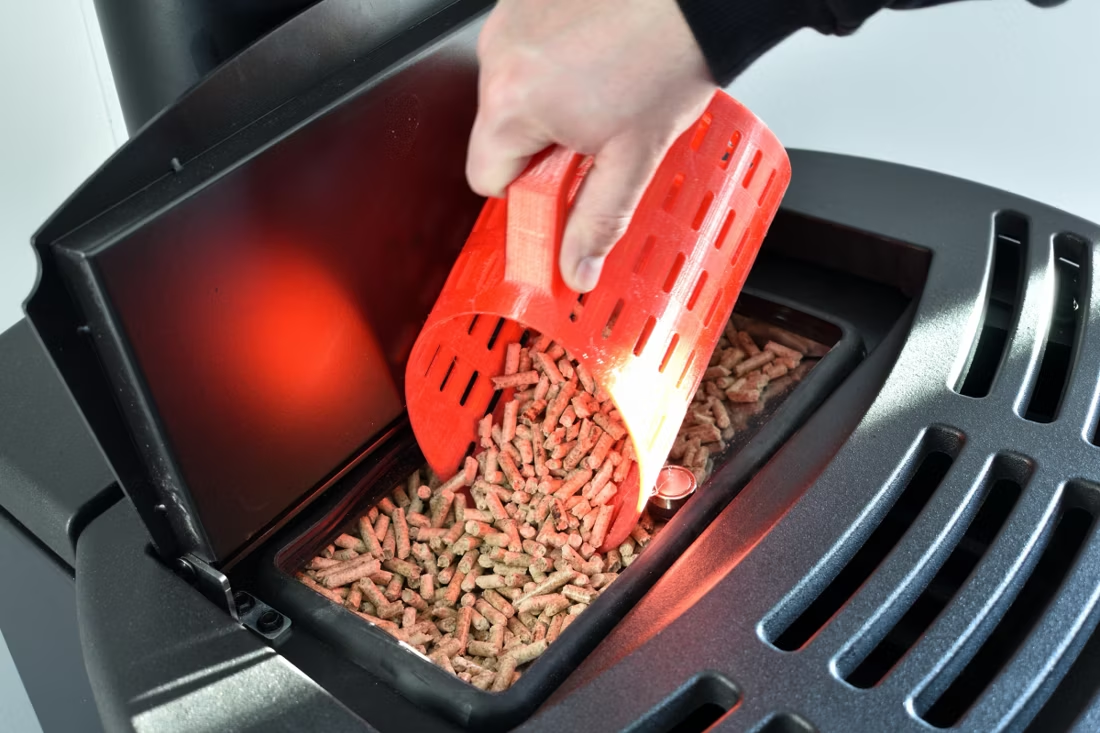
With no county-level air quality curtailment periods to navigate—unlike some western regions where wood-burning gets restricted during winter inversions—Clarion County households are free to run a pellet stove on their own schedule. Load the hopper, set the thermostat, and the auger and blower do the rest. Regional pellet brands like Energex, Hamer Pellet Fuel, and Greene Team Pellet Fuel are stocked at farm-supply and hardware retailers across this part of Pennsylvania each fall, which keeps fuel sourcing local and straightforward rather than something you have to plan a special trip for.
Three steps. No salesperson until you're ready.
Tell us about your project
Your zip code, your situation, and the fuel you're leaning toward—or let the answers point you to one.
See what's actually available
The brands dealers within 100 miles genuinely carry—real options, never a catalog mirage.
Get your dealer & Project Guide
A trusted local dealer, plus the free Project Guide & Parts List that names every component of the job.
Frequently Asked Questions
How much does a pellet stove installation cost in Clarion County?
Pellet stove and insert installations in Clarion County typically fall in the $3,000 to $6,500 range, depending on the unit, whether you're installing into an existing masonry fireplace opening, and how much PL (pellet-vent) piping the installer needs to run through an exterior wall or existing chimney. A straightforward insert into an existing fireplace with a nearby outside wall tends to land on the lower end; a freestanding stove in a room without an existing hearth or chimney, requiring new venting and a hearth pad, runs higher. A local dealer will size the job and give a firm number after seeing your space.
What size pellet stove do I need for my Clarion County home?
Sizing depends on square footage, ceiling height, insulation, and whether the pellet stove is your primary heat or a supplement to an oil or propane furnace. As a rough guide for a county with 6,708 heating degree days and plenty of older, less-insulated farmhouses: small units (under 1,000 sq ft) suit a single room or add-on, mid-size units (1,000–1,800 sq ft) cover most main living areas, and larger units can handle an open-concept main floor. Older Clarion County homes with drafty original windows often need to size up compared to a newer, tightly built house of the same square footage. A local dealer will walk your space and size it for free.
Where can I find certified pellet stove installers near me?
Look for installers with NFI (National Fireplace Institute) pellet-specific certification, which covers venting, clearances, and hopper/auger setup correctly for cold-climate use. Given Clarion County's small population, the pool of certified installers is limited compared to a metro area—most cover the county from a base in Clarion or a neighboring county seat, and a small travel charge for rural addresses (Sligo, Knox, Rimersburg) is common. Buying and installing through the same dealer simplifies warranty coverage if the auger motor or igniter needs service down the line.
What's the difference between a pellet stove and a pellet insert?
A pellet stove is a freestanding unit that sits on a hearth pad and vents through a wall or existing chimney—it can go almost anywhere with the right clearances. A pellet insert is built to slide into an existing masonry fireplace opening, turning a fireplace you already have into a thermostat-controlled heat source. For the many older homes in Clarion Borough and the surrounding county with an existing masonry fireplace, an insert is usually the more cost-effective route since it reuses the chimney cavity. Homes without an existing fireplace opening are better suited to a freestanding stove.
Do I need a permit to install a pellet stove in Clarion County?
Yes—new pellet stove and insert installations require a building permit under Pennsylvania's Uniform Construction Code (UCC), issued through your local municipality's code enforcement office (borough or township) or, in some unincorporated areas, through a third-party UCC agency contracted by the county. Most established local dealers handle this paperwork as part of the installation, including verifying clearances and venting termination points meet code. Since Clarion County has no air-quality curtailment ordinances, there's no burn-ban permitting to worry about—the permit is strictly about safe installation.
What's the best pellet stove for Clarion County's climate?
For a county with winter lows averaging 16°F and long stretches of sustained cold, look for a pellet stove with a solid hopper capacity and a reliable auger feed system—you don't want to be refilling every few hours during a January cold snap. Harman, headquartered just a few hours south in Halifax, Pennsylvania, is a common recommendation among local dealers for exactly that reason: their units are built and serviced close to home. Ravelli and other established brands also perform well in this climate zone. Ask your local retailer about hopper capacity relative to your square footage and how often you're realistically willing to reload.
How much maintenance does a pellet stove need?
Pellet stoves need more routine attention than a gas unit but far less than a wood stove's annual chimney sweep. Plan on emptying the ash pan every few days during heavy use, a deeper cleaning of the burn pot and heat exchanger tubes every one to two weeks in-season, and a full professional inspection and cleaning once a year—typically late summer before the heating season ramps up. Skipping the burn pot cleaning is the most common cause of poor ignition and error codes, so it's worth staying on top of even during a busy Clarion County winter.
Where can I buy pellet fuel in Clarion County?
Regional brands like Energex, Hamer Pellet Fuel, and Greene Team Pellet Fuel are the ones local farm-supply and hardware retailers tend to stock each fall, and buying regionally milled pellets cuts down on shipping cost and availability gaps mid-winter. Pricing shifts through the season—buying early, before the first hard cold snap of the year, generally gets you better selection and pricing than waiting until January. Your local dealer can usually point you to whichever supplier is stocking that particular season.
Pellet stove vs. wood stove—which is right for my home?
Wood stoves burn cordwood—including the oak, hickory, maple, and cherry that's common on Clarion County properties—and keep working during a power outage, which matters given how rural stretches of the county can see longer utility restoration times after a storm. Pellet stoves need electricity to run the auger and blower, so they go dark in an outage unless you add battery backup, but they offer thermostat control, less mess, and no splitting or stacking. If you already have access to a woodlot or a Forest Service cutting permit through Allegheny National Forest, wood can be the more economical choice. If convenience and hands-off operation matter more than fuel cost, pellet is usually the better fit. Local dealers carry both, and can walk through the tradeoffs for your specific setup.
How often does a pellet stove need cleaning?
A clean pellet stove is a happy pellet stove. Plan on cleaning the burn pot about once a week when you're burning regularly—ash and clinkers gum up the air holes just like a pellet barbecue. Most pellet stove problems trace back to skipped cleaning that nobody explained up front. Some designs make it easy with a trapdoor burn pot: pull a lever and the gunk drops into the ash pan.
Are pellet stoves loud?
They make some noise—there are two fans running plus an auger motor that turns as it feeds pellets. But there's a real range: premium models are engineered quiet, and the best offer a whisper-quiet mode you can comfortably watch TV next to. If noise matters in your room, ask to hear a stove running before you buy—it's a five-minute test that saves years of annoyance.
How much should I budget for a fireplace?
For an average home—covering the fireplace, the vent pipe, and basic installation—a budget between $3,900 and $5,500 gives you a lot of options across wood, gas, and pellet. By the time you add finish work, gas line, and electrical, the average complete installation lands between $5,000 and $12,000 all-in. In a remodel or new build, a good rule is to put about 2.5% of the total project cost toward the fireplace.
What is an in-home preview and do I need one?
It's a visit where a hearth professional measures your space, confirms the model you picked actually works in your home, and walks the specs—framing, gas line, venting, finish work—before anything is ordered. Some details you just can't know until you see the house. Never make a down payment without one; it's the single most-skipped step that burns buyers.
Pellet Brands Stocked Around Clarion County
Manufacturers will point you to the nearest stocking dealer.
Find your pellet stove in Clarion County.
Tell us a bit about your home and we'll put together a free Project Guide & Parts List—the right pellet stove or insert, the vent kit it needs, and a trusted local Clarion County dealer to install it.
Find Your Fireplace →