
Add warmth to your Clarion County home—no chimney required.
Plug-in ambiance or wired-in supplemental heat for family rooms, finished basements, and additions across Clarion County—from the borough of Clarion out to Shippenville, Knox, and New Bethlehem. Find the right unit and connect with a trusted local dealer.
Every Project Starts From One of These Five Situations
Electric heat that fits any room.
Clarion County is spread thin—about 13,000 people across the county seat of Clarion (home to Clarion University), and smaller communities like Shippenville, Knox, New Bethlehem, Rimersburg, and Sligo along the Clarion River. Winters here are genuinely cold: average lows near 16°F and a long, hard winter heating season put the county in the same cold-climate tier as Buffalo, NY. Most homes here still lean on oil, propane, or wood as primary heat—wood especially, with oak, hickory, maple, and cherry cut locally and Allegheny National Forest cutting permits running about $20 per cord from May through October. Electric fireplaces aren't trying to compete with that; they've found their own lane.
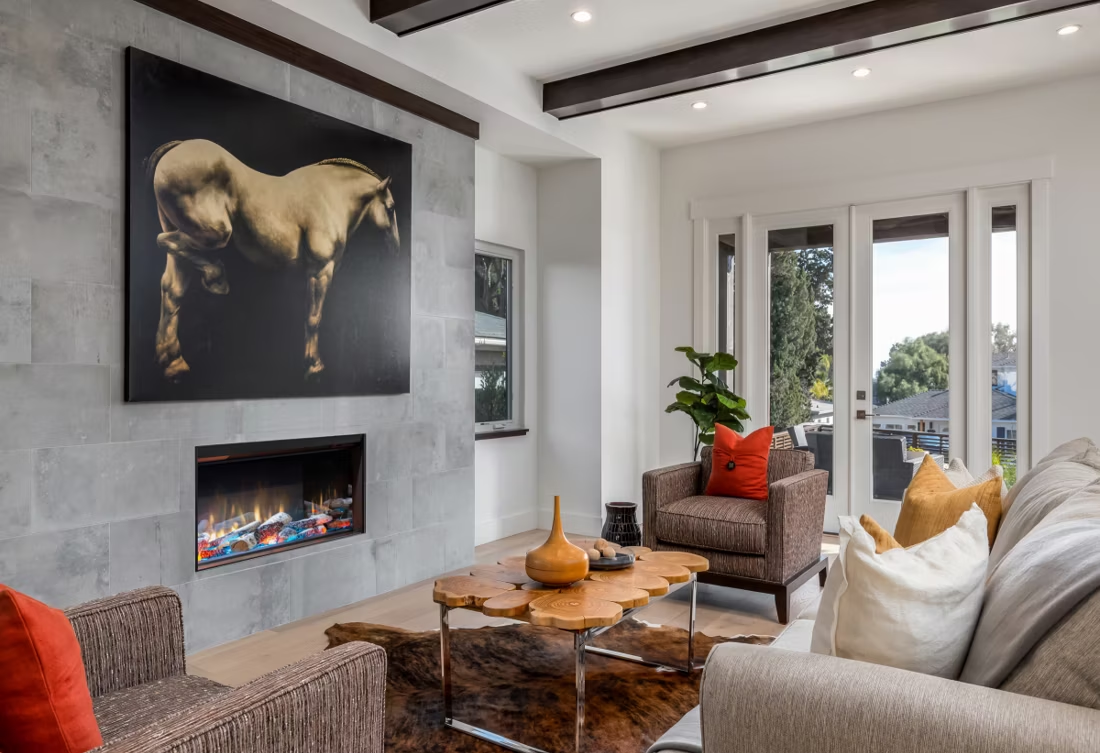
An electric fireplace won't carry a whole house through a Clarion County winter on its own—the winter heating load here is too much for a plug-in unit to handle solo. What it does well is zone heat: warming up a finished basement, a sunroom addition, or a bedroom that the furnace never quite reaches, without running new gas line or building a masonry chimney. That makes electric a common choice for renovations, rental units in Clarion or Shippenville, and older farmhouses where adding real venting isn't practical. Freestanding and mantel-package units plug into a standard outlet; built-in wall units wired to a dedicated circuit are a different project, and that's where working with a licensed local electrician and hearth dealer matters.
Three steps. No salesperson until you're ready.
Tell us about your project
Your zip code, your situation, and the fuel you're leaning toward—or let the answers point you to one.
See what's actually available
The brands dealers within 100 miles genuinely carry—real options, never a catalog mirage.
Get your dealer & Project Guide
A trusted local dealer, plus the free Project Guide & Parts List that names every component of the job.
Frequently Asked Questions
How much does an electric fireplace installation cost in Clarion County?
A basic plug-in electric insert or freestanding stove runs $300 to $1,200 installed, since there's no venting and often no electrical work beyond an existing outlet. A built-in wall unit or mantel package wired to a dedicated 20-amp circuit—the more common choice for a family room renovation in Clarion or New Bethlehem—typically runs $1,200 to $2,500 once an electrician runs the circuit and a carpenter frames the surround. Costs run toward the lower end for a straightforward swap into an existing mantel opening, and higher for full built-ins with custom millwork.
Can an electric fireplace actually heat a room in Clarion County's winters?
Yes, for the room it's in—most units put out 4,000 to 5,000 BTU, enough to noticeably warm a 400-square-foot space even when it's 16°F outside. What it won't do is replace your furnace during a January cold snap; with such a long, demanding winter heating season, Clarion County's heat load is too high for electric alone. Think of it the way most local homeowners use theirs: supplemental heat for a finished basement or bonus room, paired with whatever runs the rest of the house.
Do I need a permit to install an electric fireplace in Clarion County?
Usually not for a plug-in freestanding unit or insert—it's treated like any other appliance. If you're installing a built-in wall unit that requires a new dedicated circuit, the electrical work itself typically needs a permit through your local municipality's code enforcement office, whether that's the Borough of Clarion or your township. Most dealers coordinate with a licensed electrician who pulls that permit as part of the job, so it's rarely something you have to chase down yourself.
Electric vs. wood—which is right for my Clarion County home?
Wood still runs deep here—oak, hickory, maple, and cherry are all cut locally, and Allegheny National Forest permits at roughly $20 per cord make self-cut firewood genuinely affordable. Wood also keeps working when the power goes out, which matters during winter storms in rural parts of the county. Electric can't do that—no power, no fire, no heat—but it wins on convenience: no ash, no chimney sweep, no wood stacked on the porch, and it can go anywhere in the house since there's no venting required. Many Clarion County homes end up with both: wood or a wood insert for real heat and outage backup, electric for a spare bedroom or basement that just needs a little warmth and ambiance.
Electric vs. gas—which is right for my Clarion County home?
Gas fireplaces put out real heat—enough to serve as supplemental heat for a whole living area—and most direct-vent models keep working during a power outage with battery backup. Electric units are lower output, purely supplemental, and stop working the moment the power drops. Where electric wins is upfront cost and flexibility: no gas line, no venting, no propane tank, and installation that a lot of homeowners can DIY for a simple insert. For a rural Clarion County home already on propane, gas is often worth the extra investment for a primary living space; for a basement, bedroom, or rental unit, electric is usually the more practical call.
What size electric fireplace or insert do I need?
Sizing is mostly about the room, not the whole house, since electric units are zone heaters rather than central heat. A 30 to 40-inch insert or wall unit comfortably serves a 300 to 400-square-foot family room or den—common in the older homes around Clarion and New Bethlehem. Larger open-concept additions may call for a 50 to 60-inch unit or two smaller units on separate walls. Ceiling height and how open the space is to adjoining rooms both matter more than they would with a furnace, since electric heat doesn't travel far past the room it's in.
Will my electric fireplace work during a power outage?
No—electric fireplaces require power for both the heater and the flame effect, so they go dark the moment the electricity does. That's the one real tradeoff against wood heat in a county where winter storm outages happen. If backup heat during outages matters to you, a wood stove or insert using locally cut oak or hickory is the better hedge; electric is best thought of as everyday supplemental heat and ambiance, not an emergency heat source.
What's the difference between an electric insert, an electric stove, and a mantel package?
An electric insert is built to slide into an existing fireplace opening or a framed wall cavity—the cleanest option if you're converting an old masonry fireplace or building into new construction. An electric stove is a freestanding cabinet styled like a wood stove, useful when you want a stove look without an insert opening to fill. A mantel package pairs a smaller electric insert with a factory-built surround and mantel shelf, giving you a finished fireplace look without any carpentry—a popular choice for basement rec rooms and additions around the county where there's no existing fireplace to work with.
What's the best electric fireplace for Clarion County's climate?
Since electric units here are working as supplemental heat rather than primary heat, look for models with a strong heater output—5,000 BTU with a variable thermostat—rather than just a good-looking flame. Brands like Dimplex and Napoleon build units that separate the heat function from the flame effect, so you can run the fire for ambiance in shoulder seasons and dial up real heat output on the coldest days without overheating the room. For a basement or addition that runs chilly all winter, that flexibility matters more than it does in a milder climate.
Can I put a TV above my fireplace?
Yes—with an asterisk. Fireplaces are hot and TVs don't like heat. Either put a mantel between them to deflect rising warmth, or choose a fireplace with heat-management technology that creates a cool zone on the wall above—the wall stays around 125 degrees, barely warm, while the room still gets full heat. If you like clean lines and don't want a mantel, heat management is the answer.
Do electric fireplaces actually produce heat?
Yes—most put out around 4,800–5,000 BTUs from a standard outlet, which comfortably warms a bedroom, office, or den as a comfort-zone heater. What they won't do is carry a whole house the way wood, gas, or pellet can. Think of electric as ambiance-first with honest supplemental heat: flames on with no heat in July, flames plus warmth in January.
Can a fireplace actually lower my heating bill?
Yes—by creating a comfort zone. A furnace heats every square foot of the house just to warm the one room you're in; a gas fireplace on low burns roughly a sixth of the gas a typical furnace does. Set the furnace around 55–60 degrees as a baseline, then heat the rooms your family actually uses. Families who heat this way commonly save $20–$60 a month.
How much should I budget for a fireplace?
For an average home—covering the fireplace, the vent pipe, and basic installation—a budget between $3,900 and $5,500 gives you a lot of options across wood, gas, and pellet. By the time you add finish work, gas line, and electrical, the average complete installation lands between $5,000 and $12,000 all-in. In a remodel or new build, a good rule is to put about 2.5% of the total project cost toward the fireplace.
Find your electric fireplace in Clarion County.
Tell us a bit about your home and we'll put together a free Project Guide & Parts List—the right electric fireplace or insert for your space, the exact parts you'll need, and a trusted local dealer to install it.
Find Your Fireplace →