
Reliable heat for every Clarion County home.
Wood, gas, pellet, and electric fireplace resources for towns and rural townships across Clarion County—from the borough of Clarion to Knox and Sligo. Find the right unit and connect with a trusted local hearth retailer.
Every Project Starts From One of These Five Situations
Allegheny Plateau winters call for dependable heat in Clarion County, Pennsylvania.
Clarion County sits on the Allegheny Plateau in northwestern Pennsylvania, a region of rolling hardwood ridges and river valleys along the Clarion and Allegheny watersheds. With roughly 6,700 heating degree days and average winter lows around 16 degrees, the heating season here runs long and steady—not the extreme cold of Duluth MN, but close enough that a home without a reliable secondary heat source struggles by February. Oak, hickory, maple, and cherry are all cut locally, and firewood from the Allegheny National Forest and private woodlots has supplied Clarion County households for generations.
What you'll find on this hub: hearth retailers, service technicians, and fuel suppliers serving the whole county—from the borough of Clarion through Shippenville, Knox, Sligo, Rimersburg, and the townships in between. Pick your fuel below to drill into specifics—local dealers, installation costs, recommended units, and the resources that match your project. Whether you're heating a farmhouse outside Fryburg or a cabin near the Clarion River, this is the starting point.
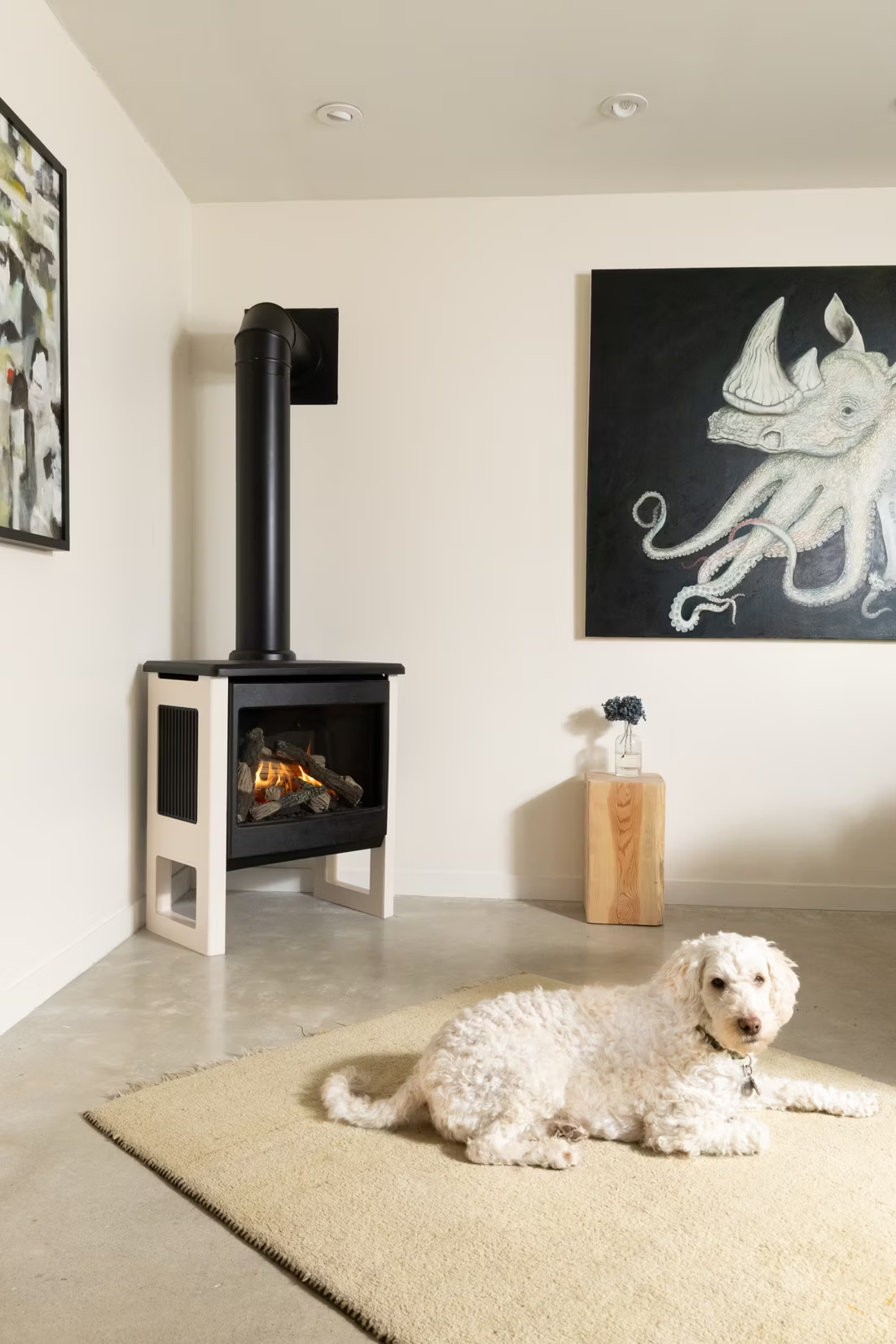
Four fuels. One honest answer for Clarion County.
Three steps. No salesperson until you're ready.
Tell us about your project
Your zip code, your situation, and the fuel you're leaning toward—or let the answers point you to one.
See what's actually available
The brands dealers within 100 miles genuinely carry—real options, never a catalog mirage.
Get your dealer & Project Guide
A trusted local dealer, plus the free Project Guide & Parts List that names every component of the job.
Frequently Asked Questions
Which fuel works best in Clarion County?
It depends on your home and priorities, but all four fuels have a real place here. Wood is the traditional choice in rural Clarion County—oak, hickory, maple, and cherry are cut locally, and a good catalytic or non-catalytic stove will carry a home through the coldest stretch of a roughly 6,700-HDD winter. Gas is the convenience option for homes with natural gas service in Clarion borough and nearby communities, or propane for outlying households—no wood handling, thermostat-controlled heat. Pellet is a strong middle ground here given the regional supply of Energex, Hamer, and Greene Team bags—less labor than splitting wood, similar even heat. Electric is best treated as supplemental—good for a bedroom or den, but not sized to carry a Clarion County home through a January cold snap on its own. Many households here pair wood or pellet as the primary heat source with gas or electric for secondary rooms.
Do I need a permit to install a fireplace in Clarion County?
In most cases, yes. New wood stoves, wood inserts, gas fireplaces, gas inserts, gas stoves, and pellet stoves typically require a building permit through the local municipal or township office, and gas installations need a separate gas line permit handled by a licensed installer. Wood-burning appliances sold and installed today are EPA-certified units, which simplifies the inspection process compared with older uncertified stoves. Electric fireplaces generally don't need a permit unless the installation involves new wiring or a built-in electrical circuit. Because Clarion County is made up of several boroughs and townships rather than one unified permitting office, requirements can vary slightly by municipality—most local hearth retailers handle the paperwork as part of the installation, so it's rarely something homeowners have to manage alone.
Are there air quality restrictions on wood burning in Clarion County?
No, Clarion County doesn't have the kind of geographic or regulatory air quality concerns you'd see in a basin or non-attainment area—there are no winter inversion advisories or wood-burning curtailment periods here. That said, all new wood stove installations still need to meet current EPA emissions standards, and a well-seasoned load of local oak or hickory burns cleaner and more efficiently than green or unseasoned wood regardless of any regulation. Good venting and proper flue sizing matter more here for performance and safety than for any air quality compliance.
Can one local hearth retailer handle all four fuel types?
Many hearth retailers serving Clarion County carry at least three of the four fuel types, and some carry all four—wood, gas, pellet, and electric—which is useful if you're still deciding what fits your home. A dealer that stocks all four can usually show you working displays side by side and talk through the practical trade-offs for your specific chimney, gas access, and budget. Smaller shops in outlying boroughs may focus more narrowly on wood and pellet, reflecting the strong local wood culture, with less floor space given to electric units. If you're cross-shopping fuels, it's worth asking a dealer directly which lines they stock before making the drive.
How does service work in rural areas of Clarion County?
Most chimney sweeps and hearth technicians serving Clarion County are based near the borough of Clarion and travel out to surrounding townships—toward Shippenville, Knox, Sligo, Rimersburg, and the more rural stretches near the Allegheny National Forest boundary. Expect a modest travel fee for calls farther from the borough. Scheduling annual service in late summer or early fall, before the heating season starts, is far easier than trying to book a mid-winter emergency visit. For households relying on wood or pellet as a primary heat source, it's worth keeping a backup plan—a small stock of dry firewood or a spare bag of pellets—in case severe weather delays a service call.
What's the typical cost range for fireplace installation across all fuel types in Clarion County?
Costs vary by fuel and by how much venting or gas line work is involved. Wood stove or insert installation typically runs $4,000–$8,500 for a standard install, more for new masonry chimney construction. Gas fireplace, insert, or stove installation generally runs $4,000–$10,000 depending on whether a new gas line is needed. Pellet stove or insert installation typically falls in the $4,000–$7,000 range. Electric fireplace costs are the most accessible—$200–$2,800 for the unit itself, with $300–$1,000 in labor for anything beyond a simple plug-and-play setup. For more detail tied to specific local retailer pricing, see the county + fuel pages above.
Can a fireplace actually lower my heating bill?
Yes—by creating a comfort zone. A furnace heats every square foot of the house just to warm the one room you're in; a gas fireplace on low burns roughly a sixth of the gas a typical furnace does. Set the furnace around 55–60 degrees as a baseline, then heat the rooms your family actually uses. Families who heat this way commonly save $20–$60 a month.
Does a fireplace add value to my home?
On average, a fireplace adds back to the home about the same amount you spent installing it. Add the monthly savings from heating the rooms you actually use instead of the whole house—often hundreds of dollars a year—and the value case is strong before you even count what a fire does for how your family uses the room.
I know I want a fireplace—where do I actually start?
Do two things today: snap a photo of the wall or fireplace you want to transform, and take a tape measure to the space—width, height, depth. Those two artifacts answer most of a hearth professional's first questions. Then settle fuel (wood, gas, pellet, or electric) and set a realistic budget: $3,900–$5,500 covers fireplace, vent, and basic install for most homes.
What are the biggest mistakes people make buying a fireplace?
Five come up constantly: budgeting for the unit but not the full job (vent, gas line, electrical, finish work); drowning in options instead of starting from style and fuel; buying without an in-home preview; handing installation to a handyman instead of a pro; and giving up out of sheer indecision. Every one is avoidable with a clear plan—step one, step two, step three.
Stove and Fireplace Dealers in Clarion County
Listings include WhyFire partner dealers, dealers we have verified as authorized for the brands we recommend, and established local businesses that carry hearth products. Every listing shows which one it is. The ones marked Preferred run on WhyFire's software, so they can show you real pricing and book your appointment right here. No manufacturer pays for placement. How we verify dealers →
Reeds Chimney Cleaning
Penn Ohio Chimney
Home Improvement Center
Find your fireplace in Clarion County.
Pick your fuel below and we'll match you with a trusted local dealer plus a free Project Guide & Parts List—the exact parts, including the vent kit, for your project in Clarion County.
Find Your Fireplace →