
Ambiance and warmth, without the smoke, in Washington County.
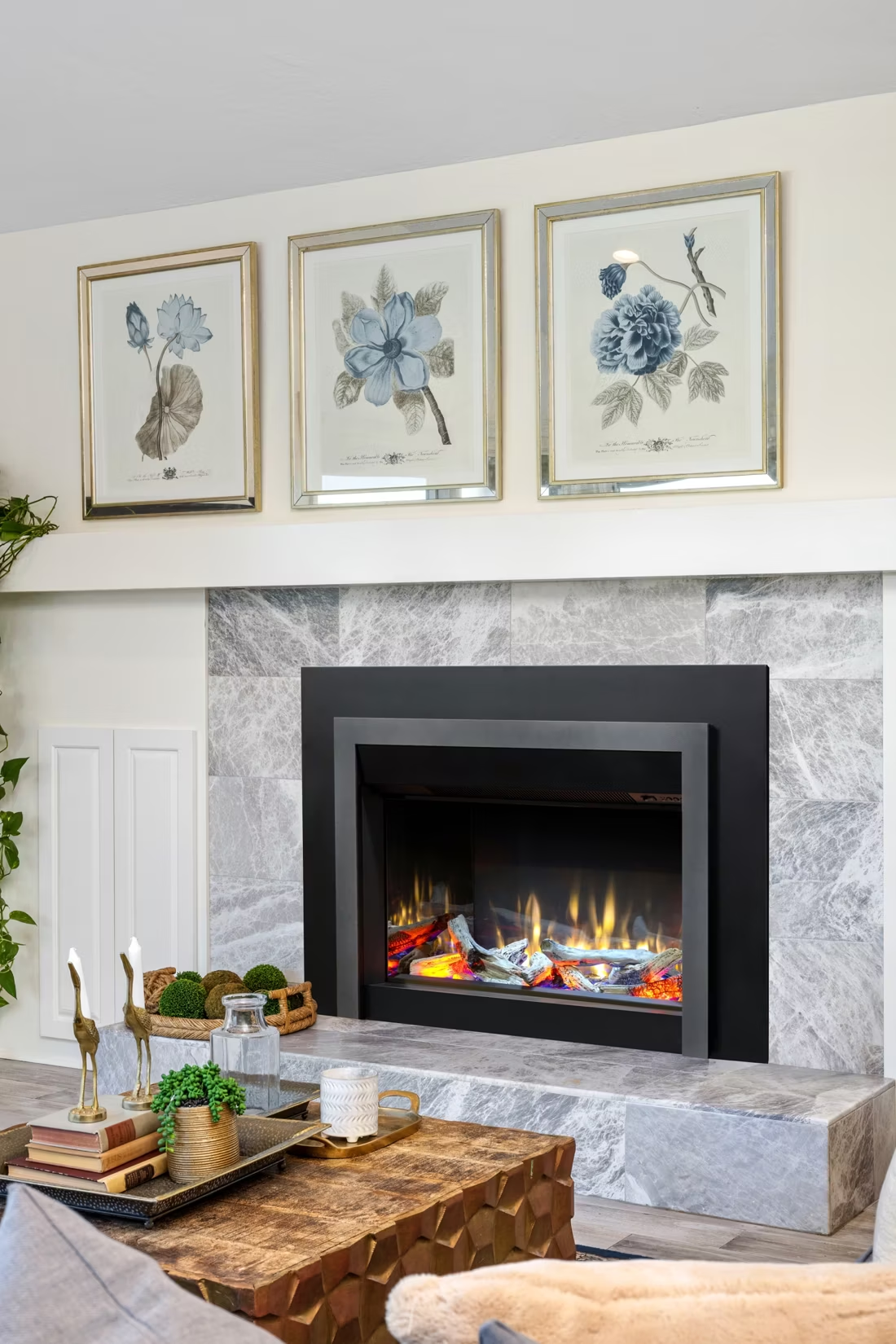
From the Silicon Forest condos of Hillsboro to the older neighborhoods of Forest Grove and Tigard, electric fireplaces give Washington County homeowners real ambiance and zone heat with no chimney, no gas line, and no smoke during wildfire season. Find the right unit and connect with a trusted local dealer.
Every Project Starts From One of These Five Situations
Convenience wins in the mild Willamette Valley climate.
Washington County's winters are mild by national standards—an average winter low near 34°F and a winter heating season that's fairly moderate overall puts most of the county in Climate Zone 4C, closer in feel to a marine climate than a true cold-climate winter. That's a very different heating picture than the high desert or the Cascades: homes here don't need a stove capable of holding a fire through a night at 15 below. What they do need is efficient zone heat for the family room while a central system or heat pump handles the rest of the house, and that's exactly the niche an electric fireplace fills.
With over half a million residents packed into a county that runs from dense Hillsboro and Beaverton neighborhoods to older homes in Forest Grove and Cornelius, a lot of the county's housing stock is newer construction, townhomes, and multifamily units where a chimney or gas line simply isn't an option—and where an HOA may restrict venting altogether. Electric fireplaces solve that: plug-in inserts and mantel units run on standard household power (PGE serves most of the county, with Forest Grove Light & Power handling the city of Forest Grove), and late-summer wildfire smoke events across the Willamette Valley make a zero-emission flame effect an easy sell for anyone who still wants fire-like ambiance without adding to outdoor air quality problems.
Three steps. No salesperson until you're ready.
Tell us about your project
Your zip code, your situation, and the fuel you're leaning toward—or let the answers point you to one.
See what's actually available
The brands dealers within 100 miles genuinely carry—real options, never a catalog mirage.
Get your dealer & Project Guide
A trusted local dealer, plus the free Project Guide & Parts List that names every component of the job.
Frequently Asked Questions
How much does an electric fireplace installation cost in Washington County?
Electric fireplaces are the least expensive hearth option to install because there's no chimney, gas line, or venting involved. A plug-in insert or mantel package that runs on a standard 120V outlet can be installed in an afternoon for a few hundred dollars in labor on top of the unit cost. Larger built-in electric fireplaces that need a dedicated 240V circuit—common in Hillsboro and Beaverton remodels—require an electrician to run new wiring, which adds cost but still comes in well under a wood or gas project since there's no venting to size or route through a wall or roof.
What's the difference between an electric insert, mantel package, and built-in electric fireplace?
An electric insert drops into an existing masonry fireplace opening, instantly converting a cold, unused wood-burning firebox into a heated feature—a popular option in Tigard and Tualatin's older housing stock. A mantel package pairs a freestanding electric unit with a surrounding mantel and is the easiest option for apartments, condos, and rentals where nothing gets built into the wall. A built-in electric fireplace is recessed into new framing, common in Hillsboro and Beaverton new-construction and remodel projects where the homeowner wants the linear, wall-mounted look without any masonry at all.
How much heat does an electric fireplace actually produce?
Most electric fireplaces top out around 1,500 watts, or roughly 5,000 BTU—enough to noticeably warm a single room, typically 300 to 400 square feet, but not a whole house. Given Washington County's mild winters (an average low around 34°F and a winter heating season that's fairly moderate overall), that's usually plenty. Most homeowners here use an electric fireplace as supplemental zone heat for the room they spend the most time in while a heat pump or forced-air furnace handles the rest of the house—not as a replacement for the primary heating system.
Do I need a permit to install an electric fireplace in Washington County?
Usually not for the fireplace itself, since there's no gas line, chimney, or combustion venting to inspect. If your installation requires a new dedicated electrical circuit—common for larger built-in units—the wiring work itself may need an electrical permit through your city (Hillsboro, Beaverton, Tigard, and Tualatin each issue their own) or through Washington County's Department of Land Use and Transportation for unincorporated areas. A licensed electrician handling the circuit will typically pull that permit as part of the job.
Will an electric fireplace work during a power outage?
No—and this is worth being upfront about. Electric fireplaces need household power to run the heating element, blower, and flame display, so during a PGE or Forest Grove Light & Power outage, they simply shut off along with everything else. Washington County sees periodic outages during winter windstorms and ice events, and if backup heat during an outage matters to your household, a wood stove or a gas unit with battery-backed ignition is a better fit than electric. Electric fireplaces are best understood as a convenience and ambiance appliance, not an emergency heat source.
What's the best electric fireplace for Washington County's climate?
Because winters here are mild rather than severe, most homeowners don't need to chase maximum BTU output the way someone in a colder climate zone would. Instead, focus on flame realism and room fit—brands like Dimplex, Napoleon, and Amantii are widely carried by local dealers and offer LED flame technology that looks convincing at close range, which matters more here than raw heat output. During wildfire smoke season, an electric unit also lets you keep the fireplace running as a centerpiece without opening a damper or adding anything to already-degraded outdoor air.
How long do electric fireplaces last, and what maintenance do they need?
Electric fireplaces are low-maintenance by design—there's no creosote, no ash, and no annual chimney sweep required. LED flame components are typically rated for 20,000+ hours of use, and the main wear item is the heating element itself, which can be replaced on most models without swapping the whole unit. Periodic dusting of the intake and exhaust vents on the heater is really the extent of routine care, which is a major part of why electric appeals to condo and apartment owners in denser parts of the county who don't want ongoing upkeep.
Electric vs. gas fireplace—which is right for my home?
Gas fireplaces deliver real, substantial heat—enough to serve as genuine zone heating even on the county's colder nights—and many models keep working during a power outage with battery-backed ignition. Electric fireplaces trade that heat output for simplicity: no gas line, no venting, no permit hassle, and a lower installed cost. For homes already served by natural gas in Hillsboro or Beaverton with an existing fireplace to convert, gas is often worth the extra investment. For condos, rentals, or rooms where you mainly want ambiance and light supplemental warmth, electric is the more practical and less expensive choice.
Electric vs. wood—which is right for my home?
Wood heat still has a place in Washington County's more rural edges near the Coast Range and the Tualatin Valley, where Douglas fir, ponderosa pine, and lodgepole pine are all locally available and Forest Service cutting permits through Siuslaw National Forest run as little as $5 to $20 per cord in season. But wood requires venting, chimney maintenance, and generates smoke—a real consideration given how often wildfire smoke already degrades summer and early fall air quality here. For most in-town homeowners, electric is the simpler, cleaner choice for a fireplace feature; wood remains the better option specifically for households that want genuine backup heat during a prolonged power outage.
Can I put a TV above my fireplace?
Yes—with an asterisk. Fireplaces are hot and TVs don't like heat. Either put a mantel between them to deflect rising warmth, or choose a fireplace with heat-management technology that creates a cool zone on the wall above—the wall stays around 125 degrees, barely warm, while the room still gets full heat. If you like clean lines and don't want a mantel, heat management is the answer.
Does an electric fireplace need a vent or chimney?
No—that's its superpower. An electric fireplace needs a wall and an outlet, period. No vent pipe, no gas line, no clearances to design around, which is why it works in bedrooms, offices, apartments, and walls where venting a gas or wood unit would be impractical or impossible. Installation is typically the simplest and least expensive of any fireplace type.
Can I install a fireplace myself?
If you're putting a fire in your house on purpose, it's best to work with an expert. Unless you're genuinely experienced in framing, gas line, vent pipe, and the national code on clearances to combustibles, have a professional do it—and ideally the same company that sells you the fireplace, so warranty, service, and liability all live under one roof.
How much should I budget for a fireplace?
For an average home—covering the fireplace, the vent pipe, and basic installation—a budget between $3,900 and $5,500 gives you a lot of options across wood, gas, and pellet. By the time you add finish work, gas line, and electrical, the average complete installation lands between $5,000 and $12,000 all-in. In a remodel or new build, a good rule is to put about 2.5% of the total project cost toward the fireplace.
Stove and Fireplace Dealers in Washington County
Listings include WhyFire partner dealers, dealers we have verified as authorized for the brands we recommend, and established local businesses that carry hearth products. Every listing shows which one it is. The ones marked Preferred run on WhyFire's software, so they can show you real pricing and book your appointment right here. No manufacturer pays for placement. How we verify dealers →
Fireside Home Solutions
Classic Pool And Spa
Rich's Stoves & Spa
Two Foot/Ten Foot Fireplaces
Emerald Outdoor Living-Portland
Western Outdoor Wholesale
Addco Electric Fireplaces
Nw Natural Appliance Center
Bridgetown Chimney & Masonry
Chimcare Home Services
Buck's Stove Palace
The Stove Shop
Haven Spa Pool & Hearth
Performance Building Products
Lisac’s Spark & Splash
Creative Fire
Haven Spa Pool & Hearth
HomeTown Hearth & Grill
Ez Propane
Pellet Stoves & More
Find your electric fireplace in Washington County.
Tell us a bit about your home and we'll match you with a trusted local dealer and send over your free Project Guide & Parts List—the exact unit, mounting, and wiring plan for your electric fireplace project in Washington County.
Find Your Fireplace →