
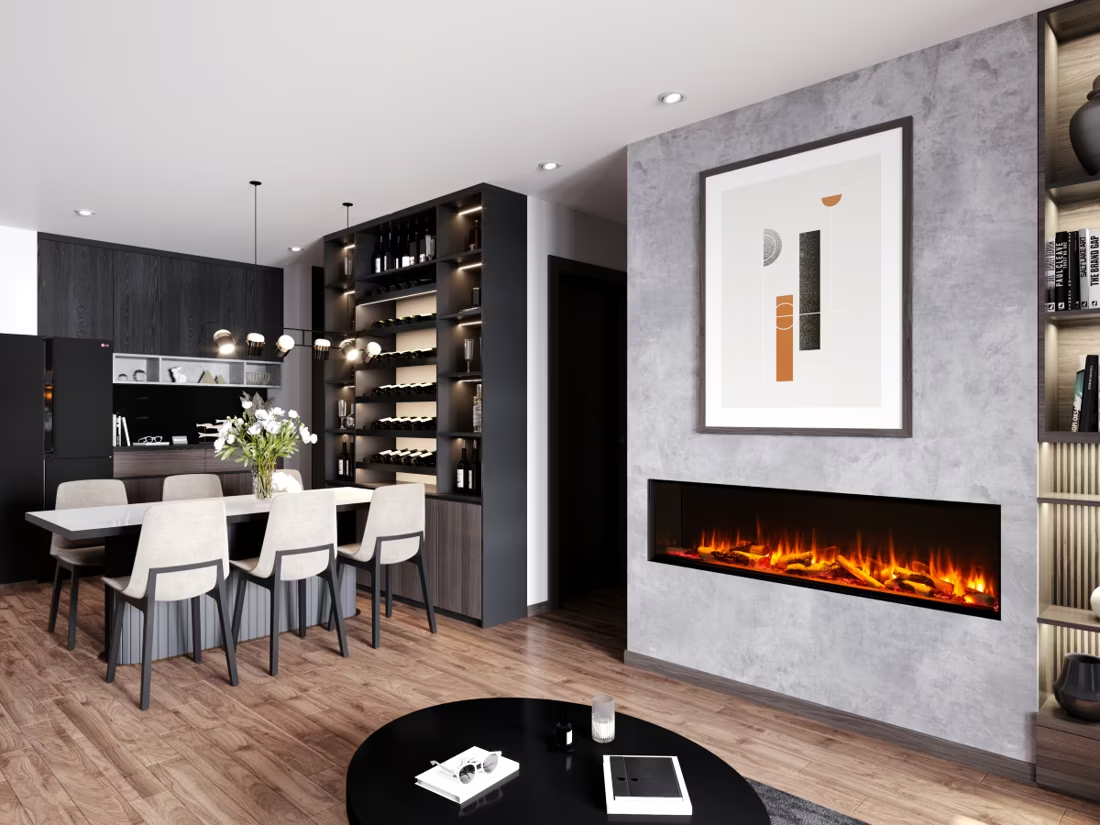
Real flame look, no chimney required.
Aloha's mild Willamette Valley winters and mostly newer housing stock make electric the simplest hearth upgrade around. Find the right unit and connect with a trusted local dealer.
Every Project Starts From One of These Five Situations
The Willamette Valley's easiest heat upgrade.
Aloha sits at just 201 feet in the Tualatin Valley west of Portland, in climate zone 4C, where winters are mild by national standards—average lows hover around 40°F and the area's winter heating need is less than half of what a place like Bozeman, Montana sees in a typical winter. That milder demand curve, combined with Aloha's housing mix of 1990s-2010s townhomes, condos, and subdivisions built without masonry chimneys, makes electric fireplaces a natural fit rather than a compromise.
Portland General Electric serves nearly every home in Aloha, and at a residential rate of about 18.2 cents per kWh, most homeowners treat an electric fireplace as ambiance plus zone heat rather than a whole-house heating strategy—pairing it with the ductless heat pumps and forced-air systems already common in the area. Because most models plug into a standard outlet or run off a dedicated 120V/240V circuit, there's no gas line, no venting, and often no permit at all—which matters in a community with a high share of renters, condos, and HOA-governed properties where a masonry chimney or gas line simply isn't an option.
Three steps. No salesperson until you're ready.
Tell us about your project
Your zip code, your situation, and the fuel you're leaning toward—or let the answers point you to one.
See what's actually available
The brands dealers within 100 miles genuinely carry—real options, never a catalog mirage.
Get your dealer & Project Guide
A trusted local dealer, plus the free Project Guide & Parts List that names every component of the job.
Frequently Asked Questions
How much does an electric fireplace installation cost in Aloha?
Plug-in electric inserts and freestanding stoves typically run $200 to $800 installed, since most just need an existing 120V outlet and a bit of trim carpentry. Built-in linear electric fireplaces—the kind mounted flush in a wall for a modern look—run $1,500 to $4,500 once you factor in framing, a dedicated 240V circuit for larger units, and finish work like tile or a mantel surround. Because Aloha's newer townhomes and condos rarely have existing masonry fireplaces to retrofit, most projects here are new-build installs rather than insert conversions, which local dealers can usually quote precisely after seeing your wall and electrical panel.
Do I need a permit to install an electric fireplace in Aloha?
Since Aloha is unincorporated, permitting runs through Washington County's Department of Land Use & Transportation Building Services rather than a city building department. A simple plug-in unit generally doesn't require a permit. A built-in electric fireplace that requires a new dedicated circuit does typically need an electrical permit, which most local hearth dealers or electricians pull as part of the installation. There's no combustion venting to inspect, which is part of why electric projects move faster through the county than wood or gas installs.
Will an electric fireplace actually keep my house warm in Aloha's winters?
For most rooms, yes—Aloha's winters are mild for a temperate-climate city, averaging around 40°F overnight lows and needing just a fraction of the winter heating that a colder market like Duluth, Minnesota deals with. A 1,500-watt electric unit puts out about 5,000 BTU, which is plenty to take the chill off a bedroom, bonus room, or living area, especially layered on top of a ductless heat pump. Electric fireplaces aren't typically sized as a home's sole heat source anywhere, but in Aloha's climate they do more real heating work than they would in a harsher-winter city.
I already have a ductless heat pump—why add an electric fireplace?
Ductless mini-splits are common throughout Washington County subdivisions, and they're efficient, but they don't give you flame visuals or the zone-heat boost of a fireplace in a specific room. An electric fireplace adds instant supplemental warmth to whichever room you're actually using—useful on the coldest nights of the year or in a room the heat pump doesn't reach well—without adding any combustion byproducts or venting requirements to a home that's likely already tightly sealed for efficiency.
What's the difference between a built-in electric fireplace and a plug-in insert?
A plug-in electric insert or freestanding stove is the simplest option—it arrives ready to place in a room and run off a standard outlet, and it's fully portable if you move. A built-in (or wall-insert) electric fireplace is designed to be recessed into a wall cavity or existing fireplace opening for a cleaner, more permanent look, and larger models often need a dedicated 240V circuit. For Aloha's newer construction without existing fireplace openings, a built-in unit usually means simple stud-bay framing rather than a masonry retrofit, which keeps costs down compared to markets with older brick-and-mortar housing stock.
How much does it cost to run an electric fireplace on PGE power?
At Portland General Electric's residential rate of roughly $0.1819 per kWh, a typical 1,500-watt electric fireplace running on its heat setting costs about 27 cents an hour to operate. Running it 4 hours a night through a mild Aloha winter adds up to roughly $1.10 a day, or about $30-$35 a month of supplemental use—considerably cheaper than running a whole-home furnace harder, though not free. Most units let you run the flame effect alone without the heater engaged, which draws only a few watts if you just want the ambiance.
Can renters or condo owners in Aloha install an electric fireplace?
Yes, and it's one of the main reasons electric fireplaces are popular here—Aloha has a large share of rental housing, condos, and HOA-governed townhome communities where a gas line or masonry chimney isn't allowed or physically possible. A plug-in electric unit requires no venting, no gas permit, and no structural changes, which sidesteps most lease restrictions and HOA architectural review that would stop a wood or gas installation cold. Always check your specific lease or HOA covenants before a built-in wall installation, since those do involve minor electrical and carpentry work.
Are electric fireplaces a good option during wildfire smoke season?
Yes. Late-summer and fall wildfire smoke is a recurring air quality concern across the Portland metro area, including Aloha, and it's one more reason homeowners lean toward electric over wood: there's zero combustion, zero smoke, and no impact on already-strained air quality during a regional smoke event. Unlike wood stoves, which can face voluntary or mandatory burning curtailments during poor air quality days, an electric fireplace runs the same regardless of what's happening outside.
Electric vs. gas vs. wood—which fits my Aloha home best?
Wood offers real fire and heat output that keeps working during a power outage, and Douglas fir, ponderosa pine, and lodgepole pine are all available through nearby Mt. Hood and Gifford Pinchot National Forest cutting permits—but wood needs a hearth, clearances, and chimney maintenance that many of Aloha's newer townhomes and condos simply don't have room for. Gas delivers instant, higher-output heat but requires a gas line and venting plan. Electric skips both of those constraints entirely—no venting, minimal permitting, and a straightforward install in almost any wall—which is why it's often the default choice in Aloha's condo, apartment, and HOA-restricted housing. Homes with an existing masonry fireplace or a detached garage/shop where wood heat still makes sense are the exception worth discussing with a local dealer.
Does an electric fireplace need a vent or chimney?
No—that's its superpower. An electric fireplace needs a wall and an outlet, period. No vent pipe, no gas line, no clearances to design around, which is why it works in bedrooms, offices, apartments, and walls where venting a gas or wood unit would be impractical or impossible. Installation is typically the simplest and least expensive of any fireplace type.
Do electric fireplaces actually produce heat?
Yes—most put out around 4,800–5,000 BTUs from a standard outlet, which comfortably warms a bedroom, office, or den as a comfort-zone heater. What they won't do is carry a whole house the way wood, gas, or pellet can. Think of electric as ambiance-first with honest supplemental heat: flames on with no heat in July, flames plus warmth in January.
What is an in-home preview and do I need one?
It's a visit where a hearth professional measures your space, confirms the model you picked actually works in your home, and walks the specs—framing, gas line, venting, finish work—before anything is ordered. Some details you just can't know until you see the house. Never make a down payment without one; it's the single most-skipped step that burns buyers.
Can a fireplace actually lower my heating bill?
Yes—by creating a comfort zone. A furnace heats every square foot of the house just to warm the one room you're in; a gas fireplace on low burns roughly a sixth of the gas a typical furnace does. Set the furnace around 55–60 degrees as a baseline, then heat the rooms your family actually uses. Families who heat this way commonly save $20–$60 a month.
Nearby Dealers
Hearth shops serving Aloha and the surrounding area. Every listing shows whether it is a WhyFire partner, a dealer we have verified as authorized for the brands we recommend, or a local business carrying hearth products. No manufacturer pays for placement. How we verify dealers →
Classic Pool And Spa
Fireside Home Solutions
Two Foot/Ten Foot Fireplaces
Rich's Stoves & Spa
Emerald Outdoor Living-Portland
Western Outdoor Wholesale
Addco Electric Fireplaces
Nw Natural Appliance Center
Bridgetown Chimney & Masonry
Chimcare Home Services
Buck's Stove Palace
The Stove Shop
Haven Spa Pool & Hearth
Performance Building Products
Lisac’s Spark & Splash
Haven Spa Pool & Hearth
Creative Fire
HomeTown Hearth & Grill
Ez Propane
Pellet Stoves & More
Electric Service in Aloha
An electric fireplace's heater draws about 1,500 watts—pennies per hour at local rates.
Portland General Electric Co
Find your electric fireplace in Aloha.
Tell us a bit about your home and we'll match you with the right electric fireplace or insert, plus a free Project Guide & Parts List and a trusted local dealer to install it.
Find Your Fireplace →