
Find the Right Fireplace for Your Washington County Home.
Wood, gas, pellet, and electric fireplace resources for every city in Washington County—from Hillsboro and Beaverton to Forest Grove and Gaston. Find the right unit for your home and get matched with a trusted local hearth retailer.
Every Project Starts From One of These Five Situations
Mild marine winters, real heating needs, across Washington County, Oregon.
Washington County sits in Oregon's climate zone 4C—the mild, wet side of the Cascades, where winter lows average 34°F and true cold snaps are rare. But this is nothing to shrug off: it's a long, damp heating season stretching from October into May, driven by persistent chill rather than the deep-freeze extremes of a place like Fargo ND or Duluth MN. Douglas fir dominates the woodlots and backyard stacks here, with ponderosa and lodgepole pine common from suppliers sourcing out of central Oregon. Late-summer and fall wildfire smoke—drifting in from the Coast Range and the Cascades—is the county's main air quality concern, more than winter inversion, and it's part of why many homeowners are moving toward EPA-certified wood stoves and pellet units that burn cleaner and perform well during power outages from winter windstorms.
This hub covers the whole county: hearth retailers, service technicians, and fuel suppliers working across Hillsboro, Beaverton, Tigard, Tualatin, Forest Grove, Cornelius, Sherwood, North Plains, Banks, Gaston, King City, and Durham. Pick your fuel below to get into specifics—local dealers, installation costs, and the resources that match your project, whether you're in a dense Hillsboro subdivision near the tech corridor or a farmhouse outside Gaston at the edge of the Coast Range.
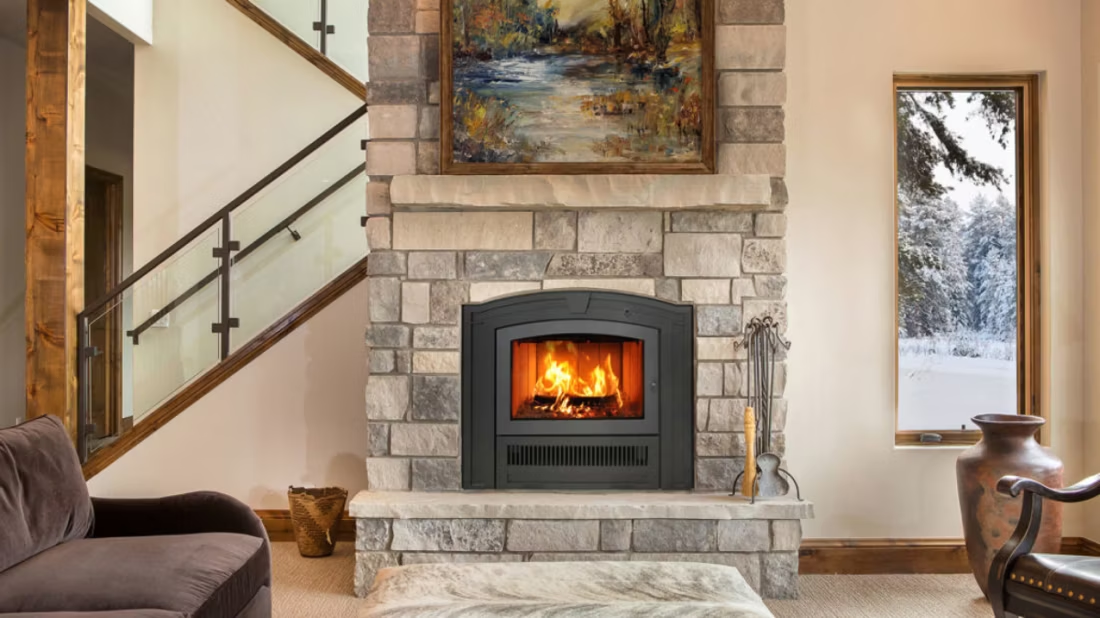
Four fuels. One honest answer for Washington County.
Three steps. No salesperson until you're ready.
Tell us about your project
Your zip code, your situation, and the fuel you're leaning toward—or let the answers point you to one.
See what's actually available
The brands dealers within 100 miles genuinely carry—real options, never a catalog mirage.
Get your dealer & Project Guide
A trusted local dealer, plus the free Project Guide & Parts List that names every component of the job.
Frequently Asked Questions
Which fuel works best in Washington County?
It depends on where in the county you live and what you're heating. Gas is the most common choice in the county's dense suburban cores—Hillsboro, Beaverton, Tigard, Tualatin—where NW Natural service is widely available and homeowners want instant heat without stacking wood. Wood remains popular in the more rural western towns like Banks, Gaston, and North Plains, where Douglas fir is easy to source and a stove doubles as backup heat during the ice storms that occasionally knock out power along the Coast Range foothills. Pellet stoves split the difference—less labor than wood, and regional brands like Bear Mountain and Lignetics keep supply steady at local dealers. Electric fireplaces are a strong fit for the county's apartments and newer townhomes near the tech corridor, where ambiance and supplemental warmth matter more than primary heating in a climate that rarely drops below the low 30s. Many households here end up combining a gas or pellet primary heater with an electric unit in a secondary room.
Do I need a permit to install a fireplace in Washington County?
In most cases, yes. New wood stoves, wood inserts, gas fireplaces, gas inserts, gas stoves, and pellet stoves all typically require a building permit, plus a separate gas line permit and licensed gas-fitter for any gas connection work. Where you apply depends on where you live: incorporated cities—Hillsboro, Beaverton, Tigard, Tualatin, Forest Grove, Cornelius, Sherwood, King City, Durham, North Plains, Banks, and Gaston—each issue permits through their own city building department, while unincorporated areas of the county go through Washington County's Department of Land Use & Transportation. Wood stoves must meet current EPA 2020 NSPS emissions standards statewide under Oregon DEQ rules. Electric fireplaces usually skip the permit unless it's a built-in install requiring new wiring. Most local hearth retailers handle the paperwork as part of the installation, so it's rarely something you manage yourself.
Are there air quality restrictions on wood burning in Washington County?
Washington County doesn't sit in a bowl-shaped basin prone to the persistent winter inversions that trigger mandatory burn curtailment in places like Klamath Falls—the county's main air quality challenge is wildfire smoke drifting in from Coast Range and Cascade fires during late summer and early fall, which shows up as Air Quality Index advisories rather than winter burn bans. That said, Oregon DEQ still requires new wood stove installations to meet EPA 2020 NSPS emissions standards statewide, and occasional DEQ Heat Smart rebate programs are available to help homeowners replace older, uncertified stoves. If you're installing wood heat, expect the emissions requirement to apply regardless of which city or unincorporated area you're in.
Can one local hearth retailer handle all four fuel types?
Many of the larger hearth retailers based in Hillsboro, Beaverton, and Tigard carry three or four fuel types—wood, gas, and pellet at minimum, with electric increasingly common as showroom traffic shifts toward apartment and condo buyers. Smaller shops in the county's western towns tend to specialize, often focusing on wood and pellet given the rural customer base near Forest Grove, Banks, and Gaston. If you're not sure which fuel fits your home, a multi-fuel dealer with working showroom displays is the easiest way to compare options side by side before committing to a chimney or gas line project.
How does service work in the more rural parts of Washington County?
Service technicians covering Washington County are concentrated around the Hillsboro-Beaverton-Tigard corridor but regularly travel out to the county's western edge—Forest Grove, Cornelius, Banks, North Plains, and Gaston near the Coast Range foothills. Rural calls sometimes carry a modest travel fee, and scheduling is easier in the pre-season window of August through October than during a mid-winter storm when techs are booked solid. If you're on a rural property, it's worth scheduling annual chimney sweeping or gas inspection early and keeping a backup heat source—wood or pellet—on hand for the windstorm-driven outages that occasionally hit the western county harder than the denser eastern cities.
What's the typical cost range for fireplace installation across all fuel types in Washington County?
Costs vary by fuel and by how much existing infrastructure is in place. Wood stove or insert installation: roughly $4,000–$8,500 for a typical retrofit, more for new chimney construction. Gas fireplace, insert, or stove: roughly $4,000–$10,000, with pricing largely driven by whether NW Natural service already runs to the home or a new gas line is needed. Pellet stove or insert: roughly $4,000–$7,000 for a standard install. Electric fireplace: $200–$3,000 for the unit itself, plus $300–$1,200 in labor for anything beyond a plug-and-play wall unit. Exact numbers depend on your specific home and city—see the county + fuel pages above for more detail tied to local retailer pricing.
Does a fireplace add value to my home?
On average, a fireplace adds back to the home about the same amount you spent installing it. Add the monthly savings from heating the rooms you actually use instead of the whole house—often hundreds of dollars a year—and the value case is strong before you even count what a fire does for how your family uses the room.
Can a fireplace actually lower my heating bill?
Yes—by creating a comfort zone. A furnace heats every square foot of the house just to warm the one room you're in; a gas fireplace on low burns roughly a sixth of the gas a typical furnace does. Set the furnace around 55–60 degrees as a baseline, then heat the rooms your family actually uses. Families who heat this way commonly save $20–$60 a month.
I know I want a fireplace—where do I actually start?
Do two things today: snap a photo of the wall or fireplace you want to transform, and take a tape measure to the space—width, height, depth. Those two artifacts answer most of a hearth professional's first questions. Then settle fuel (wood, gas, pellet, or electric) and set a realistic budget: $3,900–$5,500 covers fireplace, vent, and basic install for most homes.
Can I install a fireplace myself?
If you're putting a fire in your house on purpose, it's best to work with an expert. Unless you're genuinely experienced in framing, gas line, vent pipe, and the national code on clearances to combustibles, have a professional do it—and ideally the same company that sells you the fireplace, so warranty, service, and liability all live under one roof.
Stove and Fireplace Dealers in Washington County
Listings include WhyFire partner dealers, dealers we have verified as authorized for the brands we recommend, and established local businesses that carry hearth products. Every listing shows which one it is. The ones marked Preferred run on WhyFire's software, so they can show you real pricing and book your appointment right here. No manufacturer pays for placement. How we verify dealers →
Fireside Home Solutions
Classic Pool And Spa
Rich's Stoves & Spa
Two Foot/Ten Foot Fireplaces
Emerald Outdoor Living-Portland
Western Outdoor Wholesale
Addco Electric Fireplaces
Nw Natural Appliance Center
Bridgetown Chimney & Masonry
Chimcare Home Services
Buck's Stove Palace
The Stove Shop
Haven Spa Pool & Hearth
Performance Building Products
Lisac’s Spark & Splash
Creative Fire
Haven Spa Pool & Hearth
HomeTown Hearth & Grill
Ez Propane
Pellet Stoves & More
Find your fireplace project in Washington County.
Pick your fuel below and we'll match you with a trusted local dealer and send over a free Project Guide & Parts List—the exact parts, including the vent kit, for your specific home and city.
Find Your Fireplace →