
Warmth on Demand, No Chimney Required.
Mild winters and newer hillside homes make Bull Mountain an easy fit for electric heat. Find the right unit and connect with a trusted local dealer.
Every Project Starts From One of These Five Situations
Effortless heat for a mild marine climate.
Bull Mountain sits on a wooded ridge above Tigard in Washington County, part of the Portland metro's western suburbs at just 559 feet elevation. Winters here are mild by any measure—average lows hover around 34°F and the area sees a modest, short heating season, a fraction of what places like Bozeman, Montana or Duluth, Minnesota see. That climate reality shapes the hearth market: most Bull Mountain homes were built from the 1990s onward without masonry fireplaces or chimneys, and the winter demand is for supplemental zone heat and ambiance, not survival heat.
Electric fireplaces fit that need well. There's no venting to engineer, no combustion byproducts to manage, and installation is often as simple as plugging into a dedicated 120V or 240V circuit. Portland General Electric serves the area at a residential rate around $0.1819 per kWh, which keeps the operating cost of a zone-heating insert or built-in unit modest for evening use in a primary suite, bonus room, or basement. For homeowners weighing wood, it's worth knowing wood-burning appliances are a poor fit here—new construction rarely has a chimney to retrofit, and regional wildfire smoke concerns during late summer make an emissions-free option more appealing anyway. Electric and gas cover the vast majority of Bull Mountain hearth projects.
Three steps. No salesperson until you're ready.
Tell us about your project
Your zip code, your situation, and the fuel you're leaning toward—or let the answers point you to one.
See what's actually available
The brands dealers within 100 miles genuinely carry—real options, never a catalog mirage.
Get your dealer & Project Guide
A trusted local dealer, plus the free Project Guide & Parts List that names every component of the job.
Frequently Asked Questions
How much does an electric fireplace installation cost in Bull Mountain?
A plug-in electric insert or freestanding stove that uses an existing outlet typically runs $500 to $1,200 installed, including the unit and basic mounting. A built-in wall unit or a custom mantel surround with a dedicated 240V circuit run by a licensed electrician usually lands between $1,800 and $3,500, depending on wall framing and whether drywall or trim work is needed. Because there's no chimney or gas line involved, electric projects in Bull Mountain tend to land on the lower end of hearth remodel costs compared to wood or gas conversions.
Will an electric fireplace heat my whole house?
No—electric fireplaces are zone heaters, and that's by design in a climate like Bull Mountain's, where winter lows average around 34°F and a heat pump or furnace already handles whole-home heating. A typical 1,500-watt unit puts out about 5,000 BTU, enough to comfortably warm a bedroom, home office, or open-concept living area, but it's not sized to replace central heat. Most Bull Mountain homeowners install one to take the edge off a chilly room or add ambiance to a remodeled space, not as a primary heat source.
What type of electric fireplace works best for Bull Mountain homes?
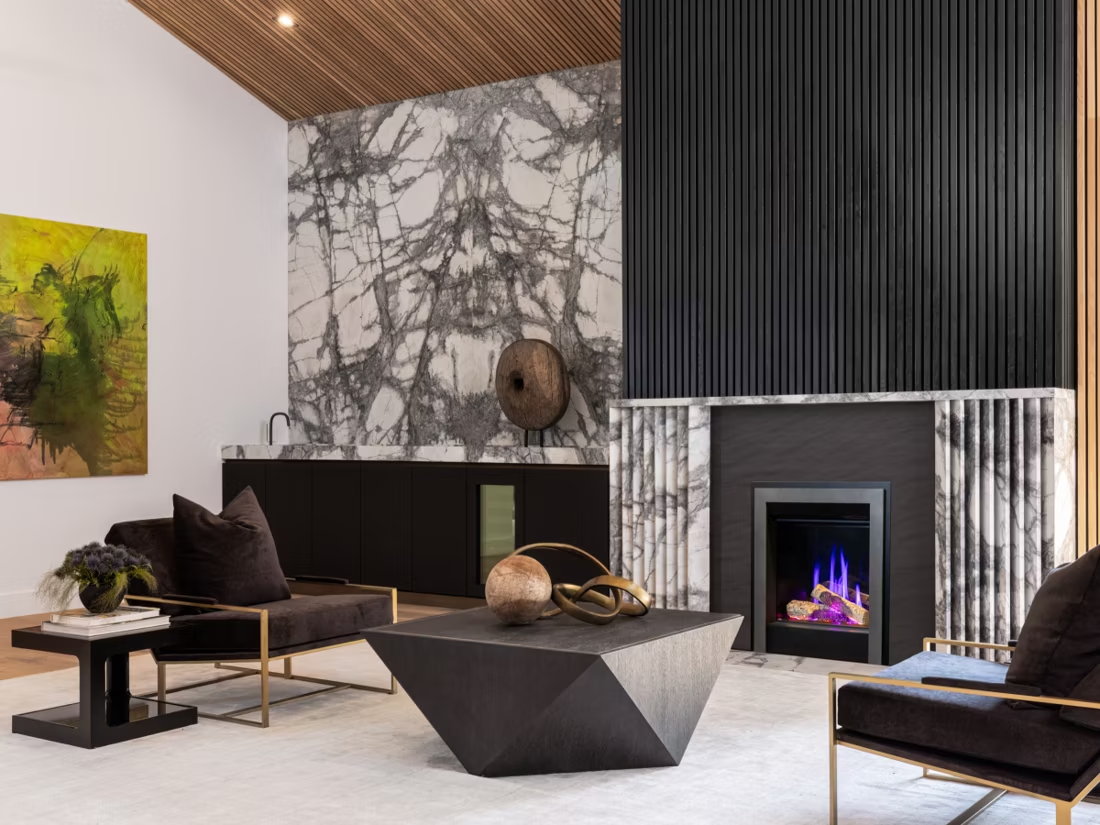
Given the age and style of housing on the mountain—mostly 1990s-and-newer two-story homes with open floor plans and view lots—a built-in wall unit or a linear electric fireplace set into a custom surround tends to look the most intentional and adds resale value. For homeowners renovating a basement or bonus room, a freestanding electric stove or a simple insert into an existing gas-log opening is a faster, lower-cost option. A local dealer can walk your specific room and recommend flame style, mantel width, and heater wattage based on your layout.
Do I need a permit to install an electric fireplace in Bull Mountain?
A simple plug-in unit that uses an existing standard outlet generally doesn't require a permit. If your installation needs a new dedicated circuit—common for larger built-in units—Washington County Building Services requires an electrical permit, and the work needs to be done by a licensed electrician. Most local hearth dealers coordinate directly with an electrician as part of the install, so you're not left managing separate contractors.
How much does it cost to run an electric fireplace in Bull Mountain?
At Portland General Electric's residential rate of roughly $0.1819 per kWh, a typical 1,500-watt electric fireplace costs about 27 cents per hour to run on high heat. Used for a few hours most evenings through a mild Bull Mountain winter, that adds up to somewhere around $15 to $30 a month—far less than most homeowners expect, and a big part of why electric units are popular as supplemental heat rather than a full heating system upgrade.
Why don't more Bull Mountain homes have wood stoves?
Most homes on Bull Mountain were built in the last three decades without a masonry chimney, which makes retrofitting a wood stove an expensive project involving new Class A chimney construction through the roof. Combine that with periodic wildfire smoke concerns in the Portland metro during late summer and fall, and wood heat simply isn't the practical choice here that it is in more rural, forested parts of Oregon. Homeowners who want the look and feel of a real flame in Bull Mountain typically choose a direct-vent gas fireplace instead, which can vent through a side wall without a full chimney.
Will my electric fireplace still work if the power goes out?
No—electric fireplaces need power to run the heating element, fan, and flame effect, so they'll shut off along with everything else during an outage. This matters in Bull Mountain, where winter windstorms occasionally knock out PGE service for hours or, in bad storms, a day or more. If backup heat during outages is a priority for your household, a battery-backed direct-vent gas fireplace is worth considering alongside or instead of an electric unit—a local dealer can walk you through both.
How much maintenance does an electric fireplace need?
Very little. There's no chimney to sweep, no ash to clean, and no annual gas line inspection required. LED flame elements are rated for 20,000+ hours of use, and the main maintenance task is an occasional dusting of the heater vents and a wipe of the glass front. This low-maintenance profile is a real selling point for Bull Mountain homeowners who want fireplace ambiance without the upkeep that comes with wood or gas appliances.
Electric vs. gas fireplace—which makes more sense for my Bull Mountain home?
Electric fireplaces cost less to install, need no venting or gas line, and are the simplest option for a bonus room, basement, or bedroom where you want ambiance and light supplemental heat. Gas fireplaces cost more upfront—typically requiring a direct-vent run and, in homes without existing service, a new gas line—but they produce real heat output and a more authentic flame, and can be paired with battery backup to keep working in a power outage. For a primary living space where you want a fireplace as a design centerpiece, gas is usually the better long-term choice; for a quick, affordable heat-and-ambiance upgrade elsewhere in the house, electric is hard to beat. Many Bull Mountain homes end up with one of each.
Can I put a TV above my fireplace?
Yes—with an asterisk. Fireplaces are hot and TVs don't like heat. Either put a mantel between them to deflect rising warmth, or choose a fireplace with heat-management technology that creates a cool zone on the wall above—the wall stays around 125 degrees, barely warm, while the room still gets full heat. If you like clean lines and don't want a mantel, heat management is the answer.
Do electric fireplaces actually produce heat?
Yes—most put out around 4,800–5,000 BTUs from a standard outlet, which comfortably warms a bedroom, office, or den as a comfort-zone heater. What they won't do is carry a whole house the way wood, gas, or pellet can. Think of electric as ambiance-first with honest supplemental heat: flames on with no heat in July, flames plus warmth in January.
What is an in-home preview and do I need one?
It's a visit where a hearth professional measures your space, confirms the model you picked actually works in your home, and walks the specs—framing, gas line, venting, finish work—before anything is ordered. Some details you just can't know until you see the house. Never make a down payment without one; it's the single most-skipped step that burns buyers.
How much should I budget for a fireplace?
For an average home—covering the fireplace, the vent pipe, and basic installation—a budget between $3,900 and $5,500 gives you a lot of options across wood, gas, and pellet. By the time you add finish work, gas line, and electrical, the average complete installation lands between $5,000 and $12,000 all-in. In a remodel or new build, a good rule is to put about 2.5% of the total project cost toward the fireplace.
Nearby Dealers
Hearth shops serving Bull Mountain and the surrounding area. Every listing shows whether it is a WhyFire partner, a dealer we have verified as authorized for the brands we recommend, or a local business carrying hearth products. No manufacturer pays for placement. How we verify dealers →
Rich's Stoves & Spa
Western Outdoor Wholesale
Emerald Outdoor Living-Portland
Fireside Home Solutions
Classic Pool And Spa
Chimcare Home Services
Two Foot/Ten Foot Fireplaces
Nw Natural Appliance Center
Addco Electric Fireplaces
Buck's Stove Palace
Bridgetown Chimney & Masonry
Haven Spa Pool & Hearth
Pellet Stoves & More
Creative Fire
Lisac’s Spark & Splash
HomeTown Hearth & Grill
Richs For The Home
The Stove Shop
Electric Service in Bull Mountain
An electric fireplace's heater draws about 1,500 watts—pennies per hour at local rates.
Portland General Electric Co
Find your electric fireplace in Bull Mountain.
Tell us a bit about your home and we'll put together a free Project Guide & Parts List for your Bull Mountain electric fireplace project—the right unit, the exact parts, and a trusted local dealer to install it.
Find Your Fireplace →