
Find the right pellet stove for Sherman County's wind and winter.
Consistent, thermostat-controlled heat for the wheat-country towns of Moro, Grass Valley, Wasco, and Rufus—matched to a trusted local dealer who can actually get it installed.
Every Project Starts From One of These Five Situations
Steady heat for a county built on wind and wheat.
Sherman County sits on the high plateau above the Columbia River, one of Oregon's smallest and least-populated counties at under 1,400 residents spread across Moro, Grass Valley, Wasco, and Rufus. Winters here bring biting wind off the gorge and long stretches of dry, cold air—closer in feel to the plains of Fargo or Bismarck than to the wetter Willamette Valley. With so few households and even fewer full-time hearth retailers based in the county itself, homeowners here often drive to The Dalles or Hood River for sales and service, which makes matching with the right dealer upfront more important than in a denser market.
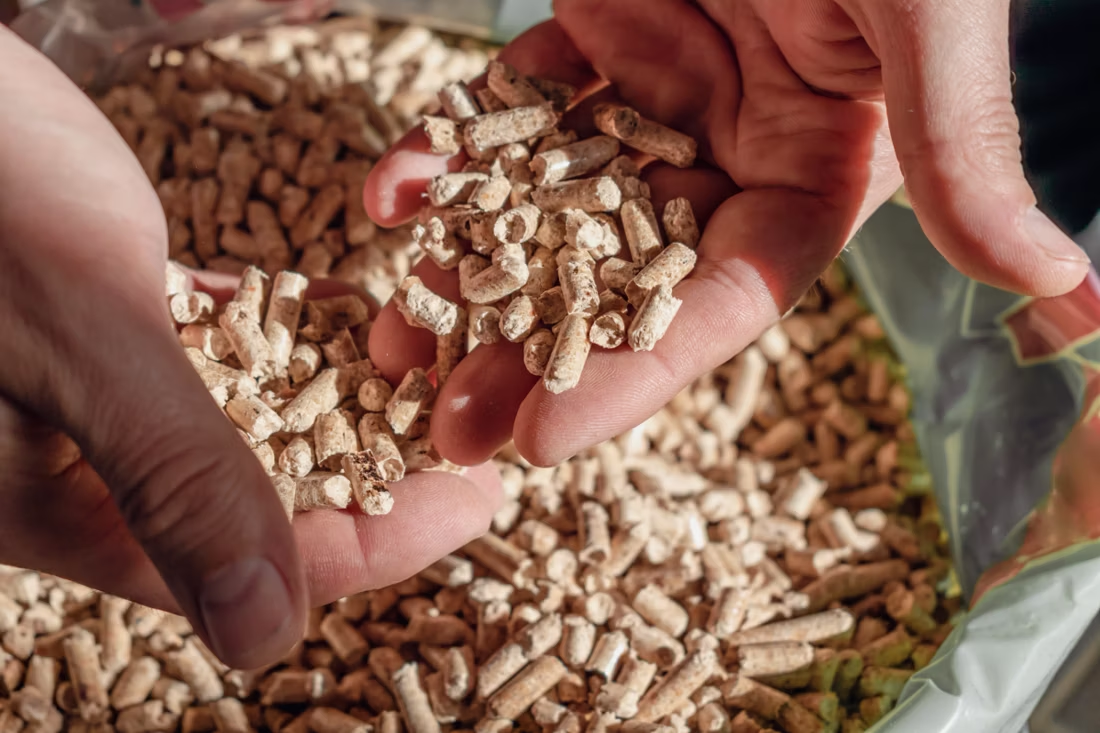
Pellet appliances make sense in Sherman County for the same reason they work well in any climate zone 5B location: they burn a manufactured, bagged fuel that doesn't depend on standing timber or a wood lot, which matters in a county where ponderosa pine, lodgepole pine, and juniper are found mostly along the river breaks and canyon draws rather than in accessible stands near town. A hopper-fed pellet stove holds a consistent burn overnight without the tending a wood stove requires, and it produces far less visible smoke—a real consideration given the wildfire smoke that regularly settles over the plateau in late summer and can linger into fall burning season.
Three steps. No salesperson until you're ready.
Tell us about your project
Your zip code, your situation, and the fuel you're leaning toward—or let the answers point you to one.
See what's actually available
The brands dealers within 100 miles genuinely carry—real options, never a catalog mirage.
Get your dealer & Project Guide
A trusted local dealer, plus the free Project Guide & Parts List that names every component of the job.
Frequently Asked Questions
How much does a pellet stove installation cost in Sherman County?
Pellet stove and insert installations typically run in the same general range seen across north-central Oregon, roughly $4,500 to $7,500 depending on the unit and whether venting runs through an existing chimney or needs a new through-wall pellet vent kit. Because Sherman County has so few year-round residents, most installers are based out of The Dalles or Hood River and will factor a modest travel charge into quotes for jobs in Moro, Grass Valley, Wasco, or Rufus. Getting matched with a dealer who already routes through the county regularly can help avoid that surprise.
Where do I buy pellets in Sherman County?
There's no large-scale pellet retailer based in the county itself given the small population, so most residents stock up during trips to The Dalles or Hood River, or arrange bulk delivery. Regional brands commonly found in this part of Oregon include Bear Mountain, Lignetics, and Pacific Pellet, all of which are milled from Pacific Northwest softwood and widely stocked at hearth and farm supply stores along the Columbia River corridor. Buying a full winter's supply—a heavy-use stove can burn 2 to 3 tons per season—in one trip is common practice here rather than making repeated short runs.
Does a pellet stove need electricity to run?
Yes—the auger that feeds pellets into the burn pot and the blower that distributes heat both run on standard household electricity. This is worth thinking through carefully in Sherman County, where winter windstorms off the Columbia Gorge occasionally knock out power to rural lines for stretches of hours. A pellet stove won't function as backup heat during an outage the way a wood stove will, so some households here pair a pellet stove for daily convenience with a wood-burning unit or a battery/generator backup plan for storm season.
How does a pellet stove compare to a wood stove for this area?
Wood stoves work without electricity and pair naturally with the juniper and pine available along the river breaks and canyon country in Sherman County, which makes them the more resilient choice during a windstorm-driven outage. Pellet stoves trade that resilience for convenience—load the hopper, set the thermostat, and walk away for a day or more without tending a fire, with far less ash and no chimney creosote buildup to manage. Given how spread out the county is and how far some homes sit from the nearest full-time fire department, the lower fire-risk profile and reduced spark output of a sealed pellet appliance is also a point in its favor for some homeowners.
What size pellet stove do I need for a Sherman County home?
Sizing depends on square footage, insulation, and how exposed the home is to gorge wind, which drives up real heat loss even when the thermometer reading looks moderate. As a rough guide, smaller pellet stoves suit single rooms or smaller farmhouses, while larger units are better matched to bigger or less-insulated homes common on older county properties. A local dealer will walk through your home's layout and wind exposure during an in-home visit rather than sizing off square footage alone—that's part of what a proper match includes.
Do I need a permit to install a pellet stove in Sherman County?
Yes—a building permit is generally required for a new pellet stove or insert installation, issued through the Sherman County Planning & Building Department. Because the county doesn't have a large in-house installer base, permitting is usually coordinated by whichever hearth retailer handles the install, whether they're based locally or driving in from The Dalles. Confirming your installer will pull the permit as part of the job—rather than leaving it to the homeowner—is a good question to ask upfront.
How often does a pellet stove need to be cleaned or serviced?
Pellet stoves need regular ash removal from the burn pot—typically every few days during heavy use—plus a deeper cleaning of the venting and hopper mechanism once a season. Because certified pellet stove service technicians are thin on the ground in a county this small, an annual service appointment is worth scheduling early in fall before the winter rush hits providers in The Dalles or Hood River. Skipping this maintenance is the most common cause of auger jams and reduced heat output over a season.
Are pellet stoves affected by wildfire smoke restrictions in Sherman County?
Pellet stoves are generally exempt from the kind of wood-smoke curtailment periods that can affect uncertified wood stoves in parts of Oregon, since they burn cleaner and produce far less particulate output. That said, wildfire smoke is a recurring late-summer and fall concern on the plateau, and it's worth checking regional air quality advisories before assuming outdoor air quality is fine for venting or combustion air intake work during an active smoke event. A pellet stove itself won't add meaningfully to local air quality problems the way an old uncertified wood stove might.
Is a pellet stove a good fit for a small or seasonal home in Sherman County?
Yes, with a caveat. Pellet stoves are a strong fit for full-time residences and larger farmhouses that want steady, low-maintenance heat without constant wood tending. For a true seasonal cabin or vacation property that sits empty for stretches, the electricity dependence and the need to keep a pellet supply on hand make a wood stove or a simple electric unit sometimes more practical, since there's no fuel to stage in advance and no auger to worry about jamming after months of disuse. A local dealer can talk through which fits your specific use pattern.
How often does a pellet stove need cleaning?
A clean pellet stove is a happy pellet stove. Plan on cleaning the burn pot about once a week when you're burning regularly—ash and clinkers gum up the air holes just like a pellet barbecue. Most pellet stove problems trace back to skipped cleaning that nobody explained up front. Some designs make it easy with a trapdoor burn pot: pull a lever and the gunk drops into the ash pan.
What's the difference between an insert and a zero-clearance fireplace?
An insert is a fireplace that slides into a pre-existing wood-burning fireplace—if you don't have one, there's nothing to insert it into. A zero-clearance fireplace is built into a framed wall, which makes it the answer for remodels and new construction. Simple test: existing masonry fireplace means insert; blank or framed wall means zero-clearance.
Can I install a fireplace myself?
If you're putting a fire in your house on purpose, it's best to work with an expert. Unless you're genuinely experienced in framing, gas line, vent pipe, and the national code on clearances to combustibles, have a professional do it—and ideally the same company that sells you the fireplace, so warranty, service, and liability all live under one roof.
What is an in-home preview and do I need one?
It's a visit where a hearth professional measures your space, confirms the model you picked actually works in your home, and walks the specs—framing, gas line, venting, finish work—before anything is ordered. Some details you just can't know until you see the house. Never make a down payment without one; it's the single most-skipped step that burns buyers.
Pellet Brands Stocked Around Sherman County
Manufacturers will point you to the nearest stocking dealer.
Get matched with a Sherman County pellet stove dealer.
Tell us about your home and we'll match you with a trusted local dealer and send over a free Project Guide & Parts List—the exact parts, vent kit included, and the dealer we recommend for your pellet install.
Find Your Fireplace →