
Wood, Gas, Pellet, and Electric—Built for Life on the Plateau.
Heating resources for every town in Sherman County—Moro, Wasco, Grass Valley, Rufus, and Kent—plus the wheat-farm and ranch properties spread across the plateau above the Columbia River Gorge.
Every Project Starts From One of These Five Situations
Wind, wheat, and winter heat across Sherman County, Oregon.
Sherman County sits on a high wheat-farming plateau above the Columbia River Gorge, with elevations running roughly 1,500 to 2,400 feet and some of the steadiest wind in the Pacific Northwest—the same wind that powers the Biglow Canyon and Klondike wind farms also drives brutal wind chill during winter storms, closer in feel to Bismarck, ND than to the wetter west side of the state. With only about 1,345 residents spread across five small towns, heating here has always been a practical, self-reliant affair. Wood heat is common on the county's larger rural properties—ponderosa pine, lodgepole pine, and juniper, much of the juniper cut through BLM thinning projects on the surrounding high desert rather than hauled from a local mill. Propane, not piped natural gas, is the standard 'gas' fuel for most Sherman County homes, since no natural gas utility serves a population this small and spread out.
What you'll find on this hub: hearth retailers, service technicians, and fuel suppliers who cover every community in the county, even though few are physically headquartered here. Pick your fuel below to see local dealer options, typical installation costs, and the specifics that apply to Sherman County's wind-exposed, propane-and-wood heating landscape—whether you're in a farmhouse outside Moro or a ranch property near Rufus overlooking the Gorge.
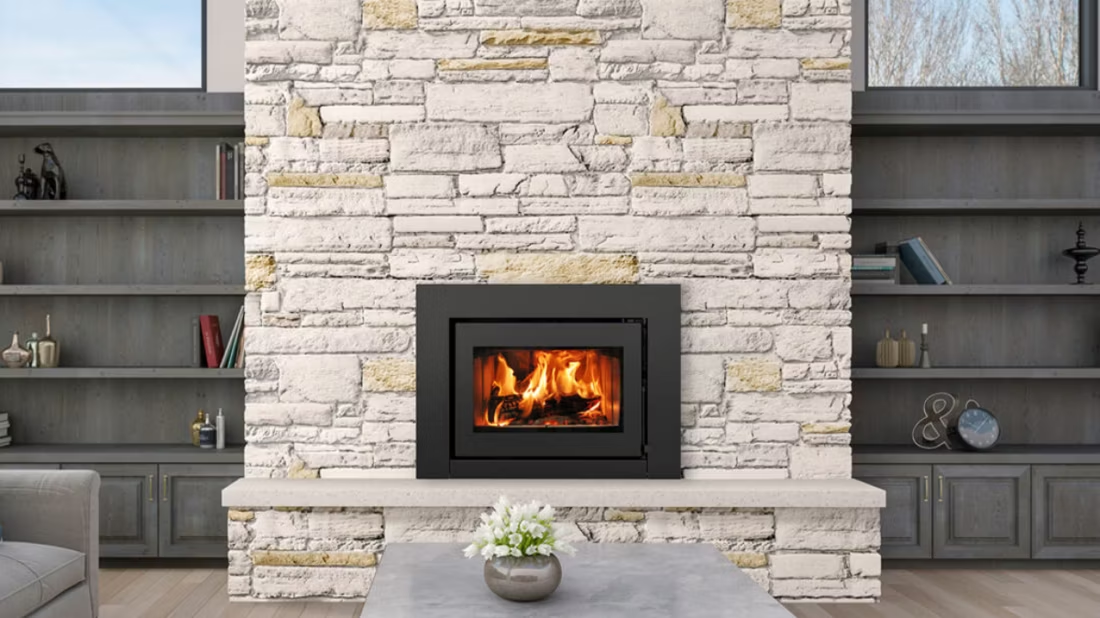
Four fuels. One honest answer for Sherman County.
Three steps. No salesperson until you're ready.
Tell us about your project
Your zip code, your situation, and the fuel you're leaning toward—or let the answers point you to one.
See what's actually available
The brands dealers within 100 miles genuinely carry—real options, never a catalog mirage.
Get your dealer & Project Guide
A trusted local dealer, plus the free Project Guide & Parts List that names every component of the job.
Frequently Asked Questions
Which fuel works best for a Sherman County home?
It depends on the property and how exposed it is to winter wind. Wood remains a practical primary choice on the county's larger rural parcels—ponderosa pine, lodgepole pine, and juniper (much of it cut under BLM juniper-thinning permits on the surrounding high desert) burn well, and a wood stove keeps working when high winds knock out power, which happens more often here given the county's wind-farm-grade gusts. 'Gas' in Sherman County almost always means propane rather than piped natural gas, since no utility runs mains to a county this size—propane fireplaces and inserts are common in Moro, Wasco, and Grass Valley. Pellet stoves are a solid middle ground, and supply is unusually convenient: Bear Mountain pellets are milled just down the Gorge in Cascade Locks. Electric fireplaces work well for supplemental heat but aren't a reliable primary source given how often wind events interrupt power on the plateau.
Do I need a permit to install a fireplace or stove in Sherman County?
Yes, in most cases. The Sherman County Planning & Building Department issues permits for new wood stoves, wood inserts, propane fireplaces and inserts, and pellet stoves. Wood-burning appliances must meet current EPA 2020 NSPS emissions standards to be installed new. Propane systems also require fire-code-compliant tank placement and setback approval, which your installer typically coordinates as part of the tank delivery. Electric fireplaces generally don't require a permit unless the installation involves a new hardwired circuit for a built-in unit. Most retailers who regularly work in the county—even those based out of The Dalles—handle the permitting paperwork as part of the installation.
Are there air quality restrictions on wood burning in Sherman County?
Sherman County's main air quality concern is wildfire smoke rather than the winter temperature inversions you see in basin communities like Klamath Falls. Summer and fall wildfire smoke drifting in from the Gorge and the Cascades, combined with regional wheat-stubble burning, can create periods of poor air quality on the plateau. There's no mandatory wood-burning curtailment program tied to daily advisories the way some Oregon counties have, but Oregon DEQ does monitor regional air quality during wildfire season, and choosing an EPA-certified wood stove reduces the particulate load your home adds during those smoky stretches.
Are there hearth retailers actually located in Sherman County?
Not showrooms, no—with a population of around 1,345 spread across Moro, Wasco, Grass Valley, Rufus, and Kent, the county doesn't support a dedicated hearth retail location. The dealers who serve Sherman County residents are based in The Dalles, about 30 to 40 miles from Moro, or in Hermiston and Pendleton to the east, and they make regular service and installation runs across the county line. Find My Fireplace matches you with whichever of these dealers is the better fit for your fuel and location—the fact that a dealer isn't headquartered inside Sherman County doesn't mean they don't already know the county's wind-exposure and propane-delivery quirks well.
How does installation and service work for such a rural, spread-out county?
Technicians and installers travel from The Dalles or Hermiston to reach Sherman County properties, and a modest travel fee—usually $50 to $100—is common for service calls to Wasco, Grass Valley, Rufus, or outlying ranch properties. Because the plateau is so exposed to wind off the Gorge, installers here pay close attention to wind-rated chimney caps and venting termination points, particularly on ridge-top properties near Rufus. Scheduling annual service in late summer or early fall, before wildfire smoke season and the first winter storms, is easier than trying to book a technician during a January cold snap.
What does fireplace or stove installation typically cost in Sherman County?
Costs track close to regional norms with a few local wrinkles. Wood stove or insert installation: roughly $4,500–$9,000 for a typical install. Propane fireplace, insert, or stove: $4,500–$10,000, with the higher end reflecting new propane tank setup for homes without existing service (since there's no piped natural gas here). Pellet stove or insert: $4,500–$7,500. Electric fireplace: $200–$3,000 for the unit plus $400–$1,200 in labor for anything beyond a plug-and-play placement. Ask any dealer serving Sherman County for a written estimate that separates the propane tank or line work from the appliance and labor costs.
Wood, gas, pellet, or electric—how do I choose?
Match the fuel to your life, not the other way around. Wood: lowest fuel cost and total power-outage independence, but you're hauling and stacking. Gas: press a button, set a thermostat, no maintenance to speak of. Pellet: wood economics with automatic feeding, in exchange for weekly cleaning and a need for electricity. Electric: plugs in anywhere with honest supplemental heat. Nobody regrets the fuel that fits how they actually live.
What is an in-home preview and do I need one?
It's a visit where a hearth professional measures your space, confirms the model you picked actually works in your home, and walks the specs—framing, gas line, venting, finish work—before anything is ordered. Some details you just can't know until you see the house. Never make a down payment without one; it's the single most-skipped step that burns buyers.
Can a fireplace actually lower my heating bill?
Yes—by creating a comfort zone. A furnace heats every square foot of the house just to warm the one room you're in; a gas fireplace on low burns roughly a sixth of the gas a typical furnace does. Set the furnace around 55–60 degrees as a baseline, then heat the rooms your family actually uses. Families who heat this way commonly save $20–$60 a month.
How much should I budget for a fireplace?
For an average home—covering the fireplace, the vent pipe, and basic installation—a budget between $3,900 and $5,500 gives you a lot of options across wood, gas, and pellet. By the time you add finish work, gas line, and electrical, the average complete installation lands between $5,000 and $12,000 all-in. In a remodel or new build, a good rule is to put about 2.5% of the total project cost toward the fireplace.
Stove and Fireplace Dealers in Sherman County
Listings include WhyFire partner dealers, dealers we have verified as authorized for the brands we recommend, and established local businesses that carry hearth products. Every listing shows which one it is. The ones marked Preferred run on WhyFire's software, so they can show you real pricing and book your appointment right here. No manufacturer pays for placement. How we verify dealers →
Coastal - The Dalles
Get matched with a Sherman County hearth dealer.
Tell us your fuel and your town—Moro, Wasco, Grass Valley, Rufus, or Kent—and we'll match you with a trusted local dealer and send a free Project Guide & Parts List built for your project, including the vent kit and their installation recommendation.
Find Your Fireplace →