
Clean, flame-effect heat for Sherman County's wind-swept wheat country.
From Moro to Wasco, Grass Valley, and Rufus, Sherman County's farmhouses and small-town homes are finding a practical fit in electric fireplaces—no chimney, no venting, no smoke. Find the right unit and connect with a trusted local dealer.
Every Project Starts From One of These Five Situations
A practical fit for a small, wind-swept county.
Sherman County is one of Oregon's smallest and least populated counties—about 1,345 residents spread across roughly 830 square miles of wheat fields and wind farms on the Columbia Plateau. Moro is the county seat, with Wasco, Grass Valley, and Rufus rounding out the county's small towns. This is climate zone 5B: cold, dry high-desert winters, near-constant wind funneling through the Columbia Gorge corridor (the same wind that makes this one of the state's wind-energy centers), and a housing stock that leans heavily toward older farmhouses and manufactured homes on working wheat ranches rather than dense subdivisions.
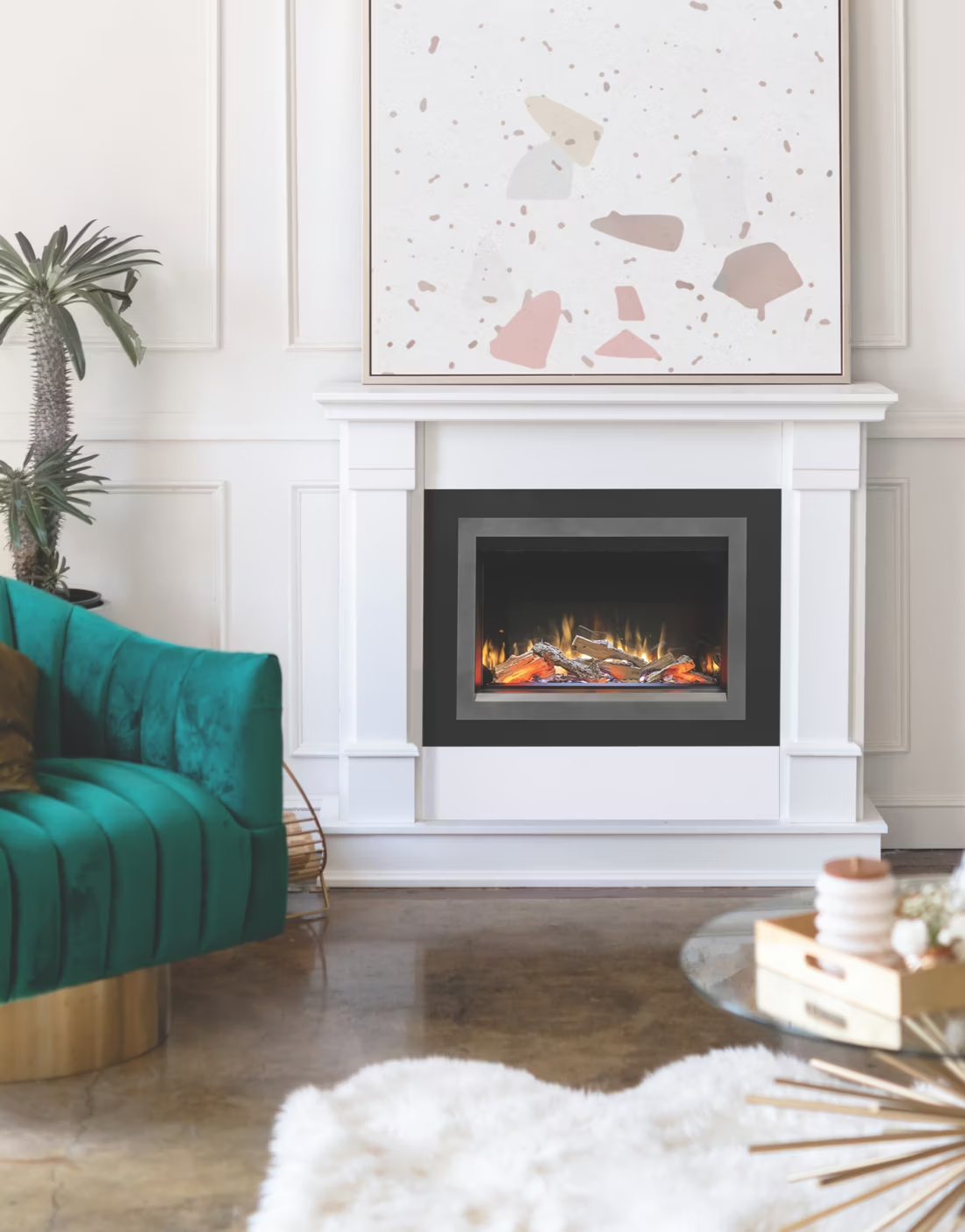
That combination—sparse population, older rural housing, and a lot of homes without existing gas service or a masonry chimney—makes electric fireplaces a genuinely sensible option here, not just a fallback. There's no venting to run through a farmhouse roof, no wood to split and stack against the wind, and no combustion byproducts to worry about during wildfire smoke season, which regularly affects air quality across this stretch of eastern Oregon in late summer. An electric insert or built-in also drops cleanly into an existing fireplace opening in an older Moro or Wasco home, delivering supplemental zone heat and ambiance without the upkeep of a chimney that rarely gets used otherwise.
Three steps. No salesperson until you're ready.
Tell us about your project
Your zip code, your situation, and the fuel you're leaning toward—or let the answers point you to one.
See what's actually available
The brands dealers within 100 miles genuinely carry—real options, never a catalog mirage.
Get your dealer & Project Guide
A trusted local dealer, plus the free Project Guide & Parts List that names every component of the job.
Frequently Asked Questions
How much does an electric fireplace installation cost in Sherman County?
Pricing depends heavily on the type of unit. A plug-in electric insert or stove that drops into an existing fireplace opening or sits on the floor typically runs $300 to $1,200 installed, since no new wiring is usually required. A built-in electric fireplace set into a wall or new framing—common in remodels of the older farmhouses scattered around Moro, Wasco, and Grass Valley—runs higher, often $1,500 to $3,000, especially if a dedicated 20-amp circuit needs to be run by an electrician. Given how few installers are based directly in the county, expect a modest travel charge if your contractor is coming from The Dalles or another neighboring town.
Will an electric fireplace actually heat my home in Sherman County's winters?
Most electric fireplaces are rated around 4,000-5,000 BTU (roughly 1,500 watts), which makes them a strong option for zone heating a single room but not a realistic sole heat source for a whole farmhouse through a 5B-climate winter with steady Columbia Gorge wind chill. In practice, most Sherman County homeowners pair an electric fireplace with their existing furnace, heat pump, or wood stove, using it to take the edge off a living room or bedroom without running the whole-house system as hard. If you're trying to heat an entire small, well-insulated home with electric alone, talk to a local dealer about a larger built-in model or a secondary unit for another zone.
Do I need a permit to install an electric fireplace in Sherman County?
A plug-in electric insert or freestanding stove that uses a standard outlet generally doesn't require a permit. If your installation calls for a new dedicated circuit—which is common for larger built-in units—that electrical work needs to be pulled by a licensed electrician and typically requires an electrical permit through the Sherman County building department. Because Sherman County is sparsely populated, permitting and inspection can take a bit longer than in a larger jurisdiction, so it's worth asking your installer about the timeline up front, especially if you're targeting a specific completion date before winter.
Will my electric fireplace work during a power outage?
No—electric fireplaces require grid power (or a generator) to run, so they won't provide heat during an outage. That matters more in Sherman County than in many places, since the county's exposed, wind-corridor location along the Columbia Gorge means winter windstorms and ice events can knock out power to rural lines for stretches at a time. If backup heat during an outage is a priority, many local households keep a wood stove or a portable propane heater on hand alongside an electric fireplace used for everyday convenience and ambiance.
What's the difference between an electric fireplace, insert, and stove?
An electric insert is built to slide into an existing masonry fireplace opening, which works well in the older farmhouses found around Moro and Wasco that already have a fireplace but no interest in tending a wood fire. A built-in electric fireplace is designed to be framed into a wall, most common during a remodel or new construction. A freestanding electric stove looks like a traditional wood stove but plugs into a standard outlet and can go almost anywhere in the room without any fireplace opening at all. For a rental property or a second home near Rufus, a freestanding stove is often the simplest option since it needs no structural changes.
What's the best electric fireplace for a Sherman County home?
For homes without existing gas service—which is common in rural, unincorporated Sherman County—a mid-size electric insert or built-in with a 1,500-watt heater and a thermostat is the practical starting point, since it delivers real supplemental heat rather than just a flame-effect glow. Larger great-room installations in newer construction can support a bigger built-in unit rated for up to 400-600 square feet. Given the wind exposure and drafty older housing stock in towns like Grass Valley and Wasco, most local dealers will steer you toward a model with a strong heater component rather than a purely decorative, ambiance-only unit.
How much maintenance does an electric fireplace need?
Very little compared to wood or pellet appliances—there's no chimney to sweep, no creosote to manage, and no ash to clean up. Maintenance is mostly dusting the unit, occasionally replacing an LED module or heater fan after years of use, and checking that the electrical connection is secure. For a county where wildfire smoke already affects outdoor air quality some summers, that low-maintenance, zero-emissions profile is a real advantage—an electric fireplace doesn't add any particulate load indoors or out.
Is electric service reliable enough in Sherman County for a fireplace to be worth it?
Most of the county is served by rural electric cooperative lines, and while service is generally reliable, Sherman County's location in the Columbia Gorge wind corridor—the same wind that supports the county's wind-energy industry—means outages do happen during strong storm events. That's not a reason to skip an electric fireplace; it's a reason to think of it as a convenience and zone-heat upgrade rather than your only heat source. A local dealer can also talk through models with battery-backed flame effects if uninterrupted ambiance during a brief outage matters to you.
Electric vs. wood or pellet—which makes more sense in Sherman County?
Wood remains a strong option here given the ready supply of ponderosa pine, lodgepole pine, and juniper in the region, and it keeps working during a power outage—a real consideration on exposed rural lines. Pellet stoves using regional brands like Bear Mountain, Lignetics, and Pacific Pellet burn cleaner than wood but, like electric, need power to run the auger and blower, so neither is an outage backup on its own. Electric wins on simplicity: no venting, no fuel storage, no smoke—which matters during wildfire smoke season—and it's the easiest and least expensive to install in a home that doesn't already have a working chimney. Many Sherman County homeowners end up with wood or pellet as their primary heat and an electric unit for everyday convenience in a second room.
Does an electric fireplace need a vent or chimney?
No—that's its superpower. An electric fireplace needs a wall and an outlet, period. No vent pipe, no gas line, no clearances to design around, which is why it works in bedrooms, offices, apartments, and walls where venting a gas or wood unit would be impractical or impossible. Installation is typically the simplest and least expensive of any fireplace type.
Do electric fireplaces actually produce heat?
Yes—most put out around 4,800–5,000 BTUs from a standard outlet, which comfortably warms a bedroom, office, or den as a comfort-zone heater. What they won't do is carry a whole house the way wood, gas, or pellet can. Think of electric as ambiance-first with honest supplemental heat: flames on with no heat in July, flames plus warmth in January.
Does a fireplace add value to my home?
On average, a fireplace adds back to the home about the same amount you spent installing it. Add the monthly savings from heating the rooms you actually use instead of the whole house—often hundreds of dollars a year—and the value case is strong before you even count what a fire does for how your family uses the room.
What is an in-home preview and do I need one?
It's a visit where a hearth professional measures your space, confirms the model you picked actually works in your home, and walks the specs—framing, gas line, venting, finish work—before anything is ordered. Some details you just can't know until you see the house. Never make a down payment without one; it's the single most-skipped step that burns buyers.
Find your electric fireplace in Sherman County.
Tell us about your home in Moro, Wasco, Grass Valley, Rufus, or anywhere else in the county, and we'll send you a free Project Guide & Parts List—the exact parts your project needs and a trusted local dealer to install it.
Find Your Fireplace →