
Steady pellet heat for Lake County's long, cold winters.
With 6,830 heating degree days and winter lows averaging 22°F, Lake County homes need heat that runs clean and holds through the night. Find a trusted local dealer who can size and install the right pellet stove for your home.
Every Project Starts From One of These Five Situations
A thermostat-simple alternative to hauling cordwood.
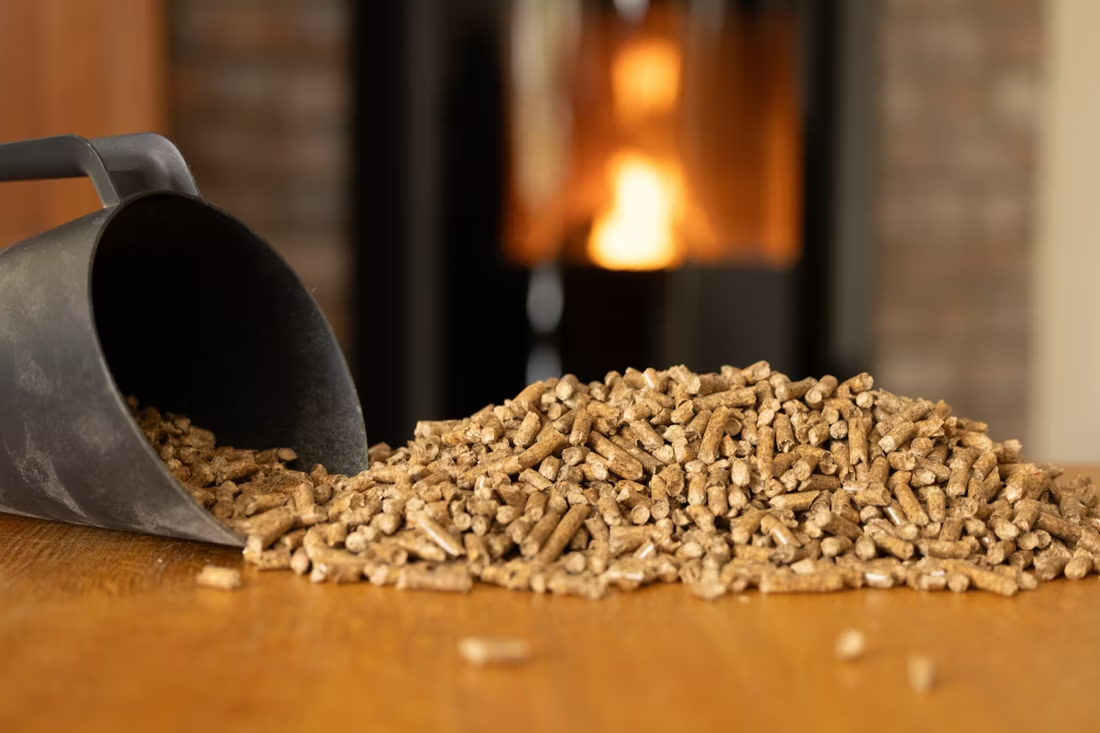
Lake County is rural and spread thin—just under 3,800 people across a high-desert basin ringed by the Fremont-Winema and Modoc National Forests and BLM Lakeview District land. Ponderosa pine, lodgepole pine, and juniper stands nearby mean firewood is cheap and permits are available April through November for as little as $5 to $20 a cord, so wood heat is deeply established here. Pellet stoves have carved out a real niche alongside it, especially for homeowners who want the radiant, glass-front look of a wood fire without the cutting, splitting, hauling, and daily tending that wood demands.
Winter inversions settle into the basin around Lakeview and other low-lying communities, trapping wood smoke close to the ground on the coldest, stillest nights—the same weather pattern that also raises wildfire smoke concerns in late summer. Pellet stoves burn markedly cleaner than open wood fires, which matters on inversion days, and they hold a consistent output for 12-24 hours per hopper load without you adjusting a damper at 2 a.m. Regional pellet brands including Bear Mountain, Lignetics, and Pacific Pellet supply the area, so fuel isn't something you have to drive to Bend or Klamath Falls to stock up on.
Three steps. No salesperson until you're ready.
Tell us about your project
Your zip code, your situation, and the fuel you're leaning toward—or let the answers point you to one.
See what's actually available
The brands dealers within 100 miles genuinely carry—real options, never a catalog mirage.
Get your dealer & Project Guide
A trusted local dealer, plus the free Project Guide & Parts List that names every component of the job.
Frequently Asked Questions
How much does a pellet stove installation cost in Lake County?
Pellet stove installations in Lake County typically run in a range comparable to other high-desert Oregon counties—expect roughly $3,000 to $6,500 depending on the unit, whether you're venting through an exterior wall or an existing chimney, and whether electrical work is needed for the hopper's auger and blower. Homes converting an old wood fireplace to a pellet insert usually land toward the lower end since the masonry opening and chimney chase already exist. Because Lake County is sparsely populated, expect installers to factor in some travel time if you're outside Lakeview proper—Paisley, Christmas Valley, and Silver Lake are all a haul from the nearest dealer.
Where do I buy pellets in Lake County, and will I run out mid-winter?
Regional brands like Bear Mountain, Lignetics, and Pacific Pellet supply pellet retailers across south-central Oregon, and Lake County dealers generally stock through the winter or can order pallets ahead of the season. Given how remote much of the county is—Christmas Valley and Silver Lake are well off the main supply routes—the smart move is buying your season's pellets in fall rather than counting on a mid-January restock. A local dealer can tell you exactly which brands they carry and how far ahead you should order for your specific address.
Is a pellet stove a good fit for a Lake County winter?
Yes, with one caveat worth being honest about: pellet stoves need electricity to run the auger and igniter, so they're not a standalone backup heat source during a power outage the way a wood stove is. Given how rural Lake County is and how storms can knock out power for stretches in outlying areas like Paisley or Adel, many households here pair a pellet stove for everyday convenience with a wood stove or generator for outage backup. For day-to-day heating through a 6,830-HDD winter, a pellet stove holds steady output better than most people expect—comparable to what you'd want in a place like Bozeman or Fargo, where consistent overnight heat matters more than flame-watching.
What size pellet stove do I need for my home?
Sizing depends on square footage, ceiling height, and insulation, but as a rough guide for Lake County's cold, dry climate: smaller units (under 40,000 BTU) suit a single room, cabin, or supplemental-heat setup, while larger units (50,000+ BTU) can carry a whole modest home through the coldest stretches. Older, less-insulated farmhouses common around Paisley and Silver Lake often need to size up compared to newer construction in Lakeview. A local dealer will size your space properly during an in-home visit—oversizing wastes pellets and undersizing leaves you cold on the worst nights.
Do I need a permit to install a pellet stove in Lake County?
Yes—a building permit is generally required for a new pellet stove installation, covering the venting path and any electrical work for the hopper system. Most local installers handle the permitting process as part of the install, so it's rarely something you have to navigate solo. One advantage pellet stoves have over wood stoves in Oregon: they're exempt from winter curtailment periods that can restrict wood-burning during inversion events, since pellet stoves burn cleaner and are certified accordingly.
Pellet stove vs. wood stove—which makes more sense in Lake County?
Wood stoves work without electricity, which matters for emergency heat when storms take down power lines in outlying parts of the county, and cheap Forest Service and BLM cutting permits (as low as $5 to $20 a cord through the Fremont-Winema and Modoc forests) make fuel cost very low if you're willing to cut and haul it yourself. Pellet stoves trade that self-sufficiency for convenience—load the hopper, set the thermostat, and walk away—plus notably lower particulate output, which matters on inversion days around Lakeview. If you want backup heat with no strings attached, wood wins. If your priority is consistent, low-maintenance heat and you have reliable power, pellet is usually the easier day-to-day choice.
How often does a pellet stove need to be cleaned and serviced?
Plan on cleaning the burn pot every few days during heavy winter use, a deeper cleaning of the exhaust venting and hopper once a month, and a full annual service—checking the auger, igniter, gaskets, and blower—before each heating season starts. For a county with winters as long as Lake County's, where the stove may run daily from October through April, staying ahead of ash buildup keeps efficiency up and prevents the stove from shutting down mid-cold-spell. A local dealer or hearth service tech can handle the annual service if you'd rather not do it yourself.
Can a pellet stove be installed in an existing wood fireplace?
Yes—a pellet insert can be fitted into an existing masonry fireplace opening, using a liner run through the chimney or, more commonly, a direct-vent kit through an exterior wall since pellet stoves don't require the same draft as wood. This is a popular upgrade path for older Lakeview and Paisley homes with a drafty open fireplace that's never provided much real heat. The insert seals the opening and turns an inefficient fireplace into a genuine heat source, often at a lower installed cost than a comparable wood insert since the venting requirements are simpler.
Will wildfire smoke or winter inversions affect my pellet stove?
Not in the way it affects a wood-burning setup. Because pellet stoves burn more completely and produce far less particulate matter, they aren't typically subject to the curtailment restrictions that can apply to wood stoves during winter inversion events in the Lakeview basin. Summer wildfire smoke is an outdoor air quality issue rather than something that affects your stove's operation—you'll just want to keep windows closed and rely on indoor heat sources like your pellet stove rather than venting the house during smoke events.
What's the difference between an insert and a zero-clearance fireplace?
An insert is a fireplace that slides into a pre-existing wood-burning fireplace—if you don't have one, there's nothing to insert it into. A zero-clearance fireplace is built into a framed wall, which makes it the answer for remodels and new construction. Simple test: existing masonry fireplace means insert; blank or framed wall means zero-clearance.
Why is a fireplace insert so efficient?
An insert does two things: it seals the chimney completely, so you stop losing air you already paid to heat, and it radiates warmth into the room through the firebox and glass. Most add a heat-exchange fan that pulls cool room air underneath, wraps it around the hot firebox, and pushes it back out warm. Your home is more efficient before you've even lit the first fire.
Can I install a fireplace myself?
If you're putting a fire in your house on purpose, it's best to work with an expert. Unless you're genuinely experienced in framing, gas line, vent pipe, and the national code on clearances to combustibles, have a professional do it—and ideally the same company that sells you the fireplace, so warranty, service, and liability all live under one roof.
What is an in-home preview and do I need one?
It's a visit where a hearth professional measures your space, confirms the model you picked actually works in your home, and walks the specs—framing, gas line, venting, finish work—before anything is ordered. Some details you just can't know until you see the house. Never make a down payment without one; it's the single most-skipped step that burns buyers.
Pellet Brands Stocked Around Lake County
Manufacturers will point you to the nearest stocking dealer.
Get matched with a pellet dealer in Lake County.
Tell us about your home and heating goals, and we'll match you with a trusted local dealer plus a free Project Guide & Parts List—the stove, vent kit, and installer recommendation for your specific Lake County address.
Find Your Fireplace →