
Heating a high desert county with fewer than 4,000 people.
Wood, gas, pellet, and electric fireplace resources for Lakeview, Paisley, Christmas Valley, Silver Lake, and the rest of Lake County—plus the trusted local retailers who actually cover this ground.
Every Project Starts From One of These Five Situations
Vast, sparsely populated, and seriously cold—heating in Lake County, Oregon.
Lake County spans over 8,000 square miles of Oregon's high desert but holds fewer than 4,000 residents—one of the most sparsely populated counties in the state. Elevations run from around 4,400 feet in the Lakeview basin up into the Fremont-Winema and Warner Mountains. At 6,830 heating degree days, the winter heat load here rivals Bismarck, ND, and winter lows averaging 22°F are typical. Wood heat is deeply practical in a county this remote: ponderosa pine, lodgepole pine, and juniper are cut locally under BLM Lakeview District and Fremont-Winema National Forest permits, and a well-tended catalytic stove can outlast a long power outage on a rural line.
What you'll find on this hub: hearth retailers, service technicians, and fuel suppliers covering the whole county—from Lakeview and Paisley to Christmas Valley, Silver Lake, and the ranch country in between. Given the population, expect fewer dealers than a metro county, and expect some to be based well outside county lines. Pick your fuel below to see specific units, installed costs, and the dealer or technician who actually services your part of the county.
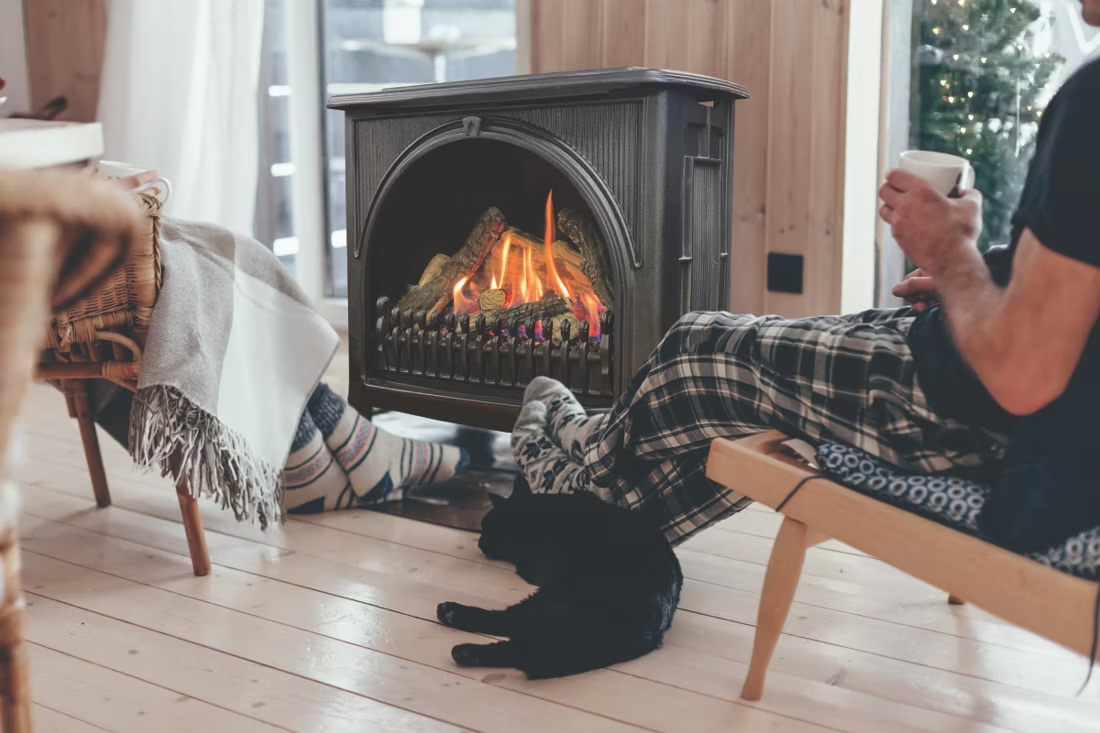
Four fuels. One honest answer for Lake County.
Three steps. No salesperson until you're ready.
Tell us about your project
Your zip code, your situation, and the fuel you're leaning toward—or let the answers point you to one.
See what's actually available
The brands dealers within 100 miles genuinely carry—real options, never a catalog mirage.
Get your dealer & Project Guide
A trusted local dealer, plus the free Project Guide & Parts List that names every component of the job.
Frequently Asked Questions
Which fireplace fuel makes the most sense in Lake County?
Wood is still the backbone fuel for most rural Lake County homes—ponderosa pine, lodgepole pine, and juniper are cut locally under BLM Lakeview District and Fremont-Winema National Forest permits, keeping fuel cost low, and a catalytic stove keeps running through the power outages that happen on rural lines around Lakeview, Paisley, and Silver Lake. Propane fills the role natural gas plays in bigger cities, since county-wide gas infrastructure is limited—propane fireplaces and inserts give instant heat without a woodpile. Pellet stoves are a solid middle option where Bear Mountain and Lignetics pellets are stocked locally, offering wood-like heat with less daily labor. Electric fireplaces work well as supplemental heat in bedrooms or additions but shouldn't be your only source of warmth given winter lows averaging 22°F and a heating season that runs long. Many households here pair wood or pellet as primary heat with propane or electric as backup.
Do I need a permit to install a wood stove or fireplace insert in Lake County?
Yes, in most cases. New wood stoves, inserts, gas appliances, and pellet stoves installed in Lake County require a building permit, and wood-burning units need to meet current EPA 2020 NSPS emissions standards. Propane installations typically require a separate permit for the gas line and connection work, handled by a licensed gas-fitter. Electric fireplaces usually skip the permit process unless you're hardwiring a built-in unit into a new circuit. Given how few local retailers there are, most of them are well-practiced at handling the permitting paperwork as part of the installation—worth confirming when you get a quote, since it saves you a trip to the county building department.
Are there wood-burning restrictions in Lake County during winter?
Lake County sees the same kind of winter temperature inversions that trap smoke close to the ground across the high desert basins of south-central Oregon, and wildfire smoke can also affect summer and early fall air quality. Unlike more urban basins, Lake County doesn't have the same formal curtailment advisory infrastructure—but common sense still applies: burn seasoned wood, avoid smoldering fires during stagnant cold-air events, and keep an eye on regional air quality reports during inversion-prone stretches. New wood stove installations still need to meet EPA 2020 NSPS standards regardless of local advisory status, and cleaner-burning certified stoves put out dramatically less smoke than an old uncertified unit during those still, cold nights.
Will one dealer in Lake County carry all four fuel types?
It's less likely here than in a bigger county—with a population under 4,000, Lake County can't support the kind of multi-fuel showroom you'd find in Klamath Falls or Bend. Some local retailers focus heavily on wood and pellet, since that matches what most rural households actually burn, while propane and electric options may come through a smaller subset of dealers or require a call to a Lakeview-based retailer who special-orders what you need. If you want to compare fuel types side by side, it may be worth checking dealers based in neighboring Klamath County who service Lake County customers and stock a broader range.
How does fireplace service and repair work in such a remote county?
Most technicians who service Lake County are based in Lakeview or make the trip in from Klamath Falls or Bend, covering Paisley, Christmas Valley, Silver Lake, and the ranch roads in between. Expect a trip or travel fee on top of the service call, especially for the more remote communities, and expect scheduling to run tighter in late summer and early fall as everyone tries to get their chimney swept or gas unit inspected before the first cold snap. If you're on a rural property, it's worth scheduling annual service early, keeping spare parts (igniters, thermocouples) on hand for gas units, and having a backup heat source ready given how far help may need to travel in a real emergency.
What does fireplace installation typically cost across fuel types in Lake County?
Costs run in a similar range to other high-desert Oregon counties, though rural travel fees can push totals higher. Wood stove or insert : roughly $4,500–$9,000 installed, more for new chimney construction. Propane fireplace, insert, or stove : roughly $4,500–$10,500 depending on gas line work and tank setup for properties without existing propane service. Pellet stove or insert : roughly $4,500–$7,500 installed. Electric fireplace : $200–$3,000 for the unit itself, plus $400–$1,200 in labor for anything beyond a simple plug-in setup. See the county + fuel pages above for retailer-specific pricing detail.
Wood, gas, pellet, or electric—how do I choose?
Match the fuel to your life, not the other way around. Wood: lowest fuel cost and total power-outage independence, but you're hauling and stacking. Gas: press a button, set a thermostat, no maintenance to speak of. Pellet: wood economics with automatic feeding, in exchange for weekly cleaning and a need for electricity. Electric: plugs in anywhere with honest supplemental heat. Nobody regrets the fuel that fits how they actually live.
Can a fireplace actually lower my heating bill?
Yes—by creating a comfort zone. A furnace heats every square foot of the house just to warm the one room you're in; a gas fireplace on low burns roughly a sixth of the gas a typical furnace does. Set the furnace around 55–60 degrees as a baseline, then heat the rooms your family actually uses. Families who heat this way commonly save $20–$60 a month.
What is an in-home preview and do I need one?
It's a visit where a hearth professional measures your space, confirms the model you picked actually works in your home, and walks the specs—framing, gas line, venting, finish work—before anything is ordered. Some details you just can't know until you see the house. Never make a down payment without one; it's the single most-skipped step that burns buyers.
Does a fireplace add value to my home?
On average, a fireplace adds back to the home about the same amount you spent installing it. Add the monthly savings from heating the rooms you actually use instead of the whole house—often hundreds of dollars a year—and the value case is strong before you even count what a fire does for how your family uses the room.
Stove and Fireplace Dealers in Lake County
Listings include WhyFire partner dealers, dealers we have verified as authorized for the brands we recommend, and established local businesses that carry hearth products. Every listing shows which one it is. The ones marked Preferred run on WhyFire's software, so they can show you real pricing and book your appointment right here. No manufacturer pays for placement. How we verify dealers →
Coastal - Klamath Falls
Ashes Away Chimney Services
Find your fireplace in Lake County.
Pick your fuel below and we'll match you with a local dealer who actually services your part of the county, plus a free Project Guide & Parts List for your project.
Find Your Fireplace →