
Gas heat that works for every corner of Clackamas County.
From NW Natural service in Oregon City and Milwaukie to propane country up toward Estacada and Mt. Hood, find the right gas fireplace, insert, or stove—and get matched with a trusted local dealer.
Every Project Starts From One of These Five Situations
Reliable warmth, minus the wood pile.
Clackamas County stretches from the dense Portland suburbs—Oregon City, Milwaukie, Lake Oswego, West Linn, Wilsonville—up through Sandy and Estacada into the foothills of Mt. Hood National Forest. It's a Zone 4C marine climate: mild by most standards, with winter lows averaging around 37°F and a moderate winter heating load overall. That's a far cry from the sustained sub-zero stretches you'd see in a place like Bismarck ND or Duluth MN—Clackamas County winters are wet and chilly more often than they're brutally cold. The county's real seasonal concern isn't January frost so much as late-summer wildfire smoke drifting down from the Cascades, which pushes a lot of homeowners toward cleaner-burning, lower-maintenance heat sources for the rest of the year.
NW Natural provides natural gas service through most of the western and urbanized parts of the county—Oregon City, Milwaukie, Lake Oswego, West Linn, Wilsonville, and Canby all sit within the service footprint. Head east toward Sandy, Estacada, Molalla, or the upper Clackamas River corridor near Mt. Hood National Forest, and propane becomes the standard fuel, delivered and tanked by regional suppliers. Either way, a gas fireplace gives Clackamas County homeowners instant, consistent heat without the chimney maintenance, ash cleanup, or wood storage that comes with a wood stove—a real advantage in a county where douglas fir and ponderosa pine are abundant for cutting but not everyone wants to manage a woodpile.
Three steps. No salesperson until you're ready.
Tell us about your project
Your zip code, your situation, and the fuel you're leaning toward—or let the answers point you to one.
See what's actually available
The brands dealers within 100 miles genuinely carry—real options, never a catalog mirage.
Get your dealer & Project Guide
A trusted local dealer, plus the free Project Guide & Parts List that names every component of the job.
Frequently Asked Questions
How much does a gas fireplace installation cost in Clackamas County?
Most gas fireplace installations in Clackamas County run somewhere between $3,500 and $10,000, with the spread driven mainly by venting complexity and whether gas service already reaches the appliance location. A direct-vent insert into an existing masonry fireplace in an NW Natural service area like Oregon City or Milwaukie—where a gas line is often already nearby—tends to land on the lower end. New construction, remodels requiring fresh gas line runs, or homes out toward Estacada or Molalla that need a propane tank set and connected will run higher. Local dealers provide a firm number after an in-home walkthrough, since venting path and gas access vary a lot house to house.
Can I convert my existing wood fireplace to gas?
Yes, and it's a common project in the older neighborhoods of Lake Oswego, West Linn, and Milwaukie, where many homes still have the original masonry wood fireplace from the 1960s or 70s. A gas insert slides into that existing firebox and uses a stainless liner run up the current chimney for venting, so you're not opening up walls or adding new masonry. Homes already on NW Natural service tend to see lower conversion costs since the gas line work is simpler; homes relying on propane in the rural parts of the county will need a tank installed or an existing one tapped. The upgrade keeps the look of the original fireplace while trading ash and creosote for a switch-flip flame.
Do I need natural gas, or should I plan on propane?
It depends on where in the county you're located. NW Natural's distribution network covers Oregon City, Milwaukie, Lake Oswego, West Linn, Wilsonville, and Canby—if your home already has gas appliances in one of these areas, adding a fireplace onto the existing line is usually the simplest path. Out toward Sandy, Estacada, Molalla, or the communities closer to Mt. Hood National Forest, natural gas infrastructure typically doesn't reach, so propane is the standard choice, either from an existing tank or a new one set by a local supplier. Most gas fireplace models can be configured for either fuel—your installer sets the correct orifice and regulator for whichever you're running.
Will my gas fireplace still work if the power goes out?
Most modern gas fireplaces are built to keep running through a power outage. Units with intermittent pilot ignition (IPI) carry a small battery backup that takes over automatically when utility power drops, so the fireplace lights on demand just like normal. Clackamas County sees its share of winter windstorms and ice storms that can knock out power for a day or more, particularly in the wooded, tree-lined neighborhoods around Estacada and up toward Mt. Hood, so this feature is worth asking about. Valor fireplaces take a different approach—they generate their own electricity through the pilot's thermocouple, so there's no battery to remember at all. Either way, confirm the ignition system with your dealer if backup heat during an outage matters to you.
What's the difference between a gas fireplace, gas insert, and gas stove?
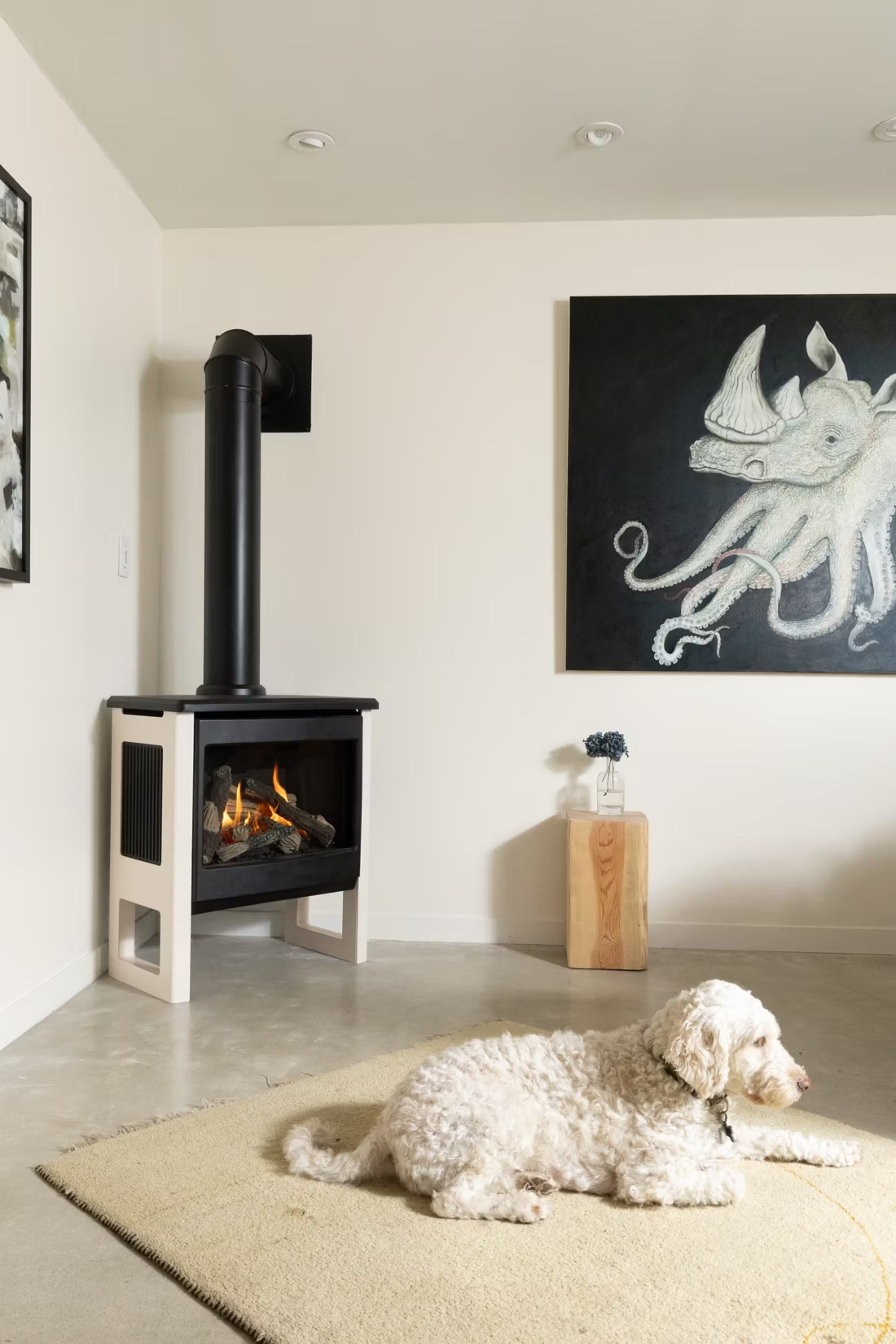
A gas fireplace is a fully built-in unit framed into a wall—the common choice for new construction and remodels in newer subdivisions around Wilsonville and Happy Valley. A gas insert is sized to slide into an existing masonry firebox, which is exactly what most older homes in Oregon City, Milwaukie, and West Linn already have. A gas stove is freestanding, sitting on the floor on its own hearth pad, similar in footprint to a wood stove but running on gas or propane instead. For a homeowner with an existing fireplace to upgrade, an insert is almost always the right call; for a room with no chimney or firebox, a built-in fireplace or freestanding stove works better.
Do I need a permit to install a gas fireplace in Clackamas County?
Yes. Within incorporated cities—Oregon City, Milwaukie, Lake Oswego, West Linn, Wilsonville, Canby, Molalla, Sandy, and Estacada—permits are issued through the city's own building department. In unincorporated areas of the county, permits run through the Clackamas County Building Codes Division. New gas fireplace installs generally need both a building permit and a gas line permit, and the gas line portion has to be done by a licensed gas-fitter. Most established hearth dealers handle this permitting as part of the install, coordinating the gas work, venting, and inspection so you're not managing separate trades yourself.
Should I get a vented or vent-free gas fireplace?
Vented gas fireplaces—direct-vent or B-vent—pull combustion air from outside and exhaust the byproducts back outside through a sealed system. Vent-free units burn directly into the room, which on paper is more fuel-efficient but releases water vapor and small amounts of combustion byproducts indoors. That water vapor is a bigger consideration in Clackamas County than in a dry climate—the Willamette Valley's wet marine winters already push indoor humidity up, and adding a vent-free unit's moisture output on top of that can contribute to condensation and mold issues in older, less-ventilated homes. Vent-free units are legal in Oregon with room-sizing and oxygen-sensor requirements, but most local dealers steer homeowners toward direct-vent units for exactly this reason—better performance, no humidity trade-off, and full code compliance everywhere.
How often does a gas fireplace need servicing?
Plan on an annual inspection for any gas appliance, insert or fireplace alike. A certified technician checks the burner, pilot assembly, venting, and gas connections, and cleans the glass and firebox interior—a much lighter job than a wood chimney sweep, but still important for safety and warranty coverage. Local gas appliance service providers in the Clackamas County area typically charge $150 to $250 for this annual visit, and it's worth scheduling before the fireplace sees its heaviest use through the wet fall and winter months.
Gas vs. wood—which makes more sense for a Clackamas County home?
Wood heat still has deep roots here—douglas fir, ponderosa pine, and lodgepole pine are all common locally, and cutting permits through Mt. Hood National Forest and Gifford Pinchot National Forest run just $5 to $20 per cord during the May-through-October season, which keeps self-cut firewood cheap for anyone with a truck and a Saturday to spare. But wood heat comes with upkeep—chimney sweeps, ash, and the reality that late-summer wildfire smoke is already a recurring air quality concern in the county, which pushes some households toward cleaner-burning options for at least part of the year. Gas wins on convenience: instant on-off heat, no ash, no wood storage, and (with the right ignition system) it can keep running through the windstorm-driven outages that hit the county's wooded neighborhoods most winters. A lot of Clackamas County homes end up running both—gas in the main living space for daily use, wood as backup or ambiance elsewhere.
What's the difference between an insert and a zero-clearance fireplace?
An insert is a fireplace that slides into a pre-existing wood-burning fireplace—if you don't have one, there's nothing to insert it into. A zero-clearance fireplace is built into a framed wall, which makes it the answer for remodels and new construction. Simple test: existing masonry fireplace means insert; blank or framed wall means zero-clearance.
Why is a fireplace insert so efficient?
An insert does two things: it seals the chimney completely, so you stop losing air you already paid to heat, and it radiates warmth into the room through the firebox and glass. Most add a heat-exchange fan that pulls cool room air underneath, wraps it around the hot firebox, and pushes it back out warm. Your home is more efficient before you've even lit the first fire.
Can I install a fireplace myself?
If you're putting a fire in your house on purpose, it's best to work with an expert. Unless you're genuinely experienced in framing, gas line, vent pipe, and the national code on clearances to combustibles, have a professional do it—and ideally the same company that sells you the fireplace, so warranty, service, and liability all live under one roof.
Can a fireplace actually lower my heating bill?
Yes—by creating a comfort zone. A furnace heats every square foot of the house just to warm the one room you're in; a gas fireplace on low burns roughly a sixth of the gas a typical furnace does. Set the furnace around 55–60 degrees as a baseline, then heat the rooms your family actually uses. Families who heat this way commonly save $20–$60 a month.
Stove and Fireplace Dealers in Clackamas County
Find the right gas fireplace for your Clackamas County home.
Tell us about your home and we'll put together your free Project Guide & Parts List—the exact gas fireplace or insert setup, vent kit included, plus a recommended local dealer to install it.
Find Your Fireplace →