
Reliable Heat for West Linn's Rainy, Mild Winters.
Instant, clean heat for Willamette Valley homes—no wet firewood, no hassle. Find the right gas fireplace or insert and connect with a trusted local dealer.
Every Project Starts From One of These Five Situations
Convenience heat for a mild, wet climate.
West Linn sits at just 678 feet along the Willamette and Tualatin rivers, in a climate zone (4C) defined less by deep cold than by long, wet stretches of Pacific Northwest rain. Winter lows average around 37 degrees—nothing like the sub-zero nights of Fargo, ND or Duluth, MN—and the region has a fairly mild winter heating season overall, well under half the heating load you'd see in a true cold-climate market. That milder profile changes what homeowners actually want from a fireplace: less about survival heat, more about clean, on-demand warmth for the living room, den, or primary suite.
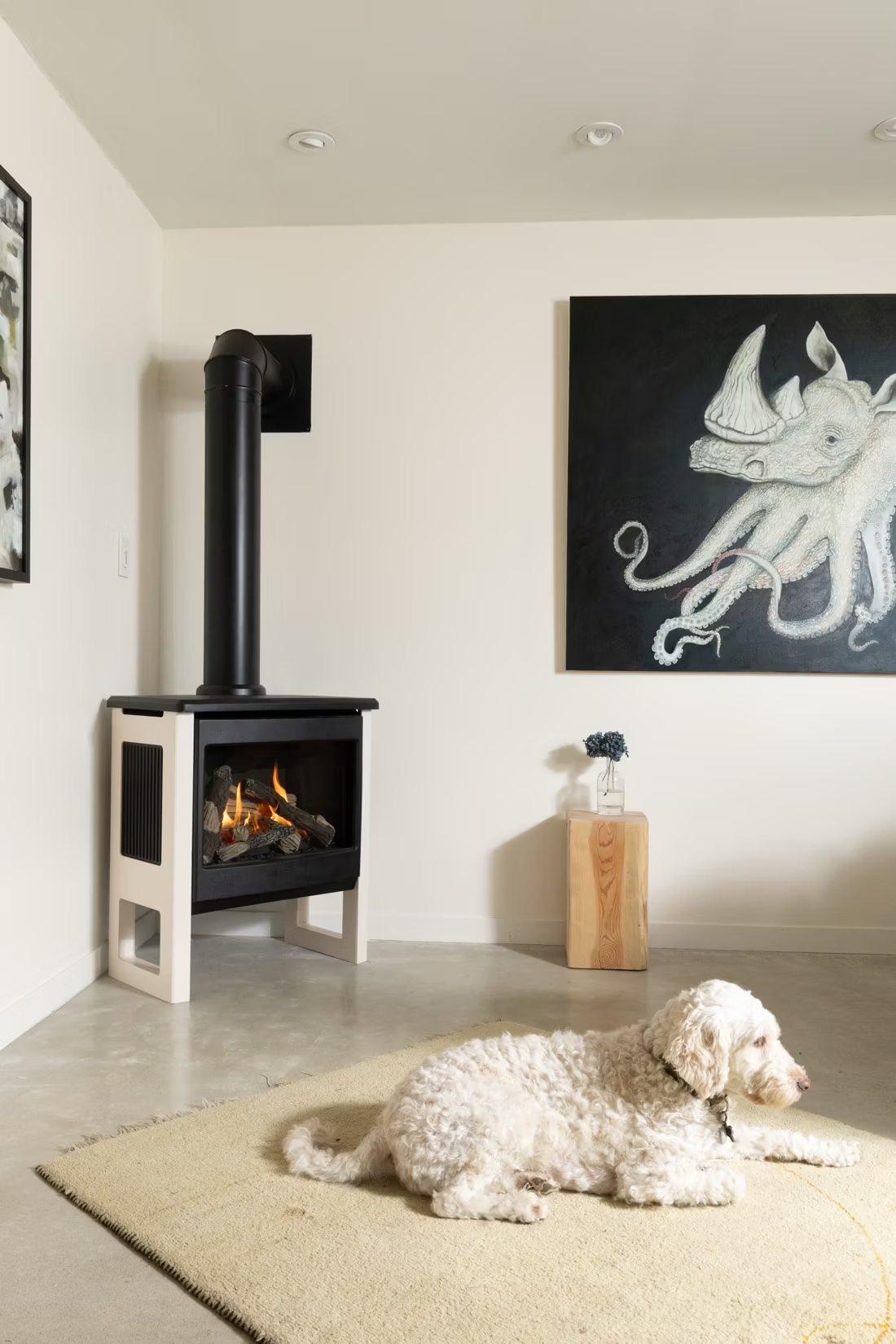
Natural gas service in West Linn comes through NW Natural, and it's a fit for the city's mix of established neighborhoods and newer construction in areas like Rosemont Summit and the Sunset district. Portland General Electric supplies power for ignition systems and blowers. Because West Linn winters bring more rain than snow, storing and drying firewood is a bigger hassle here than in drier interior climates, which is part of why gas fireplaces and inserts have become the default upgrade for homeowners converting older wood-burning fireplaces or finishing new builds. A gas unit gives instant heat at the flip of a switch or remote, with none of the wood-handling or ash cleanup that a damp Willamette Valley winter makes especially unappealing.
Three steps. No salesperson until you're ready.
Tell us about your project
Your zip code, your situation, and the fuel you're leaning toward—or let the answers point you to one.
See what's actually available
The brands dealers within 100 miles genuinely carry—real options, never a catalog mirage.
Get your dealer & Project Guide
A trusted local dealer, plus the free Project Guide & Parts List that names every component of the job.
Frequently Asked Questions
How much does a gas fireplace installation cost in West Linn?
Most gas fireplace installations in West Linn run between roughly $4,500 and $10,000, depending on the unit, the venting path, and whether new gas line work is required. A direct-vent insert dropped into an existing masonry fireplace with gas already run nearby tends to land on the lower end. A full built-in gas fireplace for a remodel or addition—with framing, direct-vent piping through an exterior wall, and a new gas line from the meter—runs toward the higher end. Homes in older sections of West Linn with existing wood fireplaces are usually the most cost-effective conversions, since the existing chase can often be reused.
Can I convert my existing wood fireplace to gas?
Yes, and it's a common project in West Linn given how many homes here—particularly in the older neighborhoods near the historic Willamette district—were built with wood-burning masonry fireplaces in the 1960s through 1980s. A gas insert typically slides into that existing firebox, using a stainless liner run through the original chimney for venting. Expect a cost in the range of $4,000 to $8,500 depending on the insert and whether NW Natural service already reaches the home or a new gas line needs to be run from the street.
Do I need natural gas to install a gas fireplace, or can I use propane?
Either works, but it depends on where in the West Linn area you live. NW Natural serves most of the incorporated city, so homes with an existing gas water heater, range, or furnace can usually add a fireplace without much extra plumbing. Homes further out in unincorporated Clackamas County—including parts of the Stafford basin—sometimes fall outside the natural gas footprint, and propane from a local supplier is the standard alternative there. Most fireplace models can be configured for either fuel; your installer sets the correct orifice and regulator for whichever you have.
Will my gas fireplace work during a power outage?
Most modern gas fireplaces will, which matters in West Linn during the windstorms and occasional ice events that roll through the Willamette Valley and knock out Portland General Electric service for hours at a time. Units with IPI (intermittent pilot ignition) run on a small battery backup that kicks in automatically when power drops, so the fireplace lights and operates normally off batteries. Valor fireplaces take a different approach—their pilot assembly generates its own electricity through the thermocouple, so there's no battery to remember or replace at all. Given how storm-related outages tend to hit this region, that's worth asking about when comparing units.
What's the difference between a gas fireplace, gas insert, and gas stove?
A gas fireplace is a fully built-in unit framed into a wall—the right choice for new construction or a remodel without an existing firebox. A gas insert is sized to slide into an existing masonry fireplace, which is common in West Linn's older wood-burning homes, and it uses the existing chimney as a chase for the new direct-vent liner. A gas stove is a freestanding cast-iron or steel unit that sits on the floor like a wood stove but runs on gas—a good option for homes without any existing fireplace opening. Most West Linn homeowners upgrading an old wood fireplace go with an insert.
Do I need a permit to install a gas fireplace in West Linn?
Yes. Homes within city limits need a building permit and a gas line permit through the City of West Linn Building Division, while homes in unincorporated Clackamas County go through the Clackamas County Building Codes Division. The gas line portion has to be pulled by a licensed gas-fitter, which is one reason it's worth using a hearth retailer who coordinates the gas work, venting, and inspections together rather than juggling separate trades yourself.
What's the difference between vented and vent-free gas fireplaces?
Vented (direct-vent) gas fireplaces draw combustion air from outside and exhaust it back outside through sealed venting—they're the cleanest and most universally code-approved option. Vent-free units burn directly into the room without external venting; they're legal in Oregon but come with strict room-size minimums and require an oxygen depletion sensor. Given West Linn's damp winters, sealed direct-vent units are also the better choice for indoor air and moisture management, since they don't add combustion byproducts or humidity to the living space. Direct-vent is what most local retailers recommend and install by default.
How often should my gas fireplace be serviced?
Plan on an annual inspection, ideally before the wet season sets in each fall. A certified technician checks the burner, pilot assembly, venting, and gas connections, and cleans the glass and interior—a much lighter job than sweeping a wood chimney, but still important. Local gas appliance service providers typically charge $150 to $250 for this visit, and it's the main thing that keeps a warranty valid on most units.
Gas vs. wood—which is right for my home in West Linn?
Wood still has a place here—Douglas fir, ponderosa pine, and lodgepole pine are all commonly burned in the area, and nearby Forest Service permits through Mt. Hood National Forest run just $5 to $20 per cord during the May-to-October cutting season. But West Linn's mild, rain-heavy winters (average lows around 37°F, well short of true cold-climate territory) mean most households don't need wood as backup survival heat the way colder inland cities do. Wildfire smoke is also a seasonal air quality concern here, which pushes some homeowners toward gas simply to avoid adding more smoke to the mix. For most West Linn living rooms and primary suites, gas wins on convenience and cleanliness; wood still appeals to homeowners who want the ritual of a real fire or extra insurance during a multi-day outage.
What's the difference between an insert and a zero-clearance fireplace?
An insert is a fireplace that slides into a pre-existing wood-burning fireplace—if you don't have one, there's nothing to insert it into. A zero-clearance fireplace is built into a framed wall, which makes it the answer for remodels and new construction. Simple test: existing masonry fireplace means insert; blank or framed wall means zero-clearance.
Why is a fireplace insert so efficient?
An insert does two things: it seals the chimney completely, so you stop losing air you already paid to heat, and it radiates warmth into the room through the firebox and glass. Most add a heat-exchange fan that pulls cool room air underneath, wraps it around the hot firebox, and pushes it back out warm. Your home is more efficient before you've even lit the first fire.
Can a fireplace actually lower my heating bill?
Yes—by creating a comfort zone. A furnace heats every square foot of the house just to warm the one room you're in; a gas fireplace on low burns roughly a sixth of the gas a typical furnace does. Set the furnace around 55–60 degrees as a baseline, then heat the rooms your family actually uses. Families who heat this way commonly save $20–$60 a month.
What is an in-home preview and do I need one?
It's a visit where a hearth professional measures your space, confirms the model you picked actually works in your home, and walks the specs—framing, gas line, venting, finish work—before anything is ordered. Some details you just can't know until you see the house. Never make a down payment without one; it's the single most-skipped step that burns buyers.
Nearby Dealers
Hearth shops serving West Linn and the surrounding area.
Find your gas fireplace in West Linn.
Tell us a bit about your home and we'll match you with a trusted local dealer and send over a free Project Guide & Parts List—the exact parts, vent kit, and recommended installer for your West Linn gas fireplace project.
Find Your Fireplace →