
Reliable gas heat for Wilsonville's rainy winters.
Instant, low-maintenance warmth for Willamette Valley homes—find the right gas fireplace or insert and get matched with a trusted local dealer.
Every Project Starts From One of These Five Situations
Clean heat that fits a fast-growing Portland suburb.
Wilsonville sits along the Willamette River at just 177 feet of elevation, in a mild marine climate zone (4C) where winter lows average around 36°F and the area logs about 4,400 heating degree days a year—a fraction of what a genuinely cold-winter city like Bozeman, Montana racks up (over 7,000). Winters here are defined less by deep cold and more by weeks of steady Pacific Northwest rain, which is exactly the kind of climate where a gas fireplace shines: instant heat on a damp 40-degree evening without the wood storage, splitting, or ash cleanup that a wetter Willamette Valley yard makes inconvenient.
Wilsonville has grown fast—from a small mill town to a city of nearly 26,000 with business parks, newer subdivisions, and a lot of homes built in the last two decades already plumbed for natural gas through NW Natural, the utility serving most of the Portland metro area. That makes gas a natural fit for both new construction and remodels of older homes near Old Town Wilsonville. A properly sized gas fireplace or insert delivers reliable zone heat, backs up central heating during a cold snap, and skips the wildfire-smoke tradeoff that comes with wood burning during Willamette Valley's smoky late-summer months.
Three steps. No salesperson until you're ready.
Tell us about your project
Your zip code, your situation, and the fuel you're leaning toward—or let the answers point you to one.
See what's actually available
The brands dealers within 100 miles genuinely carry—real options, never a catalog mirage.
Get your dealer & Project Guide
A trusted local dealer, plus the free Project Guide & Parts List that names every component of the job.
Frequently Asked Questions
How much does a gas fireplace installation cost in Wilsonville?
A typical gas fireplace installation in Wilsonville runs roughly $4,000 to $10,500, depending on the unit, the venting path, and whether new gas line work is required. A direct-vent gas insert dropped into an existing masonry fireplace with a gas line already run to that wall sits at the lower end. New construction or a remodel that requires framing a new fireplace chase, running venting through an exterior wall, and extending a gas line from the meter sits toward the higher end. Homes in newer Wilsonville subdivisions already plumbed for gas heat and gas ranges tend to see lower incremental costs than older homes near Old Town that need a fresh gas tap.
Can I convert my existing wood fireplace to gas?
Yes, and it's a common project in Wilsonville's older housing stock, particularly homes built before the city's growth spurt in the 1990s and 2000s that still have a wood-burning masonry fireplace. A gas insert typically slides into that existing firebox, using a stainless liner run through your current chimney for venting. Expect $4,200 to $9,000 depending on the insert and whether a new gas line needs to be run from an existing appliance circuit. Because NW Natural service is widely available inside city limits, most conversions don't require a propane tank—it's largely a matter of tapping into gas you likely already have for a furnace or water heater.
Do I need natural gas, or can I use propane?
Most of Wilsonville proper is served by NW Natural, so if your home already has gas appliances—a furnace, water heater, or range—adding a fireplace usually just means extending an existing line. Propane becomes the more practical option outside city limits, in unincorporated pockets of Clackamas County toward French Prairie or Charbonneau where natural gas mains don't reach every property. Nearly every gas fireplace and insert on the market can be configured for either fuel; your local installer sets the correct orifice and regulator based on which one you have.
Will my gas fireplace work during a power outage?
Most modern gas fireplaces will, with the right ignition system. Units with IPI (intermittent pilot ignition) run on a small battery backup that automatically kicks in when Portland General Electric power drops, letting the fireplace light on demand just like normal. That mattered a lot in Wilsonville during the February 2021 ice storm, when large stretches of Clackamas County lost power for days—homes with battery-backed gas fireplaces had a working heat source when the furnace's electric blower didn't. Valor fireplaces skip batteries altogether, generating their own power through the pilot's thermocouple. Ask your local dealer which ignition system is on any unit you're considering.
What's the difference between a gas fireplace, gas insert, and gas stove?
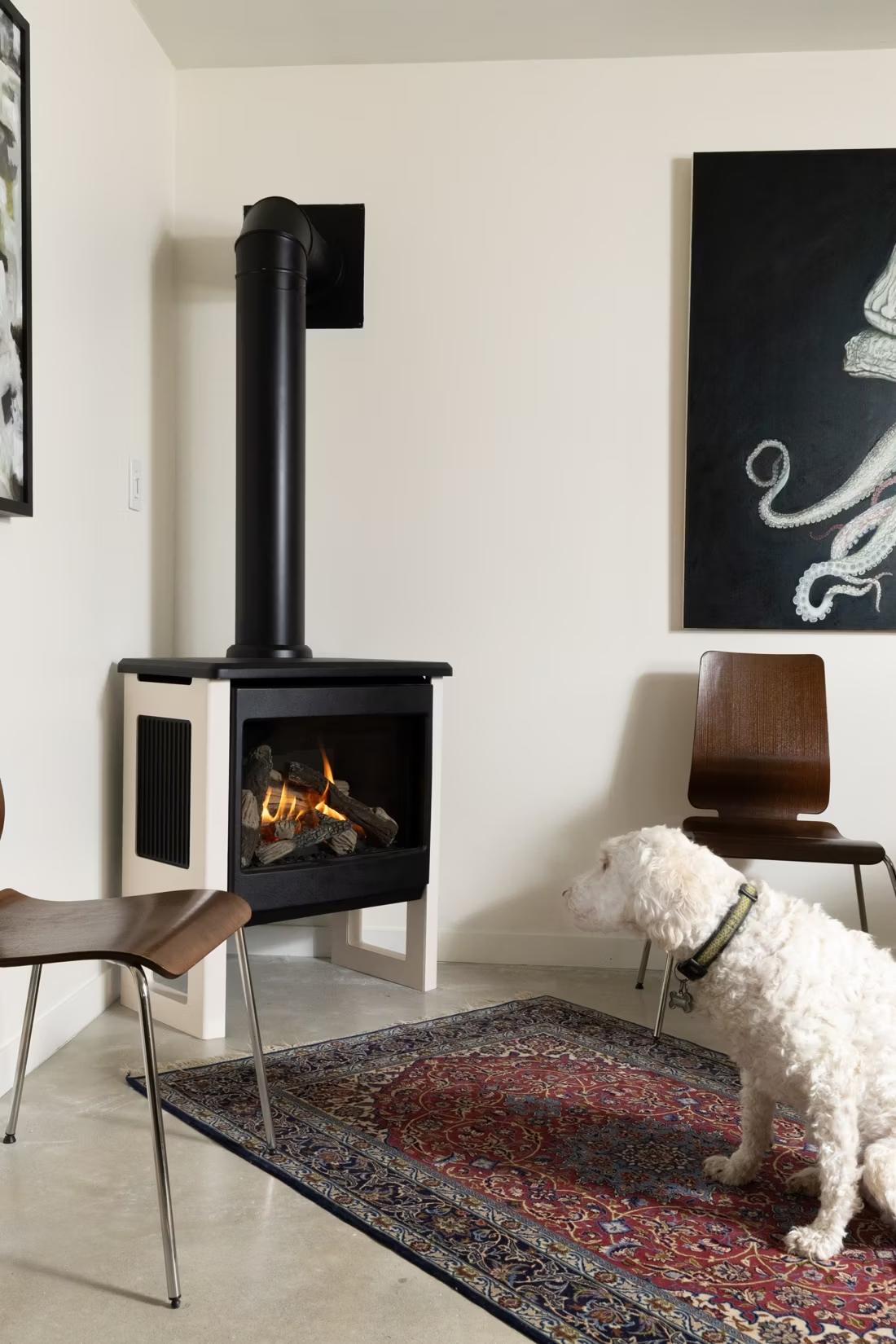
A gas fireplace is a fully built-in unit framed into a wall—the standard choice for new construction or a full remodel, which is common in Wilsonville's newer subdivisions. A gas insert is sized to slide into an existing masonry firebox, using your current chimney as the vent path—the right call for older homes near Old Town with an existing wood fireplace. A gas stove is a freestanding cast-iron or steel unit that sits on the floor on its own hearth pad, useful in rooms without any existing fireplace opening, like a finished basement or a bonus room over a garage. A local dealer can walk your specific space and tell you which format actually fits.
Do I need a permit to install a gas fireplace in Wilsonville?
Yes. New gas fireplace installations inside city limits require a building permit and a gas permit through the City of Wilsonville Building Division; homes in unincorporated Clackamas County go through the Clackamas County Building Codes Division instead. The gas line portion has to be run or connected by a licensed gas fitter. Most established hearth dealers handle this permitting and inspection process as part of the installation, which is one of the real advantages of working with a certified local installer instead of a big-box purchase you install yourself.
What's the difference between vented and vent-free gas fireplaces?
Vented (direct-vent) gas fireplaces pull combustion air from outside and exhaust it back outside through a sealed pipe—no combustion byproducts enter the room. Vent-free units burn gas directly into the living space without any external venting, which releases water vapor along with trace combustion gases indoors. That water vapor is a bigger consideration in Wilsonville than it would be in a dry climate: this is already a damp, rain-heavy part of the Willamette Valley, and adding an unvented moisture source indoors can make condensation and mold issues worse in a poorly ventilated room. Vent-free units are legal in Oregon within strict size and oxygen-sensor rules, but most local dealers steer Wilsonville homeowners toward direct-vent models for exactly that reason.
How often should my gas fireplace be serviced?
Plan on an annual inspection, ideally in early fall before you start running it regularly through the wet season. A certified technician checks the burner, pilot assembly, venting, gas connections, and cleans the glass and firebox—a straightforward visit that typically runs $150 to $250 in the Wilsonville area. It's a much lighter lift than a wood chimney sweep, but skipping it is still the most common cause of nuisance shutoffs and pilot problems going into the coldest, dampest months.
Gas vs. wood—which is right for my Wilsonville home?
Wood heat is less central to daily life in Wilsonville than it is in colder, drier parts of Oregon—with only about 4,400 heating degree days and winter lows rarely dropping much below freezing, most homes don't need wood as a primary heat source the way a high-desert or mountain town would. That said, some homeowners still burn Douglas fir, ponderosa pine, or lodgepole pine picked up through Forest Service permits from Mt. Hood or Gifford Pinchot National Forest, running $5 to $20 per cord in cutting fees. Gas wins for most Wilsonville households on convenience: no wood storage on a suburban lot, no ash, instant on-off operation, and no added smoke during the Willamette Valley's already smoky wildfire-season stretches. Wood still has an edge for backup heat that doesn't depend on a gas line, and for the ambiance of a real fire. Many local homes end up with both: gas for daily use, a wood or pellet unit as a supplemental or backup option.
Is my gas fireplace wasting gas?
If it was installed more than 15 years ago, probably. Older gas fireplaces keep a standing pilot light burning all the time, and that little flame can cost a couple hundred dollars a year. Newer models use pilot-on-demand ignition—the pilot lights only when you use the fireplace and goes out when you turn it off.
Why is a fireplace insert so efficient?
An insert does two things: it seals the chimney completely, so you stop losing air you already paid to heat, and it radiates warmth into the room through the firebox and glass. Most add a heat-exchange fan that pulls cool room air underneath, wraps it around the hot firebox, and pushes it back out warm. Your home is more efficient before you've even lit the first fire.
Can a fireplace actually lower my heating bill?
Yes—by creating a comfort zone. A furnace heats every square foot of the house just to warm the one room you're in; a gas fireplace on low burns roughly a sixth of the gas a typical furnace does. Set the furnace around 55–60 degrees as a baseline, then heat the rooms your family actually uses. Families who heat this way commonly save $20–$60 a month.
What is an in-home preview and do I need one?
It's a visit where a hearth professional measures your space, confirms the model you picked actually works in your home, and walks the specs—framing, gas line, venting, finish work—before anything is ordered. Some details you just can't know until you see the house. Never make a down payment without one; it's the single most-skipped step that burns buyers.
Nearby Dealers
Hearth shops serving Wilsonville and the surrounding area.
Find your gas fireplace in Wilsonville.
Tell us a bit about your home and we'll put together a free Project Guide & Parts List—the right gas fireplace or insert, the vent kit it needs, and a trusted local dealer in Wilsonville to install it.
Find Your Fireplace →