
Clean, no-hassle heat for Clackamas County's mild winters.
No chimney, no gas line, no venting—just plug it in or wire it in. From Oregon City condos to Sandy and the Mt. Hood foothills, find the right electric fireplace and connect with a trusted local dealer.
Every Project Starts From One of These Five Situations
Mild winters make electric a genuinely practical choice.
Clackamas County sits in climate zone 4C, with an average winter low around 37°F and a mild overall winter heating load—a fraction of what colder Cascade or high-desert counties see. Portland Metro suburbs like Lake Oswego, West Linn, Milwaukie, and Oregon City rarely see extended hard freezes, and a well-placed electric fireplace with a 5,000–9,000 BTU output can genuinely take the chill off a family room or bonus space through most of the season, not just serve as ambiance. Farther out toward Sandy, Estacada, and the Mt. Hood foothills near Mt. Hood National Forest, winters run colder at elevation, and electric tends to play a supporting role alongside wood or propane rather than carrying the whole load.
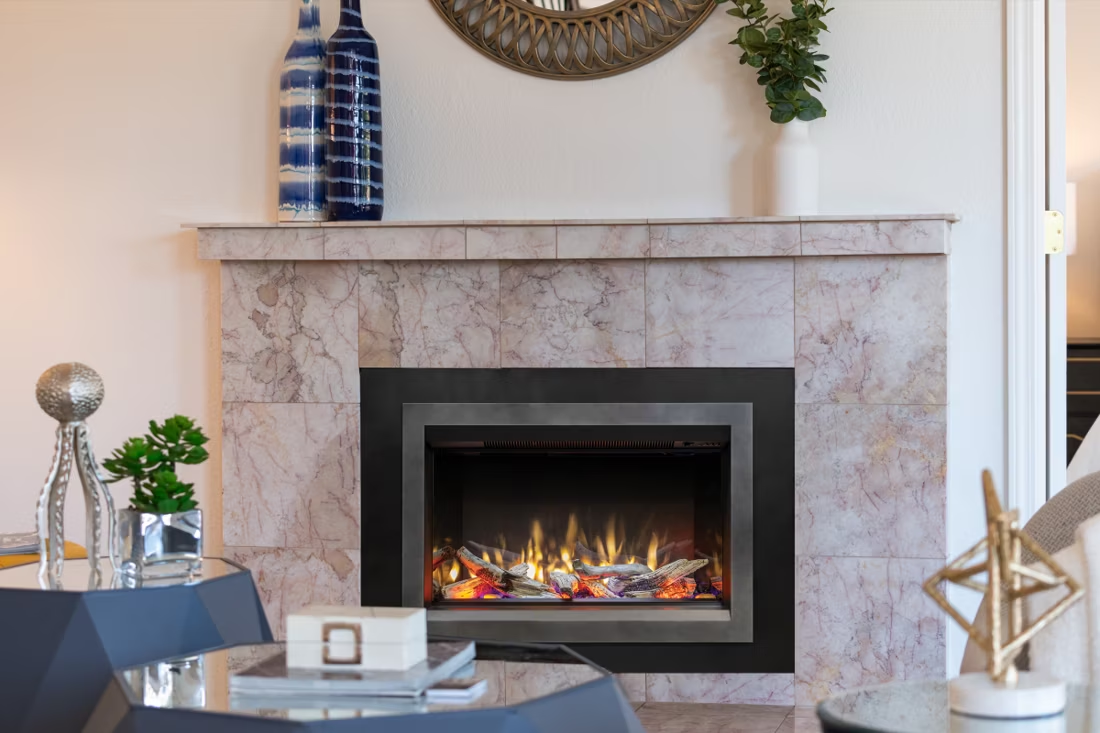
Electric also solves a problem specific to this county: wildfire smoke. Late-summer and fall smoke events in the Willamette Valley push many homeowners to keep windows and flues sealed, and an electric unit produces zero combustion byproducts and needs no outside air intake—you get heat and flame effect without cracking anything open. It's also the fastest retrofit for homes without a masonry chimney or nearby natural gas main, common in newer construction and unincorporated areas served by Portland General Electric. A licensed electrician can usually add a dedicated circuit in a single visit, which is a much smaller project than venting a gas or wood appliance.
Three steps. No salesperson until you're ready.
Tell us about your project
Your zip code, your situation, and the fuel you're leaning toward—or let the answers point you to one.
See what's actually available
The brands dealers within 100 miles genuinely carry—real options, never a catalog mirage.
Get your dealer & Project Guide
A trusted local dealer, plus the free Project Guide & Parts List that names every component of the job.
Frequently Asked Questions
How much does an electric fireplace installation cost in Clackamas County?
Costs vary widely with the type of unit. A plug-in freestanding electric stove or a basic insert that uses a standard 15-amp outlet can run $150 to $800 installed, since no new wiring is typically required. A built-in wall unit or a larger insert that needs a dedicated 20-amp circuit usually runs $800 to $2,500 once you factor in a licensed electrician, wall framing or recessing work, and the unit itself. Prices tend to run a bit higher for homes farther from Portland Metro—Molalla, Colton, and the Mt. Hood corridor—due to electrician travel time.
Will an electric fireplace actually heat my room, or is it just for looks?
Given Clackamas County's mild climate—a 37°F average winter low and a relatively light overall winter heating load—a quality electric unit with a 5,000 to 9,000 BTU heater can noticeably warm a bedroom, den, or open living space during most of the heating season. It won't replace a furnace on the coldest nights, and it's not designed to carry a large open floor plan on its own, but for supplemental zone heating in a Lake Oswego condo or a West Linn family room, it's a legitimate heat source, not just a visual effect. In the colder pockets around Government Camp and Rhododendron near Mt. Hood, treat it as a secondary source rather than a primary one.
Do I need a permit to install an electric fireplace in Clackamas County?
A simple plug-in unit that uses an existing outlet typically doesn't require a permit. If your installation needs a new dedicated circuit—common for built-in wall units and larger inserts—an electrical permit through the Clackamas County Building Codes Division (or your city's building department if you're inside Oregon City, Lake Oswego, West Linn, or Milwaukie limits) is required, and the work needs to be done by a licensed electrician. Most local hearth and electrical retailers coordinate this permitting as part of the install so you're not chasing paperwork yourself.
Is electric a good option during wildfire smoke season?
It's one of the strongest arguments for electric in this county. Clackamas County deals with wildfire smoke most late summers and falls, and the standard advice during smoke events is to keep windows closed and avoid anything that draws outside combustion air. An electric fireplace produces no smoke, no particulates, and needs no venting or make-up air, so you can run it with the house sealed up tight. That's a real advantage over wood-burning appliances, which need clean-burn conditions and can't be used at all during some advisory periods.
Can I put an electric insert into my existing fireplace instead of converting to gas?
Yes, and it's often the simplest retrofit available. A zero-clearance electric insert slides into an existing masonry firebox without any venting, gas line, or chimney liner work—you're really just running power to the opening. This matters in parts of unincorporated Clackamas County, like areas around Molalla and Colton, where natural gas service isn't available and a gas conversion would mean a propane tank and gas-fitter work. An electric insert sidesteps all of that, though it also won't produce the same heat output as a gas or wood conversion, so it's the right call when ambiance and light supplemental heat are the goal.
What brands of electric fireplaces do local dealers carry?
Local hearth and electrical retailers in the Portland Metro area typically carry lines like Dimplex, Napoleon, Amantii, and Touchstone, covering everything from compact wall-mount units to larger built-in linear fireplaces with adjustable flame and heat settings. Availability varies by dealer and by whether you want a recessed built-in versus a freestanding cabinet-style unit, so it's worth confirming in-stock models with your local dealer rather than assuming online listings match local supply.
What's the difference between a built-in electric fireplace and an electric insert?
A built-in electric fireplace is designed to be framed into a wall during new construction or a remodel, similar to how a gas fireplace would be installed, and often becomes the visual focal point of a room. An electric insert is sized to slide into an existing masonry firebox, giving an old wood fireplace new life without touching the chimney. Freestanding electric stoves are a third option—no framing or fireplace opening required, just floor space and an outlet or circuit. For most Clackamas County remodels involving an existing fireplace, the insert is the straightforward choice; for new rooms or additions, a built-in unit gives more design flexibility.
Does electric heat make sense for homes near Mt. Hood, where winter storms cause outages?
This is worth being honest about: electric fireplaces stop working the moment the power goes out, and mountain communities near Mt. Hood National Forest—Government Camp, Rhododendron, Zigzag—see winter storms that can knock out power for hours or days. In those areas, electric units make sense as a convenient secondary heat source or for shoulder-season ambiance, but homeowners should keep a wood stove, insert, or propane appliance as the actual backup plan. Down in the valley—Oregon City, Milwaukie, Happy Valley—outages are less frequent and shorter, so electric can more reasonably serve as a primary supplemental heat source.
Electric vs. wood or gas—which fits my Clackamas County home?
Wood remains a strong choice for county residents with access to Douglas fir, ponderosa pine, and lodgepole pine, especially those who cut their own firewood under a Mt. Hood National Forest permit (typically $5–$20 per cord, May through October cutting season) and want heat that works without power. Gas offers instant, consistent heat and is common in newer subdivisions with natural gas service. Electric wins on installation simplicity, upfront cost, and clean operation during wildfire smoke advisories, but it depends entirely on grid power and puts out less raw heat than a wood or gas unit of similar size. Many households in this county end up with electric in a secondary room or condo unit and wood or gas as the primary heat source elsewhere in the home.
Can I put a TV above my fireplace?
Yes—with an asterisk. Fireplaces are hot and TVs don't like heat. Either put a mantel between them to deflect rising warmth, or choose a fireplace with heat-management technology that creates a cool zone on the wall above—the wall stays around 125 degrees, barely warm, while the room still gets full heat. If you like clean lines and don't want a mantel, heat management is the answer.
Do electric fireplaces actually produce heat?
Yes—most put out around 4,800–5,000 BTUs from a standard outlet, which comfortably warms a bedroom, office, or den as a comfort-zone heater. What they won't do is carry a whole house the way wood, gas, or pellet can. Think of electric as ambiance-first with honest supplemental heat: flames on with no heat in July, flames plus warmth in January.
Can I install a fireplace myself?
If you're putting a fire in your house on purpose, it's best to work with an expert. Unless you're genuinely experienced in framing, gas line, vent pipe, and the national code on clearances to combustibles, have a professional do it—and ideally the same company that sells you the fireplace, so warranty, service, and liability all live under one roof.
What is an in-home preview and do I need one?
It's a visit where a hearth professional measures your space, confirms the model you picked actually works in your home, and walks the specs—framing, gas line, venting, finish work—before anything is ordered. Some details you just can't know until you see the house. Never make a down payment without one; it's the single most-skipped step that burns buyers.
Stove and Fireplace Dealers in Clackamas County
Find your electric fireplace in Clackamas County.
Tell us about your home and we'll put together a free Project Guide & Parts List for your electric fireplace project, then match you with a trusted local dealer who can install it right.
Find Your Fireplace →