
Keep Your Family Warm and Safe—No Matter What
Bull Mountain's mild Willamette Valley winters mean most homes lean on gas and electric heat, but a wood stove can still make sense for ambiance or outage backup. We'll connect you with a local dealer who knows what's actually installable here.
Every Project Starts From One of These Five Situations
Mild winters and newer builds keep gas and electric heat in front.
Bull Mountain sits on a forested ridge above Tigard in Washington County, at about 559 feet elevation with an average winter low near 34°F and a mild heating season—a fraction of the winter heating load a place like Bozeman, MT or Duluth, MN sees, and mild enough that a wood stove is rarely the load-bearing heat source in this zip code footprint (97223, 97224, 97140). Most of the housing stock here went up over the past three decades as part of planned subdivisions, and a lot of those developments carry HOA covenants that restrict site-built masonry chimneys or exterior stovepipe, which is part of why wood heat never became the default the way it did in older, more rural pockets of the Willamette Valley.
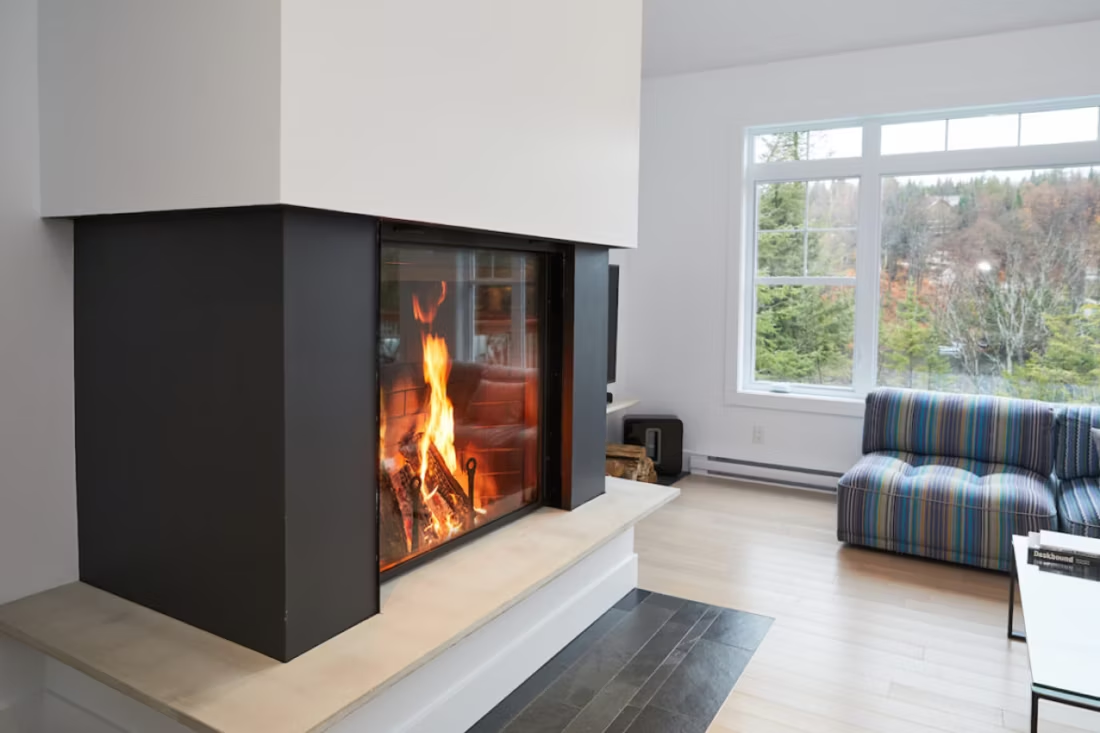
That said, wood stoves haven't disappeared from Bull Mountain entirely. A handful of homeowners install one for the look and feel of a real fire in a great room, or as genuine backup heat—ice storms roll through Washington County periodically and can knock out Portland General Electric service for days at a time, and a wood stove is one of the few heat sources that doesn't care whether the grid is up. If you go this route, expect to source firewood rather than cut it locally on Bull Mountain itself; the nearest public-land cutting permits are through Mt. Hood National Forest, Gifford Pinchot National Forest, or Siuslaw National Forest, running $5 to $20 per cord during the May–October season, with Douglas fir, ponderosa pine, and lodgepole pine the most common species available.
Firewood Cutting Permits Near Bull Mountain
Three steps. No salesperson until you're ready.
Tell us about your project
Your zip code, your situation, and the fuel you're leaning toward—or let the answers point you to one.
See what's actually available
The brands dealers within 100 miles genuinely carry—real options, never a catalog mirage.
Get your dealer & Project Guide
A trusted local dealer, plus the free Project Guide & Parts List that names every component of the job.
Frequently Asked Questions
Is a wood stove a realistic option for a home on Bull Mountain?
It's realistic, just uncommon. With winter lows averaging 34°F and a fairly mild heating season overall, Bull Mountain's climate doesn't demand wood heat the way a high-desert or northern-tier winter does—most homes here get by fine on gas furnaces, heat pumps, or electric resistance heat from Portland General Electric. Where a wood stove still earns its keep is as a secondary heat source: something to run during a Willamette Valley ice storm when PGE service goes down, or simply because a homeowner wants a real fire in the living room. If that's you, a local dealer can tell you honestly whether your home's layout and any HOA restrictions on Bull Mountain even allow for one before you go further.
What does a wood stove installation typically cost if I still want one?
Because wood stoves are a niche request in this part of Washington County, pricing isn't as standardized locally as it is in wood-heavy markets, but Pacific Northwest installs generally run $4,000 to $9,000 depending on whether you're adding a stove to a home with no existing chimney (which means new Class A pipe and a roof penetration) versus retrofitting into an existing masonry fireplace. Homes on Bull Mountain built in the last 20–30 years typically fall into the first category since most never had a wood-burning fireplace to begin with. A trusted local dealer can give you a firm number after walking your specific layout.
Are there HOA or building restrictions on wood stoves in Bull Mountain?
Many of Bull Mountain's newer subdivisions are governed by HOA covenants, and it's common for those agreements to restrict or outright prohibit exterior stovepipe, site-built chimneys, or wood-burning appliances—check your CC&Rs before you get attached to a specific stove. Beyond the HOA layer, any wood-burning appliance installed in unincorporated Washington County still needs a building permit and must meet current EPA 2020 NSPS emissions standards. A local hearth dealer who's done installs in this specific area will usually know your subdivision's rules before you even ask.
Does wildfire smoke or air quality affect wood burning here?
Bull Mountain's main air quality concern is regional wildfire smoke rather than the winter inversion problems seen east of the Cascades—smoke from summer and early fall wildfires across Oregon can settle into the Tualatin Valley for days at a time, but that's a separate issue from home heating season. Oregon DEQ does issue wood smoke advisories across the Portland metro area during winter air stagnation events, and any new stove you install needs to be EPA-certified regardless. It's worth asking your dealer whether a catalytic model, which tends to burn cleaner at low output, makes sense if you're only running the stove occasionally.
If I want a wood stove mainly for power-outage backup, what should I know?
This is actually the most common reason Bull Mountain homeowners look at wood heat at all. Washington County sees periodic ice storms that can take down PGE service for several days, and a wood stove is one of the few appliances that keeps producing heat with zero electricity—no blower, no igniter, nothing that needs the grid. If backup heat is the priority, ask your dealer about a simple, non-electric-dependent stove rather than a model with a built-in blower fan you'd lose in an outage, and make sure you have a small stash of seasoned firewood on hand year-round rather than scrambling to source it once a storm is forecast.
Can I cut my own firewood near Bull Mountain?
Not on Bull Mountain itself—it's a developed residential area—but public-land cutting permits are available within a reasonable drive through Mt. Hood National Forest, Gifford Pinchot National Forest, or Siuslaw National Forest. Permits run $5 to $20 per cord and the cutting season generally runs May through October across all three forests. Douglas fir is the most common species you'll find on permits in this part of Oregon, along with ponderosa pine and lodgepole pine at higher elevations. Most Bull Mountain wood-stove owners end up buying seasoned cordwood delivered rather than cutting their own, simply because of the drive time involved.
What do most Bull Mountain homes use for heat instead of wood?
Gas and electric heat dominate here. Portland General Electric serves the area at a residential rate around 18.2 cents per kWh, and it's common to see heat pumps or electric furnaces paired with a gas or electric fireplace for supplemental warmth and ambiance in the main living space. Gas fireplaces in particular are a standard fit for Bull Mountain's newer construction—they install cleanly in homes that were never built with a chimney, which describes most of the housing stock on the mountain.
I have an existing wood-burning fireplace—should I convert it to gas instead?
If your Bull Mountain home is older and already has a masonry, wood-burning fireplace, converting to a gas insert is worth considering, especially if you rarely use the wood side and mainly want convenient, on-demand heat. A gas insert uses your existing chimney as a venting path via a liner and gives you instant flame with no ash, no chimney sweeping, and no firewood storage. If you specifically want the backup-heat, no-electricity advantage of wood, though, keeping the fireplace wood-burning (or upgrading to a modern EPA-certified insert) preserves that. A local dealer can walk you through both paths based on your actual chimney condition.
Wood vs. pellet vs. gas—which actually fits a Bull Mountain home?
Both wood and pellet stoves are unusual choices here—the mild climate and lack of a wood-heat tradition in this Washington County suburb mean neither is a common installation, and pellet stoves in particular are hard to find local service and fuel support for compared to wood-heavy markets in eastern Oregon. Gas is the standard fit: it's clean, works with the gas service already common in newer Bull Mountain construction, and doesn't require fuel storage. The one scenario where wood still wins is backup heat during a grid-down ice storm, since it's the only one of the three that needs no electricity at all to produce warmth.
Why won't my new wood stove get going like my old one?
New wood stoves are 70%+ efficient, so far less heat goes up the flue—which also means less draft to get a fire established. The rule: build a genuinely hot fire for about 45 minutes before you choke it down. Skip that and you get smoke in the room, creosote in the chimney, and a fire that never takes off. Most performance complaints trace straight back to this.
Why is my open fireplace making my house colder?
Open fireplaces suck—literally. As the fire burns, it consumes air your furnace already paid to heat and pulls it out through the chimney, so the house is actually colder after the fire goes out than before you lit it. An insert fixes this: it seals the chimney, puts fixed glass across the front, and turns that hole in your house into a real heat source.
How much should I budget for a fireplace?
For an average home—covering the fireplace, the vent pipe, and basic installation—a budget between $3,900 and $5,500 gives you a lot of options across wood, gas, and pellet. By the time you add finish work, gas line, and electrical, the average complete installation lands between $5,000 and $12,000 all-in. In a remodel or new build, a good rule is to put about 2.5% of the total project cost toward the fireplace.
Can I install a fireplace myself?
If you're putting a fire in your house on purpose, it's best to work with an expert. Unless you're genuinely experienced in framing, gas line, vent pipe, and the national code on clearances to combustibles, have a professional do it—and ideally the same company that sells you the fireplace, so warranty, service, and liability all live under one roof.
Nearby Dealers
Hearth shops serving Bull Mountain and the surrounding area. Every listing shows whether it is a WhyFire partner, a dealer we have verified as authorized for the brands we recommend, or a local business carrying hearth products. No manufacturer pays for placement. How we verify dealers →
Rich's Stoves & Spa
Western Outdoor Wholesale
Emerald Outdoor Living-Portland
Fireside Home Solutions
Classic Pool And Spa
Chimcare Home Services
Two Foot/Ten Foot Fireplaces
Nw Natural Appliance Center
Addco Electric Fireplaces
Buck's Stove Palace
Bridgetown Chimney & Masonry
Haven Spa Pool & Hearth
Pellet Stoves & More
Creative Fire
Lisac’s Spark & Splash
HomeTown Hearth & Grill
Richs For The Home
The Stove Shop
Find your wood heat option in Bull Mountain.
Tell us about your home and whether you're after backup heat, ambiance, or both—we'll match you with a trusted local dealer and send over a free Project Guide & Parts List with the exact parts, including the vent kit, for your Bull Mountain project.
Find Your Fireplace →