
Reliable heat for Aloha's mild, wet winters.
At 201 feet in the Tualatin Valley, Aloha doesn't see brutal cold—but damp 40-degree nights and windstorm power outages still make a properly vented gas fireplace one of the most practical upgrades a Washington County homeowner can make. I'll match you with a trusted local dealer who knows the venting and gas line work here.
Every Project Starts From One of These Five Situations
Gas fits Aloha's mild but damp climate.
Aloha sits low in the Tualatin Valley at just 201 feet, and the climate reflects it: an average winter low around 40°F and a comparatively light winter heating load each year, a fraction of what you'd see in a place like Bozeman or Bismarck. This is climate zone 4C—marine, mild, and wet rather than genuinely cold—so the demand for wood heat driven by brutal overnight lows just isn't there the way it is east of the Cascades. What Aloha does deal with is long, damp heating seasons and periodic ice storms and windstorms that knock out power across Washington County, which is exactly the scenario where a gas fireplace with battery-backup ignition earns its keep.
NW Natural serves most of the Portland metro area, including the Aloha, Beaverton, and Hillsboro corridor, so the majority of homes here have a gas line already running to the street or the house. Rural pockets further west toward Scholls and Roy sometimes fall outside that service area and run on propane instead. Either way, a direct-vent gas fireplace or insert gives Aloha homeowners instant, thermostat-controlled heat that doesn't add particulate smoke during the late-summer wildfire smoke episodes the region now sees most years—a real consideration for households weighing gas against a wood-burning setup.
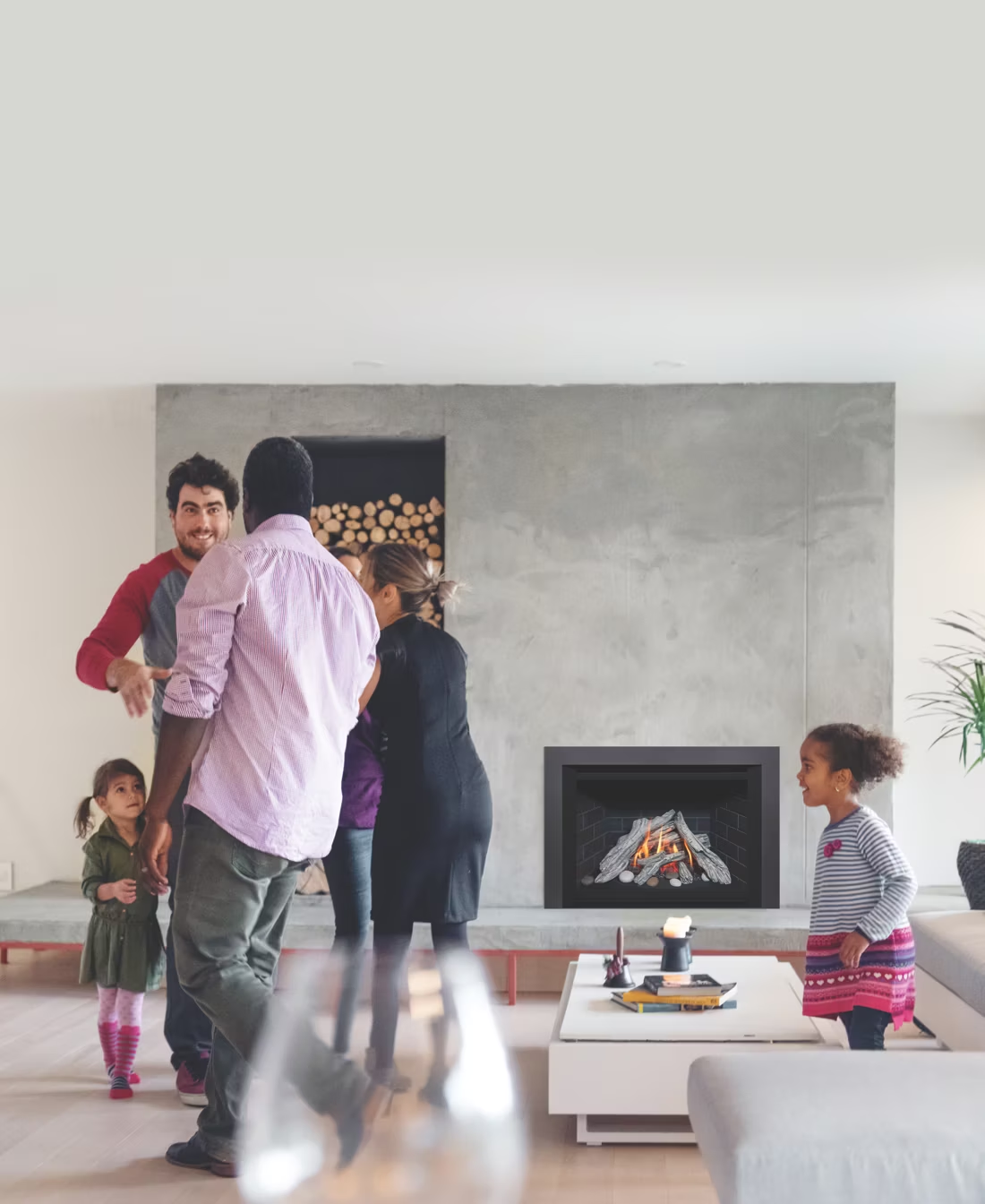
Three steps. No salesperson until you're ready.
Tell us about your project
Your zip code, your situation, and the fuel you're leaning toward—or let the answers point you to one.
See what's actually available
The brands dealers within 100 miles genuinely carry—real options, never a catalog mirage.
Get your dealer & Project Guide
A trusted local dealer, plus the free Project Guide & Parts List that names every component of the job.
Frequently Asked Questions
How much does a gas fireplace installation cost in Aloha?
Most Aloha installs run roughly $4,000 to $10,500. A direct-vent insert dropped into an existing masonry firebox with a gas line already nearby lands on the lower end—common in the ranch-style homes built through the 60s, 70s, and 80s around Farmington Road and the older Aloha subdivisions. A new built-in fireplace for a remodel or addition, requiring fresh gas line work and venting through an exterior wall, runs toward the upper end. If your property is on the propane side of Washington County rather than an NW Natural service area, factor in tank setup as an additional cost.
Can I convert my existing wood fireplace to gas?
Yes, and it's a common project in Aloha's older housing stock, where original masonry fireplaces built to burn douglas fir or ponderosa pine now sit unused most of the year. A gas insert typically slides into that existing firebox with a stainless liner run up the current chimney, and most conversions land between $4,000 and $8,000 depending on whether new gas line needs to be run from the meter. Given Aloha's mild winters, a lot of homeowners find they only ever used the wood fireplace a handful of nights a year anyway, which makes the lower-maintenance gas conversion an easy call.
Do I need natural gas service, or should I plan on propane?
It depends on your exact address. NW Natural covers the bulk of Aloha and the surrounding Beaverton-Hillsboro area, so most homeowners can tie into an existing or nearby gas main. Properties further out toward the rural edges of Washington County, past the denser subdivisions, sometimes sit outside that service footprint and need a propane tank instead. If your water heater or range already runs on natural gas, adding a fireplace is usually a simple tap-in; if not, your local dealer can spec the fireplace for propane just as easily.
Will my gas fireplace still work if the power goes out?
Most will, and it's a relevant question here—Washington County sees its share of winter windstorms and occasional ice events that knock out Portland General Electric service for hours or, in bad years, days. Fireplaces with IPI (intermittent pilot ignition) run their ignition system off AA battery backup that kicks in automatically. Valor units take it a step further: their pilot's thermocouple generates its own electricity, so there's no battery to check at all. For a household treating the fireplace as backup heat during an outage, this is worth asking your local dealer about directly.
What's the difference between a gas fireplace, insert, and stove?
A gas fireplace is a built-in unit framed into the wall, typical in newer construction around the Reedville and Kinnaman areas of Aloha. A gas insert fits inside an existing masonry firebox, which suits the older homes near the historic Aloha core that were originally built with a wood-burning fireplace. A gas stove is freestanding on a hearth pad, similar in footprint to a wood stove but running on a gas line or propane instead of split douglas fir. For most Aloha homeowners with an existing fireplace opening, an insert is the simplest and least invasive upgrade.
Do I need a permit to install a gas fireplace in Aloha?
Yes. Aloha is unincorporated, so building permits run through Washington County Building Services rather than a city department, and gas line work requires a separate permit pulled by a licensed gas-fitter. Established local hearth dealers typically manage both the building permit and the gas line permit as part of the installation, along with scheduling the final inspection, so you're not coordinating two separate trades yourself.
Vented vs. vent-free gas fireplaces—what should I know?
Direct-vent units pull combustion air from outside and exhaust it back outside through sealed venting, making them the safer, code-compliant choice everywhere including Oregon. Vent-free units burn into the room air and are legal here but carry strict room-size and ventilation requirements. Given that Aloha already deals with wildfire smoke drifting into the valley during late summer and early fall, most local dealers steer homeowners toward direct-vent units so the fireplace isn't adding any additional combustion byproducts to indoor air during a season when air quality is already a concern.
How often should a gas fireplace be serviced?
Plan on an annual inspection, ideally by early fall before the wet season sets in and you start running the fireplace daily. A technician checks the burner, pilot assembly, gas connections, and vent termination, and cleans the glass. It's a lighter service than a wood chimney sweep, but a unit that runs most evenings through Aloha's long, damp winter benefits from the once-a-year check. Expect to pay in the $150-$250 range for a standard visit.
Gas vs. wood—which makes more sense for an Aloha home?
Wood is genuinely cheap to source here—douglas fir, ponderosa pine, and lodgepole pine cutting permits run $5 to $20 a cord through Mt. Hood National Forest, Gifford Pinchot National Forest, or Siuslaw National Forest, all within reach of Washington County. But with only a comparatively light winter heating load each year and winter lows rarely dropping much below freezing, most Aloha homes don't need the kind of 20-hour overnight burns that make wood the clear winner in colder climates. Gas wins on daily convenience and, during wildfire smoke season, on not adding any extra particulate to outdoor air already carrying smoke. Many Aloha households end up choosing gas for the main living space and treating wood or pellet heat, if they keep it at all, as occasional supplemental use.
Is my gas fireplace wasting gas?
If it was installed more than 15 years ago, probably. Older gas fireplaces keep a standing pilot light burning all the time, and that little flame can cost a couple hundred dollars a year. Newer models use pilot-on-demand ignition—the pilot lights only when you use the fireplace and goes out when you turn it off.
What's the difference between an insert and a zero-clearance fireplace?
An insert is a fireplace that slides into a pre-existing wood-burning fireplace—if you don't have one, there's nothing to insert it into. A zero-clearance fireplace is built into a framed wall, which makes it the answer for remodels and new construction. Simple test: existing masonry fireplace means insert; blank or framed wall means zero-clearance.
How much should I budget for a fireplace?
For an average home—covering the fireplace, the vent pipe, and basic installation—a budget between $3,900 and $5,500 gives you a lot of options across wood, gas, and pellet. By the time you add finish work, gas line, and electrical, the average complete installation lands between $5,000 and $12,000 all-in. In a remodel or new build, a good rule is to put about 2.5% of the total project cost toward the fireplace.
Should the dealer who sells my fireplace also install it?
Ideally, yes. A fireplace project involves vent pipe, gas line, electrical, and often tile or stone. Hire three or four separate trades and you own the liability and the game of telephone between them. One company selling and installing means one accountable party, start to finish—ask about factory training, on-time completion records, and what happens if an inspection fails.
Nearby Dealers
Hearth shops serving Aloha and the surrounding area. Every listing shows whether it is a WhyFire partner, a dealer we have verified as authorized for the brands we recommend, or a local business carrying hearth products. No manufacturer pays for placement. How we verify dealers →
Classic Pool And Spa
Fireside Home Solutions
Two Foot/Ten Foot Fireplaces
Rich's Stoves & Spa
Emerald Outdoor Living-Portland
Western Outdoor Wholesale
Addco Electric Fireplaces
Nw Natural Appliance Center
Bridgetown Chimney & Masonry
Chimcare Home Services
Buck's Stove Palace
The Stove Shop
Haven Spa Pool & Hearth
Performance Building Products
Lisac’s Spark & Splash
Haven Spa Pool & Hearth
Creative Fire
HomeTown Hearth & Grill
Ez Propane
Pellet Stoves & More
Get your free Project Guide & Parts List for a gas fireplace in Aloha.
Tell me about your home and your gas access—NW Natural or propane—and I'll match you with a trusted local dealer and send a free Project Guide & Parts List with the exact vent kit and parts your Aloha project needs.
Find Your Fireplace →