
Steady pellet heat built for Major County's ranches and farmhouses.
Clean, low-maintenance heat for Major County's roughly 4,200 residents—from Fairview to Cleo Springs to Ringwood. Find the right pellet stove or insert and get matched with a trusted local dealer.
Every Project Starts From One of These Five Situations
Pellet heat solves the distance problem on the plains.
Major County sits in northwestern Oklahoma's wheat and cattle country, a place of about 4,200 residents spread across Fairview, Cleo Springs, Ringwood, and the ranchland between them. The county falls in climate zone 3A, with a moderate winter heating season and winter lows that average around 26°F—cold enough for real heating need, but nowhere near the brutal, six-month winters of places like Bismarck or Fargo. Still, the wind off the plains cuts through older farmhouses fast, and a lot of homes out here were built before central heat was standard, or run on propane instead of piped natural gas. That combination—real cold, older housing stock, and no gas line at the end of the driveway—is exactly where pellet stoves earn their keep.
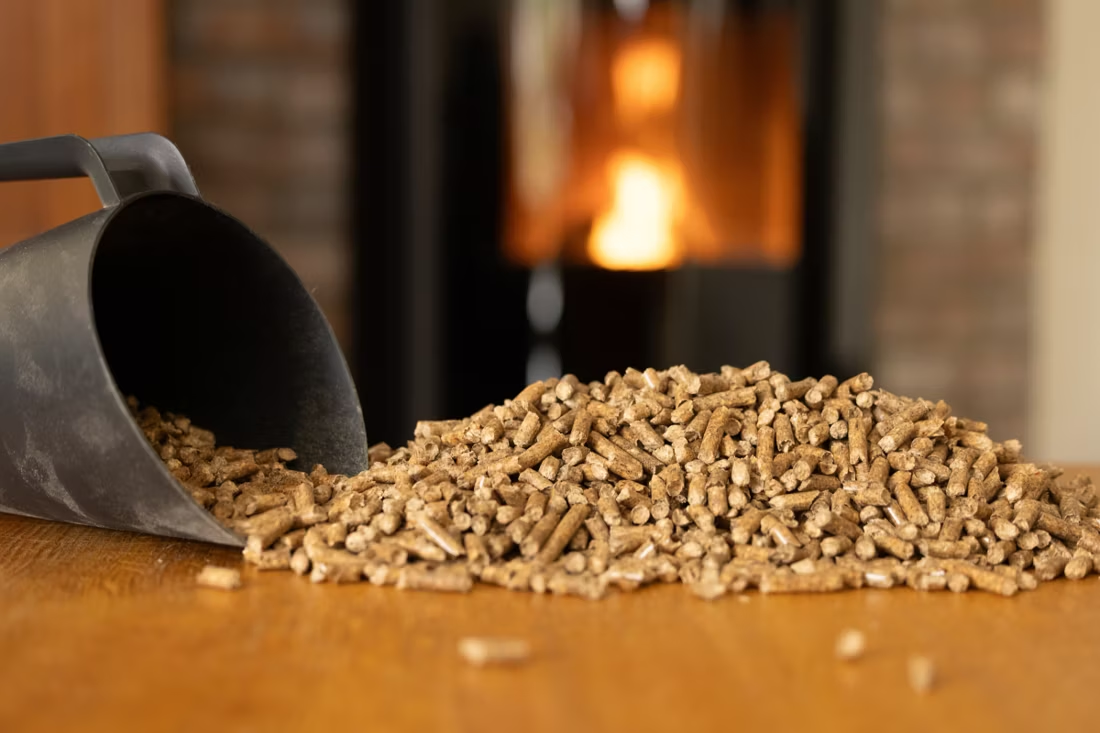
Oak, hickory, and mesquite grow throughout the county's creek bottoms and pastures, and plenty of Major County households still burn wood the old-fashioned way. But pellet stoves have found a real foothold here too, especially among ranch families who want dependable, set-and-forget heat for a shop, a mudroom, or a second living space without hauling and splitting cordwood every week. Pellets from regional suppliers like Lignetics and Indeck Energy Services typically come into the area by pallet, ordered through farm and ranch supply channels or delivered directly by a dealer—no need to drive to a big-box store in Enid or Oklahoma City every time the hopper runs low.
Three steps. No salesperson until you're ready.
Tell us about your project
Your zip code, your situation, and the fuel you're leaning toward—or let the answers point you to one.
See what's actually available
The brands dealers within 100 miles genuinely carry—real options, never a catalog mirage.
Get your dealer & Project Guide
A trusted local dealer, plus the free Project Guide & Parts List that names every component of the job.
Frequently Asked Questions
How much does a pellet stove installation cost in Major County?
Most pellet stove installations in Major County run in the $3,000 to $6,000 range, depending on the unit, whether you need new electrical work for the hopper motor and blower, and whether venting has to be run through an exterior wall versus an existing chimney. Because Major County is sparsely populated—under 4,300 residents countywide—most installers are based out of Enid or other nearby towns and will factor a modest travel charge into a rural quote, especially for homes well outside Fairview or Cleo Springs. Ask any dealer for a firm, in-home quote before committing.
What size pellet stove do I need for my home?
Major County's climate is moderate by national standards—a moderate winter heating season, with winter lows averaging around 26°F—so most homes don't need the largest hopper capacity or the highest BTU output on the market. A medium pellet stove (rated for roughly 1,200 to 2,000 square feet) handles most Major County farmhouses and ranch homes as supplemental or zone heat. If you're heating a larger, older, poorly insulated farmhouse as a primary heat source, size up and ask your dealer about hopper capacity—a bigger hopper means fewer trips out to refill during a cold snap.
Where can I find a certified pellet stove installer near me?
Because Major County's population is small and spread out across Fairview, Cleo Springs, and Ringwood, there isn't a hearth shop on every corner—most certified installers cover the county from a base in Enid or another nearby town. Look for an installer with NFI (National Fireplace Institute) certification and experience with pellet-specific venting and electrical requirements. Working with a trusted local dealer matters here more than in a dense metro area—you want someone who already knows the rural service area and won't disappear if a part needs replacing next winter.
What's the difference between a pellet stove and a pellet insert?
A pellet stove is a freestanding unit that sits on its own hearth pad and vents through a wall or existing chimney—it can go almost anywhere with the right clearances, which makes it a good fit for shops, additions, or homes without a fireplace at all. A pellet insert is built to slide into an existing masonry fireplace opening, giving an old wood fireplace a cleaner, more efficient, automated heat source. If your Major County home already has a fireplace you rarely use, an insert is usually the simpler upgrade. If you're heating a space with no chimney—a garage, a mudroom, a second building on the property—a freestanding stove is the way to go.
Do I need a permit to install a pellet stove in Major County?
Requirements vary by jurisdiction, and Major County's building permit process is handled at the county level for unincorporated areas, with Fairview and other incorporated towns managing their own permitting. In general, pellet stove installs involve less permitting friction than a masonry wood fireplace, since there's no chimney construction—but the electrical work for the auger motor and blower, and any wall penetration for venting, typically still needs to meet code. A local installer will know exactly what Major County or your specific town requires and will usually pull any needed permits as part of the job.
What's the best pellet stove for Major County's climate?
Given Major County's moderate winter lows—averaging around 26°F, with a moderate winter heating season—most homeowners don't need an oversized, high-output stove built for sub-zero Northern Plains winters. A mid-size stove with a reliable auger and blower system, sized for supplemental or zone heat, is usually plenty. Pellets from Lignetics or Indeck Energy Services, both regional suppliers, are compatible with most standard pellet appliances on the market. Ask your dealer which stove models run cleanest on the pellet brands actually available near you—burn quality varies more by pellet consistency than by brand name.
How often does a pellet stove need cleaning and maintenance?
Plan to empty the ash pan and clean the burn pot every few days during regular use, and vacuum the hopper and exhaust vent monthly. Most manufacturers recommend a full professional service once a year—checking the auger, gaskets, blower motor, and venting—ideally before the start of the winter heating season. Pellet stoves are lower-maintenance than a wood-burning chimney system, which is part of the appeal for Major County households managing a working ranch or farm on top of everything else.
Where can I buy pellets in Major County?
Regional suppliers like Lignetics and Indeck Energy Services distribute pellets throughout northwestern Oklahoma, typically sold by the ton or by pallet (40-pound bags, usually 50 bags to a pallet) through farm and ranch supply stores or direct delivery. Because Major County is rural, many households order pellets by the pallet ahead of winter rather than picking up bags one at a time—it's worth asking your installer or dealer which suppliers currently deliver to your part of the county.
Pellet stove vs. wood stove—which makes more sense for my Major County home?
Oak, hickory, and mesquite are all common on Major County land, and plenty of households still cut and burn their own wood—it's free heat if you've got the land and the time. Pellet stoves trade that self-sufficiency for convenience: load the hopper, set the thermostat, and walk away, with a cleaner burn and no splitting or stacking. The real tradeoff is electricity—pellet stoves need power to run the auger and blower, so they won't help during an ice storm outage, which does happen on the Oklahoma plains in a hard winter. If backup heat during outages matters most, wood wins. If convenience and lower day-to-day effort matter more, pellet is usually the better fit.
Why is my open fireplace making my house colder?
Open fireplaces suck—literally. As the fire burns, it consumes air your furnace already paid to heat and pulls it out through the chimney, so the house is actually colder after the fire goes out than before you lit it. An insert fixes this: it seals the chimney, puts fixed glass across the front, and turns that hole in your house into a real heat source.
What's the difference between an insert and a zero-clearance fireplace?
An insert is a fireplace that slides into a pre-existing wood-burning fireplace—if you don't have one, there's nothing to insert it into. A zero-clearance fireplace is built into a framed wall, which makes it the answer for remodels and new construction. Simple test: existing masonry fireplace means insert; blank or framed wall means zero-clearance.
Does a fireplace add value to my home?
On average, a fireplace adds back to the home about the same amount you spent installing it. Add the monthly savings from heating the rooms you actually use instead of the whole house—often hundreds of dollars a year—and the value case is strong before you even count what a fire does for how your family uses the room.
Can a fireplace actually lower my heating bill?
Yes—by creating a comfort zone. A furnace heats every square foot of the house just to warm the one room you're in; a gas fireplace on low burns roughly a sixth of the gas a typical furnace does. Set the furnace around 55–60 degrees as a baseline, then heat the rooms your family actually uses. Families who heat this way commonly save $20–$60 a month.
Pellet Brands Stocked Around Major County
Manufacturers will point you to the nearest stocking dealer.
Find your pellet stove in Major County.
Tell us a bit about your home and we'll match you with the right pellet stove or insert, plus a free Project Guide & Parts List—the exact parts, vent kit, and recommended local dealer for your Major County pellet project.
Find Your Fireplace →