
Add fireplace warmth without the wood, gas line, or chimney.
Major County winters average a mild 26°F low with about 3,868 heating degree days—mild enough that electric zone heat handles most homes, additions, and manufactured houses across Fairview, Ringwood, and the ranch country between them.
Every Project Starts From One of These Five Situations
Mild winters make electric heat make sense.
Major County sits in northwestern Oklahoma's wheat and cattle country, home to about 4,200 people spread across Fairview, Ringwood, Orienta, and a lot of open range in between. At climate zone 3A with a 26°F average winter low, the county logs roughly 3,868 heating degree days a season—less than half of what a place like Fargo, ND racks up. There's local oak, hickory, and mesquite for those who want a real wood fire, but for straightforward, dependable heat in a mild-winter county, electric holds up just fine without any of the fuel logistics.
Electric fireplaces and inserts are a natural fit here because they skip the chimney, gas line, and venting altogether—a real advantage in a rural county where manufactured and mobile homes make up a meaningful share of the housing stock and often can't accommodate solid-fuel or gas venting without major work. Whether it's a plug-in unit for a rental in Fairview or a built-in insert wired into a ranch house addition, electric heat runs off the same rural electric infrastructure—Alfalfa Electric Cooperative outside town, OG&E within Fairview's city limits—that already serves the county.
Three steps. No salesperson until you're ready.
Tell us about your project
Your zip code, your situation, and the fuel you're leaning toward—or let the answers point you to one.
See what's actually available
The brands dealers within 100 miles genuinely carry—real options, never a catalog mirage.
Get your dealer & Project Guide
A trusted local dealer, plus the free Project Guide & Parts List that names every component of the job.
Frequently Asked Questions
How much does an electric fireplace installation cost in Major County?
Plug-in electric fireplaces and inserts that use a standard household outlet run as low as $300 to $800 installed, since there's often no wiring work involved beyond setting the unit and finishing the surround. Built-in electric fireplaces that need a dedicated 20-amp circuit run higher—typically $1,200 to $2,500—once an electrician runs new wire, especially in older farmhouses around Fairview or Ringwood where panel capacity can be tight. Rural addresses outside Fairview may see a small travel charge added by whichever electrician or dealer handles the install, since the nearest full-service hearth retailers are usually based in Enid or Woodward.
Do I need a permit to install an electric fireplace in Major County?
Most plug-in electric fireplaces don't require any permit at all—they're treated like any other appliance you plug into the wall. Built-in units that need a new dedicated circuit typically require an electrical permit, and in unincorporated parts of Major County that generally means coordinating with the county rather than a city building department, since much of the county outside Fairview has minimal local permitting infrastructure. Inside Fairview city limits, check with the city before adding new wiring. Either way, a licensed electrician pulling the permit is worth it—insurance carriers sometimes ask for proof of a permitted install if a claim ever comes up.
What size electric fireplace do I need for my room?
Electric fireplaces are rated by BTU output rather than square footage of a whole house, since they're built for zone heating, not central heat. A standard 4,600 to 5,000 BTU unit comfortably heats a 400 to 1,000 square foot space—plenty for a living room, sunroom, or bedroom addition in most Major County homes given the mild winter lows here. For an open-concept ranch house or a larger addition, a local dealer can walk through ceiling height, insulation, and layout to recommend a larger insert or a second unit rather than guessing based on square footage alone.
Is electric heat really practical in a county with plenty of local firewood?
It is, and the two aren't really competing for the same job. Oak, hickory, and mesquite are all available locally and plenty of Major County homes still burn wood, but electric fireplaces solve a different problem—instant, no-mess zone heat for a room, an addition, or a manufactured home where running a chimney isn't practical. Given the county's mild 26°F average winter low, most homes don't need wood as a primary heat source the way a colder climate would demand; electric works well as the everyday, low-hassle option, with wood reserved for those who want the ritual of a real fire.
What happens to my electric fireplace during a power outage?
It won't run—electric fireplaces need power for both the heater and, on most models, the flame effect. That matters in Major County, where ice storms and high wind events occasionally knock out rural electric co-op lines for hours at a time. If backup heat during outages is a priority for your household, pair an electric fireplace with a wood stove, propane heater, or generator rather than relying on electric as your sole cold-weather backup. For everyday supplemental heat when the power's on, though, electric is as reliable as anything on the market.
Can I install an electric fireplace in a manufactured or mobile home?
Yes, and it's one of the more common reasons homeowners in Major County choose electric in the first place. Manufactured and mobile homes are a significant share of the housing stock across the county's rural areas, and they often can't safely accommodate a wood stove's clearances or a gas line and vent run. Electric fireplaces are zero-clearance and don't require any venting, which makes them one of the few real fireplace options that's straightforward to add to a manufactured home without structural changes. Confirm wall material and available amperage with your dealer before choosing a built-in versus a freestanding unit.
What electric fireplace brands are available through local dealers?
Major County itself doesn't have a large hearth retail presence given its size, so most homeowners here end up working with a dealer based in Enid or Woodward that services the county on a delivery-and-install basis. Common brands carried by regional dealers in this part of Oklahoma include Dimplex, Napoleon, and Touchstone, covering everything from simple plug-in inserts to larger built-in units with heat outputs suited to a full room. A Find My Fireplace match connects you with whichever of those dealers actually covers Fairview, Ringwood, or your specific corner of the county, rather than leaving you to guess who delivers out this far.
Are there any rebates for electric fireplaces in Major County?
Rebate programs for electric heating appliances vary by provider rather than county, so what's available depends on whether you're served by Alfalfa Electric Cooperative in the rural parts of the county or OG&E within Fairview city limits. Neither typically runs a dedicated electric fireplace rebate, but both occasionally offer efficiency incentives tied to electrical panel upgrades or high-efficiency space heating equipment. It's worth a call to your provider before installing a larger built-in unit, since a rebate can sometimes offset part of the electrician's cost for adding a new circuit.
How much maintenance does an electric fireplace need?
Very little compared to wood or gas. There's no chimney to sweep, no gas line to inspect, and no ash to clean up—maintenance is mostly dusting the unit, occasionally cleaning the glass front, and replacing an LED module every several years if the flame effect dims. That low-maintenance profile is part of why electric fireplaces work well for rental properties, second homes, and older Major County farmhouses where nobody wants to add another system that needs annual servicing.
Can I put a TV above my fireplace?
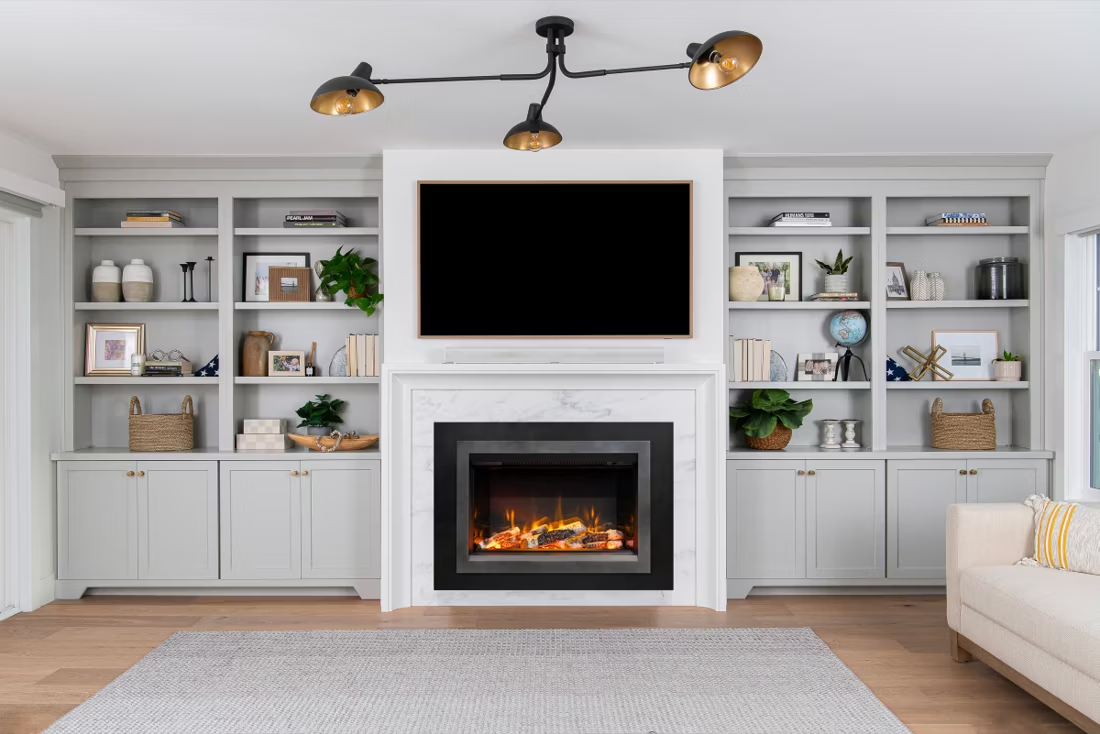
Yes—with an asterisk. Fireplaces are hot and TVs don't like heat. Either put a mantel between them to deflect rising warmth, or choose a fireplace with heat-management technology that creates a cool zone on the wall above—the wall stays around 125 degrees, barely warm, while the room still gets full heat. If you like clean lines and don't want a mantel, heat management is the answer.
Does an electric fireplace need a vent or chimney?
No—that's its superpower. An electric fireplace needs a wall and an outlet, period. No vent pipe, no gas line, no clearances to design around, which is why it works in bedrooms, offices, apartments, and walls where venting a gas or wood unit would be impractical or impossible. Installation is typically the simplest and least expensive of any fireplace type.
Can a fireplace actually lower my heating bill?
Yes—by creating a comfort zone. A furnace heats every square foot of the house just to warm the one room you're in; a gas fireplace on low burns roughly a sixth of the gas a typical furnace does. Set the furnace around 55–60 degrees as a baseline, then heat the rooms your family actually uses. Families who heat this way commonly save $20–$60 a month.
Can I install a fireplace myself?
If you're putting a fire in your house on purpose, it's best to work with an expert. Unless you're genuinely experienced in framing, gas line, vent pipe, and the national code on clearances to combustibles, have a professional do it—and ideally the same company that sells you the fireplace, so warranty, service, and liability all live under one roof.
Find your electric fireplace in Major County.
Tell us a bit about your home and we'll put together a free Project Guide & Parts List for your electric fireplace or insert project, then match you with the local dealer who actually covers your part of Major County.
Find Your Fireplace →