
Find the right fireplace for Major County's oak-and-mesquite country.
Wood, gas, pellet, and electric fireplace resources for Fairview, Ringwood, Meno, Orienta, and the rest of Major County. We'll match you with a trusted local dealer and hand you a free plan for your project.
Every Project Starts From One of These Five Situations
Cross-timbers heat and 3,868 heating degree days.
Major County sits in the transition zone between the Cross Timbers oak-hickory woodlands and the rangeland further west—which is why you'll find both post oak and hickory alongside mesquite in local woodpiles. Winters here average a 26°F low and rack up about 3,868 heating degree days a season, roughly half of what a place like Minneapolis logs in a typical winter. That's a moderate heating load: cold enough that a wood stove or gas insert earns its keep most of the season, but not so extreme that you need a 24-hour catalytic burner just to survive January.
With just over 4,200 residents spread across Fairview, Ringwood, Meno, Orienta, and the surrounding farm and ranch land, Major County doesn't support a big-box hearth showroom of its own—most retailers and technicians serving the area are based here or drive in from Enid or Woodward. This hub rolls up what's actually available locally: hearth retailers, service techs, and fuel suppliers across all four fuel types. Pick your fuel below for local dealers, cost ranges, and the specifics for your project.
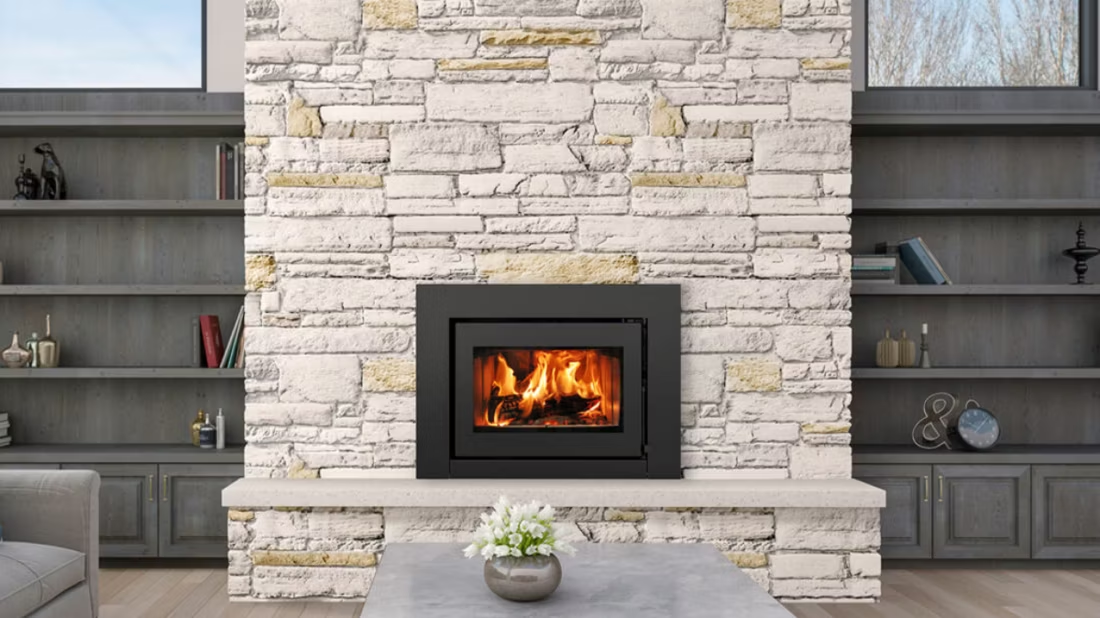
Four fuels. One honest answer for Major County.
Three steps. No salesperson until you're ready.
Tell us about your project
Your zip code, your situation, and the fuel you're leaning toward—or let the answers point you to one.
See what's actually available
The brands dealers within 100 miles genuinely carry—real options, never a catalog mirage.
Get your dealer & Project Guide
A trusted local dealer, plus the free Project Guide & Parts List that names every component of the job.
Frequently Asked Questions
Which fuel works best for a home in Major County?
It depends on your setup. Wood is a solid choice here—oak and hickory are cut locally from the Cross Timbers, and mesquite is common further west, and with only 3,868 heating degree days a season, a mid-size wood stove or insert can carry a home through most of the winter without needing to run around the clock. Gas is the low-maintenance option; most rural Major County homes run on propane, and a gas insert or freestanding stove gives you instant heat with no wood handling. Pellet stoves are a middle ground—Lignetics and Indeck Energy Services pellets are both available through regional suppliers, and a pellet stove gives you wood-like heat without splitting or stacking. Electric fireplaces work well as supplemental heat in bedrooms or additions, and they're a practical backup during the ice storms that occasionally knock out power on the plains. Many homes here end up pairing wood or propane as the primary heater with electric in a secondary room.
Do I need a permit to install a fireplace in Major County?
It depends on where you are. Inside Fairview, permits for new wood stoves, gas fireplaces, gas inserts, and pellet stoves typically go through the town's building office. In unincorporated Major County—which covers most of the county's land—code enforcement is lighter, and many rural installations proceed with less formal permitting, though any new wood-burning appliance should still meet current EPA emissions standards, and any gas line work should be done by a licensed installer. If you're unsure which category your property falls into, your local hearth retailer can usually tell you and will typically handle the paperwork as part of the installation.
Are there air quality restrictions on wood burning in Major County?
No. Major County isn't in a nonattainment area and doesn't have winter inversion issues the way some Western basin communities do, so there are no burn curtailment days or advisory restrictions here. That means you can run a wood stove or insert on cold nights without worrying about air-quality alerts. It's still worth burning well-seasoned oak, hickory, or mesquite—seasoned wood burns cleaner and more efficiently regardless of local air quality rules.
Can one hearth retailer in the area handle all four fuel types?
Given the county's small population, most of the dealers serving Major County are based in nearby Enid or Woodward and carry a broad mix—wood stoves and inserts, gas fireplaces and inserts, and pellet stoves, with electric fireplaces usually available as a simpler add-on line. Very few standalone hearth shops exist within Major County itself, so if you want to compare fuel types side by side, expect to work with a retailer that travels in for the consultation and installation. Ask which fuels a given dealer stocks and installs regularly before you commit—coverage varies by shop.
How does service work if I live out in the county, away from Fairview?
Most technicians serving Major County are based in Enid or Woodward and drive out for chimney sweeps, gas inspections, and pellet stove cleanings. Expect a modest travel charge for calls out to ranch and farm properties away from Fairview, Ringwood, or Meno. Scheduling early in the fall—before the first cold snap—makes it easier to get an appointment before the winter rush. If you're relying on wood or pellet heat and live well outside town, it's worth keeping a backup heat source on hand for the occasional ice storm that can delay both service calls and fuel deliveries.
What does fireplace installation typically cost across fuel types in Major County?
Costs here tend to run a bit below national averages given the area's rural cost structure. Wood stove or insert installation: roughly $3,500–$8,000, depending on chimney condition and whether new venting is needed. Gas fireplace, insert, or stove: roughly $4,000–$9,000, with propane line work adding to the cost on the higher end. Pellet stove or insert: roughly $3,500–$6,500 for a typical install. Electric fireplace: $200–$2,500 for the unit itself, with $300–$1,000 in labor for anything beyond a simple plug-in installation. Exact pricing depends on which dealer you work with and the specifics of your home—the county + fuel pages above break this down further.
Wood, gas, pellet, or electric—how do I choose?
Match the fuel to your life, not the other way around. Wood: lowest fuel cost and total power-outage independence, but you're hauling and stacking. Gas: press a button, set a thermostat, no maintenance to speak of. Pellet: wood economics with automatic feeding, in exchange for weekly cleaning and a need for electricity. Electric: plugs in anywhere with honest supplemental heat. Nobody regrets the fuel that fits how they actually live.
Can I install a fireplace myself?
If you're putting a fire in your house on purpose, it's best to work with an expert. Unless you're genuinely experienced in framing, gas line, vent pipe, and the national code on clearances to combustibles, have a professional do it—and ideally the same company that sells you the fireplace, so warranty, service, and liability all live under one roof.
Does a fireplace add value to my home?
On average, a fireplace adds back to the home about the same amount you spent installing it. Add the monthly savings from heating the rooms you actually use instead of the whole house—often hundreds of dollars a year—and the value case is strong before you even count what a fire does for how your family uses the room.
How much should I budget for a fireplace?
For an average home—covering the fireplace, the vent pipe, and basic installation—a budget between $3,900 and $5,500 gives you a lot of options across wood, gas, and pellet. By the time you add finish work, gas line, and electrical, the average complete installation lands between $5,000 and $12,000 all-in. In a remodel or new build, a good rule is to put about 2.5% of the total project cost toward the fireplace.
Stove and Fireplace Dealers in Major County
Listings include WhyFire partner dealers, dealers we have verified as authorized for the brands we recommend, and established local businesses that carry hearth products. Every listing shows which one it is. The ones marked Preferred run on WhyFire's software, so they can show you real pricing and book your appointment right here. No manufacturer pays for placement. How we verify dealers →
Giblet Stove Sales
Bachles Fireplace Furnishings
Aynes Enterprises
Mill Creek Lumber & Supply Okc
Rick's House Of Fire
Gas & Electrical Equip
Fireplace Place
Camco Home Improvement, Inc.
The Hearth Shop
Forrest Fireplaces
Get matched with a Major County hearth dealer.
Pick your fuel below and we'll match you with a trusted local dealer and send you a free Project Guide & Parts List—the exact parts, vent kit, and recommended installer for your home in Major County.
Find Your Fireplace →