
Consistent Warmth, Without the Woodpile.
Thermostat-controlled heat for Trotwood's Miami Valley winters, with none of the splitting, stacking, or chimney maintenance that comes with cordwood. Find the right unit and connect with a trusted local dealer.
Every Project Starts From One of These Five Situations
A clean-burning option built for Miami Valley winters.
Trotwood sits just northwest of Dayton in Montgomery County, at roughly 854 feet elevation with average winter lows near 20°F and a solid five-month heating season each year. That puts Trotwood's winters in the moderate-cold range for the Midwest—noticeably milder than the extended deep freezes of a place like Madison, WI, but still cold enough that homes here run supplemental heat for a solid five months.
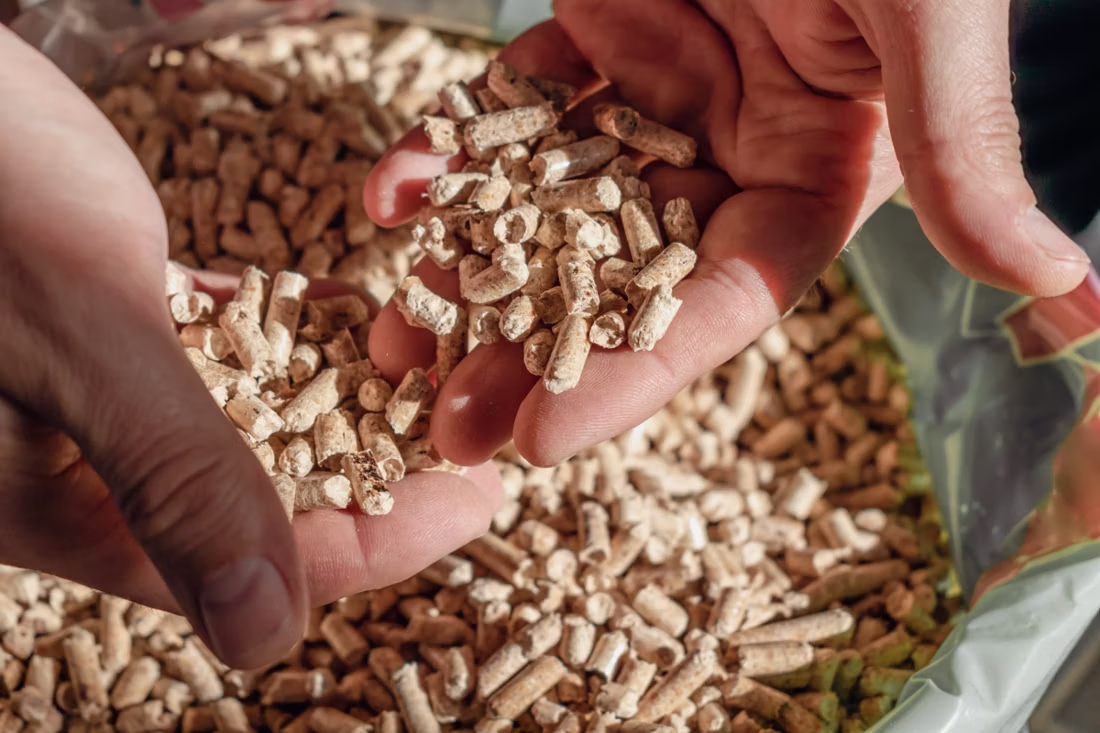
Trotwood has no listed air quality restrictions, so there's no burn-ban complexity to navigate the way there is in some Western non-attainment areas—which makes pellet stoves an easy fit for a homeowner who wants steady heat without tending a firebox. Regional pellet producers including Indeck Energy Services, Lignetics, and Somerset Pellet Fuel supply the Ohio and Midwest corridor, so bagged fuel is generally easy to source locally through hardware stores, farm supply retailers, and hearth dealers rather than something you have to special-order.
Three steps. No salesperson until you're ready.
Tell us about your project
Your zip code, your situation, and the fuel you're leaning toward—or let the answers point you to one.
See what's actually available
The brands dealers within 100 miles genuinely carry—real options, never a catalog mirage.
Get your dealer & Project Guide
A trusted local dealer, plus the free Project Guide & Parts List that names every component of the job.
Frequently Asked Questions
How much does a pellet stove installation cost in Trotwood?
A freestanding pellet stove installed in a Trotwood home typically runs $3,000 to $5,500, while a pellet insert going into an existing masonry fireplace usually falls in the $4,000 to $7,000 range once venting and a hearth pad (if needed) are factored in. Because pellet appliances vent through smaller-diameter PL-rated pipe rather than a full masonry chimney, labor is often less than a comparable wood installation. You'll also want a dedicated electrical outlet near the hearth for the auger motor, igniter, and combustion blower—Dayton Power & Light's residential rate of about 8.5 cents per kWh keeps the operating cost of running those components fairly low.
Where can I buy pellets locally, and what do they cost?
Regional producers like Indeck Energy Services, Lignetics, and Somerset Pellet Fuel supply much of the Ohio market, and their bagged pellets show up at hearth shops, farm supply stores, and some hardware chains around the Dayton area. Expect to pay somewhere in the neighborhood of $250 to $300 per ton for premium hardwood or softwood blends, sold in standard 40-pound bags—roughly 50 bags to a ton. Buying by the pallet or ton ahead of the heating season, rather than by the bag as you go, is the more economical approach most local dealers will recommend.
Do I need a permit to install a pellet stove in Trotwood?
Yes—a new pellet stove or insert installation generally requires a building permit through the local building department serving Trotwood and Montgomery County, since it involves a fuel-burning appliance, wall or roof penetration for venting, and often new electrical work. Most hearth dealers who sell and install pellet equipment handle the permit application and inspection scheduling as part of the job, which is one of the reasons it's worth having a professional handle the install rather than doing it yourself.
Will my pellet stove still work if the power goes out?
Not without a backup power source. Unlike a wood stove, a pellet stove depends on electricity to run the auger that feeds fuel, the igniter, and the combustion blower—no power means no heat, even with a full hopper. For a Trotwood home that sees occasional winter ice storms and Dayton Power & Light outages, a small battery backup unit or portable generator sized to the stove's low wattage draw (most pellet stoves use well under 500 watts) is worth discussing with your installer if reliable heat during an outage matters to you.
Pellet stove vs. wood stove—which makes more sense for my home?
Wood is genuinely abundant around Trotwood—oak, hickory, maple, and cherry are all common regional firewood species, and a wood stove will keep burning through a power outage with no electricity at all. But wood means splitting, stacking, seasoning, and manual damper control. A pellet stove trades that labor for a thermostat: load the hopper, set a temperature, and the auger feeds itself automatically, with less ash and a cleaner glass. For most Trotwood homeowners without the time or storage space for a cord of wood but who still want a real flame and radiant heat, pellet is the easier day-to-day appliance—as long as you're comfortable with its dependence on electricity.
How much pellet fuel storage space do I need?
A typical Trotwood home burning a pellet stove as supplemental heat through a full winter uses somewhere between 1 and 3 tons of pellets, depending on square footage and how hard the stove is run. That's 50 to 150 standard 40-pound bags, which stack easily on pallets in a garage, basement, or dry shed corner—far less footprint than a cord of split wood. The main requirement is keeping bags off concrete floors and away from moisture, since pellets swell and become unusable if they get wet.
How much maintenance does a pellet stove need?
Pellet stoves need more routine attention than a gas unit but less than a wood stove. Plan on emptying the ash pan every few days to weekly depending on use, cleaning the burn pot and glass regularly, and vacuuming the hopper and exhaust passages every few weeks during heavy winter use. Most manufacturers also call for an annual professional cleaning of the venting system and inspection of the auger motor, blower, and gaskets—local hearth dealers who sell pellet equipment typically offer this service, and it's worth scheduling before the heating season starts each fall.
What size pellet stove do I need for my Trotwood home?
Sizing comes down to square footage, insulation, and how open your floor plan is. A smaller pellet stove rated around 40,000 to 50,000 BTU/hr typically handles up to about 1,200 square feet, while larger models rated 60,000+ BTU/hr can heat 2,000 square feet or more in an open layout. Given Trotwood's solid five-month heating season, most homes here do well with a mid-size unit run as zone heat for the main living area rather than trying to heat the whole house from one appliance. A local dealer can size the right stove for your specific floor plan during an in-home visit.
Are there tax credits or rebates for installing a pellet stove?
Yes—under the federal 25(C) energy efficiency tax credit, biomass stoves (including pellet stoves) with a thermal efficiency rating of 75% or higher qualify for a credit worth 30% of the total cost, including installation, up to $2,000 per year. Most EPA-certified pellet stoves sold by hearth dealers today meet that efficiency threshold, but it's worth asking your installer for the manufacturer's certification statement to confirm before you file. Ohio doesn't currently layer a separate state rebate on top of the federal credit, so the 25(C) credit is the main incentive Trotwood homeowners should plan around.
How often does a pellet stove need cleaning?
A clean pellet stove is a happy pellet stove. Plan on cleaning the burn pot about once a week when you're burning regularly—ash and clinkers gum up the air holes just like a pellet barbecue. Most pellet stove problems trace back to skipped cleaning that nobody explained up front. Some designs make it easy with a trapdoor burn pot: pull a lever and the gunk drops into the ash pan.
What's the difference between an insert and a zero-clearance fireplace?
An insert is a fireplace that slides into a pre-existing wood-burning fireplace—if you don't have one, there's nothing to insert it into. A zero-clearance fireplace is built into a framed wall, which makes it the answer for remodels and new construction. Simple test: existing masonry fireplace means insert; blank or framed wall means zero-clearance.
How much should I budget for a fireplace?
For an average home—covering the fireplace, the vent pipe, and basic installation—a budget between $3,900 and $5,500 gives you a lot of options across wood, gas, and pellet. By the time you add finish work, gas line, and electrical, the average complete installation lands between $5,000 and $12,000 all-in. In a remodel or new build, a good rule is to put about 2.5% of the total project cost toward the fireplace.
Does a fireplace add value to my home?
On average, a fireplace adds back to the home about the same amount you spent installing it. Add the monthly savings from heating the rooms you actually use instead of the whole house—often hundreds of dollars a year—and the value case is strong before you even count what a fire does for how your family uses the room.
Nearby Dealers
Hearth shops serving Trotwood and the surrounding area.
Pellet Brands Stocked Around Trotwood
Manufacturers will point you to the nearest stocking dealer.
Find your pellet stove in Trotwood.
Tell us a bit about your home and we'll put together a free Project Guide & Parts List for your pellet project—the right stove or insert, the vent kit it needs, and a trusted local dealer to install it.
Find Your Fireplace →