
Pellet stoves are the exception in Montgomery County, not the rule.
With natural gas running to most Dayton-area neighborhoods and winters that rarely drop far below 20°F, pellet heat here is a deliberate choice, not a default. We'll connect you with a local dealer who actually stocks and installs it.
Every Project Starts From One of These Five Situations
Natural gas already does the heavy lifting across Dayton.
Montgomery County is home to nearly 973,000 residents centered on Dayton, sitting in climate zone 5A with an average winter low around 20°F and a solid, months-long heating season each year. That's a real Ohio winter—cold enough to need serious heat for months—but it's noticeably milder than places like Minneapolis or Duluth, which see winter heating loads 30-40% higher. Combine that moderate cold with a natural gas network that reaches most of the county, and you get a heating market where furnaces and gas fireplaces do most of the work, and pellet stoves show up only occasionally.
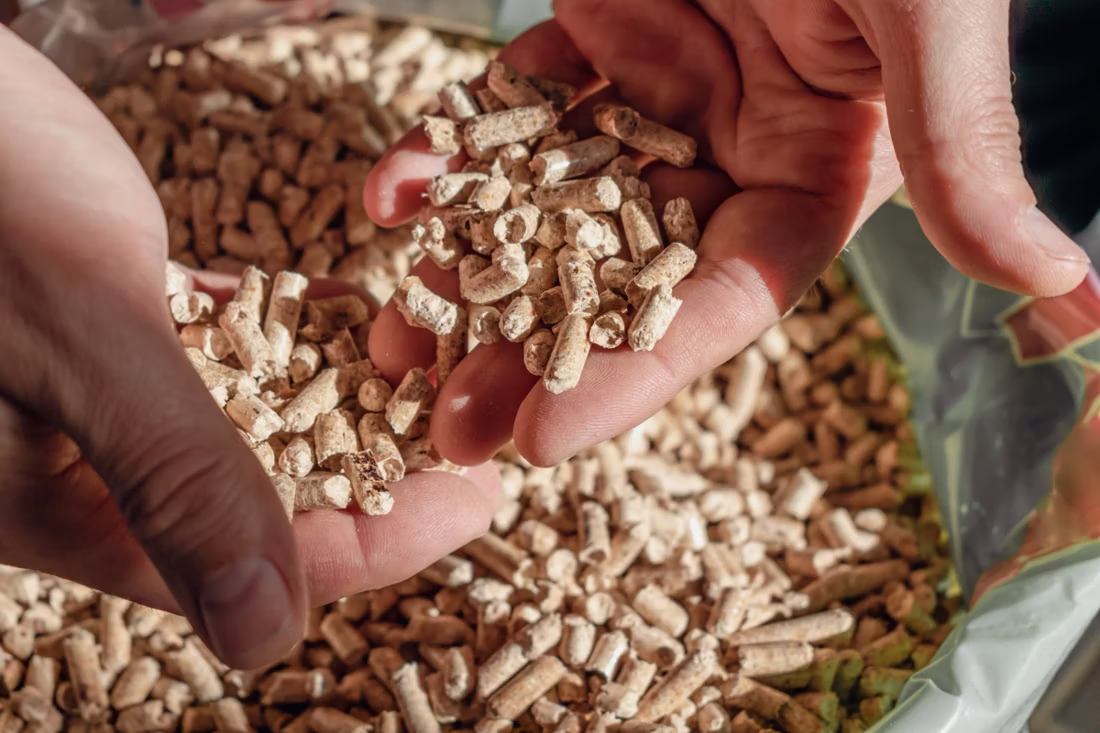
There's no local wood-cutting culture or air quality restriction pushing homeowners toward biomass here—air quality concerns are listed as none for the county, and gas fuel relevance is standard, meaning most homes already have the infrastructure. That said, pellet fuel isn't absent from the region: brands like Indeck Energy Services, Lignetics, and Somerset Pellet Fuel supply the broader Ohio market, and a small number of Montgomery County homeowners install pellet stoves anyway—for supplemental zone heat in a finished basement, for the look and smell of a real flame without splitting oak or hickory, or as backup for the rare ice storm that knocks out gas service. If that's you, a local dealer who actually carries pellet equipment matters more here than in a pellet-heavy market, simply because there are fewer of them.
Three steps. No salesperson until you're ready.
Tell us about your project
Your zip code, your situation, and the fuel you're leaning toward—or let the answers point you to one.
See what's actually available
The brands dealers within 100 miles genuinely carry—real options, never a catalog mirage.
Get your dealer & Project Guide
A trusted local dealer, plus the free Project Guide & Parts List that names every component of the job.
Frequently Asked Questions
How much does a pellet stove installation cost in Montgomery County?
Because pellet stoves are a specialty item here rather than a stock product, installed cost runs a bit higher than in regions where every hearth shop carries them—plan on roughly $3,500 to $6,500 for a freestanding pellet stove with a proper stainless vent kit, hearth pad, and nearby electrical outlet, depending on the model and how much venting work is involved. Pellet inserts into an existing masonry fireplace typically land in a similar range. Get a firm number from a trusted local installer rather than a national online estimate—pricing swings more here based on which dealers are actually willing to travel to a given part of the county.
Does a pellet stove even make sense in a natural-gas market like Dayton?
For most Montgomery County homes with existing gas service, a furnace or gas fireplace is simply the more practical choice—gas is standard here, the infrastructure already exists, and the running cost per BTU is usually lower than pellets once you factor in hopper loading and electricity for the auger. Pellet stoves still make sense in specific situations: a home without gas access, a room far from the furnace that needs zone heat, or a homeowner who specifically wants the ambiance of a real flame with less mess than cordwood. We won't tell you pellet is the obvious choice here—it isn't—but it's a legitimate option for the right situation, and a local dealer can tell you honestly whether your home is one of them.
Where can I buy pellets in Montgomery County?
Pellet fuel isn't sold at every hardware store the way it is in states where pellet stoves are common, but it is available. Regional producers and suppliers including Lignetics and Somerset Pellet Fuel distribute through farm and fleet stores, feed supply outlets, and some hearth retailers, especially as cold weather approaches. Because demand is lower here than in pellet-heavy states, it's worth confirming a supplier stocks year-round before you commit to a pellet stove as a primary heat source—running out mid-January is a real risk if you're relying on a single local source.
Will a pellet stove keep working if the power goes out?
No—not without a battery backup. Pellet stoves rely on an electric auger to feed fuel and a blower to distribute heat, so a standard outage shuts them down just like a gas furnace with electronic ignition would. Some homeowners pair a pellet stove with a small battery backup or generator specifically for this reason, since Montgomery County's electric grid, while standard-relevance, isn't immune to ice-storm outages. If backup heat during outages is your main goal, a wood stove or a gas unit with a millivolt pilot is typically a more reliable choice than pellet.
What's a good pellet stove for a moderate Ohio winter?
Montgomery County's winters—average lows around 20°F, with a solid, months-long heating season—don't demand the extreme burn times you'd need in a place like Minneapolis or Bozeman, Montana. A mid-size pellet stove rated for 1,200 to 2,000 square feet with a 40-60 lb hopper is enough for most homes here, giving you 24 to 40 hours between refills depending on the setting. If you're using it as your only heat source in a drafty older Dayton bungalow, size up slightly; if it's supplemental to an existing furnace, a smaller unit is plenty.
How do I size a pellet stove for my home?
Sizing depends on square footage, ceiling height, insulation quality, and whether the stove is primary or supplemental heat. Older housing stock common around Dayton—brick two-stories and Craftsman-era bungalows—often runs drafty by modern standards, which pushes sizing up a notch compared to new construction. A local dealer will walk your specific floor plan rather than rely on a generic square-footage chart, which matters more here since an oversized pellet stove in a well-sealed newer home will just cycle on and off constantly.
Do I need a permit to install a pellet stove in Montgomery County?
Yes—pellet stove installations typically require a building permit through your local municipality's building department, since Montgomery County includes multiple incorporated cities and townships with their own permitting offices rather than one countywide office. Most installers who regularly work in the area handle the permit application and inspection scheduling as part of the job, which is one more reason to use a dealer who's done pellet installs locally before rather than a generalist.
How often does a pellet stove vent need cleaning?
Pellet stove venting produces far less creosote than a wood-burning chimney, but the venting and burn pot still need regular attention—plan on cleaning the burn pot weekly during heavy use and having the venting system professionally inspected annually. Because certified pellet-stove service techs are less common in a gas-dominant market like Montgomery County, it's worth confirming your installer offers ongoing service before you buy, rather than discovering after the fact that no one nearby services the brand you chose.
Pellet stove vs. gas fireplace—which makes more sense here?
For most Montgomery County homes, gas wins on convenience and running cost, since natural gas service already reaches most of the county and gas fireplace relevance here is standard rather than niche. A gas fireplace or insert gives you instant on-off heat with no fuel storage or ash cleanup. A pellet stove makes more sense if you want the visual and radiant character of a real flame, don't have gas service at your specific address, or want a supplemental heat source that burns a renewable fuel rather than a fossil one. Plenty of homeowners in the county have both—gas for daily convenience, pellet for a den or basement they want to feel different.
Why is my open fireplace making my house colder?
Open fireplaces suck—literally. As the fire burns, it consumes air your furnace already paid to heat and pulls it out through the chimney, so the house is actually colder after the fire goes out than before you lit it. An insert fixes this: it seals the chimney, puts fixed glass across the front, and turns that hole in your house into a real heat source.
What's the difference between an insert and a zero-clearance fireplace?
An insert is a fireplace that slides into a pre-existing wood-burning fireplace—if you don't have one, there's nothing to insert it into. A zero-clearance fireplace is built into a framed wall, which makes it the answer for remodels and new construction. Simple test: existing masonry fireplace means insert; blank or framed wall means zero-clearance.
Can a fireplace actually lower my heating bill?
Yes—by creating a comfort zone. A furnace heats every square foot of the house just to warm the one room you're in; a gas fireplace on low burns roughly a sixth of the gas a typical furnace does. Set the furnace around 55–60 degrees as a baseline, then heat the rooms your family actually uses. Families who heat this way commonly save $20–$60 a month.
How much should I budget for a fireplace?
For an average home—covering the fireplace, the vent pipe, and basic installation—a budget between $3,900 and $5,500 gives you a lot of options across wood, gas, and pellet. By the time you add finish work, gas line, and electrical, the average complete installation lands between $5,000 and $12,000 all-in. In a remodel or new build, a good rule is to put about 2.5% of the total project cost toward the fireplace.
Stove and Fireplace Dealers in Montgomery County
Pellet Brands Stocked Around Montgomery County
Manufacturers will point you to the nearest stocking dealer.
Get matched with a Montgomery County pellet stove dealer.
Tell us about your home and heating goals and we'll match you with a trusted local dealer who actually stocks pellet equipment—plus a free Project Guide & Parts List with the exact parts, vent kit, and dealer recommendation for your Montgomery County pellet project.
Find Your Fireplace →