
Modern Heat for Every Dayton-Area Home.
Fireplace resources for every city and suburb in Montgomery County—from downtown Dayton to Kettering, Centerville, Miamisburg, and Vandalia. Wood and pellet setups exist here too, just for a much smaller share of homes—we'll help you find the right fit either way and connect you with a trusted local dealer.
Every Project Starts From One of These Five Situations
Gas-and-electric heating anchors Montgomery County, Ohio.
Montgomery County sits in Ohio's Miami Valley, home to Dayton and nearly a million residents across a dense network of suburbs. At climate zone 5A with a moderate winter heating load and average winter lows around 20°F, the heating season here is real but far milder than what you'd see in Duluth, MN or Fargo, ND. Decades of natural gas buildout—Vectren, now part of CenterPoint Energy—mean the vast majority of Montgomery County homes already have gas service, and gas fireplaces and inserts are the default upgrade for anyone converting a wood-burning masonry fireplace or adding a heat source to a family room. Electric units from AES Ohio-served homes fill in where venting isn't practical—condos, rentals, upper-floor bedrooms. Wood-burning is genuinely uncommon here: dense suburban lot sizes, HOA restrictions in many newer developments, and easy access to gas make it a niche choice rather than a heating strategy. That said, a smaller number of homeowners still split and burn local oak, hickory, maple, or cherry for ambiance or backup heat, and pellet stoves show up occasionally as a middle option, supplied through regional bagged-pellet producers like Lignetics and Somerset Pellet Fuel.
What you'll find on this hub: hearth retailers, service technicians, and fuel suppliers serving every community in the county—Dayton, Kettering, Oakwood, Centerville, Miamisburg, West Carrollton, Huber Heights, Trotwood, Vandalia, Englewood, and the smaller towns toward Germantown and Farmersville. The gas and electric county-fuel pages will have the most local depth, since that's where nearly all the retailer and technician activity in Montgomery County concentrates. The wood and pellet pages still exist and still connect you with real dealers—there just aren't as many of them, and we say so plainly rather than pretending otherwise. Pick your fuel below to see local dealers, typical installed costs, and recommended units for your specific project.
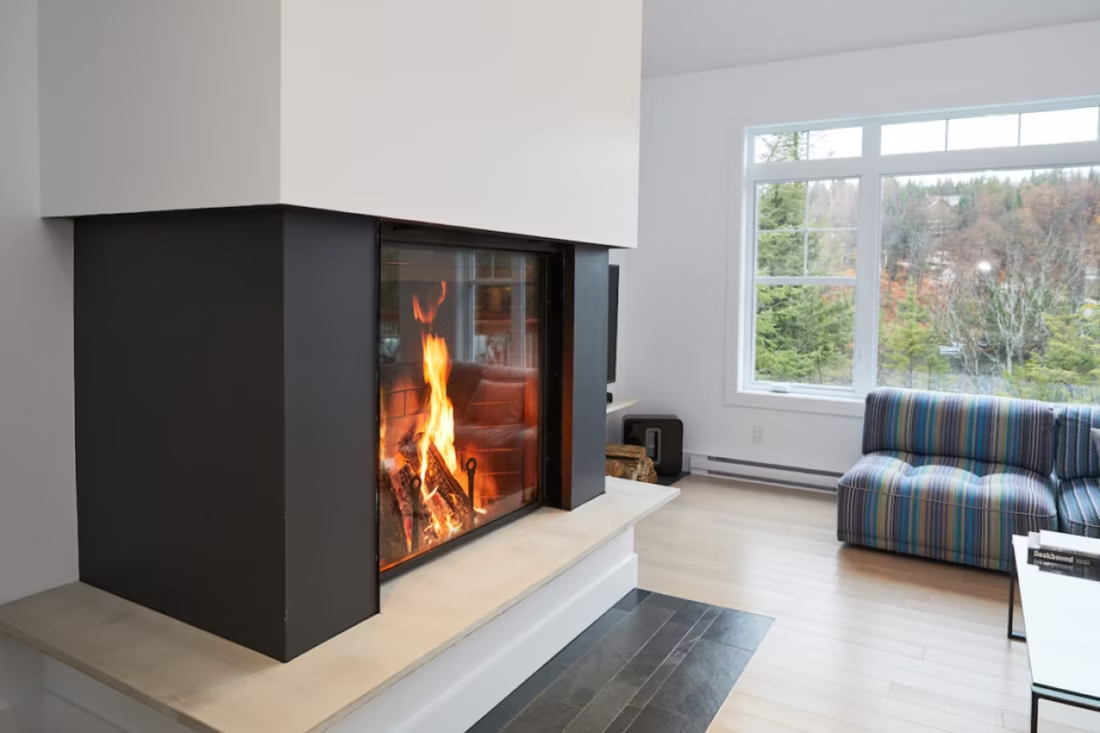
Four fuels. One honest answer for Montgomery County.
Three steps. No salesperson until you're ready.
Tell us about your project
Your zip code, your situation, and the fuel you're leaning toward—or let the answers point you to one.
See what's actually available
The brands dealers within 100 miles genuinely carry—real options, never a catalog mirage.
Get your dealer & Project Guide
A trusted local dealer, plus the free Project Guide & Parts List that names every component of the job.
Frequently Asked Questions
Which fuel works best in Montgomery County?
For most homes here, gas is the practical default. Montgomery County's existing CenterPoint Energy (formerly Vectren) gas infrastructure means converting an old masonry fireplace to a gas insert or adding a new gas fireplace is usually the path of least resistance—instant heat, no chimney maintenance, and a straightforward retrofit. Electric fireplaces from AES Ohio-served homes are the right call for condos, upper floors, and rentals where venting isn't an option. Wood stoves and pellet stoves are both real options but genuinely uncommon in this market—HOA rules in many newer subdivisions restrict solid-fuel appliances, and suburban lot sizes rarely support convenient firewood storage or processing. If you're drawn to wood heat anyway, local oak, hickory, maple, and cherry all burn well and are readily available from firewood suppliers in the county; it's just not the mainstream choice the way it is in more rural parts of the Midwest.
Do I need a permit to install a fireplace in Montgomery County?
Usually, yes. Gas fireplace, insert, and stove installations require a building permit plus a separate gas line permit performed by a licensed gas fitter—most local retailers handle this as part of the installation quote. Electric fireplaces that plug into an existing outlet typically don't need a permit, but built-in electric units that require new wiring or a dedicated circuit do need an electrical permit. Within Dayton city limits, permits go through the city's building inspection division; in the surrounding suburbs and unincorporated areas, Montgomery County Building Regulatory Services handles permitting. Wood stove installs—rare as they are here—still require a permit and must meet current EPA emissions standards for the appliance.
Are there air quality restrictions on wood burning in Montgomery County?
No formal wood-burning curtailment program exists in Montgomery County the way it does in some western basin cities. The Regional Air Pollution Control Agency (RAPCA) monitors regional air quality for the Dayton metro area, but Montgomery County doesn't see the winter inversion events that trigger burn advisories elsewhere. Combined with how few homes here actually burn wood as a primary heat source, air quality isn't a major factor in the wood-vs-gas decision locally—it's really about installation practicality and household preference.
Can one local hearth retailer handle all four fuel types?
Not typically, and that's a reflection of local demand rather than retailer limitation. Most Dayton-area hearth retailers carry gas and electric as their primary lines, since that's what the vast majority of Montgomery County customers are shopping for. A smaller number also stock pellet stoves as a secondary category. True wood-stove specialists—dealers with a real wood showroom and wood-specific installation experience—are hard to find in this county; if you're set on wood heat, expect to look slightly further afield or work with a generalist dealer who special-orders the unit.
How does service work across a spread-out suburban county like this?
Montgomery County's geography works in your favor here—it's compact by comparison to many rural counties, and most suburbs (Kettering, Centerville, Oakwood, Miamisburg, Vandalia) are within a 20-30 minute drive of Dayton-based service technicians. Gas fireplace inspections and electric fireplace wiring calls are the most common service types and are easy to schedule almost anywhere in the county. If you're in one of the more rural pockets toward Germantown or Farmersville, expect slightly fewer technician options and possibly a small travel fee, though most gas and electric specialists still cover that area without issue.
What's the typical cost range for fireplace installation across fuel types in Montgomery County?
Gas fireplace, insert, or stove installation typically runs $4,000–$9,500 depending on whether existing gas line and venting can be reused or new line work is required. Electric fireplace installation ranges from $200–$2,500 for the unit itself, with $300–$1,000 in labor for anything beyond a simple plug-in—most wall-mount and insert installs fall in that range. Pellet stove installation, where you can find a dealer who carries one, generally runs $4,000–$7,000, with bagged pellets from suppliers like Lignetics and Somerset Pellet Fuel available seasonally. Wood stove installation, though uncommon, typically costs $4,500–$9,000 for a full chimney-and-appliance install. For details tied to your specific fuel, see the county + fuel pages above.
What is an in-home preview and do I need one?
It's a visit where a hearth professional measures your space, confirms the model you picked actually works in your home, and walks the specs—framing, gas line, venting, finish work—before anything is ordered. Some details you just can't know until you see the house. Never make a down payment without one; it's the single most-skipped step that burns buyers.
Does a fireplace add value to my home?
On average, a fireplace adds back to the home about the same amount you spent installing it. Add the monthly savings from heating the rooms you actually use instead of the whole house—often hundreds of dollars a year—and the value case is strong before you even count what a fire does for how your family uses the room.
Can I install a fireplace myself?
If you're putting a fire in your house on purpose, it's best to work with an expert. Unless you're genuinely experienced in framing, gas line, vent pipe, and the national code on clearances to combustibles, have a professional do it—and ideally the same company that sells you the fireplace, so warranty, service, and liability all live under one roof.
Wood, gas, pellet, or electric—how do I choose?
Match the fuel to your life, not the other way around. Wood: lowest fuel cost and total power-outage independence, but you're hauling and stacking. Gas: press a button, set a thermostat, no maintenance to speak of. Pellet: wood economics with automatic feeding, in exchange for weekly cleaning and a need for electricity. Electric: plugs in anywhere with honest supplemental heat. Nobody regrets the fuel that fits how they actually live.
Stove and Fireplace Dealers in Montgomery County
Listings include WhyFire partner dealers, dealers we have verified as authorized for the brands we recommend, and established local businesses that carry hearth products. Every listing shows which one it is. The ones marked Preferred run on WhyFire's software, so they can show you real pricing and book your appointment right here. No manufacturer pays for placement. How we verify dealers →
Ye Olde Chimney Sweep & Sons, Ltd.
Bells Fireplace Services
Dayton Fireplace Systems Inc.
Southlite Fan City
Abbey Road Chimney Sweep
Watson's Of Dayton
Chimney Solutions LLC
Moseley Stove Shop
Charles Family Hearth
Ted's Chimney Service
Fireside Radiant
Find Your Fireplace in Montgomery County.
Pick your fuel below and we'll match you with a trusted local Dayton-area dealer, plus a free Project Guide & Parts List—the exact parts, vent kit, and recommended dealer for your specific project.
Find Your Fireplace →