
A Niche Heat Source in a Natural-Gas Town.
Pellet stoves aren't common in Marion, but for the right home they add supplemental heat, real-flame ambiance, and a hedge against rising utility costs. We'll help you figure out if one fits, and connect you with a local dealer who actually carries them.
Every Project Starts From One of These Five Situations
Marion runs on natural gas—pellet is the exception, not the rule.
Marion sits in climate zone 5A at just under 1,000 feet elevation, with winters that average an 18-degree low and rack up around 6,015 heating degree days a year—a real Ohio winter, but nowhere near the wood-and-pellet culture you'd find in a place like Burlington, VT or Duluth, MN. Natural gas service runs through most of the city and is the default heating fuel for the large majority of Marion homes. That's the biggest reason pellet stoves haven't caught on here the way they have in more rural, off-grid-leaning parts of the Midwest: when gas is cheap, reliable, and already piped to the house, there's less incentive to install and feed a hopper-fed appliance.
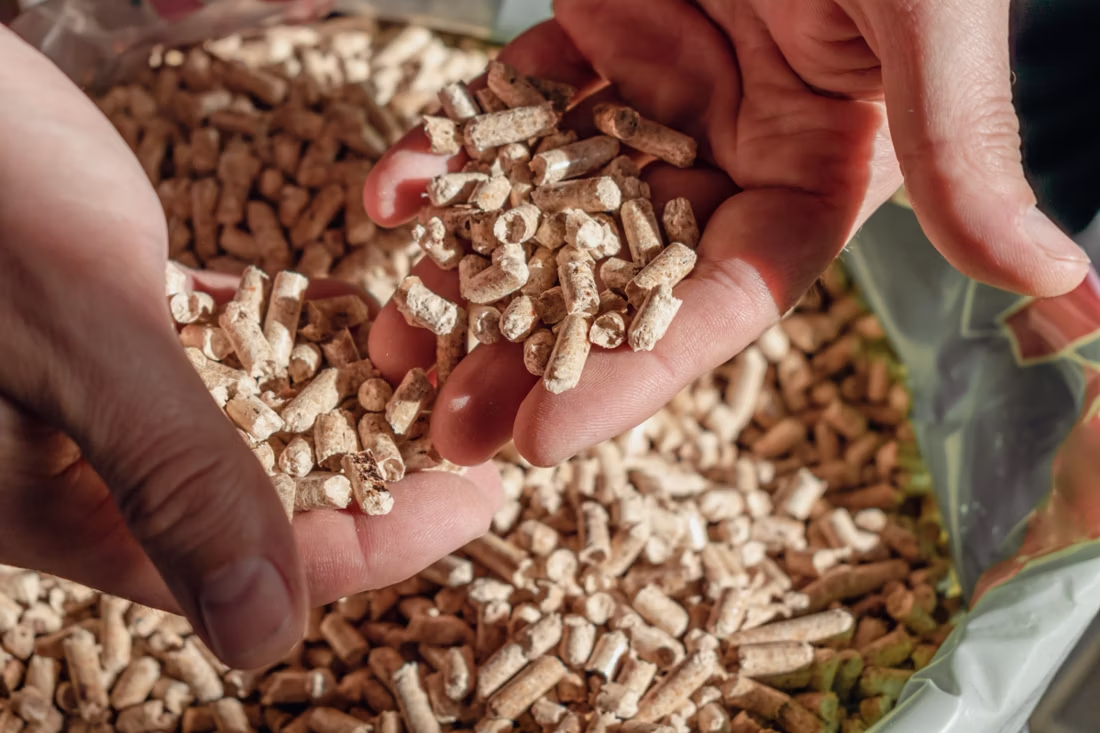
That said, a small number of Marion homeowners do install pellet stoves—usually for supplemental zone heat in a finished basement or addition, for the look of a real flame without wood mess, or as a partial hedge against gas price swings. Pellet fuel isn't a local retail fixture in Marion the way firewood is in wood-heavy counties, but pellets from regional producers like Indeck Energy Services, Lignetics, and Somerset Pellet Fuel are available through hearth dealers and farm-supply stores across central Ohio, usually by special order or seasonal stock-up. If you're set on pellet heat here, working with a dealer who can guarantee fuel supply matters more than it would in a market where every hardware store stocks bags year-round.
Three steps. No salesperson until you're ready.
Tell us about your project
Your zip code, your situation, and the fuel you're leaning toward—or let the answers point you to one.
See what's actually available
The brands dealers within 100 miles genuinely carry—real options, never a catalog mirage.
Get your dealer & Project Guide
A trusted local dealer, plus the free Project Guide & Parts List that names every component of the job.
Frequently Asked Questions
How much does it cost to install a pellet stove in Marion?
Because pellet stoves are more of a special-order item for Marion hearth dealers than a stocked product, installed costs vary more here than they would in a pellet-heavy market. Expect somewhere in the $3,000 to $6,500 range for a freestanding pellet stove with venting, and toward the higher end if you're converting an existing fireplace into a pellet insert with a liner. Because fewer local installers move pellet units regularly, getting two or three quotes matters more here than for a gas project—we match you with a dealer who actually stocks and services pellet equipment rather than one who'll steer you toward gas by default.
Does a pellet stove even make sense for my home in Marion?
It depends on what you're solving for. If you want whole-home heat, gas is almost always the better answer in Marion—natural gas is widely available, Ohio Edison electric rates run about 9.6 cents per kWh, and gas furnaces and fireplaces are far cheaper to fuel and service locally. Pellet makes more sense as a secondary heat source: a finished basement without ductwork, a sunroom addition, or a home where the owner specifically wants the ambiance of a real flame with lower emissions than cordwood. If you fall into that second category, a pellet stove can be a genuinely good fit—just go in knowing you're choosing a niche appliance here, not the local default.
Where can I buy pellets in Marion, and what do they cost?
Pellets aren't stocked on every corner in Marion the way they might be in New England or the Pacific Northwest. Regional producers like Indeck Energy Services, Lignetics, and Somerset Pellet Fuel supply bagged hardwood and softwood pellets to hearth dealers and farm-supply retailers throughout central Ohio, typically running $230 to $300 per ton depending on brand and season. Because local demand is lower, it's worth buying your season's supply in October or November, before a cold snap drives a run on whatever stock a dealer has left, rather than assuming you can restock mid-January the way you could with a gas fireplace.
Do I need a permit to install a pellet stove in Marion?
Yes. Marion, like most Ohio municipalities, requires a building permit for any new solid-fuel or pellet-burning appliance, along with an inspection of the venting once it's installed. The City of Marion Building Department, or Marion County's building office if you're outside city limits, handles these permits, and most established hearth dealers include the permit and inspection as part of the installation quote. Because pellet installs are less common here than gas, it's worth confirming your installer has actually pulled a pellet-stove permit before—not every general contractor has.
Will a pellet stove keep working if the power goes out?
No—and this is one of the biggest misconceptions people have. Pellet stoves rely on an electric auger to feed fuel and a blower to distribute heat, so they shut down the moment the power does, just like a gas furnace with an electronic igniter. If backup heat during an outage is your goal, a battery backup or small generator (many pellet stoves draw well under 100 watts) can keep a unit running through an outage, but it's added equipment to plan for. Marion homeowners who want heat that works with zero electricity typically look at a vented gas fireplace with a standing pilot instead.
How is a pellet stove vented, and does it need a chimney?
Pellet stoves vent through a small-diameter PL pipe—usually 3 or 4 inches—that can run horizontally through an exterior wall rather than requiring a full vertical chimney. That makes them easier to retrofit into a Marion home without existing masonry than a wood stove would be, since you're not tied to running pipe up through the roofline. Sizing follows square footage and how open the floor plan is: a stove rated for 1,000 to 1,500 square feet handles most single-room or basement supplemental-heat installs in Marion's housing stock, while heating a full floor calls for a larger unit and a real look at your home's insulation from a local installer.
How much maintenance does a pellet stove need?
More than gas, less than wood. Plan on emptying the ash pan every few days to weekly during regular use, wiping the glass and cleaning the burn pot every week or two, and running the hopper and internal fans through a deeper cleaning at the start of each burning season. An annual professional inspection of the vent pipe and exhaust blower is worth scheduling in the fall before Marion's heating season ramps up, both for safety and to keep warranty coverage intact. It's more hands-on than a gas insert, which is one more reason most Marion homeowners who go this route treat it as supplemental heat rather than their only heat source.
Pellet stove vs. gas fireplace—which makes more sense in Marion?
For most Marion homes, gas wins on convenience and total cost: natural gas is already piped to most houses in the city, gas fireplaces run on a switch or remote with no fuel handling, and units with a standing pilot will operate even during a power outage. Pellet stoves offer a real, visible flame, lower particulate emissions than cordwood, and a renewable-leaning fuel source, but they need regular hopper refills, ash cleanout, and electricity to run. If you already have gas service to the house, gas is the simpler and more common choice here. If you specifically want the pellet-burning experience, or you're heating a space without existing gas or ductwork, a pellet stove is a reasonable alternative—just a less typical one in this market.
Are there rebates or tax credits for installing a pellet stove in Marion?
Ohio doesn't run a state-level hearth rebate program the way some Western states do, but pellet stoves rated at 75% efficiency or higher qualify for the federal biomass stove tax credit under Section 25(C) of the tax code, currently 26% of total project cost including equipment and installation, up to $2,000 a year. Most manufacturer spec sheets list the efficiency rating and whether a given model qualifies. A local dealer can confirm which units on the floor meet the threshold and help you keep the paperwork you'll need to claim the credit.
Why is my open fireplace making my house colder?
Open fireplaces suck—literally. As the fire burns, it consumes air your furnace already paid to heat and pulls it out through the chimney, so the house is actually colder after the fire goes out than before you lit it. An insert fixes this: it seals the chimney, puts fixed glass across the front, and turns that hole in your house into a real heat source.
Why is a fireplace insert so efficient?
An insert does two things: it seals the chimney completely, so you stop losing air you already paid to heat, and it radiates warmth into the room through the firebox and glass. Most add a heat-exchange fan that pulls cool room air underneath, wraps it around the hot firebox, and pushes it back out warm. Your home is more efficient before you've even lit the first fire.
Can I install a fireplace myself?
If you're putting a fire in your house on purpose, it's best to work with an expert. Unless you're genuinely experienced in framing, gas line, vent pipe, and the national code on clearances to combustibles, have a professional do it—and ideally the same company that sells you the fireplace, so warranty, service, and liability all live under one roof.
How much should I budget for a fireplace?
For an average home—covering the fireplace, the vent pipe, and basic installation—a budget between $3,900 and $5,500 gives you a lot of options across wood, gas, and pellet. By the time you add finish work, gas line, and electrical, the average complete installation lands between $5,000 and $12,000 all-in. In a remodel or new build, a good rule is to put about 2.5% of the total project cost toward the fireplace.
Pellet Brands Stocked Around Marion
Manufacturers will point you to the nearest stocking dealer.
Find your pellet stove in Marion.
Tell us about your space and heating goals, and we'll match you with a local Marion-area dealer who actually carries pellet equipment, plus a free Project Guide & Parts List with the exact vent kit and parts your install needs.
Find Your Fireplace →