
Pellet Heat That Runs Itself Through Marion County Winters.
Automated, thermostat-controlled heat for the six-month heating season across Marion County—from the city of Marion out to Prospect, LaRue, and Caledonia. Find the right stove or insert and connect with a trusted local dealer.
Every Project Starts From One of These Five Situations
Automated wood heat for a Midwest heating season.
Marion County sits in Ohio's climate zone 5A, with average winter lows around 18°F and a long, cold heating season—a stretch that runs from October into April, not unlike what homeowners deal with in Madison, Wisconsin. The county is still largely agricultural, with the city of Marion as the county seat and smaller communities like Prospect, LaRue, Waldo, and Caledonia scattered across farmland dotted with oak, hickory, maple, and cherry woodlots. That's real wood-heat country, but a growing share of local homeowners are choosing pellet appliances over cordwood for one simple reason: they want heat that doesn't require splitting, stacking, or feeding a fire every few hours.
Marion County has no local air quality restrictions on solid-fuel burning, so there's no curtailment season to plan around—pellet stoves burn clean enough that most jurisdictions exempt them from wood-burning bans anyway. Regional pellet supply is dependable: Lignetics and Somerset Pellet Fuel both distribute hardwood pellets into central Ohio, with Indeck Energy Services supplying bulk biomass pellets as well, so running a pellet stove all winter doesn't mean hunting for fuel. The one tradeoff worth knowing going in: pellet stoves need electricity for the auger and blower, so if you're weighing pellet against wood specifically for outage resilience, that's a real factor to discuss with your electric provider's outage history for your specific address.
Three steps. No salesperson until you're ready.
Tell us about your project
Your zip code, your situation, and the fuel you're leaning toward—or let the answers point you to one.
See what's actually available
The brands dealers within 100 miles genuinely carry—real options, never a catalog mirage.
Get your dealer & Project Guide
A trusted local dealer, plus the free Project Guide & Parts List that names every component of the job.
Frequently Asked Questions
How much does a pellet stove installation cost in Marion County?
A pellet stove insert or freestanding unit installed in Marion County typically runs $3,000 to $6,000, depending on whether it's a straightforward insert into an existing masonry fireplace or a freestanding stove that needs a new hearth pad and through-wall vent kit. Installations that require running a dedicated electrical circuit for the auger and blower, or a longer wall vent run, land toward the higher end. Local dealers serving the county—including installers based in Marion and reaching out to Prospect and LaRue—will give you a firm number after seeing your chimney or wall configuration in person.
What size pellet stove do I need for my home?
Pellet stove sizing in Marion County depends on square footage, ceiling height, and how tightly built your home is. For the county's climate zone 5A winters—average lows around 18°F and a long heating season similar to what homes in Madison, Wisconsin deal with—a mid-size unit with a 40-60 lb hopper, rated for 1,200-2,000 sq ft, covers most single-family homes in Marion, Prospect, and the surrounding townships. Older farmhouses with less insulation, common throughout rural Marion County, often need to size up one class. A local dealer will walk your space and size it based on actual heat loss, not just square footage.
Where can I find certified pellet stove installers near me?
Look for a hearth dealer with NFI-certified technicians who install and service pellet appliances specifically—pellet stoves have electrical and mechanical components (auger motor, exhaust blower, combustion fan) that a general wood-stove installer may not be set up to service. Retailers serving Marion County typically cover the whole county, from the city of Marion out to Waldo, Caledonia, and Green Camp, sometimes with a small trip charge for the more rural addresses.
What's the difference between a pellet stove and a pellet insert?
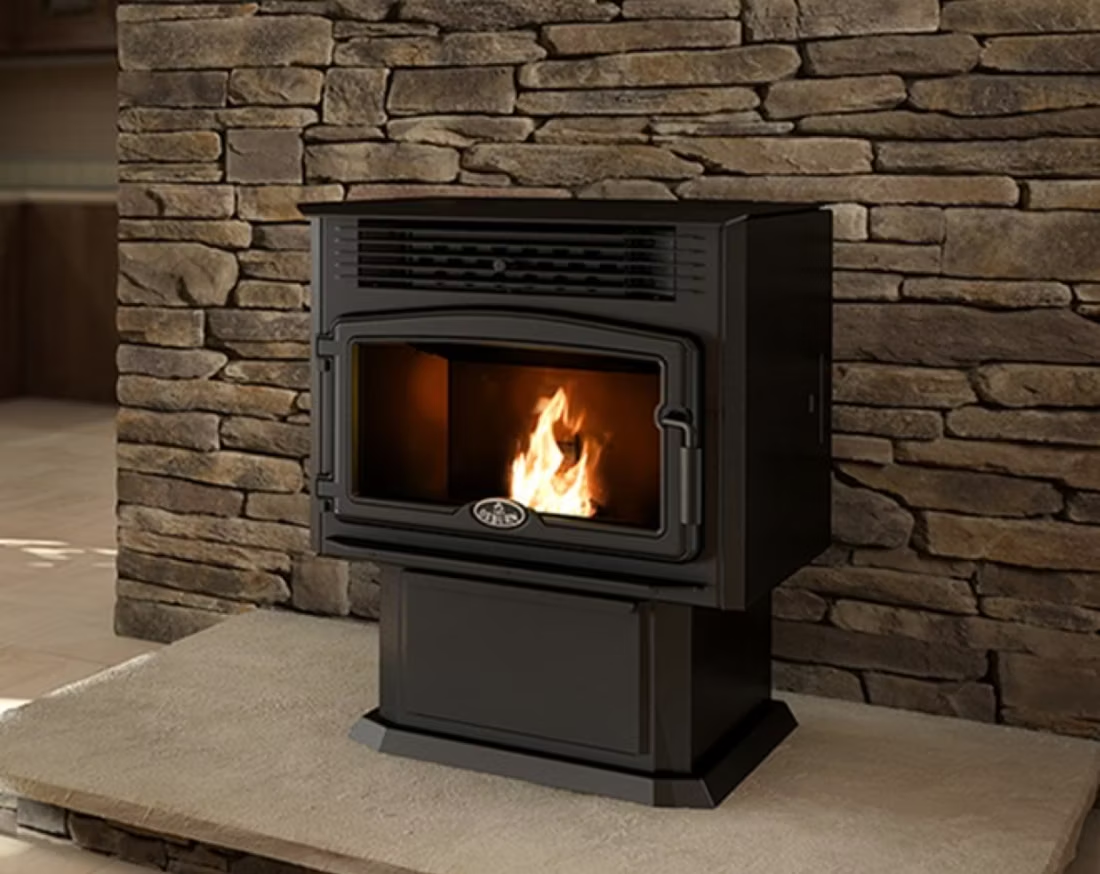
A pellet stove is a freestanding unit that sits on a hearth pad and vents through an existing wall or the roof—it can go almost anywhere with a code-compliant vent run. A pellet insert is built to slide into an existing masonry fireplace opening, using the existing chimney chase, fitted with a vent liner, to exhaust. For Marion County homes with an old wood-burning fireplace that rarely gets used, an insert is usually the simpler retrofit. Homes without an existing fireplace, or new construction, are better suited to a freestanding stove.
Do I need a permit to install a pellet stove in Marion County?
Yes. Marion County requires a building permit for a new pellet stove or insert installation, and if you're inside city limits, that permit typically runs through the City of Marion building department rather than the county office. Because pellet appliances also need a dedicated electrical circuit for the auger and blower motors, some installers pull an electrical permit as well. Most hearth dealers handle this paperwork as part of the install quote, so you're rarely filing anything yourself.
What's the best pellet stove for Marion County's climate?
For Marion County's cold, six-month heating season, look for a pellet stove with at least a 40-pound hopper and a burn time of 24-plus hours on a low setting—that matters when a January cold snap keeps temperatures in the teens for days at a stretch. Regional pellet supply is solid: Somerset Pellet Fuel and Lignetics both distribute into central Ohio, and Indeck Energy Services supplies bulk biomass pellets to the region as well, so hopper size isn't limited by fuel scarcity. A local dealer can match hopper capacity and BTU output to your square footage and insulation level.
How much maintenance does a pellet stove need?
Pellet stoves need more frequent attention than wood stoves, but it's lighter work: emptying the ash pan every few days during heavy use, cleaning the burn pot weekly, and a full professional service once a year to check the auger, blower motors, and exhaust venting. Marion County has no local air quality restrictions on pellet burning—pellet appliances burn clean enough that they're typically exempt from the curtailment rules some other regions impose on solid-fuel appliances—but regular maintenance still matters for safety and consistent output.
Where can I buy pellet fuel locally in Marion County?
Bagged hardwood pellets are available from regional suppliers including Lignetics and Somerset Pellet Fuel, both of which distribute into central Ohio retailers, plus bulk biomass pellets through Indeck Energy Services for larger-volume users. Pricing runs roughly in line with the rest of the Midwest—expect somewhere in the $230-$280 per ton range for premium hardwood pellets, sold by the ton (about fifty 40-pound bags) or by the pallet. Buying a season's supply in late summer, before demand picks up, is the usual way to avoid the price bump that hits every November.
Pellet stove vs. wood stove—which is right for me?
Wood offers a real flame, works without electricity, and pairs well with the oak, hickory, and cherry that's common in Marion County's hardwood stands and farm woodlots—useful if the power goes out during a winter storm. Pellet stoves trade that off for convenience: load the hopper, set the thermostat, and the auger and igniter handle the rest, with a cleaner burn and far less ash to manage. The catch is pellet stoves need electricity to run the auger, igniter, and blower, so they're not a stand-alone backup heat source unless paired with a battery backup or generator. For most Marion County homes prioritizing daily convenience over emergency self-sufficiency, pellet is the easier day-to-day choice.
How often does a pellet stove need cleaning?
A clean pellet stove is a happy pellet stove. Plan on cleaning the burn pot about once a week when you're burning regularly—ash and clinkers gum up the air holes just like a pellet barbecue. Most pellet stove problems trace back to skipped cleaning that nobody explained up front. Some designs make it easy with a trapdoor burn pot: pull a lever and the gunk drops into the ash pan.
Why is my open fireplace making my house colder?
Open fireplaces suck—literally. As the fire burns, it consumes air your furnace already paid to heat and pulls it out through the chimney, so the house is actually colder after the fire goes out than before you lit it. An insert fixes this: it seals the chimney, puts fixed glass across the front, and turns that hole in your house into a real heat source.
Can a fireplace actually lower my heating bill?
Yes—by creating a comfort zone. A furnace heats every square foot of the house just to warm the one room you're in; a gas fireplace on low burns roughly a sixth of the gas a typical furnace does. Set the furnace around 55–60 degrees as a baseline, then heat the rooms your family actually uses. Families who heat this way commonly save $20–$60 a month.
Should the dealer who sells my fireplace also install it?
Ideally, yes. A fireplace project involves vent pipe, gas line, electrical, and often tile or stone. Hire three or four separate trades and you own the liability and the game of telephone between them. One company selling and installing means one accountable party, start to finish—ask about factory training, on-time completion records, and what happens if an inspection fails.
Pellet Brands Stocked Around Marion County
Manufacturers will point you to the nearest stocking dealer.
Find your pellet stove in Marion County.
Tell us a bit about your home and we'll match you with a trusted local dealer and send over your free Project Guide & Parts List—the exact parts, vent kit, and recommended installer for your Marion County pellet project.
Find Your Fireplace →