
Heat Your Marion County Home the Right Way, Every Season.
Wood, gas, pellet, and electric fireplace resources for every town in Marion County—from the city of Marion out to Prospect, Waldo, LaRue, Caledonia, and Green Camp. Find the right fuel for your farmhouse or in-town home and connect with a trusted local hearth retailer.
Every Project Starts From One of These Five Situations
Steady Midwest winters call for steady heat in Marion County, Ohio.
Marion County sits in flat, fertile central Ohio farm country—no elevation swings, no wildfire smoke, no coastal moderation. Winters run long and consistently cold: Climate Zone 5A, with average winter lows around 18°F, a heating load in the same range as Madison, Wisconsin. Farmhouses on wooded lots around Prospect and Green Camp have burned oak, hickory, maple, and cherry from their own woodlots for generations—all dense, long-burning hardwoods well suited to overnight coaling in a modern EPA-certified stove or insert.
What you'll find on this hub: hearth retailers, service technicians, and fuel suppliers covering the whole county—from downtown Marion out along Route 4 to Waldo and Caledonia, and west toward LaRue and Morral. Pick your fuel below to get into the specifics: local dealers, typical installation costs, and recommended units for a Marion County home. Whether you're replacing an aging wood stove on a family farm or adding a gas insert in a Marion subdivision, this page is the starting point.
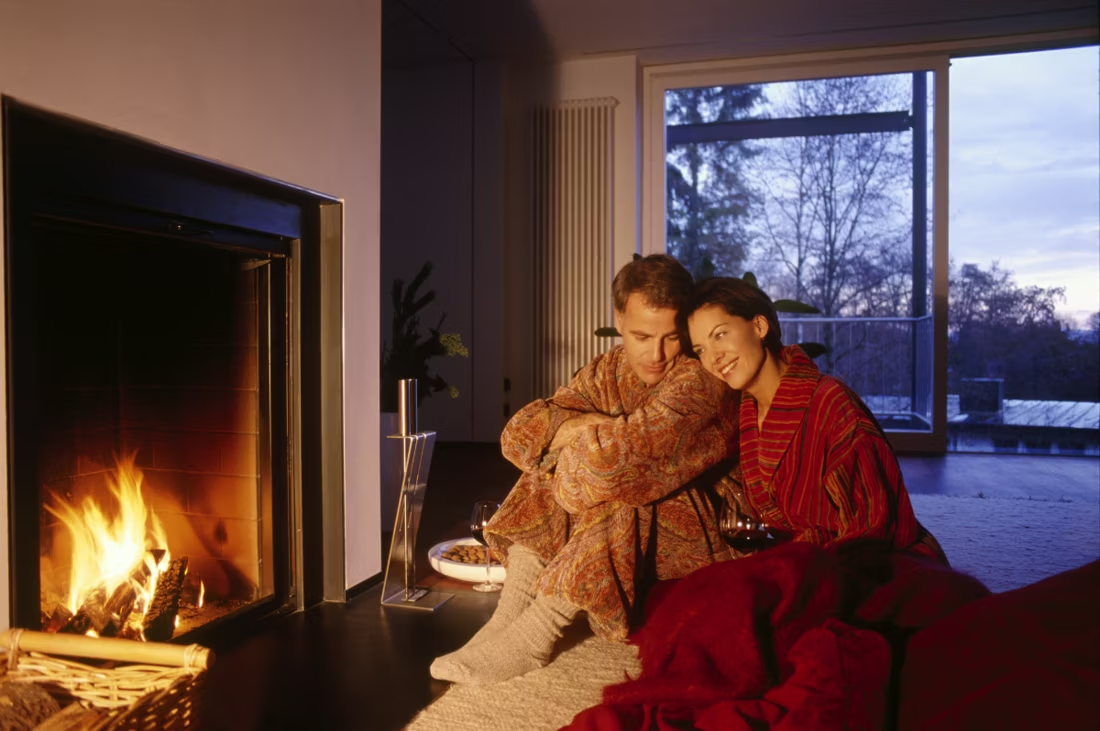
Four fuels. One honest answer for Marion County.
Three steps. No salesperson until you're ready.
Tell us about your project
Your zip code, your situation, and the fuel you're leaning toward—or let the answers point you to one.
See what's actually available
The brands dealers within 100 miles genuinely carry—real options, never a catalog mirage.
Get your dealer & Project Guide
A trusted local dealer, plus the free Project Guide & Parts List that names every component of the job.
Frequently Asked Questions
Which fuel works best for a home in Marion County?
All four fuel types are common here, so the right choice usually comes down to your home and habits rather than climate limitations. Wood stoves and inserts remain popular on the county's farm properties, where oak, hickory, maple, and cherry from a home woodlot keep fuel costs near zero—a well-loaded catalytic or hybrid stove can hold overnight heat through an 18°F night without trouble. Gas is the low-effort choice for homes already on natural gas service in and around the city of Marion—no wood handling, thermostat control, works during a power outage if it's a standing-pilot unit. Pellet stoves are a solid middle path for homes without easy wood storage—regional supply through brands like Lignetics and Somerset Pellet Fuel keeps them practical here. Electric fireplaces are widely used as supplemental heat and ambiance in bedrooms, dens, and finished basements, but they're not a primary heat source for a Marion County winter on their own.
Do I need a permit to install a fireplace in Marion County?
In most cases, yes. New wood stoves, wood inserts, gas fireplaces, gas inserts, and pellet stoves typically require a building permit, and any gas line work requires a licensed gas-fitter and a separate gas permit. Within city limits, permits are handled through the City of Marion; in the surrounding townships, permitting runs through the Marion County building department. Wood-burning appliances installed today need to meet current EPA emissions standards regardless of jurisdiction. A plug-in electric fireplace generally doesn't need a permit, but a hardwired built-in unit with a new circuit does. Most local hearth retailers pull the permit as part of the installation, so it's rarely something the homeowner has to manage directly.
Are there air quality restrictions on wood burning in Marion County?
No—Marion County has no air quality nonattainment designation and no winter burn advisories like the inversion-prone basins you find out West. That said, EPA 2020 NSPS emissions standards still apply to any newly installed wood stove or insert nationwide, so a new unit needs to be certified regardless of local air quality. If you're replacing an older pre-EPA stove on a farm property, a modern certified unit will burn noticeably cleaner and get more heat out of the same cord of oak or hickory.
Can one local hearth retailer handle all four fuel types?
Several dealers serving Marion County carry three or four fuel types under one roof, which makes cross-shopping easier if you're not locked into a fuel yet. A full-line hearth shop in Marion typically stocks working wood, gas, and pellet displays plus electric units, while some smaller shops in outlying towns lean toward one or two fuels—often wood and pellet, given the farm-country customer base. If you're comparing fuels side by side, ask a dealer directly which lines they carry and whether they can show you a running display before you commit.
How does hearth service work outside the city of Marion?
Marion County is compact—a little over 400 square miles—so most Marion-based technicians reach Prospect, Waldo, Caledonia, LaRue, and Green Camp without much added travel cost compared to a larger, sprawling county. A small trip fee is still common for the farthest townships, but it's usually modest. The bigger factor is timing: pre-season appointments in late summer and early fall book up fast once the weather turns, so scheduling your chimney sweep or gas inspection before October gives you far more flexibility than calling in December.
What's the typical cost range for fireplace installation across all fuel types in Marion County?
Costs vary by fuel and by how much venting or gas line work is involved. Wood stove or insert installation: roughly $3,800–$8,000 for a typical retrofit, higher if a full new chimney chase is needed. Gas fireplace, insert, or stove: roughly $4,000–$9,500 depending on whether an existing gas line can be tapped or new line run is required. Pellet stove or insert: roughly $4,000–$6,800 for a standard installation. Electric fireplace: $200–$2,500 for the unit itself, with $300–$1,000 in labor for anything beyond a simple plug-in wall unit. See the county + fuel pages above for cost detail tied to specific local dealers.
Can a fireplace actually lower my heating bill?
Yes—by creating a comfort zone. A furnace heats every square foot of the house just to warm the one room you're in; a gas fireplace on low burns roughly a sixth of the gas a typical furnace does. Set the furnace around 55–60 degrees as a baseline, then heat the rooms your family actually uses. Families who heat this way commonly save $20–$60 a month.
Wood, gas, pellet, or electric—how do I choose?
Match the fuel to your life, not the other way around. Wood: lowest fuel cost and total power-outage independence, but you're hauling and stacking. Gas: press a button, set a thermostat, no maintenance to speak of. Pellet: wood economics with automatic feeding, in exchange for weekly cleaning and a need for electricity. Electric: plugs in anywhere with honest supplemental heat. Nobody regrets the fuel that fits how they actually live.
Can I install a fireplace myself?
If you're putting a fire in your house on purpose, it's best to work with an expert. Unless you're genuinely experienced in framing, gas line, vent pipe, and the national code on clearances to combustibles, have a professional do it—and ideally the same company that sells you the fireplace, so warranty, service, and liability all live under one roof.
Should the dealer who sells my fireplace also install it?
Ideally, yes. A fireplace project involves vent pipe, gas line, electrical, and often tile or stone. Hire three or four separate trades and you own the liability and the game of telephone between them. One company selling and installing means one accountable party, start to finish—ask about factory training, on-time completion records, and what happens if an inspection fails.
Stove and Fireplace Dealers in Marion County
Listings include WhyFire partner dealers, dealers we have verified as authorized for the brands we recommend, and established local businesses that carry hearth products. Every listing shows which one it is. The ones marked Preferred run on WhyFire's software, so they can show you real pricing and book your appointment right here. No manufacturer pays for placement. How we verify dealers →
Carmar Gardens
Henak Masonry, Ltd
The Wood Stove Shed
Get Matched with a Marion County Hearth Dealer.
Tell us about your home and fuel preference, and we'll match you with a trusted local dealer and send you a free Project Guide & Parts List—the exact parts, vent kit, and recommended installer for your Marion County project.
Find Your Fireplace →