
Steady, low-maintenance heat for Guernsey County winters.
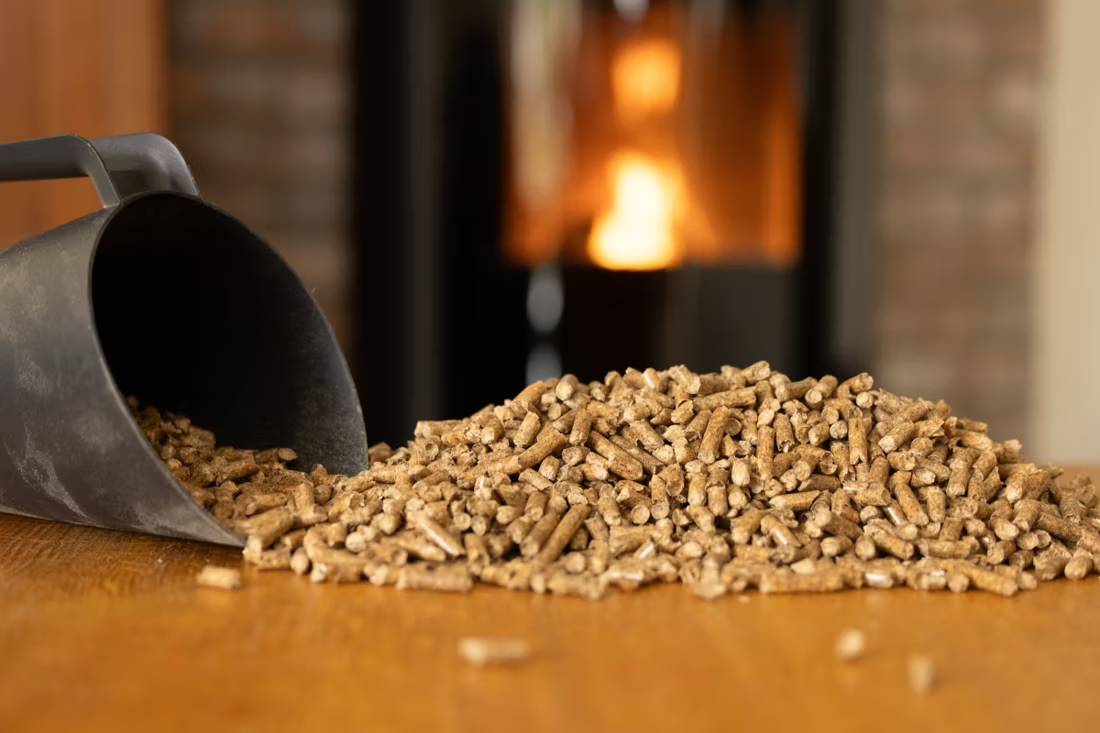
From Cambridge to Byesville and the rural townships between, Guernsey County's roughly 16,000 residents heat through a real Appalachian-foothills winter. A pellet stove delivers wood-fire warmth with a thermostat and an auger doing the work—find the right unit and connect with a trusted local dealer.
Every Project Starts From One of These Five Situations
Convenience meets consistent heat in the Appalachian foothills.
Guernsey County sits in the Appalachian foothills of eastern Ohio, centered on Cambridge and spread across small towns like Byesville, Old Washington, Senecaville, and Quaker City. At climate zone 5A with a genuine heating season running from October into April and winter lows averaging 21°F, the county has real winter cold to contend with—cold enough to matter, but nowhere near the depths of harsher cold-climate towns like Duluth, MN or International Falls, MN. Oak, hickory, maple, and cherry are the dominant hardwoods locally, and plenty of Guernsey County households already burn wood or have a wood lot on the property. Pellet stoves appeal to that same audience for a different reason: they deliver comparable radiant heat and the look of a real fire, but without splitting, stacking, or hauling cordwood every season.
Regional hardwood pellet supply is solid in this part of Ohio, with brands like Lignetics, Somerset Pellet Fuel, and Indeck Energy Services serving the broader Appalachian corridor—Somerset Pellet Fuel in particular draws on the same hardwood forests (oak, hickory, maple) that supply Guernsey County's traditional firewood market. Guernsey County has no listed air quality nonattainment issues, which means no winter burn curtailment days to plan around—a pellet stove here runs on your schedule, not the DEQ's. For homeowners who want automated, thermostatically controlled heat that still burns real wood fuel—rather than natural gas or propane—pellet is often the cleanest bridge between convenience and tradition in this county.
Three steps. No salesperson until you're ready.
Tell us about your project
Your zip code, your situation, and the fuel you're leaning toward—or let the answers point you to one.
See what's actually available
The brands dealers within 100 miles genuinely carry—real options, never a catalog mirage.
Get your dealer & Project Guide
A trusted local dealer, plus the free Project Guide & Parts List that names every component of the job.
Frequently Asked Questions
How much does a pellet stove installation cost in Guernsey County?
Costs vary by installer and by whether you're placing a freestanding stove or converting an existing masonry fireplace into a pellet insert, but installations in this part of Ohio typically run in the $2,500 to $6,000 range. A freestanding pellet stove venting through an existing wall or chimney chase tends to land on the lower end; a pellet insert into a full masonry fireplace, with a liner run up the flue, usually costs more. Because pellet stoves vent through a smaller-diameter pipe than wood stoves and don't require the same chimney clearances, installation labor is often less involved than a comparable wood stove project—ask any local dealer for a firm in-home quote.
What size pellet stove do I need for a Guernsey County home?
Sizing depends on square footage, insulation, and whether the stove is your primary heat source or a supplement to an existing furnace. With winter lows averaging 21°F and a solid multi-month heating season, Guernsey County sits in a moderate-cold climate—not as demanding as northern Minnesota or Maine, but enough that undersized units struggle on the coldest nights in January and February. As a rough guide: a small pellet stove (under 1,000 sq ft) suits a single room or a smaller Byesville-style ranch house, while a medium-to-large unit (1,500–2,500 sq ft) is more appropriate for the older farmhouses common throughout the county's rural townships, especially those with less insulation. A local dealer will size based on your actual home rather than square footage alone.
Where can I find a certified pellet stove dealer near me?
Look for dealers whose installers carry NFI (National Fireplace Institute) certification, which covers proper venting, clearances, and code compliance for pellet appliances specifically. In a county the size of Guernsey—around 16,000 people spread across Cambridge and the surrounding rural townships—dealer coverage tends to be thinner than in a metro area, so expect installers to travel to reach homes in places like Old Washington or Senecaville. Pellet venting is simpler than wood-stove chimney work, but it's still worth having a certified installer handle the through-wall or through-roof vent kit rather than a general handyman.
What's the difference between a pellet stove and a pellet insert?
A pellet stove is a freestanding appliance that sits on the floor and vents through a wall or existing chimney chase—it can go almost anywhere with a nearby power outlet, since the auger and blower both run on electricity. A pellet insert is built to slide into an existing masonry fireplace opening, converting a Guernsey County home's old open hearth into a sealed, high-efficiency heat source that uses the existing chimney as its vent path. If you already have a working fireplace, an insert is usually the more cost-effective route since it reuses infrastructure you already have; if you don't, a freestanding stove gives you more flexibility on placement.
Do I need a permit to install a pellet stove in Guernsey County?
Most jurisdictions in Ohio require a building permit for new solid-fuel appliance installations, including pellet stoves and inserts, and Guernsey County is no exception—check with the local building department before work begins. Most established hearth dealers handle the permit paperwork as part of the installation, so it's rarely something homeowners have to manage on their own. Because Guernsey County has no listed air quality nonattainment status, there's no winter curtailment schedule to work around once the stove is installed and inspected.
What's the best pellet stove for Guernsey County's climate?
For a moderate-cold climate like Guernsey County's—winter lows averaging 21°F, a real heating season without the extremes of the Upper Midwest—a mid-size pellet stove with a hopper that holds 40 to 60 pounds of pellets is usually enough to run overnight without a refill. Look for a unit rated for the actual square footage you're heating rather than the whole house, since most Guernsey County pellet stoves supplement an existing furnace rather than replace it outright. Fuel quality matters as much as the stove: densified hardwood pellets from regional suppliers like Lignetics or Somerset Pellet Fuel—sourced from the same oak, hickory, and maple hardwoods common to this part of Ohio—tend to burn hotter and leave less ash than softwood blends.
How often does a pellet stove need to be cleaned and serviced?
Pellet stoves need more frequent attention than a gas fireplace but less than a wood-burning chimney. Plan on emptying the ash pan every few days during regular winter use, a deeper cleaning of the burn pot and heat exchanger tubes every one to two weeks, and a full annual service—including exhaust vent and hopper inspection—before each heating season starts. Skipping the annual service is the most common cause of feed jams and reduced heat output over a Guernsey County winter, so it's worth scheduling with a local dealer or service tech each fall.
Where can I buy wood pellets in Guernsey County?
Regional hardwood pellet brands available in this part of Ohio and the surrounding Appalachian corridor include Lignetics, Somerset Pellet Fuel, and Indeck Energy Services, typically sold in 40-pound bags through hearth dealers, farm supply stores, and hardware retailers. Pricing runs by the ton (roughly fifty 40-pound bags), and premium hardwood pellets sourced from oak and maple sawdust generally cost more than softwood blends but burn cleaner with less ash. Stocking up early in the fall is worth it in Guernsey County—pellet supply can tighten locally once the first hard cold snap hits.
Pellet stove vs. wood stove—which is right for my Guernsey County home?
Wood stoves burn cordwood—abundant in a county surrounded by oak, hickory, maple, and cherry forests—cost nothing to fuel if you cut your own, and keep working during a power outage since they need no electricity. Pellet stoves trade that self-sufficiency for convenience: load the hopper, set the thermostat, and let the auger and blower do the rest, with far less ash and a cleaner burn overall. The catch is that pellet stoves need electricity to run, so they're not a reliable backup during an outage unless paired with a battery backup or generator. For Guernsey County homeowners who already manage a wood lot or value being off-grid during winter storms, wood often makes more sense. For those who want wood heat's warmth without the labor of splitting and stacking, pellet is usually the better fit—both options are available through local dealers.
How often does a pellet stove need cleaning?
A clean pellet stove is a happy pellet stove. Plan on cleaning the burn pot about once a week when you're burning regularly—ash and clinkers gum up the air holes just like a pellet barbecue. Most pellet stove problems trace back to skipped cleaning that nobody explained up front. Some designs make it easy with a trapdoor burn pot: pull a lever and the gunk drops into the ash pan.
Why is a fireplace insert so efficient?
An insert does two things: it seals the chimney completely, so you stop losing air you already paid to heat, and it radiates warmth into the room through the firebox and glass. Most add a heat-exchange fan that pulls cool room air underneath, wraps it around the hot firebox, and pushes it back out warm. Your home is more efficient before you've even lit the first fire.
How much should I budget for a fireplace?
For an average home—covering the fireplace, the vent pipe, and basic installation—a budget between $3,900 and $5,500 gives you a lot of options across wood, gas, and pellet. By the time you add finish work, gas line, and electrical, the average complete installation lands between $5,000 and $12,000 all-in. In a remodel or new build, a good rule is to put about 2.5% of the total project cost toward the fireplace.
Can a fireplace actually lower my heating bill?
Yes—by creating a comfort zone. A furnace heats every square foot of the house just to warm the one room you're in; a gas fireplace on low burns roughly a sixth of the gas a typical furnace does. Set the furnace around 55–60 degrees as a baseline, then heat the rooms your family actually uses. Families who heat this way commonly save $20–$60 a month.
Pellet Brands Stocked Around Guernsey County
Manufacturers will point you to the nearest stocking dealer.
Find your pellet stove in Guernsey County.
Tell us a bit about your home and we'll match you with the right pellet stove or insert, plus a free Project Guide & Parts List—the exact parts, including the vent kit, and a trusted local Guernsey County dealer to install it.'
Find Your Fireplace →