
Zero-clearance heat for Fairborn's cold Ohio winters.
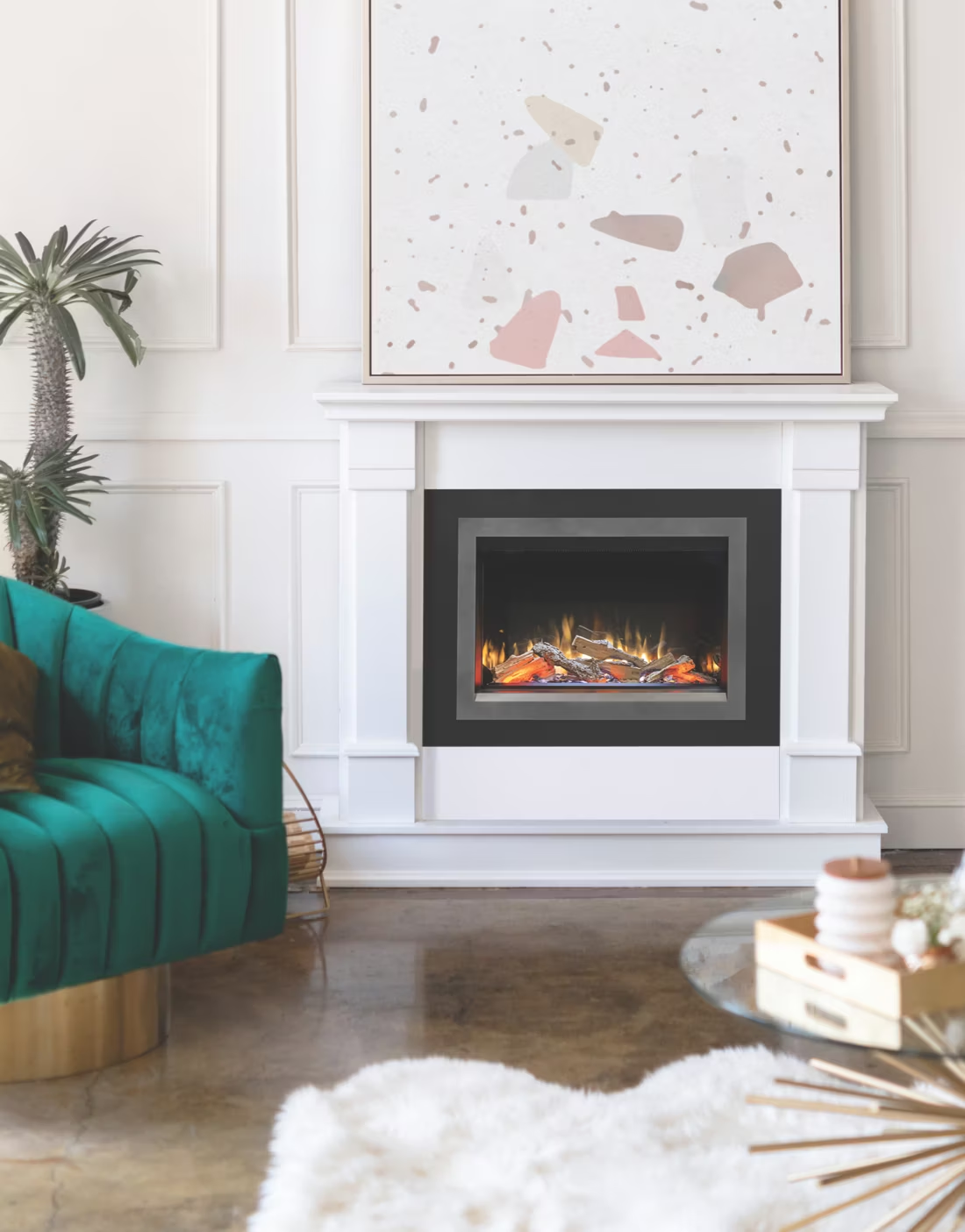
No chimney, no gas line, no venting—just plug in and warm the room. Find the right electric fireplace or insert for your Fairborn home and connect with a trusted local dealer.
Every Project Starts From One of These Five Situations
The easiest way to add heat where you actually live.
Fairborn sits in climate zone 5A with roughly 5,595 heating degree days a year and winter lows that average around 17°F—cold enough that a supplemental heat source in a home office, finished basement, or bonus room off the main HVAC zone earns its keep most winters. Between Wright-Patterson AFB housing, the rental stock near Wright State University, and the ranch-style and split-level homes that make up much of the city, a lot of Fairborn households live in spaces where running new gas line or building a masonry chimney just isn't realistic—and often isn't necessary.
Dayton Power & Light serves electric accounts throughout Fairborn at a residential rate around 8.5 cents per kWh, which is meaningfully below what many parts of the country pay for electricity. That matters for electric fireplaces specifically: a typical 1,500-watt unit running on its heater setting costs somewhere around 13 cents an hour to operate here, which makes zone heating a spare bedroom or den with an electric insert a low-cost way to take pressure off the furnace without any venting, gas plumbing, or wood handling at all.
Three steps. No salesperson until you're ready.
Tell us about your project
Your zip code, your situation, and the fuel you're leaning toward—or let the answers point you to one.
See what's actually available
The brands dealers within 100 miles genuinely carry—real options, never a catalog mirage.
Get your dealer & Project Guide
A trusted local dealer, plus the free Project Guide & Parts List that names every component of the job.
Frequently Asked Questions
How much does an electric fireplace installation cost in Fairborn?
Plug-in electric inserts and freestanding stoves—the kind that slide into an existing firebox or stand against a wall on their own—typically run $300 to $1,500 installed, since most just need a standard 120V outlet and no electrician. Built-in wall units or full mantel packages that require a dedicated 20-amp circuit, in-wall wiring, and custom surround work usually land between $1,500 and $4,000 depending on the size of the unit and how much carpentry is involved. A local dealer can tell you which category your project falls into once they see the room and your existing outlet situation.
What's the difference between an electric insert, a wall-mounted unit, and a mantel package?
An electric insert is built to slide into an existing fireplace opening—a common upgrade for Fairborn homes with an old, rarely-used masonry firebox that never gets lit. A wall-mounted unit hangs flat against drywall like a large TV and works well in a room with no existing fireplace. A mantel package pairs an insert or built-in unit with a surrounding cabinet or mantel shelf, giving you a finished look similar to a traditional fireplace without any venting requirements. Which one makes sense mostly comes down to whether you're working with an existing opening or starting from a blank wall.
Do I need a permit to install an electric fireplace in Fairborn?
Most plug-in electric fireplaces need no permit at all since they run off a standard household outlet. If you're having an electrician add a dedicated 20-amp circuit for a built-in unit or run new wiring behind a mantel, that electrical work typically does require a permit through the City of Fairborn's building and electrical inspection process. A licensed electrician or your hearth dealer will usually pull that permit as part of the job, so it's rarely something you have to manage yourself.
How much does it actually cost to run an electric fireplace in Fairborn?
Most electric fireplace heaters draw around 1,500 watts on their highest heat setting. At Dayton Power & Light's residential rate of roughly 8.5 cents per kWh, that works out to about 13 cents an hour to run at full heat—noticeably cheaper than the same unit would cost in a lot of other utility territories where rates run closer to 15 or 16 cents. On flame-only mode with the heater off, an electric fireplace draws only a few watts, so leaving it on for ambiance costs next to nothing.
Can an electric fireplace actually heat a room, or is it just for looks?
A quality electric insert or wall unit with a built-in 4,600–5,000 BTU heater and thermostat can genuinely take the edge off a mid-sized room—enough to be useful supplemental heat during Fairborn's colder stretches when temperatures sit in the teens overnight. It won't replace a furnace for a whole house, but for a bonus room, finished basement, or home office that runs cold, it's a real heat source, not just a light show. Ask a local dealer to match BTU output to your room's square footage rather than buying on looks alone.
Electric vs. gas—which fireplace makes more sense for my Fairborn home?
Gas fireplaces put out more heat and can double as backup warmth during a power outage if the unit has battery-backup ignition, but they require a gas line and venting work, which adds cost and complexity—especially in homes where gas service isn't already run to the room you want to heat. Electric fireplaces install almost anywhere with just an outlet, cost far less upfront, and run cheaply on Dayton Power & Light's rate, but they go dark the moment the power does. For a rental near Wright State or a room where running gas line isn't practical, electric is usually the simpler answer. For a primary living space where you want real heat output and outage resilience, gas is worth the extra investment.
Why don't more people in Fairborn use wood stoves instead?
Wood heat is uncommon in Fairborn. The city's tighter suburban and near-campus lots, the amount of housing tied to Wright-Patterson AFB, and the lack of nearby public-land cutting permits mean most residents don't have easy access to the firewood supply or forest permits that support wood heat in more rural parts of Ohio. Electric fireplaces fill that gap well—they deliver real ambiance and supplemental warmth without needing a wood supply, chimney, or ash cleanup, which is a big part of why they're the more practical fit here.
Will my electric fireplace still work if the power goes out?
No—an electric fireplace runs entirely on household wiring, so it shuts off the moment Dayton Power & Light service is interrupted, which does happen occasionally around Greene County during ice storms and summer thunderstorms. If outage backup matters to you, pair an electric unit for everyday ambiance and zone heat with a battery-backup gas insert or a small propane heater elsewhere in the house for actual emergency warmth. A local dealer can help you plan for both if that's a priority.
What's the best electric fireplace option for a Fairborn rental or apartment?
For renters near Wright State or on-base housing where you can't modify walls or wiring, a freestanding plug-in electric stove is the easiest option—it sits on the floor, plugs into any outlet, and moves with you when the lease ends. Homeowners doing a more permanent renovation have more room to consider a wall-mounted unit or a full insert-and-mantel package tied into a dedicated circuit. Either way, a local dealer can walk through what's realistic for your specific unit before you buy anything.
Do electric fireplaces actually produce heat?
Yes—most put out around 4,800–5,000 BTUs from a standard outlet, which comfortably warms a bedroom, office, or den as a comfort-zone heater. What they won't do is carry a whole house the way wood, gas, or pellet can. Think of electric as ambiance-first with honest supplemental heat: flames on with no heat in July, flames plus warmth in January.
Can I put a TV above my fireplace?
Yes—with an asterisk. Fireplaces are hot and TVs don't like heat. Either put a mantel between them to deflect rising warmth, or choose a fireplace with heat-management technology that creates a cool zone on the wall above—the wall stays around 125 degrees, barely warm, while the room still gets full heat. If you like clean lines and don't want a mantel, heat management is the answer.
Does a fireplace add value to my home?
On average, a fireplace adds back to the home about the same amount you spent installing it. Add the monthly savings from heating the rooms you actually use instead of the whole house—often hundreds of dollars a year—and the value case is strong before you even count what a fire does for how your family uses the room.
Can I install a fireplace myself?
If you're putting a fire in your house on purpose, it's best to work with an expert. Unless you're genuinely experienced in framing, gas line, vent pipe, and the national code on clearances to combustibles, have a professional do it—and ideally the same company that sells you the fireplace, so warranty, service, and liability all live under one roof.
Electric Service in Fairborn
An electric fireplace's heater draws about 1,500 watts—pennies per hour at local rates.
Dayton Power & Light Co
Find your electric fireplace in Fairborn.
Tell us a bit about your home and we'll put together a free Project Guide & Parts List—the right electric fireplace or insert for your space, plus a trusted local Fairborn dealer to install it.
Find Your Fireplace →