
Pellet Heat in Delaware County: A Niche Fit, Not the Default.
Most homes from Delaware to Powell to Sunbury heat with natural gas. Pellet stoves still have a place—on rural lots without a gas line, in older farmhouses, or as supplemental zone heat—and we'll help you figure out if yours is one of them.
Every Project Starts From One of These Five Situations
In Delaware County, gas heat is the default—not pellets.
Delaware County sits just north of Columbus, and its housing stock reflects three decades of suburban and exurban growth—subdivisions around Delaware, Powell, and Sunbury built almost entirely on natural gas forced-air systems. With a winter heating season on the order of Delaware's typical stretch and a winter low averaging 21°F, the climate here (zone 5A) calls for real heat, but it's milder than harder cold-climate markets like Madison, Wisconsin—so most builders and homeowners never had a reason to look past the furnace already piped into the house. Oak, hickory, maple, and cherry are all common locally and make excellent cordwood, but that's a wood-burning fact, not a pellet one—pellet appliances burn manufactured fuel, not logs off your property.
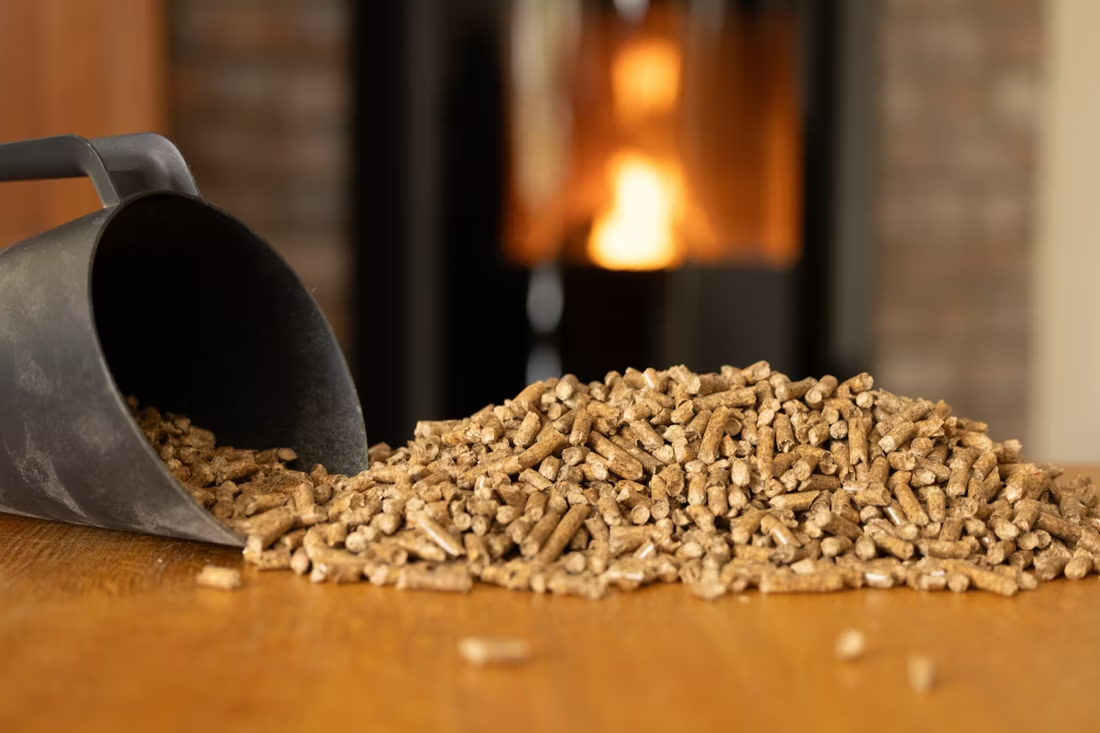
That's why pellet stoves show up here in small numbers rather than as a mainstream category. The homeowners who do install one are usually on the county's rural edges—out past Ashley or Ostrander, where a gas main hasn't been extended—or they want a supplemental heat source for a bonus room or converted farmhouse without opening a masonry flue. Ohio-based pellet suppliers like Indeck Energy Services, Lignetics, and Somerset Pellet Fuel keep bagged fuel reasonably accessible through farm and hardware stores even where installed stoves are scarce, so fuel supply isn't the obstacle—finding a dealer who actually stocks and installs the appliance is. That's the gap we're built to close.
Three steps. No salesperson until you're ready.
Tell us about your project
Your zip code, your situation, and the fuel you're leaning toward—or let the answers point you to one.
See what's actually available
The brands dealers within 100 miles genuinely carry—real options, never a catalog mirage.
Get your dealer & Project Guide
A trusted local dealer, plus the free Project Guide & Parts List that names every component of the job.
Frequently Asked Questions
How much does a pellet stove installation cost in Delaware County?
Because demand is low, most Delaware County hearth dealers don't publish local pellet-specific pricing the way they do for gas. As a general guide, a freestanding pellet stove with direct venting typically runs $3,500 to $6,500 installed, and a pellet insert into an existing masonry fireplace often lands in a similar range depending on liner and venting work. Homes without an existing gas connection sometimes choose pellet specifically to avoid the cost of extending a gas line from the street, which can offset some of the install cost difference. A local dealer will give you a firm number after an in-home visit—that's part of what we help arrange.
Why are there so few pellet stove dealers in Delaware County?
Simple economics: the subdivisions built around Delaware, Powell, and Sunbury over the last 25 years were designed around natural gas furnaces from the start, so most local hearth retailers stock gas fireplaces and inserts as their bread and butter, with pellet appliances kept as a smaller side offering—if they're carried at all. That doesn't mean pellet is a bad choice for your specific situation, it just means the search takes a bit more legwork. We track which dealers in the Columbus-area market actually stock and install pellet equipment so you're not calling around county-wide on your own.
Does a pellet stove work as backup heat during a power outage?
Not on its own. Pellet stoves rely on an electric auger to feed fuel and a blower to distribute heat, so a standard unit shuts down the moment the power does—the same limitation that makes them a poor fit for true storm backup. If outage protection is the main reason you're considering solid fuel, a wood-burning stove or a battery-backed generator setup paired with your pellet unit are the more reliable answers. If your goal is clean, low-maintenance supplemental heat during normal weather, pellet still performs well—you just shouldn't count on it when the grid goes down.
Are there any burn restrictions on pellet stoves in Delaware County?
No—Delaware County has no listed air quality non-attainment issues or winter inversion concerns, so there are no curtailment periods or burn bans affecting pellet or wood-burning appliances here the way there are in some western states. Pellet stoves burn cleanly enough that they're rarely subject to restrictions even in areas that do regulate wood smoke, so this isn't a factor working against pellet locally—it's really just a matter of finding an installer.
Where can I buy wood pellets near me in Delaware County?
Bagged pellets from regional producers like Lignetics and Somerset Pellet Fuel, along with supply from Indeck Energy Services, are generally available through farm supply and hardware retailers serving central Ohio, even in areas where installed pellet stoves are uncommon. Pricing in this part of the Midwest typically runs in the low-to-mid $200s per ton, though it's worth calling ahead in late fall—smaller retailers sometimes sell through their stock before the coldest months hit if they don't restock aggressively.
Pellet stove vs. gas insert—which makes more sense in Delaware County?
For the vast majority of Delaware County homes—anywhere inside the natural gas service areas around Delaware, Powell, or Sunbury—a gas insert is the more practical choice: instant on-off operation, no fuel storage, and a well-established dealer network used to installing them. A pellet stove starts to make more sense specifically when there's no gas line nearby, when you want a real firebox flame with visible combustion (something vent-free or direct-vent gas can approximate but not quite replicate), or when you're supplementing an all-electric or propane home and want a lower-cost heat source than running new gas service.
Pellet stove vs. wood stove—is either one common here?
Both are genuinely uncommon in Delaware County for the same underlying reason: natural gas access is widespread and most homeowners default to it. Between the two, wood has a slight edge for the rural households that do choose solid fuel, since local oak, hickory, and cherry are easy to source and a wood stove keeps working without electricity. Pellet appliances win on convenience—load the hopper, set the thermostat, less ash—but need power to run. If you're set on solid fuel heat out past the edge of the gas service area, the choice usually comes down to whether you value off-grid reliability (wood) or day-to-day ease (pellet).
Do I need a permit to install a pellet stove in Delaware County?
Yes, in most cases—a new solid-fuel or pellet-burning appliance typically requires a building permit, whether you're inside Delaware, Powell, or Sunbury city limits (through the applicable city building department) or in unincorporated Delaware County (through the county building department). The stove also needs to meet current EPA emissions certification. Because pellet installs are infrequent here, it's worth confirming with whichever dealer you work with that they're pulling the permit as part of the job—some smaller installers assume homeowners will handle it themselves, which is easy to miss.
If pellet isn't a strong fit, what should I actually consider instead?
For most Delaware County homes with access to natural gas, a direct-vent gas insert or fireplace will outperform pellet on convenience and installer availability. For homes that want supplemental zone heat without any venting work at all, an electric fireplace or electric insert is a low-cost, low-hassle option that works anywhere there's an outlet—genuinely standard here and worth a look before committing to pellet equipment and fuel storage. We'll walk through your specific situation—gas access, budget, and why you're drawn to pellet in the first place—before pointing you toward a dealer.
Why is my open fireplace making my house colder?
Open fireplaces suck—literally. As the fire burns, it consumes air your furnace already paid to heat and pulls it out through the chimney, so the house is actually colder after the fire goes out than before you lit it. An insert fixes this: it seals the chimney, puts fixed glass across the front, and turns that hole in your house into a real heat source.
Why is a fireplace insert so efficient?
An insert does two things: it seals the chimney completely, so you stop losing air you already paid to heat, and it radiates warmth into the room through the firebox and glass. Most add a heat-exchange fan that pulls cool room air underneath, wraps it around the hot firebox, and pushes it back out warm. Your home is more efficient before you've even lit the first fire.
Should the dealer who sells my fireplace also install it?
Ideally, yes. A fireplace project involves vent pipe, gas line, electrical, and often tile or stone. Hire three or four separate trades and you own the liability and the game of telephone between them. One company selling and installing means one accountable party, start to finish—ask about factory training, on-time completion records, and what happens if an inspection fails.
Does a fireplace add value to my home?
On average, a fireplace adds back to the home about the same amount you spent installing it. Add the monthly savings from heating the rooms you actually use instead of the whole house—often hundreds of dollars a year—and the value case is strong before you even count what a fire does for how your family uses the room.
Stove and Fireplace Dealers in Delaware County
Pellet Brands Stocked Around Delaware County
Manufacturers will point you to the nearest stocking dealer.
Find your pellet stove match in Delaware County.
Tell us about your home and whether you have gas access, and we'll be straight with you about whether pellet makes sense—then match you with a trusted local dealer and send over a free Project Guide & Parts List with the exact parts, including the vent kit, for your project.
Find Your Fireplace →