
Find the right fireplace for your Delaware County home.
Fireplace resources for every city and growing subdivision in Delaware County—from the county seat of Delaware to Powell and Sunbury. Wood and pellet appliances are uncommon here; find the fuel that actually fits your home and connect with a trusted local dealer.
Every Project Starts From One of These Five Situations
Gas-forward heating for a fast-growing Central Ohio county.
Delaware County sits just north of Columbus in climate zone 5A, with roughly 5,546 heating degree days and average winter lows around 21°F—cold enough for a real heating season, though nowhere near the extremes of Duluth or International Falls. The county has plenty of oak, hickory, maple, and cherry in its wooded corridors along the Olentangy River, but this is one of the fastest-growing counties in Ohio, built out largely in the last two decades with subdivisions already wired for natural gas. As a result, wood stoves and pellet appliances are genuinely rare here—most homeowners heat supplementally with a gas fireplace or insert, with electric units filling in for bedrooms, basements, and finished spaces where running new gas line isn't practical.
What you'll find on this hub: hearth retailers, service technicians, and fuel suppliers serving every community in the county—from Delaware and Powell down to Sunbury and Ostrander. Pick your fuel below to drill into specifics—local dealers, installation costs, recommended units, and the resources that match your project. If you're weighing gas against electric for a new-construction home or a remodel, this is the starting point.
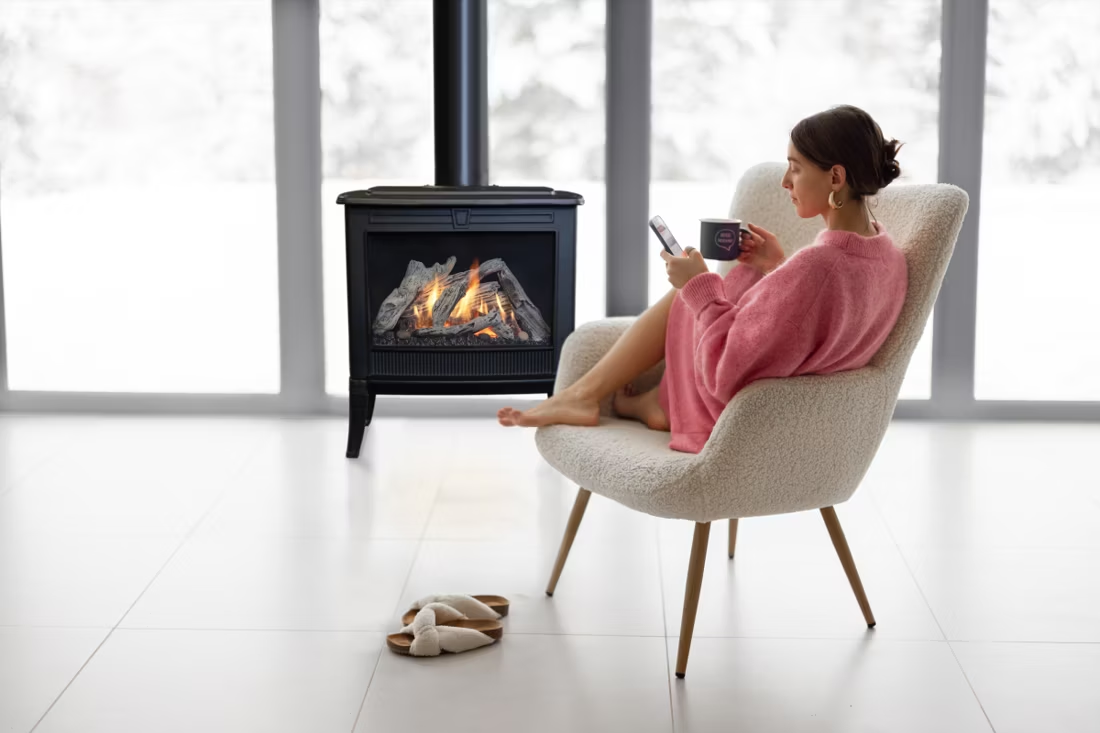
Four fuels. One honest answer for Delaware County.
Three steps. No salesperson until you're ready.
Tell us about your project
Your zip code, your situation, and the fuel you're leaning toward—or let the answers point you to one.
See what's actually available
The brands dealers within 100 miles genuinely carry—real options, never a catalog mirage.
Get your dealer & Project Guide
A trusted local dealer, plus the free Project Guide & Parts List that names every component of the job.
Frequently Asked Questions
Which fuel works best in Delaware County?
For most homes here, it's gas or electric—not wood or pellet. Delaware County has real hardwood forest (oak, hickory, maple, cherry along the Olentangy corridor), but the housing stock is overwhelmingly newer construction built with natural gas service already in place, and there's little cultural tradition of wood heat the way there is in more rural or mountain counties. Gas fireplaces and inserts are the primary choice for supplemental heat and ambiance—clean, thermostat-controlled, and simple to vent in a modern build. Electric fireplaces are the go-to for basements, bedrooms, and rooms where running new gas line isn't worth the cost. If you're set on a wood-burning unit, it's not impossible, but expect to be one of a small minority and to work with a dealer who special-orders rather than stocks that category.
Do I need a permit to install a fireplace in Delaware County?
Generally yes for gas, generally no for electric. New gas fireplace, insert, or stove installations typically require a building permit plus a separate gas line permit pulled by a licensed gas fitter—this covers both the appliance and the fuel line work. Electric fireplaces are usually permit-free for plug-in units; built-in electric fireplaces that require hardwiring or a new circuit may need an electrical permit. Permits in Delaware County are handled through the relevant city or township building department depending on where the home sits—your local hearth retailer can typically manage this as part of installation, so you're not filing paperwork yourself.
Are there air quality restrictions on gas or wood burning in Delaware County?
No—Delaware County doesn't carry the kind of air quality nonattainment designation or winter burn advisories you'll see in basin or mountain-valley counties out west. There's no formal burn-ban program here. That said, the low demand for wood burning isn't a regulatory story—it's a housing-stock and convenience story. Gas has simply become the default supplemental fuel in a county built out mostly in the gas era, and that pattern shows no sign of reversing.
Can one local retailer handle both gas and electric fireplaces?
Yes, and most do. Because gas and electric cover the overwhelming majority of local demand, Delaware County hearth retailers typically stock and install both fuel types under one roof, which makes cross-shopping straightforward—you can see working gas displays and electric units side by side and talk through the trade-offs for your specific room. Dealers who also carry wood or pellet units tend to treat those as special-order items rather than showroom staples, so ask directly if that's what you're after.
What about the wood-burning masonry fireplaces already in older Delaware County homes?
There are still plenty of them, especially in homes built before the county's big growth wave. If you've got an existing masonry wood fireplace, you don't need to rip it out—regular chimney sweeping and inspection keep it safe to use occasionally, and a certified wood insert can improve its efficiency if you want more real heat out of it. What's genuinely rare in Delaware County is someone installing a brand-new wood-burning fireplace or freestanding stove in new construction—that's where the gas and electric preference really shows up.
What's the typical cost range for gas and electric fireplace installation in Delaware County?
Gas fireplace, insert, or stove: roughly $4,500–$11,000 depending on gas line work, venting type, and whether it's new construction or a retrofit—conversions on the lower end where gas service already runs to the room. Electric fireplace: $200–$3,000 for the unit itself, plus $400–$1,200 in labor for anything beyond a simple plug-in install, which covers most wall-mount, insert, and built-in projects. Wood or pellet installs, where a dealer will even take the job, tend to run higher due to special-order equipment and venting—get a specific quote if that's the direction you want to go.
How much should I budget for a fireplace?
For an average home—covering the fireplace, the vent pipe, and basic installation—a budget between $3,900 and $5,500 gives you a lot of options across wood, gas, and pellet. By the time you add finish work, gas line, and electrical, the average complete installation lands between $5,000 and $12,000 all-in. In a remodel or new build, a good rule is to put about 2.5% of the total project cost toward the fireplace.
Wood, gas, pellet, or electric—how do I choose?
Match the fuel to your life, not the other way around. Wood: lowest fuel cost and total power-outage independence, but you're hauling and stacking. Gas: press a button, set a thermostat, no maintenance to speak of. Pellet: wood economics with automatic feeding, in exchange for weekly cleaning and a need for electricity. Electric: plugs in anywhere with honest supplemental heat. Nobody regrets the fuel that fits how they actually live.
Can I install a fireplace myself?
If you're putting a fire in your house on purpose, it's best to work with an expert. Unless you're genuinely experienced in framing, gas line, vent pipe, and the national code on clearances to combustibles, have a professional do it—and ideally the same company that sells you the fireplace, so warranty, service, and liability all live under one roof.
What are the biggest mistakes people make buying a fireplace?
Five come up constantly: budgeting for the unit but not the full job (vent, gas line, electrical, finish work); drowning in options instead of starting from style and fuel; buying without an in-home preview; handing installation to a handyman instead of a pro; and giving up out of sheer indecision. Every one is avoidable with a clear plan—step one, step two, step three.
Stove and Fireplace Dealers in Delaware County
Listings include WhyFire partner dealers, dealers we have verified as authorized for the brands we recommend, and established local businesses that carry hearth products. Every listing shows which one it is. The ones marked Preferred run on WhyFire's software, so they can show you real pricing and book your appointment right here. No manufacturer pays for placement. How we verify dealers →
Specialty Gas Services Inc.
Scioto Valley
Mid Ohio Hearth Products
Hamilton Parker Co
Reading Rock, Inc.
Reading Rock, Inc
Find your fireplace in Delaware County.
Get matched with a trusted local dealer and receive a free Project Guide & Parts List—a plan for your gas or electric fireplace project in Delaware County, with the exact parts and your recommended local installer.
Find Your Fireplace →